

Why the pregnancy list does not carry over
When the baby arrives, most people keep taking whatever was in the cabinet from pregnancy. That feels logical, and a lot of it is fine. But the question changes after birth. During pregnancy you were thinking about the placenta. Now you are thinking about breast milk, and some ingredients pass into milk in ways that matter for a nursing infant.
So the useful habit is not "find the perfect breastfeeding stack." It is to get every item written in one place, then check them one at a time. A short, organized list is far easier for a clinician to review than a vague memory of "the prenatal and a couple of other things."
A quick word on what this page is and is not. It is a way to organize and verify. It is not medical clearance, and nothing here tells you to start or stop anything. Your doctor, your baby's pediatrician, and a lactation-aware pharmacist make the calls for your specific situation.
Step 1: Write down everything in one place
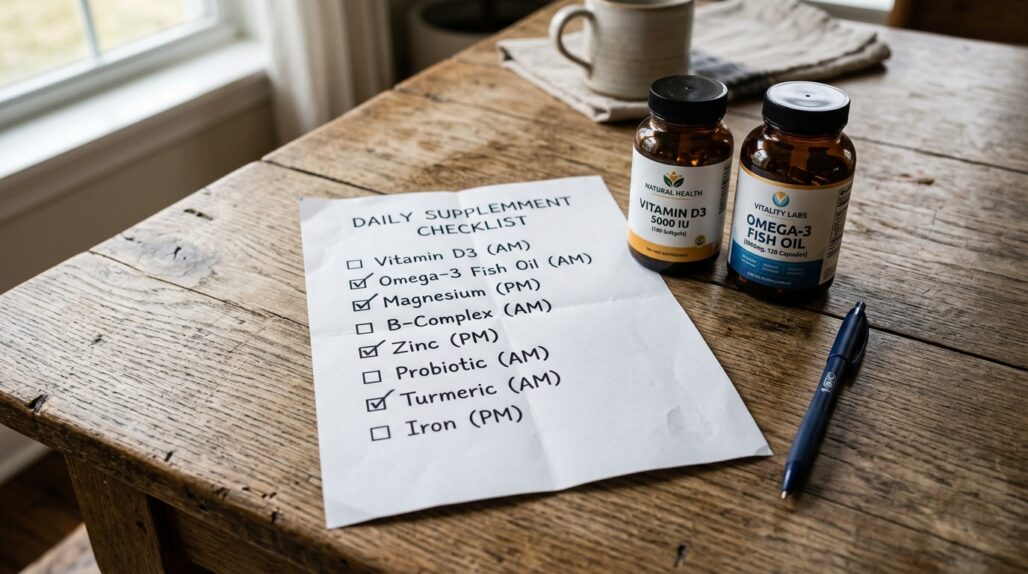
Pull every bottle, gummy, powder, and tea off the shelf, including the ones you take "sometimes." Then capture each one. You can do this on paper in five minutes, and here is a template you can copy by hand or into your phone notes.
For each item, write four things: the full name, the dose (the number on the label), how often you take it, and why you take it. That last column is the one people skip, and it is the one that catches duplicates later.
| Item | Dose on label | How often | Why I take it |
|---|---|---|---|
| Postnatal multivitamin | 1 tablet | Daily, morning | General coverage while nursing |
| Vitamin D | 2000 IU | Daily | Low level on last bloodwork |
| Omega-3 fish oil | Per label | Daily | Did not eat much fish |
| Herbal “lactation” tea | 1 cup | As needed | Heard it helps supply |
Include prescriptions and over-the-counter medicines on the same list, even pain relievers and the occasional antihistamine. The point of one combined list is that nothing is invisible when a professional looks at it.
Step 2: Sort each item into three buckets
Once everything is written down, you are not deciding what is safe. You are sorting items into how much checking each one needs. Three buckets work well.
Bucket 1, the usual postpartum basics. These are commonly continued while nursing and are worth a quick confirm rather than worry. A postnatal or prenatal multivitamin, vitamin D, an omega-3, and sometimes iron tend to land here. Frame them as "discuss and confirm," not "automatically keep." The CDC notes that a prenatal may actually exceed the iron and folic acid a nursing parent needs, so the right dose can shift after birth. Your bloodwork and your clinician guide that.
One related point that surprises people: the CDC's vitamin D guidance for breastfed infants is that the baby usually needs 400 IU of vitamin D daily, because breast milk alone tends to fall short. That is a conversation for the pediatrician and separate from your own dose.
Bucket 2, flag and verify before you keep taking it. This is where careful reading pays off. Put anything in this bucket that fits the categories below.
Bucket 3, set aside until a professional weighs in. If you genuinely cannot tell what an ingredient does, or the label hides a "proprietary blend," it belongs here until someone with training looks at it.
Step 3: Know which categories to flag
A few groups come up again and again as the ones to slow down on while nursing. None of this is a diagnosis. It is a prompt to ask.
- Weight-loss and "detox" products. Many detox teas and cleanses lean on laxative or diuretic herbs that can cause dehydration and stomach upset, and very low-calorie cleanses can affect milk supply. These are a clear "ask first."
- High-dose herbals and botanical blends. Strength varies wildly between products, and many herbs have little safety data during lactation. A normal culinary amount of ginger in food is a different thing from a concentrated extract in a capsule.
- Anything marketed to change milk supply, in either direction. Supply is sensitive, the evidence behind many of these products is thin, and a lactation-aware professional is the right person to involve.
- Very high doses of fat-soluble vitamins, such as preformed vitamin A (retinol), which passes into milk. More is not better here.
A 2025 review of supplement use in pregnancy and postpartum underlines the broader issue: the evidence base for many supplements in this window is limited, and products are not vetted the way prescription drugs are. That is exactly why "verify each item" beats "assume it is fine."
When you want a real reference for a single ingredient, the best free one is LactMed, the NIH lactation database. It carries peer-reviewed entries on medications, vitamins, minerals, and hundreds of herbal products, with notes on what is known about each in breastfeeding. It is a research tool, not a yes-or-no verdict for you personally, so use it to inform the question you bring to a clinician.
Step 4: Keep the one list current
The list only helps if it matches reality. Things change fast in the first months: you stop the iron, you try a tea a friend swore by, the pediatrician suggests something. A list from six weeks ago can send a pharmacist down the wrong path.
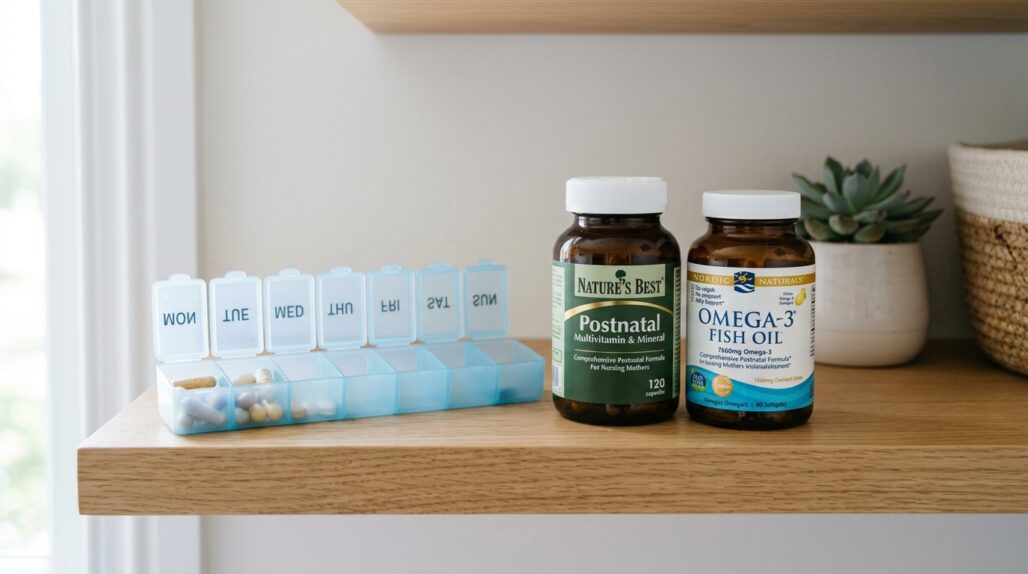
The low-tech version works perfectly. Keep the paper template from Step 1 on the fridge or folded in your bag, and cross out or add a line whenever something changes. A pill organizer plus that single sheet covers most people. The whole system is the sheet, the pen, and the habit of updating it the day something changes.
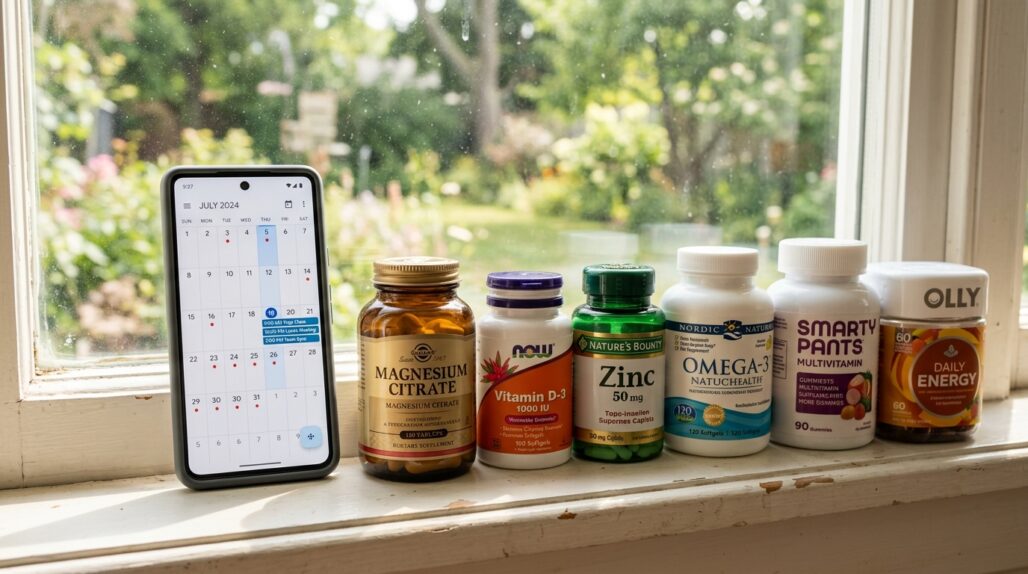
If you would rather keep it on your phone so it is always with you, this is the point to do it. Some supplements that were fine before are not recommended while nursing, so it helps to keep your current list in one place, and StackMyMed (our own free app) lets you log everything and flag possible interactions to raise with your doctor or a lactation-aware pharmacist. The app does not clear anything as safe; it surfaces what to ask about, and the paper sheet does the same job if you prefer to stay off your phone. Either way, the decision on any flagged item belongs to a professional.
Step 5: Bring the list to the right person
A complete, current list is most useful in front of someone who can read it as a whole. Two appointments are worth aiming for.
Your pharmacist is the most accessible expert on combinations and is free to talk to. Bring the full list, supplements included, and ask which items are reasonable to continue, which to space apart from any medication, and which to drop. If you take a prescription, this conversation matters more, not less. Never stop a prescription on your own to "make room" for a supplement.
Your doctor and your baby's pediatrician handle the medical decisions: your own bloodwork-driven doses, the baby's vitamin D, and anything tied to a condition. If you eat a vegetarian or vegan diet, the CDC's maternal diet guidance notes you may need specific support such as vitamin B12 or iron, so flag that too.
If your list is starting to feel long, two of our other walkthroughs help. Our supplement self-audit is a calm way to trim duplicates, and the drug and supplement interactions overview explains why some pairings need spacing. If you are also helping with someone else's routine, checking whether a relative's supplements fit their prescriptions follows the same one-list method.
FAQ
Can I just keep taking my prenatal vitamin while breastfeeding? Many people switch to or continue a prenatal or postnatal multivitamin, but the right choice and dose can change after birth. The CDC notes a prenatal may exceed the iron and folic acid you now need, so confirm it with your clinician rather than assuming.
Is it safe to take a “lactation” or milk-supply supplement? The evidence behind many supply products is limited, and supply is sensitive. Treat these as a flag-and-ask item and raise them with a lactation-aware professional before relying on them.
Are detox teas or weight-loss supplements okay while nursing? These are a common “ask first” category. Many contain laxative or diuretic herbs that can cause dehydration, and very low-calorie cleanses may affect milk supply. Run any product like this by your doctor or pharmacist before using it.
Where can I look up a specific herb or supplement myself? LactMed, the free NIH Drugs and Lactation Database, has peer-reviewed entries on medications, supplements, and many herbal products. Use it to inform your questions, not as a personal safety verdict.
Does my baby need a vitamin even if I take mine? Often yes for vitamin D. The AAP and CDC recommend most breastfed infants get 400 IU of vitamin D daily because breast milk alone tends to fall short. That is a separate decision from your own supplements, so ask the pediatrician.
What if I take a prescription medication too? Keep it on the same single list as your supplements and review the whole thing with your pharmacist. Do not stop or change a prescription on your own to accommodate a supplement.
The bottom line
The single most useful thing you can do is keep one current list of every supplement, vitamin, and medication you take, and treat it as a starting point for questions rather than a finished plan. Sort each item into keep-and-confirm, flag-and-verify, or set-aside, and pay special attention to high-dose herbals, weight-loss and detox products, and anything marketed to change milk supply.
Then take that list to a pharmacist or your doctor, with the pediatrician handling the baby's vitamin D. You organize; the professionals decide. That split keeps things both calm and safe.
This article is for general information and does not replace personalized advice from a qualified clinician. It does not diagnose, treat, or recommend starting, stopping, or changing any medication or supplement. Talk to your doctor, your child's pediatrician, or a pharmacist about your specific situation before making changes, especially while breastfeeding.
StackMyMed is made by UsefulVitamins. It helps you organize your list and flag things to discuss with a pharmacist or doctor; it is not a diagnosis or treatment tool and does not replace professional medical advice.
Reviewed by the UsefulVitamins Editorial Team.
