
Affiliate disclosure: this article contains affiliate links. As an Amazon Associate, UsefulVitamins.com earns from qualifying purchases at no extra cost to you.
Tennis has a scheduling problem no other recreational sport quite shares: you do not know if you signed up for 45 minutes of doubles or a three-hour singles grinder until the match is underway. That uncertainty is exactly why electrolyte advice for tennis players is so often wrong, because the right answer for a quick indoor hit and a July tournament final are completely different products, or no product at all. This guide works through the published tennis sweat data, then matches five real products to the way tennis is actually played. The picks below are the ones we would pack for our own family before a summer league weekend.
Before you decide
Most casual players do not need any of this. If your typical session is an hour of doubles in an air-conditioned bubble and you eat a normal diet, water and your dinner plate already cover your losses. Buying a high-sodium mix for that schedule just adds sodium you will excrete.
A few groups should talk to a doctor before adding concentrated electrolytes. That includes anyone with kidney disease, heart failure, or high blood pressure managed with a sodium-restricted diet, and anyone taking diuretics, ACE inhibitors, potassium-sparing medications, or lithium. High-dose sodium and potassium products can work against those treatments. Nothing here is medical advice; it is label math and sports-science context to bring to your own clinician.
Who this comparison is actually for: singles players whose matches regularly pass the hour mark, anyone competing outdoors in heat, tournament players facing two matches in a day, and the cramp-prone player who has already tried bananas and magnesium without result.
What a tennis match actually takes out of you
Tennis is unusually well studied among racquet sports, and the numbers are bigger than most players expect. In a 2011 study of indoor match play in the International Journal of Sport Nutrition and Exercise Metabolism, men playing at a mild 17 degrees Celsius still sweated about 1.1 liters per hour, with individual rates ranging from 0.3 up to 2.0 liters per hour. A single 68-minute indoor match cost those players roughly 1.1 grams of sodium on average, and the saltiest sweaters lost 1.8 grams.
Heat changes the scale entirely. A case report in the International Journal of Sport Nutrition documented a competitive 17-year-old sweating 2.5 liters per hour during summer play, with on-court sodium losses near 90 mmol, roughly two grams, for every hour on court. His recurring full-body cramps stopped once he raised his sodium intake. No supplement fixed him; salt did.
Reviews by the same research group pull the picture together. A 2003 review in the Journal of Science and Medicine in Sport tied heat cramping in tennis directly to the combination of large sweat sodium losses and fluid deficits accumulated across long matches and multi-match days. A 2014 review in the British Journal of Sports Medicine reached the same conclusion for competitive play in the heat: substantial sweat losses produce real body water and electrolyte deficits, especially across a tournament. Match length is the multiplier. A 2.5-hour three-setter at a 1.5 liter per hour sweat rate is nearly four liters of fluid and potentially three grams of sodium, which no banana addresses.
For the full physiology behind these numbers, our complete guide to electrolytes covers what each mineral actually does during exercise.
When water alone is enough
Here is the honest gate most roundups skip. If your session is under about an hour, indoors or in mild weather, plain water covers you. The 2011 indoor study above found players replaced 93 percent of their sweat losses just drinking to thirst, and finished with trivial body mass change. Your kidneys and your next meal handle a one-hour session without help.
Water also wins for low-sweat players. Sweat rates vary more than sixfold between individuals in the same match, so a light sweater playing morning doubles has no deficit worth supplementing. A quick way to check yourself: weigh in before and after a typical match. Each kilogram lost is about a liter of sweat. Our electrolyte replacement calculator turns that weigh-in into an actual per-hour sodium target.
The product case begins where the hour ends. Long singles, back-to-back matches, visible salt crust on your hat or shirt, or any outdoor play above roughly 27 degrees Celsius (80 F) shifts you into the range where the studies above start recording gram-level sodium losses.
How to choose for tennis
Sodium per serving is the first number on the label that matters. The products below span 300 mg to 1,000 mg per serving, a threefold spread. Match it to your situation: 300-500 mg per hour suits moderate sweaters in mild conditions, while heavy sweaters in heat justify 750-1,000 mg per hour. That range is consistent with the deficits measured in the tennis literature, where hot-weather losses ran one to two grams per hour.
Format matters more in tennis than in most sports because you drink in 90-second changeover windows. A pre-mixed bottle you sip at every changeover beats anything you have to fumble with courtside. Stick packs mix into a standard 500-700 ml bottle before the match; tablets need a few minutes to dissolve, so drop them in before warm-up, not at 4-4 in the second set. If you are deciding between formats on dose grounds, we broke down why tablets are often underdosed against powders in a separate piece.
Sugar is a genuine fork in the road. For a match under 90 minutes, you do not need carbohydrate in the bottle, and the 11-19 grams of sugar in drink-mix products is just dessert. Past the 90-minute mark, 20-40 grams of carbs per hour starts earning its place as fuel. Pick zero-sugar for short matches and a carb mix only when the match itself is long enough to need fuel.
Price per serving closes the decision. The spread runs from about $0.75 to about $1.60 per serving among the picks below, and daily users feel that difference fast. Our stick packs versus tub cost breakdown shows how much of that premium is packaging.
The numbers side by side
All figures come from current brand label pages or, where noted, retailer listings, checked in August 2026. Where a brand does not publish a number, we say so rather than guess.
| Product | Sodium per serving | Potassium | Sugar / carbs | Format | Price per serving |
|---|---|---|---|---|---|
| LMNT | 1,000 mg | 200 mg (plus 60 mg magnesium) | 0 g | Stick pack | About $1.50 ($45 per 30) as of August 2026 |
| Precision Fuel & Hydration PH 1500 | 750 mg per packet in 500 ml (1,500 mg per liter) | Not published on the product page | Not published on the product page | Stick pack | About 1.60 euros (12.99 euros per 8, EU store) as of August 2026 |
| Liquid I.V. Hydration Multiplier | 500 mg | 370 mg | 11 g sugar (45 cal) | Stick pack | About $1.56 ($24.99 per 16) as of August 2026 |
| Skratch Labs Sport Hydration | 400 mg | Not listed on the product page | 19 g carbs | Powder bag or singles | About $1.20 ($23.95 per 20-serving bag) as of August 2026 |
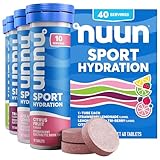
| Nuun Sport | 300 mg | 150 mg (plus 25 mg magnesium, 13 mg calcium) | 1 g sugar (15 cal) | Effervescent tablet | About $0.75 ($7.49 per 10) as of August 2026 |
Top picks for tennis players
LMNT is the pick for hot-weather singles and heavy sweaters. One stick in a 700 ml bottle delivers 1,000 mg of sodium with no sugar, which lines up with the gram-per-hour losses recorded in hot-weather tennis studies. The salty taste is polarizing, and the dose is genuinely too much for a light sweater playing indoors. We put the brand through a longer cost and formulation review in our LMNT deep dive if you want the full accounting.
Precision Fuel & Hydration PH 1500 is the cramp-specialist option. At 750 mg of sodium per 500 ml packet, it is built for pre-loading: drinking a bottle in the 90 minutes before a hot match so you start topped up, the same logic tested in a 2014 match-play trial that standardized sodium intake for players competing in heat. The brand also sells sweat testing, which is the honest path for a player whose cramps keep returning. The main friction for US buyers is availability and pricing, which the brand quotes in euros on its main store.
Liquid I.V. suits players who will not drink plain-tasting mixes. The 500 mg of sodium per stick sits in the useful middle of the range, and 370 mg of potassium is the highest here. The 11 grams of sugar per stick is the tradeoff: reasonable as light fuel mid-match, pointless for a 45-minute hit. Palatability is not a trivial feature; the drink you actually finish beats the better formula sitting full in your bag.
Skratch Labs Sport Hydration is the long-match fuel option. With 400 mg of sodium and 19 grams of carbohydrate per serving, it does double duty in matches that stretch past 90 minutes, when carbs start mattering as much as fluid. Treat it as a sports drink done properly, with more sodium and less sugar than the big-brand bottles, and skip it when the match is short.
Nuun Sport wins on price and portability. At about $0.75 per tablet with 1 gram of sugar, it is the cheapest respectable option and the easiest to keep in a tennis bag year-round. The 300 mg sodium dose is the lightest here, which makes it right for indoor sessions and moderate sweaters and undersized for a July tournament. We compared it against a popular budget rival in our Nuun versus Ultima head-to-head.
For players who train across several sports, our broader athlete electrolyte roundup covers the same brands from a general-training angle.
What to look for when buying
Read the sodium line first and ignore the front of the pack. Marketing terms like "advanced hydration" and "cellular transport" appear on 300 mg products and 1,000 mg products alike, and only the Supplement Facts panel separates them. Check that the serving size in the panel matches how you actually mix it; some brands print a two-scoop serving to make the numbers look bigger.
Be suspicious of magnesium-forward cramp marketing. Magnesium oxide in particular is poorly absorbed, and the clinical evidence for any oral magnesium against cramps is weak, as covered in the FAQ below. A tennis cramp formula that leads with magnesium instead of sodium has the physiology backwards.
Prefer third-party tested products if you compete. NSF Certified for Sport or Informed Sport logos matter for anyone subject to testing, and they are a decent purity signal for everyone else. Also weigh the container question: tubs are cheaper per serving, and stick packs survive a tennis bag in August far better than a tub with a scoop.


As an Amazon Associate, UsefulVitamins.com earns from qualifying purchases at no extra cost to you. We only recommend products supported by published research or third-party testing.
Averages only get you so far. Weigh in before and after one session and run your own numbers through our sweat rate calculator.
FAQ
Does magnesium stop tennis cramps?
The evidence says mostly no. A 2020 Cochrane review concluded that magnesium supplementation is unlikely to prevent the common idiopathic cramps it examined, found no adequate trials at all in exercise-related cramping, and reported more stomach upset than benefit. The tennis-specific literature points instead at large sweat sodium losses plus dehydration as the driver of on-court cramping. If you cramp in long hot matches, raising sodium and fluid intake has case-level and review-level support; magnesium does not.
How much sodium per hour should I target during a match?
Published tennis data puts sweat sodium losses anywhere from about 0.5 grams per match indoors to roughly 2 grams per hour in heavy sweaters playing in heat. A practical target is 500-1,000 mg of sodium per hour once matches pass the hour mark in warm conditions, taken with 400-800 ml of fluid per hour. One caution: do not force fluid far beyond your measured sweat losses, because overdrinking, especially plain water, can dilute blood sodium into hyponatremia, which is more dangerous than mild dehydration. Light sweaters and indoor players need the bottom of that range or nothing at all.
Are regular sports drinks good enough for tennis?
Mostly they are underpowered on the number that matters. A typical 20 oz bottle of a mainstream sports drink carries about 270-300 mg of sodium alongside 30 g or more of sugar, so you buy a lot of carbohydrate to get a little salt. For a long hot match, a 500-1,000 mg sodium mix with modest or no sugar is a better fit; for a short session, water beats both.
Should I drink electrolytes before the match or during it?
Both have a case, and pre-loading is the underused half. Starting a hot match already topped up with sodium and fluid, then sipping at changeovers, beats trying to catch up from behind in the third set. A high-sodium packet in 500 ml of water with breakfast before a tournament day is a simple version of the protocols researchers have tested in match-play heat studies.
I take blood pressure or heart medication. Can I use high-sodium electrolyte mixes?
Check with your doctor or pharmacist first, specifically. A 1,000 mg sodium serving is roughly 40 percent of the 2,300 mg general daily sodium guideline in a single bottle, which can directly oppose a sodium-restricted treatment plan, and potassium-containing mixes can interact with diuretics, ACE inhibitors, and potassium-sparing medications. Bring the actual label to the appointment, and see the interaction section of our complete guide to electrolytes for the common medication classes affected.
The bottom line
Tennis earns electrolyte support honestly once matches get long and hot, and the published sweat data says the fix is sodium and fluid in the right amounts, timed around changeovers and match starts. Pick LMNT for hot singles and heavy sweat, PH 1500 for pre-loading and stubborn cramps, Skratch when the match doubles as an endurance event, and Nuun when your tennis is short, indoor, or budget-conscious. Skip all of them for casual sub-hour sessions; water and a salted meal were always enough for those. And if cramps are your problem, put the magnesium bottle down and run the weigh-in test first, because in tennis the cramp story has been a salt story all along.
