
Affiliate disclosure: this article contains affiliate links. As an Amazon Associate, UsefulVitamins.com earns from qualifying purchases at no extra cost to you.
What you are actually paying for
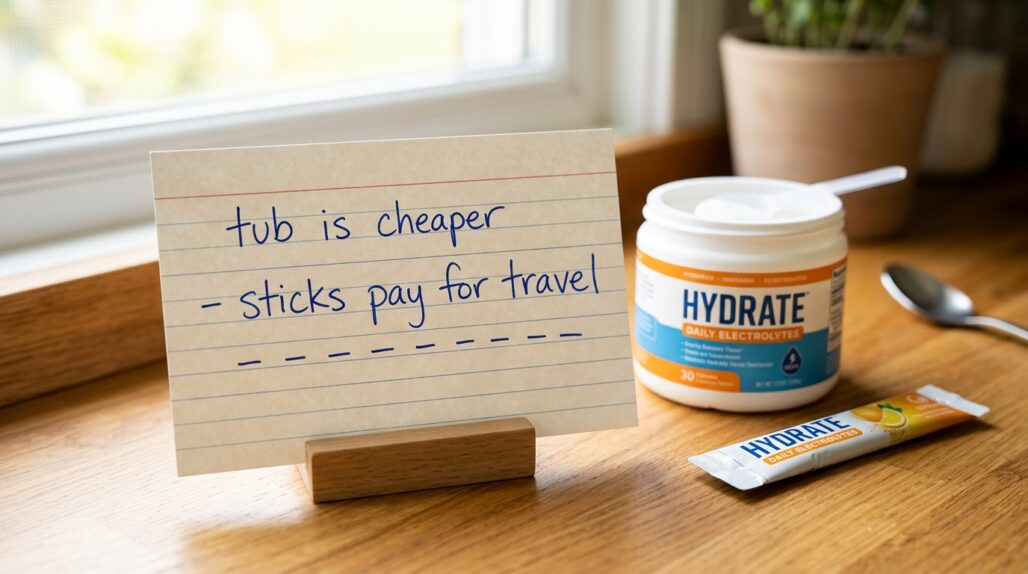
The powder inside a stick pack and the powder inside a tub are, for most brands, the same recipe. The price gap is the packaging.
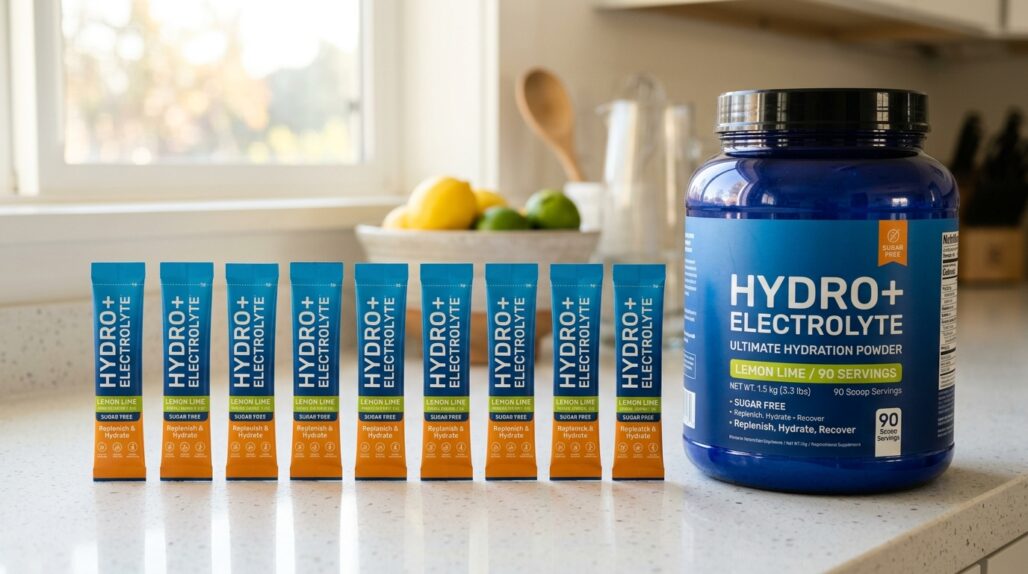
Single-serve sticks need a printed foil wrapper, a filling line that portions and seals each one, and the shipping weight of all that material. A tub holds 30, 60, or 90 servings behind one lid and one scoop, so the per-serving overhead drops sharply.
That is the whole story in one line: sticks cost more because of the wrapper, not because they hydrate you better. Once you see it that way, the decision gets simple, and it comes down to how often you are actually away from your kitchen.
The real cost-per-serving math
Here is where the marketing blurs the picture. A box price like "$45 for 30" sounds fine until you divide it out and compare formats honestly.
Take LMNT as a clean example, since its stick packs are a single format with a published price. A 30-count box runs about $45, which is $1.50 a serving at full price as of writing (check current price). Their bulk bundle brings it down toward $1.13 a stick, but that is still a single-serve wrapper around every dose.
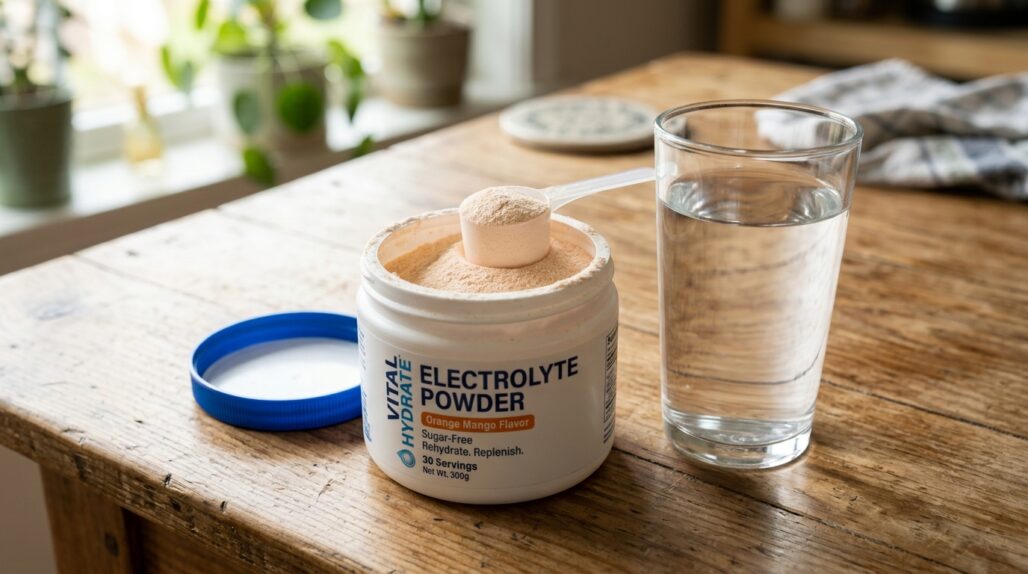
Now compare a value tub. Surveys of budget electrolyte powders put a tub's average near $0.67 a serving, with brands like Ultima Replenisher around $0.47 and Redmond Re-Lyte near $0.75 in 60-to-90-serving canisters as of writing. A few bare-bones tubs dip to roughly $0.33 a serving.
So the spread is real and it is wide.
| Format | Typical price per serving | What drives the cost | Best for |
|---|---|---|---|
| Premium stick pack | $1.50 (around $1.13 on bulk subscription) | Foil wrapper, single-serve filling, shipping weight | Travel, gym bag, desk drawer |
| Value stick pack | $0.80-$1.20 | Same wrapper, cheaper formula | Occasional on-the-go use |
| Premium tub | $0.60-$0.90 | One canister, one scoop, no per-dose packaging | Daily home use |
| Value tub | $0.33-$0.55 | Bulk fill, basic flavor system | High-volume daily users, keto, endurance |
Run the everyday numbers. One serving a day from a $1.50 stick is about $45 a month. The same daily serving from a $0.50 tub is about $15 a month, or roughly $360 saved over a year. Drink two a day in summer and the gap doubles.
If you want your own number rather than these ranges, our best electrolyte powder roundup lists current per-serving costs by brand so you can check the math against what is actually on the shelf this week.
Why people still reach for the sticks
The premium is not irrational. You are buying something the tub cannot give you, and for a lot of people that thing is worth it.
A stick pack is portion-controlled, spill-proof, and fits anywhere. No scoop, no measuring, no powder dusting the inside of a gym bag. You tear, pour, and you are done.
That matters most when you are not standing in your own kitchen:
- Travel: a stick pack survives a carry-on or a glovebox with no mess.
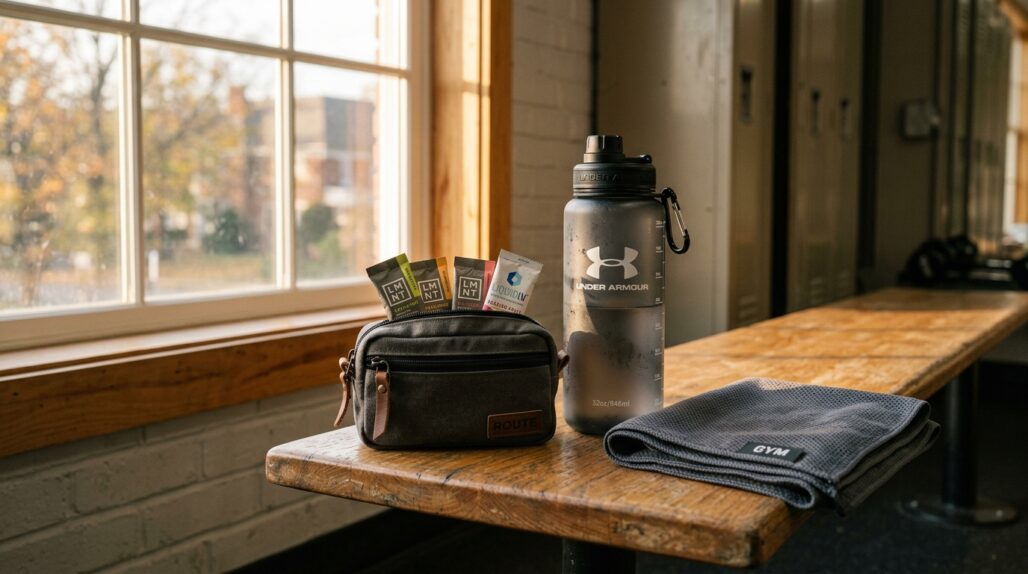
- The gym or a run: one stick drops cleanly into a bottle mid-workout.
- The office: a desk drawer of sticks beats hauling a tub to work.
- Sharing: handing a single sealed dose to a friend is easier than scooping into a stranger's glass.
There is also a quieter benefit. A format you actually reach for beats a better-value tub that sits in the pantry untouched. If sticks are the reason you stay hydrated at all, the convenience is paying for itself in adherence, and that is a fair trade.
The hybrid play most people should run
You do not have to pick a side. The cheapest sensible setup is to use both formats for what each one does well.
Keep a tub at home for your daily serving, where cost-per-serving is the thing that adds up. Keep a small stash of stick packs for travel days, the gym, and trips where a scoop is a hassle.
That combination captures most of the savings while keeping the convenience exactly where you need it. You are not paying the stick premium 365 times a year; you are paying it the dozen or so times it genuinely earns its keep.


As an Amazon Associate, UsefulVitamins.com earns from qualifying purchases at no extra cost to you.
UsefulVitamins may earn a commission from purchases made through the links below, at no extra cost to you. Prices and availability change; confirm current pricing on the retailer's page.
If you are deciding between specific brands rather than formats, our Nuun versus Ultima comparison breaks down how two popular lines differ on sodium and taste, which often matters more than the wrapper.
Watch the sodium dose, not just the price
Here is the catch that trips people up: a brand's stick line and its tub line are not always the same recipe. Sodium per serving can differ even under the same logo.
Before you assume a tub is a like-for-like swap for your sticks, read the sodium-per-serving number on both labels. A stick might pour 1,000 mg while a same-brand tub scoop lands at 500 mg, or the reverse. If the doses differ, your "cheaper" tub may simply be a smaller serving, which changes the real cost-per-milligram of sodium.
This is where matching the format to your needs comes in:
- Light, daily hydration: a lower-sodium serving (around 300-500 mg) is plenty, and a value tub shines here.
- Heavy sweat, endurance, or hot-weather training: you may want a higher-sodium formula. The National Academies' review of water and electrolytes notes athletes can lose substantial sodium in sweat, and replacement scales with how much you sweat.
- Keto or low-carb: low-carb eating flushes sodium faster, and keto guides commonly point to needing several extra grams of sodium a day. Our keto electrolyte guide covers how to dose for that without guessing.
For the underlying why-it-matters of each mineral and how much you actually need, the complete guide to electrolytes is the place to start before you commit to a format.
A quick word on high-sodium formulas
A 1,000 mg sodium serving is a lot relative to where many people already sit. The American Heart Association suggests capping daily sodium at no more than 2,300 mg, with an ideal target near 1,500 mg, and the CDC notes the average American already takes in over 3,300 mg a day, mostly from processed and restaurant food.
If you sweat hard for hours, that extra sodium is replacing real losses. If you are sedentary, a high-sodium electrolyte every day may be more than you need. People with high blood pressure or kidney concerns should talk to a pharmacist or doctor before making a high-sodium product a daily habit, since the link between sodium and blood pressure is well documented. This is general information, not a personal recommendation.
FAQ
Are stick packs really worse value than a tub? On price per serving, yes. The same formula in a tub typically costs about a third to a half of what it costs in single-serve sticks, because you stop paying for the wrapper and the per-dose filling.
Is the powder in stick packs different from the tub? Usually it is the same recipe, but not always. Some brands set a different sodium dose for their stick line versus their tub, so check the sodium-per-serving on both labels before assuming they are interchangeable.
How much can I actually save with a tub? If you take one serving a day, swapping a $1.50 stick for a roughly $0.50 tub serving saves around $30 a month, or close to $360 over a year. Two servings a day roughly doubles that.
When are stick packs worth the premium? Travel, the gym, the office, and any time a scoop is a hassle. A single sealed dose is mess-free and portable, and if sticks are what keep you hydrated, the convenience earns its cost.
Should I buy the bulk stick bundle instead of a tub? A bulk stick subscription lowers the per-stick price, but it is still wrapped single-serve and usually costs more than a comparable tub. Buy the bundle only if you genuinely use sticks on the go most days.
Is a high-sodium electrolyte safe to drink daily? For most active people replacing sweat losses, yes, but a 1,000 mg sodium serving is significant. If you have high blood pressure, kidney disease, or follow a sodium-restricted diet, check with a pharmacist or doctor before making it a daily routine.
The bottom line
Stick packs are not a worse product. They are the same powder wearing a more expensive wrapper, and that wrapper buys you portability you may genuinely want.
The honest call: run a tub at home and keep a few sticks for the road. You pocket most of the savings without giving up the convenience where it counts, and you avoid paying the single-serve premium on every glass of water you drink.
Before you commit, do one thing the marketing won't: divide the box price by the serving count, and compare the sodium per serving on both labels. The cheaper number and the right dose are usually not the one on the front of the package.
This article is general information, not medical advice. It does not replace guidance from your own doctor or pharmacist, and you should not start, stop, or change any supplement or prescription based on it.
Reviewed by the UsefulVitamins Editorial Team.
