
Affiliate disclosure: this article contains affiliate links. As an Amazon Associate, UsefulVitamins.com earns from qualifying purchases at no extra cost to you.
Why format beats brand when you fly
The hydration problem on a plane is real, but the packing problem is what trips people up. You cannot carry your usual pre-mixed bottle through the checkpoint, so the question is which dry format clears security cleanly and still works at 35,000 feet.
The honest answer is that the format matters far more than the brand here. Any decent electrolyte mix works on a plane if you can actually get it past the scanner and into water. So this page is about logistics first, sodium second.
If you have not picked a brand yet, our roundup of the best electrolyte powders covers the picks themselves. This page is the travel protocol that sits on top of whatever you choose.
What TSA actually allows
Two separate rules apply, and confusing them is where most travelers go wrong. Liquids follow the 3-1-1 rule; powders follow a different, more generous threshold.
A pre-mixed electrolyte drink counts as a liquid, so it is capped at 3.4 oz (100 mL) per container in your carry-on, per the TSA liquids, aerosols, and gels rule. A standard sports bottle is roughly 16 to 24 oz, which means your filled bottle gets confiscated at the bin. The container size is what counts, not how much is left in it.
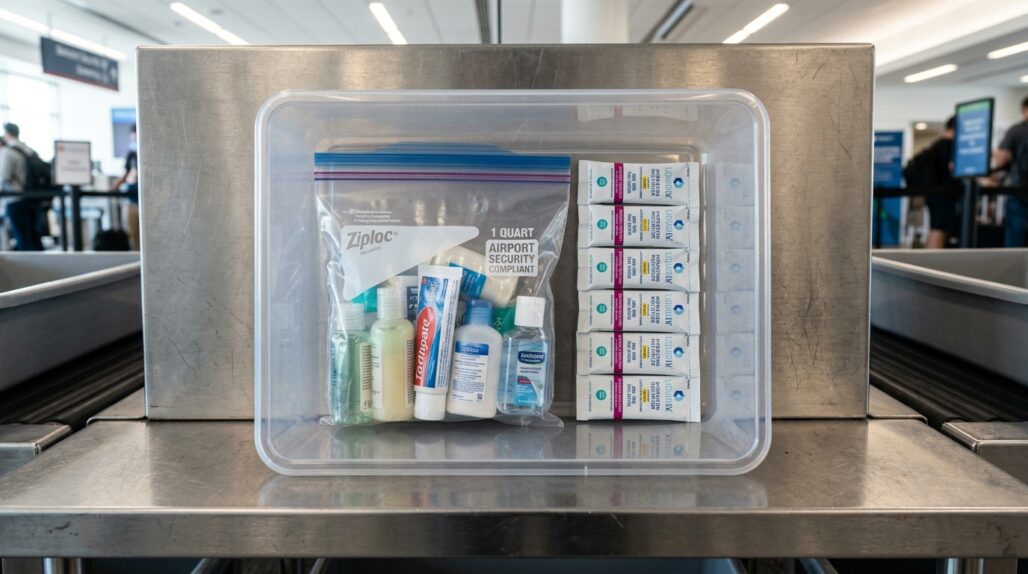
Dry powders and tablets are treated differently and far more leniently. You can bring powdered drink mix through in your carry-on. The catch is volume: per the TSA powder restrictions guidance, any powder over 12 oz (350 mL) should come out of your bag for X-ray and may get a secondary screen, where an officer can open and test it.
Where each format lands
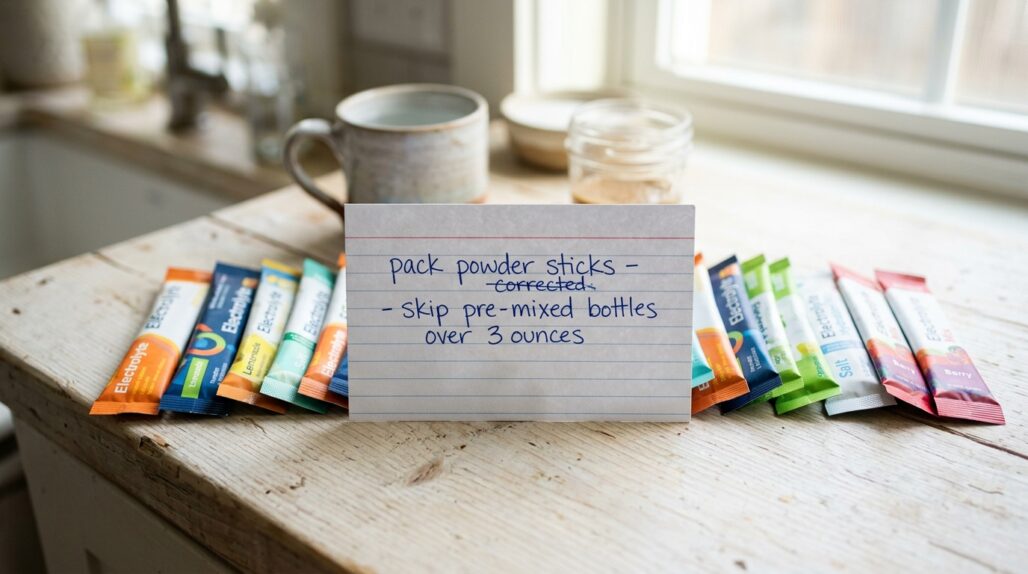
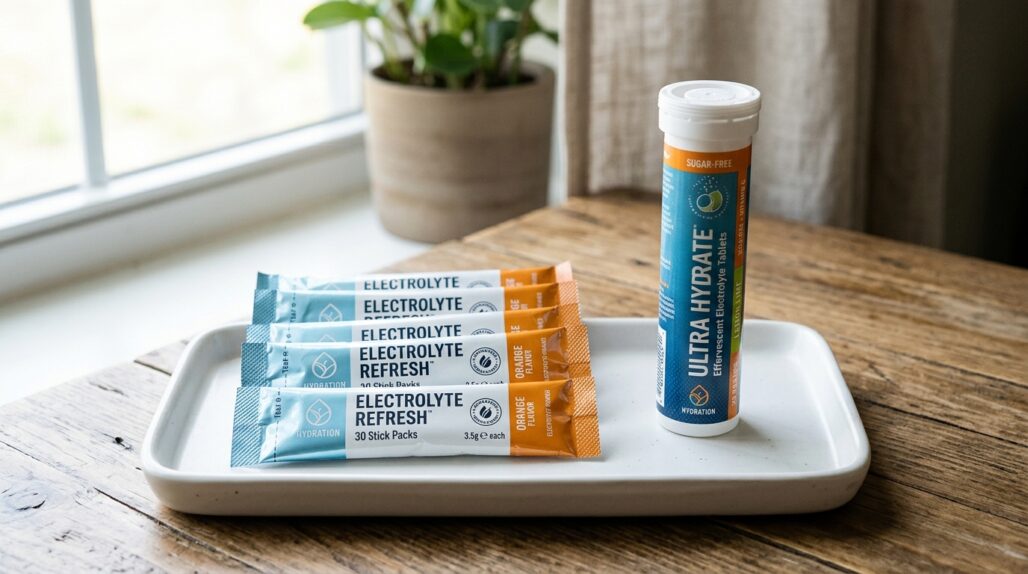
- Stick packs and single-serve tubes: sail through. Each is a few grams, nowhere near 350 mL.
- Effervescent tablet tubes: also fine. Solid tablets are not liquids and a tube is tiny by volume.
- A full tub of powder: allowed, but a big tub can cross the 12 oz line and earn a bin and a swab. Decant a few servings into a small bag instead of hauling the whole thing.
- Your pre-mixed bottle: the one thing that does not make it. Empty it before the line.
| Format | TSA status in carry-on | Mess and effort on board | Best for |
|---|---|---|---|
| Powder stick packs | Clears easily, well under the 12 oz powder limit | Low – tear, pour, no scoop | Most flyers; the default pick |
| Effervescent tablets | Clears easily; solid, not a liquid | Lowest – drop one in and wait | Zero-spill priority, light hydration |
| Full powder tub | Allowed, but over 12 oz may get a secondary screen | Medium – needs a scoop and a steady tray | Home and road trips, not the cabin |
| Pre-mixed liquid | Confiscated if over 3.4 oz | None, but you cannot get it through | After landing only, or checked bag |
One more note for international trips back to the U.S.: the 350 mL powder rule is enforced most strictly on flights bound for the United States, so the same dry-format logic protects you on the return leg too.
Why stick packs are the cleanest travel format
Among the formats that clear security, stick packs win on the actual experience of using them on a plane. They are single-serve, so there is no scoop to fish out over a wobbling tray table and no guessing at a dose.
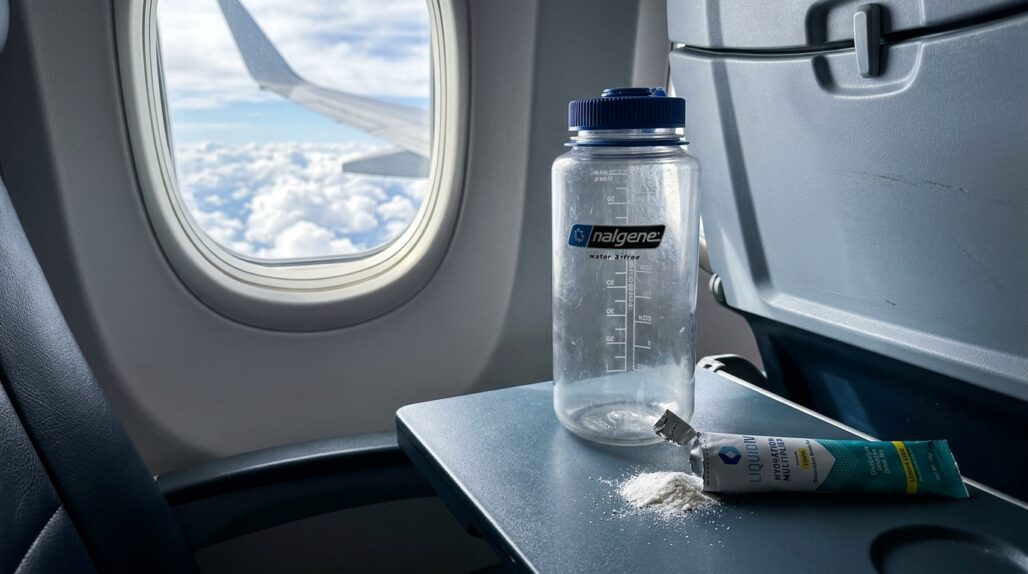
The move is simple. Buy a bottle of water past the checkpoint, tear a stick, pour it in, and cap and shake. No measuring, no spill, no powder dusting your seatmate.
Tablets are a close second and arguably even tidier, since you just drop one in and let it fizz. The tradeoff is dose: most tablets are built for light hydration, which we will come back to.
A full tub is the format to leave at home. Carrying a tub means a scoop, a bigger volume that may flag at the scanner, and a real chance of spilling loose powder in a cramped seat. Save the tub for your kitchen counter and travel with sticks pulled from it.
A small packing trick
If you already own a tub and do not want to buy sticks, portion a few servings into a small zip bag or a single travel tube. Keep that container well under 12 oz and you get tub economics with stick-pack convenience. Label it so a curious officer can see what it is.
How to actually use it in the air
Cabin air is dry, and that is not a myth. Relative humidity in the cabin typically runs around 10 to 20 percent, far below the 40 to 50 percent of a normal room, according to the UK Civil Aviation Authority's physiology-of-flight guidance. The driest seats can read in the single digits.
Be precise about what that does, though. The same CAA guidance notes the additional insensible fluid loss from dry cabin air is small – about 150 mL over an 8-hour flight, with no measurable change in blood concentration – so the effect is far less dramatic than the headlines suggest. The bigger drivers are usually skipped water, alcohol, and coffee, not the air itself.
So keep it sensible. Sip plain water steadily and add electrolytes to one bottle if you are on a long-haul, sweating, arriving to work out, or prone to travel-day cramps. You do not need an electrolyte in every glass.
Practical rhythm for a long flight:
- Fill a bottle after security and drink some plain water before you add anything.
- Add one stick or tablet to a refill if the flight is over a few hours or you boarded already low.
- Go easy on the in-flight wine and the third coffee, which work against you more than the air does.
- Land, then rehydrate normally; you do not need to pre-load like an athlete unless you are one.
If you are stacking this onto a bigger itinerary, our guide to keeping a supplement routine on track across time zones covers the timing side of travel days.
Reading the label so you pack the right dose
Not all of these formats carry the same dose, and the number that matters is sodium per serving. Light "everyday" formats sit low; sweat-replacement formats sit high.
For reference, a high-sodium powder like LMNT runs about 1,000 mg of sodium per stick, while a Nuun Sport tablet is closer to 300 mg. That is a real gap, and it is the whole reason to read the panel instead of the marketing.
Match the dose to the trip:
- A short hop or a desk-bound business trip: a lighter tablet around 300 mg is plenty.
- A long-haul, a hot destination, or you are arriving to train or hike: a higher-sodium stick around 500 to 1,000 mg fits better.
For how those numbers map to your own sweat rate and activity, our complete guide to electrolytes walks through daily needs, and the electrolyte picks for athletes cover heavier sweat loss. Use those to land on your number, then pack the format that hits it.
Which travel format to buy
For most flyers the call is easy: buy stick packs for the bag and keep your tub at home. Sticks clear security without a second look, mix in seconds, and let you carry exactly as many servings as the trip needs.
If you want the absolute lowest spill risk and only need light hydration, tablets are the no-mess pick since there is no powder at all. And if you want value for the home base, a tub is the cheapest per serving; just decant a few into a travel container rather than hauling the whole thing.
The links below may earn us a commission at no extra cost to you. We only point to formats and products we would actually pack.


As an Amazon Associate, UsefulVitamins.com earns from qualifying purchases at no extra cost to you.
A quick reality check on price: single-serve sticks usually cost more per serving than the same brand's tub, so the travel premium is convenience, not better hydration. That tradeoff is worth it for a flight and silly for daily use at home.
FAQ
Can I bring electrolyte powder through TSA security? Yes. Dry powder is allowed in carry-on bags, and stick packs are well under the 12 oz / 350 mL threshold that can trigger a secondary screening, so they clear without fuss.
Why can’t I bring my pre-mixed electrolyte drink on the plane? A mixed drink counts as a liquid under the 3-1-1 rule, which caps carry-on liquids at 3.4 oz (100 mL) per container. A full sports bottle is far larger, so it gets pulled at the checkpoint. Empty it first, then refill after security.
Are effervescent electrolyte tablets allowed in carry-on? Yes. Tablets are solid, not liquid, and a tube is tiny by volume, so they pass easily and are the lowest-spill option to use on board.
Do I need to declare electrolyte powder to a TSA officer? Not normally. Standard sticks and tablets need no special declaration. Only medically necessary liquids over 3.4 oz must be declared at the start of screening per TSA’s medical guidance, and a large tub of powder may simply get a routine X-ray and swab.
Is flying actually dehydrating enough to need electrolytes? Cabin air is dry, around 10 to 20 percent humidity, but the measured extra fluid loss is modest. Plain water usually covers a short flight; electrolytes earn their place on long-haul trips, in heat, or before activity.
I have high blood pressure. Should I still use a high-sodium travel formula? Check with your doctor or pharmacist first. The FDA’s daily value for sodium is under 2,300 mg, and a single high-sodium stick can be a large share of that, so a lower-sodium tablet or plain water may suit you better.
The bottom line
The winning travel format is the one that clears the checkpoint and mixes without a mess, and that is single-serve stick packs, with tablets a tidy runner-up. Leave the pre-mixed bottle and the full tub at home. Buy water after security, tear a stick into it, and you are set.
Match the sodium dose to the trip rather than defaulting to the strongest formula, and lean on plain water for short hops. The brand is a smaller decision than the format and the dose.
This article is general education, not medical advice. Electrolyte needs and sodium limits vary by person, and a high-sodium formula is not right for everyone. If you are pregnant, manage a kidney or heart condition, or take blood-pressure medication, talk to a pharmacist or doctor before changing what you take.
Reviewed by the UsefulVitamins Editorial Team.
