
Affiliate disclosure: this article contains affiliate links. As an Amazon Associate, UsefulVitamins.com earns from qualifying purchases at no extra cost to you.
Nearly every electrolyte roundup on the internet is written for marathoners. Meanwhile the people sweating the most hours per year, the framers, roofers, landscapers, and road crews, get hydration advice that amounts to a cooler of water and good luck. An outdoor worker in August sweats more in one week than most recreational athletes do in a month, and the products that make sense at that volume are different too, because cost per serving stops being a detail at 250 shifts a year. This page does the label math for heat work specifically. These are the same sticks we would drop into a family member's lunch cooler before a heat-wave pour.
Before you decide
First, the people who should close this tab. If a doctor has you on a salt restriction, or you take blood pressure medication, diuretics, ACE inhibitors, ARBs, or lithium, do not add a high-sodium product on your own. One LMNT stick carries 1,000 mg of sodium, nearly half the general daily guideline in a single drink, and that works directly against most blood pressure treatment. Kidney disease and heart failure are hard stops without medical sign-off. Nothing on this page is medical advice; it is label arithmetic plus published heat-stress research, and our complete guide to electrolytes covers the physiology in more depth.
Equipment operators in climate-controlled cabs mostly do not need any of this, and neither does anyone whose outdoor time is a couple of mild hours. The gate is sweat, and a dry shirt at lunch means the gate is closed.
Who this comparison is actually for: construction crews, landscapers, roofers, paving and utility crews, farm workers, and anyone else putting in six-plus hours of physical work in real heat. If your sweating happens in running shoes instead of work boots, our best electrolytes for athletes guide runs the same math for training.
What a shift in the heat actually takes out of you
The best field data on working people, as opposed to athletes, comes from underground mining. A field study of 39 miners in Occupational and Environmental Medicine tracked men working 10 to 12.5 hour shifts in severe heat, around 31 C on the WBGT heat-stress index. They drank an average of 0.8 liters per hour through the whole shift, some as much as 1.5 liters per hour, and the ones who kept that pace held their hydration steady. Run that intake over an eight-hour day in the heat and you get six-plus liters of fluid, which is the scale the rest of this page is built on. The study's other finding is quietly damning: most workers showed up at the start of the shift already dehydrated from the day before.
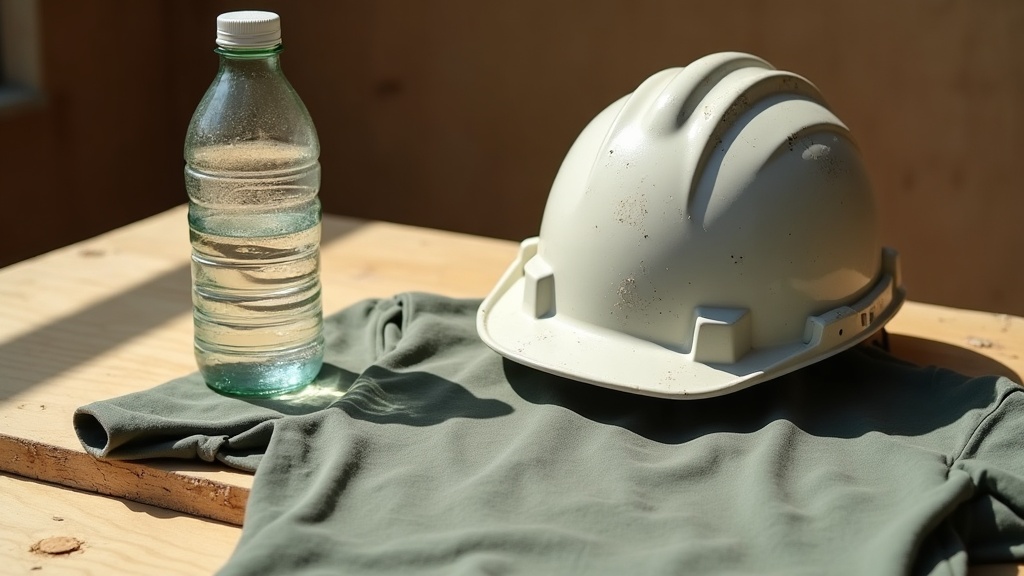
How much salt rides out with that sweat? Testing of 506 athletes published in the Journal of Sports Sciences found whole-body sweat sodium averaged about 36 mmol/L, roughly 830 mg of sodium per liter, with the saltiest sweaters near double that. At five to six liters of sweat, an average sweater loses somewhere around four to five grams of sodium in a single hot shift, which is more than a typical American eats in an entire day. The white crust on a hard hat headband or a black t-shirt is that sodium, and heavy crusters sit at the expensive end of the range.
Two more facts from the sweat-testing literature matter on a jobsite. Person-to-person spread is huge, several-fold on both sweat volume and saltiness, so the guy who never cramps and the guy who cramps every July are probably both being honest. And heat acclimation changes your numbers, which is why the first heat wave of the season and the first week back after vacation are when crews get in trouble.
This is also the mechanism behind the classic jobsite heat cramp. OSHA's Water. Rest. Shade. guidance says it plainly: workers lose salt and other electrolytes when they sweat, substantial loss can cause muscle cramps and other dangerous health problems, and water cannot replace electrolytes. The cramping calf at hour seven is not a water problem; by then it is usually a salt problem.
When water alone is enough
OSHA's line is a genuinely useful gate: for short jobs, cool water is sufficient, and for jobs that run past two hours employers should provide electrolyte-containing beverages. Under two hours of heat exposure, water covers you, full stop. A morning of errands around the yard, a quick service call, mild spring weather where the shirt stays dry: buying products for those days is buying flavor, not function.
Your meals do more than you think, too. A working diet is not a low-sodium diet, and breakfast, a real lunch, and dinner replace a meaningful share of a moderate day's sodium. The problem days are the ones that outrun food: back-to-back heat, missed lunch, ten-hour pours, the first hot week of the season before your body has adapted.
There is a hard limit on the water-only approach worth naming, because it hospitalizes people every summer. Sweating heavily for many hours while drinking only plain water can dilute blood sodium, a condition called hyponatremia. A 2017 review in Frontiers in Medicine identifies overdrinking plain fluid beyond thirst as its primary cause. A gallon-jug-of-water-and-nothing-else strategy on a twelve-hour summer shift is the exact setup the case reports describe. Long hot days need some salt in the system, whether it comes from food, a stick in the jug, or both.
How to choose for outdoor work
Sodium per serving is the first number on every label worth reading, and it should roughly track your day. A heavy sweater on a roof deck wants a serving in the 500 to 1,000 mg range. A moderate day is fine at 300 mg plus salted food. Most brightly packaged hydration products cluster near the bottom of that range, which is the single most useful thing to know before buying. Our electrolyte replacement calculator turns your body weight, hours, and conditions into a personal daily number.
Price per serving matters more here than in any sports context, because the volume is brutal. An athlete uses maybe a hundred servings a year. A crew of six drinking two sticks each per hot day burns through a 30-count box before Wednesday. At jobsite volume, the difference between a 45-cent stick and a $1.50 stick is thousands of dollars a season, which is why the value column in our table below deserves as much attention as the sodium column.
Skip caffeine during heat work. This is a safety position, and we will state it as one: caffeine puts a stimulant load on a heart that is already working hard to move blood to the skin and shed heat, and jittery hands are the last thing anyone needs on a ladder, a roof edge, or a saw. Energy drinks also stack sugar on top and trade an afternoon crash for the morning lift. Every product in our table is caffeine-free, and on a jobsite that should be a requirement, not a preference.
Format is the last filter. Powder sticks win on jobsites: they weigh nothing, survive a glovebox summer, and turn any gas-station water bottle or crew cooler into an electrolyte drink. Ready-to-drink bottles like Gatorlyte cost more per serving and take up cooler space, but need zero prep. Tablets are compact and cheap, though they run light on sodium; our tablets versus powder analysis found most tablets deliver half or less of what a hard, hot day costs.
The numbers side by side
Every figure below comes from the brand's own label or published product page, checked in August 2026. Where a brand does not publish a number, the cell says so rather than guessing.
| Product | Sodium per serving | Potassium | Sugar | Format | Price per serving |
|---|---|---|---|---|---|
| LMNT | 1,000 mg | 200 mg | 0 g | powder stick (16-32 oz) | about $1.50 ($45 per 30) |
| Gatorlyte | 490 mg | 350 mg | contains sugar (see bottle label) | ready-to-drink 20 oz bottle | store pricing varies |
| DripDrop | 330 mg per 8 oz stick (brand publishes 660 mg per 16 oz) | not published on pages we checked | contains sugar (ORS formula) | powder stick (8 oz) | about $1.12 ($35.99 per 32) |
| Sqwincher Qwik Stik Zero | 135 mg | 110 mg | 0 g (5 cal) | powder stick (20 oz) | about $0.45 (roughly $23 per 50-ct bag) |
| Nuun Sport | 300 mg | 150 mg | 1 g | effervescent tablet | about $0.75 ($7.49 per 10) |
Prices are approximate as of August 2026 and move with retailers, case sizes, and subscriptions. Sqwincher pricing is from industrial suppliers, where it is sold by the bag and case.
Top picks for outdoor workers
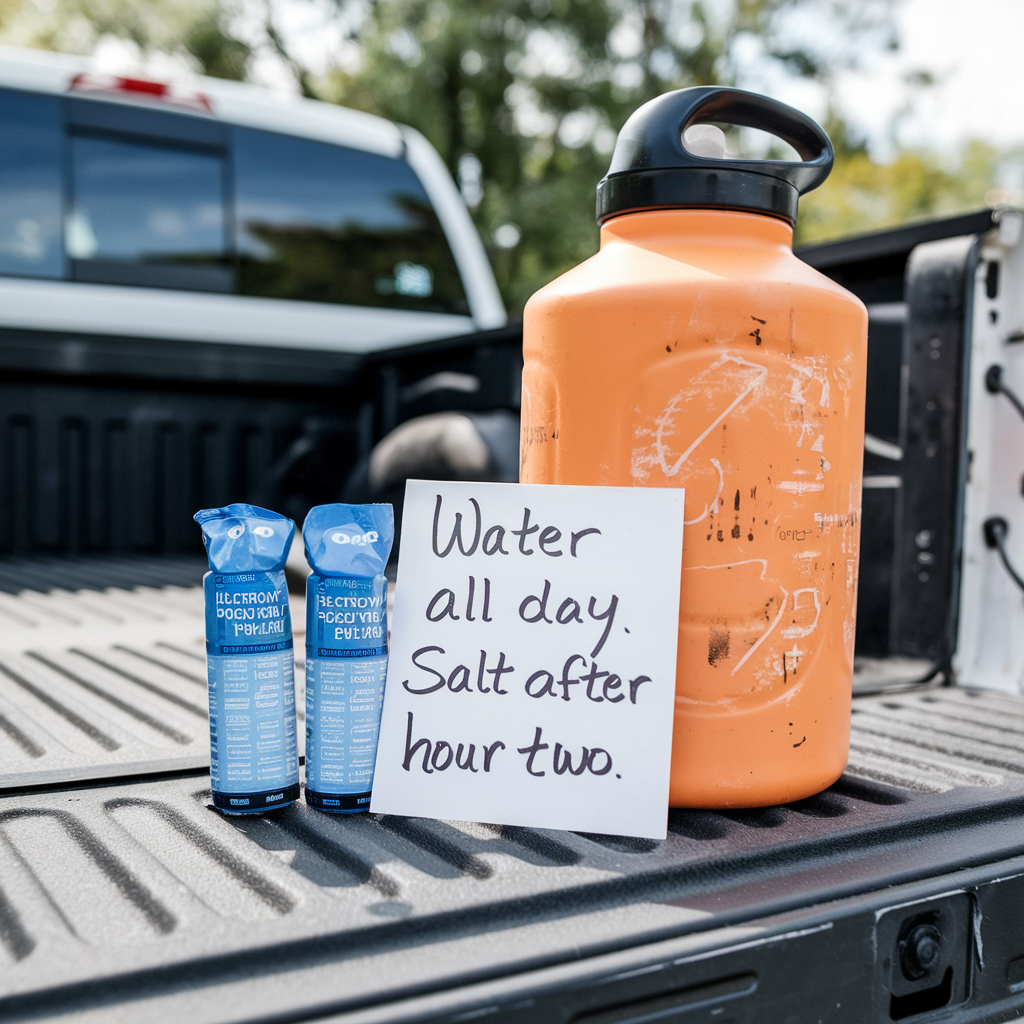
LMNT: best overall for heavy sweaters and long hot shifts. It is the only mainstream product whose sodium dose lives in the same universe as heat-work losses: 1,000 mg per stick, with 200 mg potassium and 60 mg magnesium, zero sugar, zero caffeine. One stick in a half-gallon jug sipped through the morning replaces a real fraction of what a roofer actually loses, and the salty taste that puts off casual users reads as correct at hour six. It is also, oddly, the best sodium-per-dollar buy on the table at roughly 670 mg per dollar. The catch is the sticker price per box; our full LMNT review runs the value math against plain salt.
Sqwincher Qwik Stik Zero: best value for outfitting a crew. This is the drink that already lives on half the jobsites in America, and the label deserves an honest reading: 135 mg of sodium per 20 oz stick is modest, roughly a seventh of an LMNT stick. What it does brilliantly is get people to drink. It is sugar-free, five calories, under 50 cents a stick from industrial suppliers, and a bag of 50 disappears into a cooler without anyone doing math. Use it as the all-day base that keeps the crew drinking, and add a higher-sodium serving for the heavy sweaters, rather than treating it as full replacement on its own.
DripDrop: best for catching up fast. DripDrop is built on oral rehydration solution ratios, the sodium-plus-glucose pairing medicine uses to rehydrate patients quickly, which makes it the right tool for a specific moment: the worker who shows up already behind, the post-cramp recovery, the end of a brutal day before tomorrow's repeat. At 330 mg of sodium in a small 8 oz serving it is concentrated, and the sugar is doing transport work rather than just flavoring. The mining study's finding that most workers start their shift already dehydrated is exactly the gap this product fills.
Gatorlyte: best convenience-store option. When the plan falls apart and the crew is at a gas station cooler, Gatorlyte is the pick over regular sports drinks: 490 mg sodium and 350 mg potassium per 20 oz bottle, roughly double the sodium and about four times the potassium of a standard thirst quencher. Ready-to-drink means zero prep and zero excuses. The trade-offs are cost per serving and hauling your hydration as full bottles instead of a pocket of sticks.
Nuun Sport: best light option for milder days. At 300 mg sodium per tablet with 1 g of sugar, Nuun is dosed below a hard heat day but sits well on moderate ones, and the tube format survives a toolbox better than most packaging. It is the reasonable choice for the shoulder seasons, dilute sweaters, and anyone who finds the strong-salt products undrinkable. Ask it to cover a July roof tear-off and it will come up short.
What to look for when buying
Read the sodium line first and the serving size right after it, because brands quietly dose per 8, 16, or 20 ounces and the per-bottle numbers are not comparable until you normalize them. Prefer zero-sugar formulas for all-day sipping, since a sugared drink nursed for eight hours is a dental and calorie problem sugar-free versions avoid. Confirm there is no caffeine before anything goes in the crew cooler. Then run the real math: price per serving times sticks per day times workers times a season, which is the number that decides whether the plan survives past July. Our best electrolyte powder overview covers the wider field if none of the five above fit.


As an Amazon Associate, UsefulVitamins.com earns from qualifying purchases at no extra cost to you. We only recommend products supported by published research or third-party testing.
Averages only get you so far. Weigh in before and after one session and run your own numbers through our sweat rate calculator.
FAQ
How much sodium do I actually lose on an eight-hour shift in the heat?
More than almost any published serving replaces. Field data on miners in severe heat showed sustained fluid turnover of 0.8 liters per hour, and sweat carries roughly 800 mg of sodium per liter for an average sweater. Multiply those out and a full hot shift plausibly costs four to five grams of sodium, with salty sweaters higher. You do not need to replace all of it from a packet, since meals carry sodium too, but the arithmetic explains why a single 100 mg serving of a light sports drink does not touch a cramping problem.
My employer stocks the jobsite cooler with an electrolyte drink. Is that enough?
Check the label, because the industrial-catering products are dosed lighter than most people assume. Sqwincher Qwik Stik Zero, the most common one, carries 135 mg of sodium per 20 oz serving. That is a real drinking prompt and better than plain water, and for moderate days plus salted meals it may be all you need. Heavy sweaters on long hot shifts should add a higher-sodium serving on their own rather than assuming the cooler covers them.
Do electrolyte drinks interact with blood pressure medication or diuretics?
Yes, and this is the interaction category to take seriously. High-sodium products push directly against what blood pressure treatment is trying to do, diuretics change how your kidneys handle sodium and potassium, and ACE inhibitors, ARBs, and potassium-sparing diuretics can raise blood potassium, which matters with higher-potassium formulas. Sodium intake changes can also shift lithium levels. Run your medication list through our drug and supplement interaction checker and then confirm with a pharmacist before adding a daily high-sodium product.
Are energy drinks okay for working in the heat?
We recommend against them during heat work. They are not electrolyte products, so they do not solve the problem in question, and they add a stimulant load to a cardiovascular system that is already working hard to shed heat. On elevated surfaces and around machinery, jitters and the mid-afternoon crash are their own hazards. If you want caffeine, take it with breakfast in an air-conditioned truck, and keep the on-site drinking to water and electrolytes.
Will electrolytes stop my heat cramps?
Often, though not always. OSHA's heat guidance identifies substantial electrolyte loss as a cause of muscle cramps, and workers who cramp late in hot shifts frequently improve once salt replacement matches conditions. The research on cramping overall is mixed, since fatigue and unaccustomed workload contribute too. For a healthy worker the experiment is cheap and low-risk: dose sodium properly through a full hot week and watch what the cramps do. If cramping continues, or comes with confusion, nausea, or a racing heart, that is heat illness territory and a medical issue, not a supplement one.
The bottom line
The math for heat work is blunt. A long shift in real heat turns over five-plus liters of sweat and several grams of sodium, OSHA's own guidance calls for electrolyte drinks once a job passes two hours, and most products sold for "hydration" are dosed for a 45-minute jog. LMNT is the one mainstream stick that matches the actual losses and it happens to win the sodium-per-dollar math too. Sqwincher Zero is the crew-scale value that keeps everyone drinking. DripDrop rescues the already-dehydrated, Gatorlyte covers the gas-station stop, and Nuun handles the mild days. Water all day, salt in the mix after hour two, caffeine left in the truck, and the late-shift cramps get a lot rarer.
