
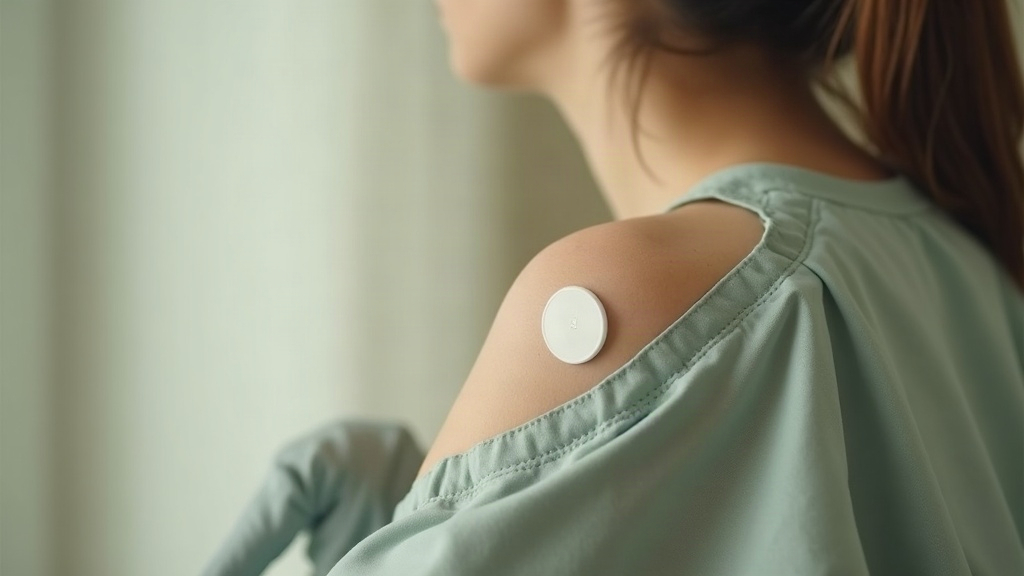
A continuous glucose monitor was a prescription device for people with diabetes until 2024, when the FDA cleared the first over-the-counter versions and a wellness market appeared overnight. The pitch is seductive: stick a sensor on your arm, watch your blood sugar respond to breakfast, and finally see which foods are secretly wrecking you. The physiology behind that pitch is real, but the number on the screen is doing something subtler than the app implies. This guide covers what the sensor measures, what a normal glucose curve looks like in someone without diabetes, where the readings stop being trustworthy, and the short list of people who get genuine value from two weeks of data.
Before you decide
Both over-the-counter sensors are cleared for adults 18 and older who are not taking insulin. That exclusion is not fine print. Insulin dosing from an over-the-counter sensor without clinical guidance can cause dangerous lows, which is why the prescription products exist as a separate category.
Dexcom also states plainly on the Stelo product page that you should not use it if you have problematic hypoglycemia. Abbott is blunter still about scope: the Lingo system "is NOT intended for diagnosis of diseases, including diabetes." A wellness sensor is not a diagnostic test, and neither manufacturer claims otherwise.
The professional guidance agrees. The 2026 Standards of Care in Diabetes from the American Diabetes Association states there is presently insufficient evidence to support using CGM for screening or diagnosis of prediabetes or diabetes. If your actual question is "do I have a blood sugar problem," the test that answers it is an A1c or a fasting glucose from a lab, and our guide to high fasting glucose and what to do next walks through that path.
One more group should think carefully before starting. Abbott's own program materials advise consulting a professional first if you have a history of disordered eating, and that caution is well placed. A device that scores your food in real time can turn ordinary eating into a test you are constantly failing, and the people most vulnerable to that are exactly the ones drawn to the data.
What the sensor is actually measuring
A CGM does not measure blood. A tiny filament sits under the skin and reads glucose in interstitial fluid, the liquid between your cells, and an algorithm converts that into the number you see. Glucose reaches interstitial fluid by diffusing out of the capillaries, so the reading trails your actual blood glucose by several minutes, and the lag widens when levels are moving fast.
That single fact explains most of the confusion new users run into. A spike you see at 40 minutes may have peaked in your blood at 30. A "crash" after exercise may partly be the algorithm catching up. The device is describing a related fluid compartment, not the one a lab measures.
Manufacturers report accuracy as MARD, the mean absolute relative difference from a reference. Stelo is reported around 8.3% and Lingo around 9.3%, which sounds tight. The catch is that MARD is dominated by studies in people whose glucose spans a wide range, and a fixed error looks small next to a reading of 250 and large next to a reading of 95. In the narrow band where a healthy person lives, the same absolute error is a much bigger share of the number.
The oldest direct measurement of that problem compared CGM against venous blood in 34 healthy adults and found a MARD of 17.6% in normoglycemic people. That study used a sensor generation from 2015, so treat it as a ceiling rather than a verdict on today's hardware. The direction of the effect, though, has held up in newer work.
What normal actually looks like without diabetes
This is the section that changes how most people read their own data, and it is missing from nearly every roundup of these devices.
Researchers put blinded sensors on 1,175 adults in the Framingham Heart Study and published reference values for people without diabetes. In the normoglycemic group, mean glucose was 114.5 mg/dL, time between 70 and 140 mg/dL was 86.8%, time between 140 and 180 was 11.0%, and time above 180 was 1.3%. Stated another way: healthy people with no diabetes spent roughly three hours a day at or above 140 mg/dL.
Now consider what your app does with that. Consumer CGM software routinely flags 140 mg/dL as the line between a good reading and a "spike" worth correcting. By that standard, a metabolically normal adult fails about an eighth of their waking life. The threshold your app treats as an alarm is, for a healthy person, an ordinary Tuesday.
The Framingham data also recorded peak values in that cohort ranging from 80 all the way to 376 mg/dL. A single high number after a meal is not a diagnosis, a red flag, or evidence that a food is bad for you. It is a data point inside a wide normal distribution.
Variability genuinely does differ between people, which is the honest core of the personalization pitch. The Stanford glucotypes study found that 24% of participants who looked normal on standard testing showed a severe variability pattern, spending part of the recording in prediabetic ranges. That is a real and interesting finding. What nobody has established is what you should do differently because of it, which brings us to the limits.
Where the readings stop being trustworthy

The most useful study for a prospective buyer is a randomized crossover trial from the University of Bath, published in the American Journal of Clinical Nutrition. Fifteen healthy adults ate standardized carbohydrate loads while wearing a Libre 2 sensor, with capillary sampling every 15 minutes as the reference.
The sensor consistently read higher than the reference, and the size of that bias changed depending on what was eaten. For a smoothie, the CGM put the glycemic index at 69, in the medium band, while the reference method put it at 53, in the low band. Whole fruits were similarly misclassified upward. Most striking for anyone watching their app: time spent above the recommended threshold was overestimated by roughly fourfold.
The senior author's conclusion was direct: CGMs are unlikely to be a valid method for determining whether a food is high or low GI, and for healthy people, relying on them could lead to unnecessary food restriction. That is the single most important sentence in the consumer CGM literature, and it targets precisely the use case the apps are marketed for.
Interpretation is unsettled even among specialists. When 18 expert clinicians were each given 20 CGM reports from people without diabetes and asked who needed clinical follow-up, their agreement was poor, with a Fleiss kappa of 0.36. If endocrinologists cannot agree on what these reports mean, an app's cheerful color-coding is not a second opinion.
The behavioral evidence is thinner than the marketing suggests too. A meta-analysis of 25 randomized trials covering 2,996 participants found only three trials conducted in people without diabetes, and the pooled weight change did not reach significance at −0.7 kg (95% CI −1.4 to 0.0). The tool may still help individuals. It has simply not been shown to move the average.
There is one more comparison worth knowing, and it is written into federal regulation rather than a study. The special controls for integrated CGM systems live in 21 CFR 862.1355, and for readings between 70 and 180 mg/dL, the rule requires only that the lower confidence bound on readings falling within 15% of a reference exceed 70%. Almost everything a healthy person records sits inside that band.
Now hold that against the standard for the cheap device. Under ISO 15197:2013, a self-monitoring fingerstick meter must land within 15 mg/dL of a reference for at least 95% of results below 100 mg/dL, and within 15% at or above that. In the range a healthy person actually lives in, the $20 meter is held to a tighter standard than the $99 sensor. That is not a knock on the sensor doing its job; a CGM is built to trace a curve over two weeks, which no meter can do. It is a reason to stop treating any single number on the screen as precise.
The two you can actually buy
Three over-the-counter monitors have been cleared in the US. Only two are on sale. Abbott's Libre Rio was cleared in June 2024 alongside Lingo but, per Abbott's own consumer biowearables announcement, still has no commercial launch as of August 2026. Any roundup that ranks Libre Rio as a buying option is listing a product you cannot purchase.
| Device | Wear time | Warm-up | Reading interval | Reported MARD | Price | Status |
|---|---|---|---|---|---|---|
| Dexcom Stelo | 15 days, Dexcom notes about 20% may not last the full term | 30 minutes | Every 15 minutes | About 8.3% | $89/month subscription, one-time 2-packs also sold | On sale |
| Abbott Lingo | Up to 14 days | 60 minutes | Every minute | About 9.3% | About $54 for a two-week starter, no auto-renewal | On sale |
| Abbott Libre Rio | 15 days | Not published | Not published | Not published | Not priced | Cleared June 2024, never launched |
The practical difference is smaller than the spec sheet suggests. Stelo's longer wear and shorter warm-up make one sensor cover a clean two-week block, which matters if you are running a defined experiment. Lingo's minute-by-minute updates look more responsive, though given the interstitial lag described above, the extra resolution is mostly cosmetic for a wellness user.
Price is where they actually diverge. Lingo's single two-week biosensor with no subscription is the honest way to try the category once and stop. Stelo's subscription is better value if you intend to keep wearing sensors, and worse if you do not remember to cancel. Our head-to-head on Stelo versus Lingo goes deeper on the app experience, and our verdict on whether Stelo is worth it covers the subscription math.
Signos, Levels and Nutrisense are not extra devices
New buyers routinely compare "Stelo versus Signos versus Levels" as though these were five competing sensors. They are not. Signos, Levels and Nutrisense are software and coaching layers that run on hardware built by Dexcom or Abbott.
Signos is the notable one. The FDA cleared its app for weight management, making it the first CGM-based system with that specific indication, and it runs on the Dexcom Stelo biosensor. Nutrisense sells dietitian access alongside the data, with an app-only tier at a much lower price. Levels charges an annual membership and has you buy sensors separately.
The question to ask is therefore not which sensor but whether you are paying for coaching. Signos and Nutrisense in their full tiers run roughly $150 to $200 a month, several times the cost of the raw sensor. If a human interpreting your data is what you want, that premium is the product; if you only want the curve, you are paying a large markup for a dashboard.
Who gets real value out of two weeks
The evidence supports narrow, specific uses rather than general wellness monitoring.
People with prediabetes or a high fasting glucose have the strongest case, and one small trial isolates why. Thirty adults with prediabetes all received the same nutrition counselling and all wore a sensor; the only difference was that half could see their readings and half were blinded. After 30 days, only the group that could see the data improved, dropping mean glucose from 129.1 to 121.6 mg/dL, while the blinded group changed on no measure. Thirty people over thirty days is a small study and the authors say so, but it is the cleanest evidence that the feedback itself does something. If this describes you, start with our guide to high fasting glucose and treat the sensor as an addition to clinical care rather than a replacement.
People testing meal timing and movement have the one intervention with clean supporting data. A systematic review of CGM in non-diabetic adults found that walking started about 20 minutes before an individual's postprandial peak meaningfully lowered the glucose response. Finding your personal peak timing is something a sensor genuinely does better than a guess.
People on GLP-1 medication get useful pattern information during dose changes, when appetite and eating patterns shift quickly. Our roundup of GLP-1 support supplements covers the nutritional side of that transition.
People with PCOS or diagnosed insulin resistance are working with a known metabolic condition rather than hunting for one, which changes the calculus. Our piece on inositol dosing for PCOS covers the supplement question that usually comes with it.
If you are in none of those groups and simply curious, that is a legitimate reason to buy one sensor once. Just buy it as a two-week curiosity rather than a subscription, and read the section above on what normal looks like before you interpret a single reading.
How to get something useful out of the sensor
Decide your question before you apply it. "Does my usual breakfast leave me flat by 11" is answerable. "Which foods are bad" is not, given the misclassification data above.
Change one variable at a time and repeat it. A single meal tells you almost nothing, because the same person eating the same food on different days produces different curves. Test the same breakfast three times before drawing any conclusion from it.
Watch shape, not peaks. The height of a spike is where sensor error concentrates and where the app is loudest. How long you stay elevated, and whether a walk changes that, is both more stable and more actionable.
Ignore the first 12 hours. Sensors are least reliable immediately after insertion, and early readings on a fresh sensor are a common source of alarming numbers that vanish by day two.
Do not restrict food based on a curve. If the data pushes you toward eliminating whole food groups, that is the failure mode the Bath researchers warned about. Our article on what a CGM can and cannot tell you about a supplement covers the same trap on the supplement side.
Who should skip it
If you take insulin, this is not your product category. Both devices exclude insulin users, and that is a safety line rather than a marketing one.
If your real question is diagnostic, buy the cheaper thing that actually answers it. An at-home A1c test costs a fraction of a sensor and speaks to your risk directly, which is precisely what these devices are not cleared to do. Our comparison of at-home versus lab blood testing covers where each one is reliable.
There is also a group the manufacturers themselves flag. A history of disordered eating and a device that grades your food every few minutes make a bad pair, and you cannot take this one off on a bad day. Involve a clinician or skip it.
Hoping to prove a supplement works? It will not settle that either. Blood sugar moves with sleep, stress, illness, a short walk, and whatever you ate three hours ago, so a curve cannot isolate what one capsule did. Same reason we push back on the marketing around berberine as "nature's Ozempic".
The tools that answer what a sensor cannot
Most of the useful hardware in this space was built for people with diabetes and sold over the counter, which means anyone can buy it. If your question is "is my blood sugar a problem," these answer it better and cost less than a sensor.
An A1c test gives you a three-month average rather than a two-week movie, and it is the measure diagnosis is actually based on. Instant fingerstick kits return a number in about five minutes; mail-in kits send a sample to a lab and take a few days. The American Diabetes Association's consumer guide to home A1c kits lists what is currently sold. One honest caveat: a home result that suggests something has changed should be confirmed with a venous draw at a certified lab before anyone acts on it.
A fingerstick glucose meter is the unglamorous pick, and for a curious healthy adult it is arguably the better first purchase. Meters and strips run in the tens of dollars, the accuracy standard is tighter than the CGM standard in the normal range, and you can use one to spot-check a sensor that is telling you something alarming. What it cannot do is show you shape or timing, which is the one thing a CGM genuinely does well. If you want to know whether your breakfast peaks at 40 minutes or 90, a meter will not tell you without a dozen finger pricks.
A fasting insulin panel is the one most people have never heard of. Insulin rises to hold glucose down long before glucose itself drifts up, so a fasting insulin result alongside fasting glucose (the pair behind a HOMA-IR score) can flag insulin resistance while every glucose number still looks fine. These are ordered through consumer lab services rather than bought in a box, and our guide to at-home versus lab blood testing covers how that works.
Ketone meters deserve a brief mention because low-carb readers ask. Dual glucose-and-ketone meters exist and are sold over the counter, but ketones answer a different question about fuel use, not about glucose control, and buying one to evaluate blood sugar is a category error.
FAQ
Do I need a prescription for a CGM if I do not have diabetes?
No. Stelo and Lingo are both cleared for over-the-counter sale to adults 18 and older who are not on insulin, and you can buy either without seeing a clinician. Libre Rio was also cleared but has never launched commercially, so despite appearing in many roundups it is not something you can actually purchase.
Is a spike over 140 mg/dL bad if I do not have diabetes?
Usually not, and this is the most common misreading of consumer CGM data. The Framingham reference data found that people without diabetes spend around three hours a day at or above 140 mg/dL, with individual peaks ranging widely. Apps flag that threshold because it is meaningful in diabetes management, not because it signals a problem in a healthy adult.
Can a CGM tell me which foods are good or bad for me?
Not reliably. The randomized crossover trial from Bath found the sensor misclassified a smoothie as medium-GI when the reference method scored it low, and overestimated time above threshold roughly fourfold. Use the sensor for patterns like the effect of a post-meal walk, not for grading individual foods.
Which is more accurate, Stelo or Lingo?
The reported MARD figures are close, about 8.3% for Stelo and about 9.3% for Lingo, and that gap is smaller than the difference between an individual sensor and its neighbor. More relevant is that both figures come mainly from studies spanning a wide glucose range, so relative error in the narrow band a healthy person occupies is larger than the headline number suggests.
Should I just buy a cheap fingerstick meter instead?
For many people, yes, at least first. A meter and strips cost a fraction of a sensor, and in the glucose range a healthy person occupies the meter is held to a tighter accuracy standard than the CGM is. The trade-off is real though: a meter gives you isolated points, so it cannot show you how long you stay elevated or when your peak lands, and those are the questions a sensor is genuinely good at.
Can I use products made for people with diabetes if I do not have it?
Yes. A1c kits, glucose meters, strips and lancets are sold over the counter and nobody checks your diagnosis. The category to stay out of is anything for dosing insulin, and the caution worth repeating is that a home A1c suggesting a problem should be confirmed with a lab draw rather than acted on directly.
Is the subscription worth it, or should I buy one sensor?
For a first try, one sensor is the right call, and Lingo's non-renewing two-week starter is the cleanest version of that. A subscription only makes sense once you have a specific ongoing reason to wear sensors, such as managing prediabetes alongside clinical care or tracking through GLP-1 dose changes.
Do I need Signos, Levels or Nutrisense on top of the sensor?
Only if you want coaching. Those services run on Dexcom or Abbott hardware and charge for interpretation, dietitian access or app features. Signos is the one with an FDA clearance specific to weight management, and it runs on the Stelo biosensor rather than its own device.
The bottom line
Buy a sensor to answer a question, not to be watched. Two weeks of data can show you how long your usual breakfast keeps you elevated, whether a ten-minute walk changes that, and roughly when your personal peak arrives. A guess cannot give you any of that.
What the same two weeks cannot do is tell you whether you have diabetes. The ADA says the evidence is not there, and Abbott prints the same warning on its own product page. It is also a poor judge of individual foods, which is exactly where the Bath trial caught the sensor overstating the response.
If you want one honest experiment, take Lingo's two-week biosensor at about $54 and stop when it stops. If you want a longer block or intend to keep going, Stelo's 15-day sensor and 30-minute warm-up make it the better platform, and the subscription is only worth it if you would genuinely keep wearing it. And if what you actually want to know is whether your blood sugar is a problem, skip both and order an A1c, which costs less and answers the question these devices are explicitly not cleared to answer.
