
Affiliate disclosure: this article contains affiliate links. As an Amazon Associate, UsefulVitamins.com earns from qualifying purchases at no extra cost to you.
Search "electrolytes for firefighters" and nearly every result is a small brand selling its own sticks to you. Nobody in that lineup has an incentive to tell you when their product is unnecessary, or to put five competing labels in one table. This page does the label math the vendor sites will not, grounded in the firefighter heat-stress literature and the federal rehab guidance your department already trains to. These are the same sticks we would hand a family member walking out the door for a 24, and the reasoning below is exactly what we would tell them.
Before you decide
Start with the people who should close this tab. If a doctor has you on a salt restriction, or you take blood pressure medication, diuretics, ACE inhibitors, ARBs, or lithium, do not add a high-sodium product on your own. One LMNT stick carries 1,000 mg of sodium, nearly half the general daily guideline in a single drink, and that pushes directly against most blood pressure treatment. Kidney disease and heart failure are hard stops without medical sign-off. This matters more in the fire service than almost anywhere: the USFA's own fatality data shows cardiac events account for more than half of firefighter line-of-duty deaths. Nothing here is medical advice; it is label arithmetic plus published heat-stress research, and our complete guide to electrolytes covers the physiology in depth.
Know your red flags before your next fire, because some symptoms end the supplement conversation. Confusion, stumbling, collapse, chest pain, or a firefighter who has stopped sweating in the heat is a medical emergency, handled by the rehab medic and an ambulance, never by a drink mix.
Who this comparison is for: structural and wildland firefighters, EMS crews working extended incidents, police tactical teams in kit, and the military crowd sweating under armor, which loads heat onto the body in much the same way turnout gear does. If your heat exposure comes from a jobsite instead of a fireground, our sister guide to the best electrolytes for outdoor workers runs the same math for eight-hour shifts in the sun.
What a working fire actually takes out of you
Turnout gear creates a heat problem that almost no other job has. Sweat cools you by evaporating, and an encapsulating ensemble blocks that evaporation almost completely, so the body keeps sweating harder into clothing that lets none of it work. In a 2024 study of 19 professional firefighters in Industrial Health, a single 15-minute simulated smoke dive drove core temperature from 37.5 to 38.4 C by the end of the dive, with a post-exposure peak of 39.6 C and heart rates reaching 190. Fifteen minutes of interior work produces the physiological strain of a race effort, and the sweat bill gets paid whether or not the cooling ever arrived.
The best numbers on what that costs come from a 2016 review of firefighter hydration studies in Annals of Occupational and Environmental Medicine. Across the pooled studies, a three-hour live-fire training evolution cost firefighters an average of 1.9 kg of sweat even after accounting for everything they drank, and mixed structural training exercises ran at roughly a kilogram of body weight per hour. The review's blunt conclusion is that drinking to thirst may not keep up during intense, longer, hot structural operations. Wildland data in the same review found crews turning over around 9.5 liters of fluid per day across 11-hour shifts.
Sweat is not just water. Testing of 506 athletes in the Journal of Sports Sciences put whole-body sweat sodium at roughly 830 mg per liter on average, with the saltiest sweaters near double that. A hard fire that costs two liters of sweat plausibly takes 1.5 to 3 grams of sodium with it, and the white crust on a helmet band or flash hood is that sodium made visible. Person-to-person spread is several-fold on both volume and saltiness, which is why the crew member who cramps every August and the one who never does are both telling the truth. Our sweat rate calculator turns a before-and-after scale reading into your own number.
The rehab framework already assumes all of this. NFPA 1584, the standard on the rehabilitation process for members during emergency operations (2022 edition, since consolidated into NFPA 1580), is the reason rehab areas exist, and the USFA's Emergency Incident Rehabilitation manual built around it spells out the classic cycle: rest and fluids for at least 10 minutes after one 30-minute SCBA cylinder, then formal rehab with fluids, a medical check, and at least 20 minutes of rest after the second bottle or 40 minutes of intense work. The same manual puts extreme-exertion sweat losses at up to a liter per hour and names electrolyte replacement, usually via sports beverages, as part of proper rehab. The question at an extended incident is not whether to drink electrolytes; the guidance already says so. The open question is which product earns the cooler space.
When water alone is enough
Most calls are not working fires. A single-bottle response, an EMS run, an alarm reset, a cool-season shift where the hood comes off dry: water covers all of it. If the incident ends before the second bottle and your shirt is merely damp, you do not need a product, and the USFA guidance reflects exactly that by treating short incidents as water-and-rest territory. Station meals do quiet work here too, because firehouse cooking is not a low-sodium cuisine, and three real meals replace a meaningful share of a moderate day's losses.
The gate swings the other way on extended operations, and there is a failure mode worth naming because it hospitalizes people. Sweating for hours while drinking only plain water can dilute blood sodium into hyponatremia, and a 2017 review in Frontiers in Medicine identifies overdrinking beyond thirst as its primary cause. A campaign fire or a multi-day wildland assignment fueled by nothing but bottled water is the textbook setup. Long incidents need salt from somewhere: food at the base camp, a stick in the bottle, or both.
There is also a ceiling on catching up that surprises people. The USFA manual notes the gut can only empty about 1.0 to 1.5 liters of fluid per hour, and less under heat and hard work. You cannot pound your way back to even in one rehab cycle, which is the physiological argument for starting hydrated, sipping between assignments, and treating recovery as an all-shift project instead of a heroic chug.
How to choose for fire and rescue work
Sodium per serving is the first line worth reading, and the honest range for fire work is wide. A heavy sweater coming out of an interior assignment is well served by 500 to 1,000 mg in the rehab cup. A lighter day, or a lighter sweater, does fine at 300 mg plus salted food. Most brightly packaged hydration products cluster near the bottom of that range, which is the single most useful thing to know before a department buys a case of anything.
Format matters more in this vertical than any other we cover. Rehab happens out of coolers and paper cups, apparatus cabs bake all summer, and nobody is stirring a scoop from a tub on the tailboard. Single-serve sticks that dissolve fast in any bottled water are the format that survives contact with an actual incident, and they ride in a turnout coat pocket or cab door without ceremony. Our stick packs versus tub cost breakdown prices the convenience premium; for station-counter use between calls, the tub math wins, and for the rig, sticks do.
Skip caffeine on the fireground, full stop. Heart rates during interior work already touch 190, and the USFA manual is explicit that energy drinks have no place in rehab operations. It flags coffee and tea as poor rehab choices too, since both are diuretics. Caffeine belongs with breakfast at the station, not in the rehab area, and every product in our table below is caffeine-free.
Sugar is a genuine judgment call rather than a purity test. In a 2026 trial of 24 firefighters in the Journal of the International Society of Sports Nutrition, carbohydrate-electrolyte solutions restored hydration during a 60-minute recovery significantly better than plain water. A modest-sugar formula earns its place in post-incident rehab, while zero-sugar versions make more sense for all-shift sipping, where a sweetened drink nursed for hours becomes a dental and calorie problem.
The numbers side by side
Every figure below comes from the brand's own label or published product page, checked in August 2026. Where a brand does not publish a number, the cell says so rather than guessing.
| Product | Sodium per serving | Potassium | Sugar | Format | Price per serving |
|---|---|---|---|---|---|
| LMNT | 1,000 mg | 200 mg | 0 g | powder stick (16-32 oz) | about $1.50 ($45 per 30) |
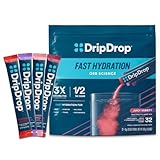
| DripDrop | 330 mg per 8 oz stick (brand publishes 660 mg per 16 oz) | not published on pages we checked | contains sugar (ORS formula); zero-sugar version sold separately | powder stick (8 oz) | about $1.10 ($35.99 per 32) |
| Sqwincher Qwik Stik Zero | 130-140 mg (varies by flavor) | 104-133 mg | 0 g (5 cal) | powder stick (20 oz) | typically under $0.50 from industrial suppliers (50-ct bags) |
| Gatorlyte | 490 mg | 350 mg | 12 g | ready-to-drink 20 oz bottle | store pricing varies |
| Nuun Sport | 300 mg | 150 mg | 1 g | effervescent tablet | about $0.75 ($7.49 per 10) |
Prices are approximate as of August 2026 and move with retailers, case sizes, and subscriptions. Sqwincher is sold by the bag and case through industrial and fire-service suppliers rather than at consumer prices.
Top picks for firefighters and first responders
LMNT: best overall for interior work and heavy sweaters. At 1,000 mg of sodium with 200 mg potassium and 60 mg magnesium per stick, it is the one mainstream product dosed in the same range as actual fireground losses, and it is zero sugar and zero caffeine, so it works for all-shift sipping as well as rehab. One stick split across a big bottle through a hot training day replaces a real fraction of what the review data says a live-fire evolution costs. The salty taste that puts off casual users reads as correct coming out of an interior assignment. The catch is the price per box, which is why it fits best as personal kit rather than the department cooler.
Sqwincher Qwik Stik Zero: best value for outfitting a station. This is already the industrial-rehab standby, and the label deserves an honest reading: about 135 mg of sodium per 20 oz stick is modest, roughly a seventh of an LMNT. What it does brilliantly is get an entire crew drinking, at five calories and typically under 50 cents a stick, in 50-count bags that disappear into a rehab cooler without anyone doing math. Treat it as the base that keeps everyone drinking and add a higher-sodium serving for the heavy sweaters, rather than calling it full replacement on its own.
DripDrop: best for post-incident catch-up. DripDrop is built on oral rehydration solution ratios, pairing sodium with sugar to speed absorption, and it markets to fire and EMS for a reason: the moment it fits is the firefighter coming out of a second bottle already well behind. The firefighter trial above is the supporting evidence for exactly this use, since carbohydrate-electrolyte solutions beat plain water for restoring hydration in the hour after simulated fire work. At 330 mg of sodium in a small 8 oz cup it is concentrated, quick to mix, and easy to drink fast, which is what a 20-minute rehab window actually allows.
Gatorlyte: best convenience-store option. When the incident outlasts the cooler and someone makes a store run, Gatorlyte beats the regular sports drinks beside it: 490 mg sodium and 350 mg potassium per 20 oz bottle, with 12 g of sugar doing useful transport work post-incident. Ready-to-drink means zero prep in a chaotic staging area. The trade-offs are cost per serving and hauling bottles instead of sticks.
Nuun Sport: best for the apparatus cab and lighter days. A tube of tablets survives a baking cab better than most packaging, weighs nothing, and drops into any water bottle. At 300 mg sodium and 1 g sugar per tablet it is dosed below a working fire but sits well on training days, standbys, and shoulder-season shifts. Ask it to cover an August campaign fire alone and it will come up short.
What to look for when buying
Read the sodium line and the serving size together, because brands dose per 8, 16, or 20 ounces and the numbers are not comparable until you normalize them. Confirm zero caffeine before anything enters a rehab cooler. Prefer zero sugar for products that will be sipped across a full shift, and keep one ORS-style option on hand for post-incident recovery. Then run the procurement math honestly: price per serving times crew size times incidents per season, with cheap sticks as the volume base and a high-sodium option reserved for the members who visibly crust their gear. Our best electrolyte powder overview covers the wider field if none of the five above fit your station.


As an Amazon Associate, UsefulVitamins.com earns from qualifying purchases at no extra cost to you. We only recommend products supported by published research or third-party testing.
FAQ
How much do you actually sweat in turnout gear?
More than nearly any other clothing lets you. The pooled firefighter studies put mixed structural training at roughly a kilogram of body weight per hour, a three-hour live-fire evolution at nearly two liters of sweat after subtracting fluid intake, and federal rehab guidance uses up to a liter per hour for extreme exertion. Individual spread is huge, so weigh yourself before and after a training evolution; a kilogram lost equals about a liter of sweat, and that single data point is worth more than any average.
Do electrolyte drinks interact with blood pressure or heart medications?
Yes, and firefighters should take this category seriously given how common hypertension treatment is in the fire service. High-sodium products work directly against blood pressure medication, diuretics change how the kidneys handle sodium and potassium, and ACE inhibitors, ARBs, and potassium-sparing diuretics can raise blood potassium, which matters with higher-potassium formulas. Sodium swings can also shift lithium levels. Run your medication list through our drug and supplement interaction checker, then confirm with a pharmacist or your department physician before making any high-sodium product a habit.
What should be in the rehab cooler at an extended incident?
Water first and most, then a caffeine-free electrolyte option the crew will actually drink, which in practice means a mild-tasting stick like Sqwincher mixed into a cooler or handed out in cups, plus a few concentrated ORS-style sticks for members coming out of interior assignments well behind. Energy drinks stay out entirely; the USFA rehab manual excludes them by name, and it flags coffee as a poor rehab choice too. The cooler is not the whole plan, since rehab also means rest, shade, and a medical look at anyone who fits the criteria.
Is it better to drink before, during, or after the fire?
All three, weighted toward before and after, because the middle is mostly out of your control. Arriving hydrated is the biggest lever, since the gut can only absorb about a liter to a liter and a half per hour and much less during hard work, so a firefighter who starts a job behind cannot fix it mid-incident. Between bottles, drink what the rehab cycle gives you. Afterward, the firefighter trial data favors an electrolyte solution over plain water for the first hour of recovery, and the scale tells you how much ground there is to make up.
When is cramping or fatigue a 911 problem instead of a hydration problem?
Ordinary heat cramps in a healthy firefighter often respond to rest, fluids, and sodium, and a cramping pattern that repeats every hot tour usually means the salt math has been wrong all season. The line is crossed the moment anything neurological or cardiac appears. Confusion, slurred speech, stumbling, collapse, hot skin with altered behavior, chest pain, or a pounding irregular heartbeat are heat stroke or cardiac territory, and cardiac events kill more firefighters than anything else. That firefighter goes to the rehab medic and then to a hospital, not back in service with a sports drink.
The bottom line
The fire service already runs on the two-bottle rhythm, and the hydration research maps onto it cleanly: turnout gear costs close to a liter of sweat an hour, hard interior work runs beyond it, and drinking to thirst does not reliably keep up on long hot incidents. The rehab framework built around NFPA 1584 already calls for fluids at every cycle, so the only real decision is what earns cooler and pocket space. LMNT matches fireground losses for personal kit, Sqwincher Zero keeps a whole station drinking at department prices, DripDrop catches you up in a 20-minute rehab window, Gatorlyte covers the store run, and Nuun lives in the cab for the light days. Water every bottle, salt every rehab, caffeine left at the station, and the scale after training tells you the rest.
