
Affiliate disclosure: this article contains affiliate links. As an Amazon Associate, UsefulVitamins.com earns from qualifying purchases at no extra cost to you.
Re-Lyte and LMNT are the two names that come up whenever someone decides sugary sports drinks are not the answer and goes looking for a salt-first electrolyte powder. On paper they look interchangeable: zero sugar, stevia-sweetened flavors, sodium doses that would make a cardiologist raise an eyebrow. The real differences hide in the ratios and the receipt, and that is where this comparison lives. We have tested both in our own kitchen and gym bags, and the picks below are the ones we would hand to our own family, with the sodium caveats below in mind.
Before you decide
A quick reality check before we compare anything. Both of these products are built around large sodium doses, 810 mg per serving for Re-Lyte and 1000 mg for LMNT. The FDA's sodium guidance notes the Dietary Guidelines cap recommended intake at 2300 mg per day for everyone 14 and older, and the average American already eats about 3400 mg. One stick of either product is a third to nearly half of that daily cap.
That means some people should skip both. If you have hypertension, heart failure, kidney disease, or you have been told to restrict sodium for any reason, do not add a gram of salt to your water because a podcast said so. The same goes if you take diuretics, ACE inhibitors, or potassium-sparing medications, since the potassium in these mixes can interact with them. This article is general information, not medical advice, and your doctor or pharmacist outranks any blog, including this one.
Who is the comparison actually for? People who sweat hard and often, people on keto or fasting protocols where sodium losses genuinely climb, and people who drink a lot of plain water during long efforts. That last group has a real, documented reason to care: the 2015 exercise-associated hyponatremia consensus statement describes how overdrinking plain water during prolonged exercise can dilute blood sodium to dangerous levels. For that population, a salty mix is a legitimate tool rather than a fad.
What you're actually buying
Strip the branding away and both products are the same idea executed with slightly different accents. You are buying flavored salt with supporting minerals, and almost nothing else.
LMNT is the minimalist. Each stick delivers 1000 mg sodium, 200 mg potassium, and 60 mg magnesium (as magnesium malate), per the brand's ingredients page. Flavored sticks add citric or malic acid, natural flavors, and stevia leaf extract. The Raw Unflavored version contains no sweetener at all, just the three salts. There are twelve drink-mix flavors as of August 2026, and everything comes in single-serving sticks.
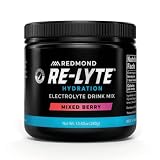
Re-Lyte, made by Redmond (the Real Salt company), is the maximalist by comparison. A flavored serving carries 810 mg sodium, 400 mg potassium, 50 mg magnesium, and 60 mg calcium, sweetened with stevia (Rebaudioside A) and rounded out with coconut water powder, per the Redmond label page. The sodium comes from Redmond's unrefined ancient sea salt, which is a genuine sourcing difference, though the trace minerals it adds are tiny in absolute terms. Most flavors come in 60-serving tubs; stick packs exist too.
One wrinkle worth knowing: Re-Lyte's Unflavored version is dosed differently from its own flavored line. It delivers 1000 mg sodium, 500 mg potassium, and 60 mg magnesium per serving, with 75 servings per tub. That makes Unflavored Re-Lyte the closest head-to-head match for LMNT's sodium dose, at a fraction of the price. Keep that option in mind as you read the math below.
Serving sizes are close enough to ignore. Re-Lyte's scoop runs about 5 to 7.8 g depending on flavor, and an LMNT stick lands in the same ballpark at roughly 6 g. Nobody should choose based on powder weight.
Head-to-head: the sodium-to-potassium ratio
Here is the single most decisive difference, and the one most reviews gloss over. LMNT's ratio of sodium to potassium is 5:1 (1000 mg to 200 mg). Re-Lyte's flavored line runs 2:1 (810 mg to 400 mg), and its Unflavored version is also 2:1 (1000 mg to 500 mg). Same product category, meaningfully different mineral philosophy.
Why does that matter? Sweat is mostly a sodium story, and sodium losses vary enormously between people. A 2017 review in Sports Medicine documented just how wide the individual spread in sweat sodium concentration is, which is exactly why heavy, salty sweaters gravitate to products like these. If your only goal is replacing sweat sodium during long, hot sessions, LMNT's 1000 mg per stick is the more direct instrument.
Potassium is the quieter half of the equation. The NIH Office of Dietary Supplements potassium fact sheet puts adequate intake at 3400 mg per day for adult men and 2600 mg for adult women, and notes most Americans fall short of those targets. If your diet is light on produce, Re-Lyte's extra 200 to 300 mg of potassium per serving is doing more useful work for you than an extra 190 mg of sodium would. Neither product will close a real potassium gap on its own, but the ratio tells you which direction each brand leans.
Magnesium is close to a wash: 50 to 60 mg per serving in both. Against adult RDAs of roughly 310 to 420 mg per day listed in the NIH magnesium fact sheet, both amounts are a modest top-up rather than a real magnesium supplement. Re-Lyte's 60 mg of calcium is a nice-to-have and a rounding error against dietary needs.
The numbers side by side

All figures below are pulled from the brands' own label pages in August 2026. Where the two Re-Lyte formulations differ, we show the flavored line, since that is what most buyers actually order.
| Spec | Re-Lyte (flavored) | LMNT (flavored) |
|---|---|---|
| Sodium per serving | 810 mg | 1000 mg |
| Potassium per serving | 400 mg | 200 mg |
| Magnesium per serving | 50 mg | 60 mg (malate) |
| Calcium per serving | 60 mg | none listed |
| Sodium:potassium ratio | about 2:1 | 5:1 |
| Sweetener | stevia (Reb A) | stevia leaf extract |
| Unsweetened option | Unflavored tub (1000 mg Na, 500 mg K) | Raw Unflavored (no sweetener) |
| Extras | coconut water powder, unrefined sea salt | natural flavors only |
| Servings per container | 60 (tub) | 30 (sticks) |
| Price, one-time (DTC) | about $45.99 as of August 2026 | about $45 as of August 2026 |
| Price per serving | about $0.77 | about $1.50 |
Notice the near-identical container price hiding a 2x difference in servings. A Re-Lyte tub and an LMNT box cost within a dollar of each other, but the tub holds twice as many servings. That is the whole pricing story in one row.
Price per 1000 mg of sodium: the honest math
Price per serving flatters whichever product puts less in the scoop, so the fairer yardstick for salt-first mixes is price per 1000 mg of sodium delivered. Here is the arithmetic on August 2026 direct-from-brand prices.
LMNT: about $45 for 30 sticks is $1.50 per stick, and each stick carries exactly 1000 mg of sodium. That makes LMNT's cost almost exactly $1.50 per 1000 mg of sodium, dropping to about $1.30 on subscription at $39 per box.
Re-Lyte flavored: about $45.99 for 60 servings is roughly $0.77 per serving, and each serving carries 810 mg of sodium. That works out to about $0.95 per 1000 mg of sodium. Re-Lyte Unflavored does even better: the same tub price spread across 75 servings of 1000 mg each lands near $0.61 per 1000 mg of sodium. Redmond's subscription discount (up to 15 percent) pushes those numbers lower still.
So on the metric that actually matters for this category, Re-Lyte delivers sodium at roughly 60 percent of LMNT's cost, and its unflavored tub at about 40 percent. We ran the same style of math on tablets in our piece on whether electrolyte tablets are underdosed compared to powders, and the pattern repeats across the category: format and branding drive price far more than minerals do.
What about Amazon? Both brands sell there, LMNT in 30-count boxes and Re-Lyte in tubs and stick packs. Amazon prices for both fluctuate often enough that we could not pin a stable number at press time, so treat the DTC prices above as the anchor and check the live listing before you buy. Our roundup of LMNT alternatives on Amazon covers the marketplace options in more depth, including which cheaper competitors are worth a look.
Who should pick Re-Lyte (and who LMNT)
Pick Re-Lyte if value is the deciding factor, full stop. It costs about half as much per serving, carries double the potassium, and adds calcium. The balanced 2:1 ratio also makes it the better everyday mix for someone salting their water daily rather than dosing around specific workouts. The tub format is the tradeoff: scooping is cheaper but less portable than sticks, though Re-Lyte's stick packs close that gap at a higher per-serving price.
Pick LMNT if you specifically want the 1000 mg sodium dose in a sealed, pocketable stick and you like its flavor lineup. It is the simpler formula, three minerals and nothing else, and the Raw Unflavored stick is one of the cleanest products in the category. Heavy sweaters chasing big sodium replacement during long, hot sessions get to their target dose in one stick instead of one and a quarter scoops. We go deeper on whether the premium is justified in our full LMNT review.
If your actual complaint is fatigue or cramping and you are not sweating buckets, be honest with yourself: neither product may be the answer, and cheaper habits (eating fruit, salting food to taste) cover most people. And if you came here comparing against mainstream hydration brands, our Liquid I.V. vs LMNT and DripDrop vs LMNT breakdowns cover the sugar-based side of the aisle, which is a genuinely different product philosophy.
What to look for when buying
Match the sodium dose to your actual output. A desk day with one gym hour does not need 1000 mg of supplemental sodium; a long trail run in July might. Buy the dose you will actually sweat out, and remember you can use half a serving.
Check the label of the exact flavor you order. Re-Lyte's specs shift between flavored, unflavored, and chocolate versions, and both brands revise formulas over time. The numbers in this article are the August 2026 labels, not a permanent guarantee.
Mind the sweetener if stevia bothers your stomach or your palate. Both flavored lines use stevia, so the escape hatch on both sides is the unflavored option: LMNT's Raw Unflavored is explicitly sweetener-free, and Re-Lyte's Unflavored tub drops the flavoring system as well (verify the current label if you are strict about it).
Finally, buy direct or from the brand's official Amazon storefront rather than third-party resellers. Salt-based powders are a favorite category for gray-market sellers, and clumped, expired, or repackaged product is a real complaint pattern in marketplace reviews.


As an Amazon Associate, UsefulVitamins.com earns from qualifying purchases at no extra cost to you. We only recommend products supported by published research or third-party testing.
FAQ
Which has more potassium, Re-Lyte or LMNT?
Re-Lyte, by double. A flavored Re-Lyte serving has 400 mg of potassium against LMNT's 200 mg, and Re-Lyte Unflavored carries 500 mg. Both are modest against the 2600 to 3400 mg daily adequate intake, but if potassium is your priority, Re-Lyte leans your way.
Is either one safe to drink every day?
For healthy people who sweat regularly and do not already eat a high-sodium diet, a daily serving is generally reasonable, but remember one serving is 810 to 1000 mg of sodium against a 2300 mg daily guideline. Anyone with blood pressure, heart, or kidney concerns should ask their doctor first. Track what the rest of your diet contributes before making it a habit.
Do Re-Lyte or LMNT contain sugar?
No. Both are zero-sugar and sweetened with stevia in their flavored versions. That is the core difference between this pair and glucose-based mixes like Liquid I.V., which use sugar deliberately as part of a sodium-glucose transport formula.
Which one tastes saltier?
LMNT, in our testing, which follows from the label: 1000 mg of sodium in a stick versus 810 mg in a slightly larger scoop. People who find LMNT too aggressive often land on Re-Lyte, and both brands' answer for salt-shy drinkers is the same trick: mix into more water.
Is Re-Lyte's coconut water powder a meaningful advantage?
Not really, at this dose. It contributes trace potassium and a slightly rounder flavor, but the measurable minerals are already itemized on the label. Treat it as a taste feature, not a functional one. If you have a coconut allergy, it is a reason to choose LMNT instead.
The bottom line
Re-Lyte and LMNT are the same idea wearing different price tags. If we are buying for our own family, the default is Re-Lyte: about $0.95 per 1000 mg of sodium versus LMNT's $1.50, twice the potassium, and a formula that suits daily use. LMNT earns its premium in one specific job, delivering a full 1000 mg sodium dose in a clean, portable stick for hard, hot training days. Decide which job you are actually hiring the powder for, check the current label and price before you order, and either way you will end up with one of the two best salt-first mixes on the market.
