
Affiliate disclosure: this article contains affiliate links. As an Amazon Associate, UsefulVitamins.com earns from qualifying purchases at no extra cost to you.
Electrolyte marketing is built for people who sweat buckets, marathoners and roofers mostly. Nurses have the opposite problem. The unit is climate controlled, the sweat losses are modest, and yet a large share of ward staff finish their shift measurably dehydrated, because food and drink are banned at the station and the med pass does not pause for a water break. This page does the math for a 12-hour shift the way the research actually describes it: a drinking-opportunity problem with a small sodium component, and picks products accordingly. These are the same tubes and sticks we would slip into a family member's scrub pocket before a stretch of back-to-back twelves.
Before you decide
Start with who should not be here. If a doctor has you on a salt restriction or fluid restriction, or you take blood pressure medication, diuretics, ACE inhibitors, ARBs, or lithium, do not add an electrolyte product on your own; even moderate-sodium servings push against those treatments, and sodium changes can shift lithium levels. Kidney disease and heart failure are hard stops without medical sign-off. Nothing on this page is medical advice. It is label arithmetic plus published hydration research, and our complete guide to electrolytes covers the underlying physiology in depth.
One more routing note, because nurses are the readers most likely to need it: dizziness with chest pain, confusion, fainting, or a racing heart at work is a medical event, not a hydration project. Get assessed the way you would tell a patient to get assessed.
Who this comparison is actually for: floor nurses, ED and ICU staff, midwives, CNAs, techs, and anyone else working 12-hour hospital shifts where drinking happens in stolen moments. If your job has you sweating outdoors instead, the math changes completely, and our best electrolytes for outdoor workers guide runs that version.
What a 12-hour shift actually takes out of you

The key study here was run on hospital staff, and its numbers deserve to be better known. The HANDS on prospective cohort study in Clinical Nutrition tracked 88 nurses and doctors across 130 shifts at a UK teaching hospital, measuring urine concentration before and after work. Thirty-six percent were already dehydrated when the shift started, and 45 percent were dehydrated by the end, using a urine osmolality threshold above 800 mOsm/kg. About four in ten finished the shift with clinically reduced urine output. The start-of-shift figure is the quietly alarming one: many staff never rehydrate between shifts, so mild dehydration becomes their baseline.
The same study explains why anyone should care beyond comfort. Participants who were dehydrated performed significantly worse on short-term memory testing. Mild dehydration in this population is a cognition issue on a job where cognition is the safety margin, which is a stronger argument for a water plan than any cramp or energy claim a supplement brand can print.
Why does this happen indoors, in air conditioning, with water fountains down the hall? Because drinking costs time and creates bathroom trips, and both are rationed on a busy floor. A survey of 353 female nurses and midwives in the Journal of Advanced Nursing found 77 percent delayed urination during shifts and 27 percent deliberately limited their fluid intake specifically to avoid needing the toilet. Nearly half reported urinary symptoms at work. A quarter of nurses are rationing water on purpose, as a workflow strategy, and the study linked that habit to worse time management, not better. The dehydration is not an accident. It is a coping mechanism with a cost.
Night shifts add a wrinkle the research has not fully mapped. Appetite and thirst cues run on circadian time, so a 3 am slump often gets treated with a third coffee when part of it is simply eight dry hours. We could not find trial data on night-shift hydration specifically, so we will not invent any; the practical version is that nights need a more deliberate drinking schedule than days, because thirst is an even worse prompt at 3 am than at 3 pm.
For contrast, this is what the sport products are dosed for: sweat testing across 506 athletes found average losses over a liter of sweat per hour of hard exercise, carrying roughly 830 mg of sodium per liter. A nurse walking five miles of hallway in a 21 C unit is losing a small fraction of that. Your deficit is measured in missed cups, not liters of sweat, and that single fact should shape everything you buy.
When water alone is enough
Honesty first: for many nurses, water genuinely is enough, and the whole intervention is behavioral. If you can finish a planned liter across a 12-hour shift and you eat actual meals on your breaks, your sodium needs are covered by food, since hospital cafeteria food is not exactly a low-salt diet. The gate question is whether the liter actually gets drunk, not whether it contains electrolytes.
Where a product earns its place is when the liter does not get drunk. Plain water at hour nine of a night shift is easy to ignore, and flavor is a legitimately effective drinking prompt. A modest-sodium, low-sugar serving also replaces the small amount of salt a long shift on your feet does cost, without the 30-plus grams of sugar a bottled sports drink would add to every workday. You are buying compliance and a pinch of salt, and it is worth being clear-eyed that this is the honest pitch.
There is also a wrong way to catch up. Chugging a liter in the parking lot after clocking out mostly produces one large bathroom stop, and drinking far beyond thirst is the one pattern hydration medicine actively warns against; a 2017 review in Frontiers in Medicine identifies overdrinking beyond thirst as the primary driver of dangerously diluted blood sodium in athletes. A nurse sipping through a shift is nowhere near that scenario, and small steady intake beats end-of-shift volume anyway. Spread the liter across the shift; do not bolus it.
How to choose for 12-hour shifts
Sodium per serving comes first, and for nurses the right answer is moderate. A 300 mg serving covers a long indoor shift alongside normal meals; the 1,000 mg products are dosed for heavy sweaters and will just add unneeded salt to most hospital days. On this page, unlike our sport roundups, the middle of the sodium range wins. Nurses working un-air-conditioned units in summer, or anyone who visibly sweats through scrubs, can reasonably size up.
Sugar matters more than usual because the serving is daily. One gram per serving is a rounding error; a 20-ounce sports drink pattern repeated 15 shifts a month is a dietary decision. Prefer 0 to 1 g of sugar for anything you will drink every working day, and save the sugared oral-rehydration formulas for actual illness recovery.
Format is where nurse logistics bite. Whatever you buy has to survive a scrub pocket or a small locker, deploy into a bottle in under 30 seconds, and not look like a mystery powder at the station. Tablets in a tube and single-serve sticks both pass; canisters with scoops mostly do not travel, though they are the cheapest per serving, and our stick packs versus tub cost breakdown quantifies exactly what the pocket convenience costs.
Caffeine deserves a deliberate decision rather than a default. Caffeinated electrolyte products exist, and mixing one at 5 am on a night shift is how you end up wired at 9 am trying to sleep. Keep the electrolyte serving caffeine-free and manage caffeine separately, front-loaded early in the shift.
The numbers side by side
Every figure below comes from the brand's own label or published product page, checked in August 2026. Where a brand does not publish a number in checkable text, the cell says so rather than guessing.
| Product | Sodium per serving | Potassium | Sugar | Format | Price per serving |
|---|---|---|---|---|---|
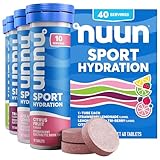
| Nuun Sport | 300 mg | 150 mg | 1 g | effervescent tablet (16 oz) | about $0.75 ($7.49 per 10-tablet tube) |
| Ultima Replenisher | 55 mg | 250 mg | 0 g | powder scoop or stick (16 oz) | about $0.47 (90-serving canister) |
| Liquid I.V. Sugar-Free | not published as text on brand pages (label image only) | not published as text on brand pages | 0 g (allulose) | powder stick (16 oz) | about $1.56 ($21.84 per 14) |
| LMNT | 1,000 mg | 200 mg | 0 g | powder stick (16-32 oz) | about $1.50 ($45 per 30) |
| DripDrop | 330 mg per 8 oz stick (brand publishes 660 mg per 16 oz) | not published on pages we checked | contains sugar (ORS-style formula) | powder stick (8 oz) | about $1.12 ($35.99 per 32) |
Prices are approximate as of August 2026 and move with retailers, pack sizes, and subscriptions. Third-party nutrition databases list Liquid I.V. Sugar-Free at around 500 mg sodium per stick, but the brand's own pages publish that number only inside a label image we could not check as text, so we leave it unconfirmed here.
Top picks for 12-hour shifts
Nuun Sport: best overall for shift work. The dose is right for the job: 300 mg of sodium and 150 mg of potassium with 1 g of sugar, enough salt to matter across a long shift without pretending you ran a half marathon. The tube format is the real win for nurses, ten tablets in a container that survives a scrub pocket, a lanyard bag, or a locker shelf, and a tablet dropped into any bottle fizzes itself into a flavored drink with zero mixing. At about 75 cents a serving it is affordable at 15-shifts-a-month frequency. Our Nuun versus Ultima head-to-head has the full label teardown if you are choosing between the two.
Ultima Replenisher: best value flavor prompt. Ultima is honest about what it is only if you read the label: 55 mg of sodium is seasoning, not replacement. For a nurse whose actual problem is that plain water goes undrunk, that can be fine, because Ultima's job is making the liter disappear, with zero sugar and about 47 cents a serving from the big canister. The 250 mg of potassium is a nice bonus for a workforce that skips meals. Pick it when taste is the barrier; pick Nuun when you also want the sodium to do real work.
Liquid I.V. Sugar-Free: best for people who want a sweet drink without the sugar. This is the pick for anyone who would otherwise buy a bottled sports drink in the cafeteria. It is allulose-sweetened, dessert-sweet by electrolyte standards, and genuinely sugar-free, at a premium of about $1.56 per stick. Our one reservation is transparency: the brand's own pages market "3x the electrolytes of the leading sports drink" but do not publish the sodium number as checkable text, which the plainer labels above manage fine.
LMNT: only for the genuinely sweaty edge cases. At 1,000 mg of sodium per stick, LMNT is dosed for losses most hospital work never produces, and for a salt-restricted or hypertensive nurse it is actively the wrong product. It earns its slot for the exceptions: summer shifts on units where the HVAC loses the fight, staff who sweat visibly through scrubs, and high-sweat life outside work stacked on top of shifts. If your shirt is dry at clock-out, you do not need this much salt.
DripDrop: the sick-day and recovery pick. DripDrop is built on oral rehydration solution logic, sodium paired with glucose for rapid absorption, which makes it the right tool for actual volume depletion: the GI bug you caught from the unit, the shift worked while sick, the genuinely rough stretch where you started depleted and stayed there. The sugar is doing transport work in that scenario. As an everyday shift drink it is over-spec; as the packet in your locker for bad weeks, it is the best of these five.
What to look for when buying
Read the sodium line and the serving size together, because brands dose per 8, 16, or 20 ounces and the numbers are not comparable until you normalize them. For everyday shifts, target roughly 100 to 300 mg of sodium per serving with 0 to 1 g of sugar, and treat anything at 1,000 mg as a special-situation product. Confirm the caffeine status of the specific flavor you grab, since several brands sell caffeinated variants in near-identical packaging. Favor formats that deploy at a nurses' station in seconds: tubes and sticks over scoops. Then sanity-check the per-serving price against your real usage, because a product you use 15 times a month costs whatever the label says times 180 a year.


As an Amazon Associate, UsefulVitamins.com earns from qualifying purchases at no extra cost to you. We only recommend products supported by published research or third-party testing.
FAQ
How much should I actually drink on a 12-hour shift?
A planned liter across the shift is the evidence-aligned floor for most people, on top of drinks with meals, and more in hot units or if you are visibly sweating. The useful trick from the hospital-staff research is to stop trusting thirst, which fails exactly when you are busiest, and tie drinking to fixed anchors instead: a third of the bottle by first break, two-thirds by lunch, done by handover. Urine color at your bathroom stops is the free feedback loop; dark and infrequent means you are behind.
Do electrolyte drinks interact with blood pressure medication or diuretics?
This is the interaction category to take seriously. Added sodium works directly against blood pressure treatment and fluid-restriction plans. Diuretics change how your kidneys handle sodium and potassium, and ACE inhibitors, ARBs, and potassium-sparing diuretics can raise blood potassium, which matters for potassium-forward formulas like Ultima. Sodium intake swings can also shift lithium levels. Run your list through our drug and supplement interaction checker, then confirm with a pharmacist before making any electrolyte product a daily habit.
Can I just count coffee as my fluids?
Mostly yes, with a night-shift caveat. Caffeinated drinks still contribute fluid; the old idea that coffee dehydrates you outright does not hold up at normal intakes. The problems are practical: coffee is how nurses accidentally push all their fluid to the first half of the shift, and caffeine after roughly the shift's midpoint sabotages post-shift sleep. Keep the coffee, add plain or lightly dosed fluid for the back half.
Will electrolytes fix the leg cramps I get after standing all shift?
We will not promise that, because the evidence does not. Cramps after 12 hours of standing in compression socks are mostly a fatigue-and-circulation story, not a proven electrolyte deficiency, and the 2020 Cochrane review on magnesium for cramps concluded magnesium is unlikely to help the idiopathic night-time cramps it has actually been tested on, mostly in older adults. Better hydration is cheap to try and helps some people, and if cramps are your main complaint our magnesium for leg cramps guide walks through what the evidence does and does not support. Frequent or worsening cramps deserve a clinician visit, since medications and vascular issues can drive them.
Is it okay to skip water during the shift and catch up at home?
It is the most common pattern and the worst one. The nursing surveys show about a quarter of nurses restrict fluids on purpose to avoid bathroom trips, and that habit tracks with urinary symptoms and worse on-shift performance, while the hospital cohort data shows the deficit compounds from shift to shift. Catching up by chugging large volumes fast is also the one behavior hydration researchers specifically warn against. Small, steady, on-shift intake with bathroom breaks you actually take is the whole intervention.
The bottom line
Nurses do not have an athlete's electrolyte problem; they have an access problem with decades of research quietly documenting it. Roughly a third of hospital staff start their shift dehydrated, nearly half finish it that way, and a quarter of nurses are skipping water on purpose to dodge the bathroom, at a measurable cost to short-term memory and time management. The fix costs almost nothing: a planned liter per 12 hours, drunk on schedule rather than on thirst, with one low-sugar, moderate-sodium serving to make it palatable and cover the salt. Nuun Sport is the best fit for the job, Ultima is the budget flavor prompt, Liquid I.V. Sugar-Free covers the sweet tooth, LMNT is for the truly sweaty exceptions, and DripDrop waits in the locker for sick weeks. Buy the cheap tube, put the bottle where you chart, and take the bathroom break.
