
Affiliate disclosure: this article contains affiliate links. As an Amazon Associate, UsefulVitamins.com earns from qualifying purchases at no extra cost to you.
If you're searching for whether NMN or NR is actually worth the $50-to-$100-a-month price tag, you've probably already read the Sinclair lab papers, watched the longevity podcast circuit, and now want to know whether the cheap niacinamide bottle on the same Amazon page is genuinely 1/20th the molecule or just 1/20th the marketing budget.
Summary / Quick Answer: which NAD+ precursor is worth the money?
For a generally healthy adult who wants to support NAD+ status without buying into the full longevity stack, niacinamide at 250 to 500 mg per day is the most defensible first pick on cost-per-NAD+-rise grounds.
- Best for cost-per-NAD+-rise in a healthy adult: niacinamide (nicotinamide). About $0.05 per 500 mg dose. Salvages directly to NAD+ via the NMNAT enzymes. Well-tolerated up to roughly 1.5 g/day.
- Best replicated human pharmacokinetics among the premium precursors: nicotinamide riboside (NR), specifically ChromaDex's Niagen, the patented form used in Trammell 2016 and Conze 2019. About $1.00 per 300 mg dose.
- Most hyped, thinnest human evidence: nicotinamide mononucleotide (NMN), about $2.00 per 500 mg dose. The rodent extension data is striking, but human trials remain small, short, and measure surrogate endpoints rather than felt outcomes.
- Not the right starting form for general support: nicotinic acid (niacin) at gram doses, which causes flushing and is essentially a statin-era lipid drug rather than a longevity supplement.
- Decision shortcut: the premium price does not yet have the premium evidence for NMN over niacinamide on any felt human outcome.
Who should NOT pick a precursor by price alone: anyone on a PARP inhibitor or other DNA-damage chemotherapy regimen, anyone on a statin who is considering nicotinic acid at lipid-modifying doses, anyone with liver disease taking niacinamide above 1.5 g/day, and anyone with a confirmed NAD+ pathway disorder where dosing should be set by a clinician.
What bioavailability means for NAD+ precursors
NAD+ is not a supplement you can buy directly in a form that meaningfully crosses cell membranes. It's a coenzyme synthesized inside the cell from precursors the body either eats (tryptophan, niacin, niacinamide) or salvages from breakdown products (nicotinamide from PARP and CD38 NADase activity). The bioavailability question for the "NAD+ booster" category is really three questions stacked together. Does the precursor survive digestion intact. Does the intact molecule cross the cell membrane that matters, or does it get hydrolyzed first. Does the salvage or de novo enzyme machinery downstream pick it up and assemble NAD+.
The pathways are not interchangeable, but they all converge. The Preiss-Handler pathway handles nicotinic acid through nicotinic acid mononucleotide. The salvage pathway handles nicotinamide directly through NMNAT enzymes (NMNAT1 in the nucleus, NMNAT2 in the cytoplasm, NMNAT3 in mitochondria) to NAD+ from nicotinamide mononucleotide. The NR pathway uses nicotinamide riboside kinase (NRK1, NRK2) to phosphorylate NR into NMN, which then enters the same NMNAT step. The NMN pathway lands at the same final NMNAT step, with a controversy about whether intact oral NMN gets into the cell or whether it has to be hydrolyzed to NR first by the CD73 ectoenzyme on the cell surface and re-phosphorylated.
The trials in this space measure plasma or whole-blood NAD+ at baseline and after dosing, sometimes peripheral blood mononuclear cell NAD+ as a tissue proxy, occasionally muscle biopsy NAD+ in the more rigorous studies. Cmax, AUC, and percent rise from baseline are the standard readouts. None of these is the same as "NAD+ in your aging tissues went up by X percent and that produced a felt clinical outcome."
The forms compared
Niacinamide (nicotinamide)
The amide form of niacin (B3). Cheapest, widely available as a USP-grade ingredient. The body salvages it directly into the NAD+ pool through NMNAT, which means the molecule enters the same enzymatic step as orally dosed NMN one reaction earlier in the pathway. Well-tolerated at supplement doses (250 to 1,000 mg), with the upper safety threshold typically cited at 1.5 g/day to avoid hepatotoxicity risk. The NIH ODS niacin fact sheet lists 3 g/day as the threshold where chronic liver injury risk becomes a real concern.
Niacinamide does not cause the flushing reaction associated with nicotinic acid because it does not activate the GPR109A receptor that drives prostaglandin-mediated cutaneous vasodilation.
Nicotinic acid (niacin)
The carboxylic acid form. Classic statin-era LDL-lowering and HDL-raising drug at 1 to 3 g/day, with documented effects on lipoprotein metabolism mediated through hepatic DGAT2 inhibition and adipose GPR109A signaling. Causes the well-known niacin flush within 20 to 30 minutes of dosing at gram-level intakes, an effect that tachyphylaxes with consistent use but remains a persistent tolerability problem. Converts to NAD+ via the Preiss-Handler pathway.
For NAD+ replenishment specifically, nicotinic acid is overkill at the doses required and brings cardiovascular drug-class baggage that does not belong in a general supplement decision.
Nicotinamide riboside (NR)
Marketed primarily as ChromaDex's patented Niagen. This is the form that has the most published human pharmacokinetic and safety data. The Trammell 2016 trial (n=12) established that oral NR raises whole-blood NAD+ in a dose-dependent fashion, with a roughly 2.7-fold rise at 1,000 mg after 9 days. The Conze 2019 randomized trial (n=140) at 100, 300, and 1,000 mg/day over 8 weeks confirmed sustained NAD+ elevation and acceptable safety.
NR is phosphorylated intracellularly by NRK1/NRK2 to NMN, which is then used by NMNAT to assemble NAD+. The branded ingredient pricing puts a typical 300 mg daily serving at roughly $30 to $60 per month.
Nicotinamide mononucleotide (NMN)
The form most popularized by David Sinclair's lab and the longevity podcast circuit. There is a live mechanistic controversy about whether intact NMN crosses the cell membrane through a dedicated transporter (Slc12a8, reported in mouse intestine) or whether it is hydrolyzed to NR at the cell surface by CD73 and then re-phosphorylated inside the cell. The functional answer for the supplement consumer is similar either way: the molecule ends up in the NAD+ pool. The mechanistic answer matters for the marketing claim that NMN is biochemically distinct from NR.
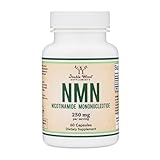
The FDA briefly classified NMN as a drug rather than a supplement in 2022 after a pharmaceutical filing, which temporarily disrupted the supplement market. The status remains unsettled in regulatory grey zone for some marketing claims. Typical consumer pricing puts a 500 mg daily serving at roughly $50 to $100 per month.
Trace dietary sources (nicotinamide N-oxide, milk)
Trace amounts of nicotinamide riboside have been detected in cow's milk and other dietary sources, but the concentrations are nutritionally irrelevant for supplementation purposes. The marketing claim that "NR is naturally present in milk" is biochemically accurate but quantitatively meaningless at any rational dietary intake.
Form comparison table
| Form | Pathway to NAD+ | Typical Daily Dose | Approximate Cost per Dose | Documented Human NAD+ Rise |
|---|---|---|---|---|
| Niacinamide | Salvage via NMNAT | 250 to 500 mg | $0.05 | Yes, well-documented |
| Nicotinic acid | Preiss-Handler | 50 to 500 mg (lipid use: 1 to 3 g) | $0.05 | Yes, but flushing limits use |
| NR (Niagen) | NRK to NMN to NMNAT | 300 mg | $1.00 | Yes, replicated (Trammell, Conze) |
| NMN | NMNAT (direct or via CD73 to NR) | 500 mg | $2.00 | Yes, smaller human dataset |
The RCT evidence per form
The honest framing for this section is that NAD+ precursor research is in a peculiar state where the rodent data is genuinely impressive and the human data is genuinely small, short, and measuring surrogate endpoints rather than the outcomes consumers actually care about.
The Trammell 2016 pharmacokinetic trial in 12 healthy adults established the dose-response for oral NR. At 1,000 mg, whole-blood NAD+ rose roughly 2.7-fold over 9 days. The molecule is bioavailable, the conversion to NAD+ is documented, and the precursor reaches its biochemical target. What the trial did not establish was any felt cognitive, metabolic, or longevity outcome.
The Conze 2019 trial extended this with a randomized 8-week parallel-arm design (n=140) at 100, 300, and 1,000 mg NR. Sustained NAD+ elevation, acceptable safety profile, no serious adverse events attributable to NR. Again, no felt clinical outcome endpoint was the primary readout. This is the strongest replicated human evidence for any NAD+ precursor.
The Yoshino 2021 NMN trial in postmenopausal women with prediabetes (n=25) gave 250 mg NMN daily for 10 weeks. The primary finding was improved skeletal muscle insulin signaling on biopsy, specifically increased AKT phosphorylation. The secondary cognitive and metabolic outcomes did not separate from placebo. This is genuine human data but at a dose far below what the rodent NMN extension work used, and with an endpoint that is biochemically interesting rather than felt.
The Mills 2016 long-term NMN trial in mice reported NMN supplementation across the lifespan attenuated age-associated physiological decline. Striking rodent data. The translation to human outcomes remains the entire empirical question of the field.
The Brakedal 2022 NR trial in Parkinson's disease (NR-PD, n=30) tested 1,000 mg NR daily for 30 days as add-on therapy. The trial documented brain NAD+ elevation on MR spectroscopy and modest motor improvement signal, but the effect was equivocal at the small sample size and short duration.
The Yamane 2022 NMN safety trial (n=10, 250 mg/day for 12 weeks) reported no significant adverse events but, again, was not designed to detect efficacy on any felt outcome.
Actionable takeaway: the human RCT evidence for NAD+ precursors confirms the molecules raise NAD+, are safe at typical supplement doses, and produce occasional biochemical signal on biopsy or insulin signaling. The evidence does not yet support the lifespan-extension framing the marketing leans on. That gap matters when you're deciding whether to spend $50 or $5 per month.
Cost-vs-bioavailability decision matrix
The math that matters is dollars per documented NAD+ rise, not dollars per bottle. All four forms raise NAD+. The question is by how much per dollar.
Niacinamide at 500 mg produces a measurable NAD+ rise at roughly $0.05 per dose. NR at 300 mg produces a well-replicated NAD+ rise at roughly $1.00 per dose. NMN at 500 mg produces a documented (smaller human dataset) NAD+ rise at roughly $2.00 per dose. On the narrow metric of "raise the precursor pool that feeds NAD+ synthesis," the cost ratio is roughly 20 to 40-fold for the premium forms over niacinamide, and the head-to-head trial proving they produce a meaningfully larger NAD+ rise per dose in tissues that matter has not been published.
The dose-trial-supplement gap is sharp here. Rodent lifespan-extension NMN protocols typically used 300 to 500 mg/kg in mice. The human NMN trials use 250 to 500 mg total. Consumer products marketed as Sinclair-protocol commonly contain 250 mg per serving. You are not running the rodent trial in your body when you take a 250 mg NMN cap.
When does the premium form pay off. When the buyer has read the literature, accepts the rodent-to-human translation gap is the active question, and prefers NR because Niagen has the most replicated human pharmacokinetic data. That's the legitimate value case. The value case for NMN is thinner and rests on mechanism-based hope rather than replicated human outcome data.
When is niacinamide fine. For a reader who wants a defensible NAD+ support intervention without committing to a longevity hypothesis, niacinamide at 250 to 500 mg covers the biochemistry at 1/20th the cost.
How to choose the right form for your goal
If you are a generally healthy adult who wants NAD+ support without paying the longevity-stack premium, choose niacinamide at 250 to 500 mg/day. Cheap, well-tolerated, salvages directly into the NAD+ pool. Doctor's Best and NOW Foods carry USP-grade niacinamide at roughly $0.05 per dose.
If you are committed to the longevity hypothesis and willing to pay for the form with the most replicated human pharmacokinetic data, choose NR specifically as ChromaDex Niagen at 300 mg/day. Tru Niagen is the consumer brand. The Trammell and Conze trials used this ingredient.
If you are a Sinclair-influenced buyer who specifically wants NMN and accepts that the human evidence is thinner than the rodent data suggests, choose NMN at 500 mg/day from a third-party-tested brand. Be honest that you're paying a premium for the marketing pathway, not for documented human outcome separation from NR.
If your goal is lipid lowering, nicotinic acid at 1 to 3 g/day under clinician supervision is the relevant intervention, and that is a cardiology decision. The clinical role of high-dose niacin for lipids has narrowed since the AIM-HIGH and HPS2-THRIVE trials.
If you're eyeing a $200/month "longevity stack" combining NMN with resveratrol, pterostilbene, fisetin, and other compounds at undisclosed doses, skip it. The combination products rarely disclose enough information to do the dose-trial-supplement math.
Actionable takeaway: form choice matters less than honesty about why you're buying. The longevity precursors all raise NAD+. None has yet produced replicated human outcome data on a felt endpoint that would justify the premium over niacinamide on evidence grounds alone.
FAQ
Is niacinamide really equivalent to NR or NMN for NAD+ support? On raising the NAD+ precursor pool, niacinamide reaches the same NMNAT salvage step that NR and NMN reach. The mechanism case for the premium forms is they may distribute differently to tissues, but the comparative human tissue distribution trial proving meaningful difference has not been published. On felt clinical outcomes, none of the three has clear human RCT separation from placebo.
Does NMN really cross the cell membrane intact? Live mechanistic controversy. A mouse intestinal transporter (Slc12a8) was reported, but other work suggests NMN is hydrolyzed to NR at the cell surface by CD73 and re-phosphorylated inside the cell. For the consumer, the functional question is whether NMN raises NAD+ (yes, either way), not which mechanism dominates.
Why did the FDA classify NMN as a drug in 2022? A pharmaceutical company filed an investigational new drug application for NMN, which triggered the FDA's view that NMN no longer qualifies as a supplement under DSHEA. The status remains contested. This is a regulatory issue, not a safety issue.
Why does the consumer NMN dose differ so much from the trial dose? Published human NMN trials used 250 to 500 mg. Rodent lifespan trials used much higher per-kilogram doses. Consumer products at 250 mg sit at the low end of the human trial range, which is the relevant comparison.
Drug-supplement interaction notes
For nicotinic acid at lipid-modifying doses (1 to 3 g/day), per Drugs.com, notable interactions include statins (additive myopathy risk, particularly with simvastatin and atorvastatin at the higher niacin doses), oral antidiabetic agents (niacin can worsen glucose control), and alcohol (potentiates flushing and hepatotoxicity risk). For niacinamide above 1.5 g/day, chronic liver function monitoring is reasonable per the NIH ODS niacin fact sheet, particularly in patients with pre-existing hepatic disease.
For all NAD+ precursors, there is a theoretical concern about co-administration with PARP inhibitors (olaparib, talazoparib, niraparib, rucaparib) used in oncology, because PARP inhibition is the therapeutic mechanism and NAD+ replenishment could theoretically attenuate the drug effect. The mechanistic concern is not the same as documented clinical interaction, but the prudent step is to discuss any NAD+ precursor supplementation with the oncology team before initiating during active PARP inhibitor therapy.
Conclusion: the bottom line on NAD+ precursor bioavailability
For the majority of readers thinking about NAD+ support, the form question is simpler than the longevity-podcast circuit makes it sound. Niacinamide at 250 to 500 mg/day raises NAD+, is well-tolerated, and costs roughly 5 percent of the premium precursors. NR at 300 mg as ChromaDex Niagen has the most replicated human pharmacokinetic data and is the defensible premium choice for a reader who has read the trials and accepts the tradeoff. NMN at 500 mg has thinner human evidence and a sharper price premium, and is the right pick only for a reader buying explicitly on the Sinclair lab hypothesis with honest awareness of how much of the supporting data comes from rodent work.
The premium price does not yet have the premium evidence for NMN over niacinamide on any felt human outcome. That sentence will get updated when a properly powered, sufficiently long, head-to-head human trial reports out. Until then, the bioavailability case for NAD+ precursors lives in the pharmacokinetic data, and the longevity case lives in mechanism and rodent biology.
Next steps:
- Review how we evaluate supplements for the testing and trial-evaluation framework used in this article.
- Read more from Maria Rodriguez, MS Nutrition Science on mechanism-anchored cognitive and aging biochemistry.
- For dose, stack, and broader longevity-supplement context, see the best supplements for longevity 2026 guide.
Reviewed by Maria Rodriguez, MS Nutrition Science, focused on cognitive and mood biochemistry.
This article is for informational purposes and not medical advice. NAD+ precursors can interact with chemotherapy regimens and with high-dose niacin for lipid management. Consult a licensed physician before starting any supplement, particularly if you are pregnant, nursing, taking prescription medications, or managing a chronic condition.
Recommended Products


As an Amazon Associate, UsefulVitamins.com earns from qualifying purchases at no extra cost to you. We only recommend products supported by published research or third-party testing.
