
Affiliate disclosure: this article contains affiliate links. As an Amazon Associate, UsefulVitamins.com earns from qualifying purchases at no extra cost to you.
If you have searched for whether KSM-66 is actually worth the premium over the $9 ashwagandha bottle on the bottom shelf, you have run into the same thing every honest review runs into: ashwagandha is not really one supplement. It is a category of standardized extracts that were each tested at specific doses in specific trial populations, and the cheap unstandardized capsules in most retail stores are not the things those trials studied.
Quick answer: KSM-66 vs Sensoril, which form should you buy?
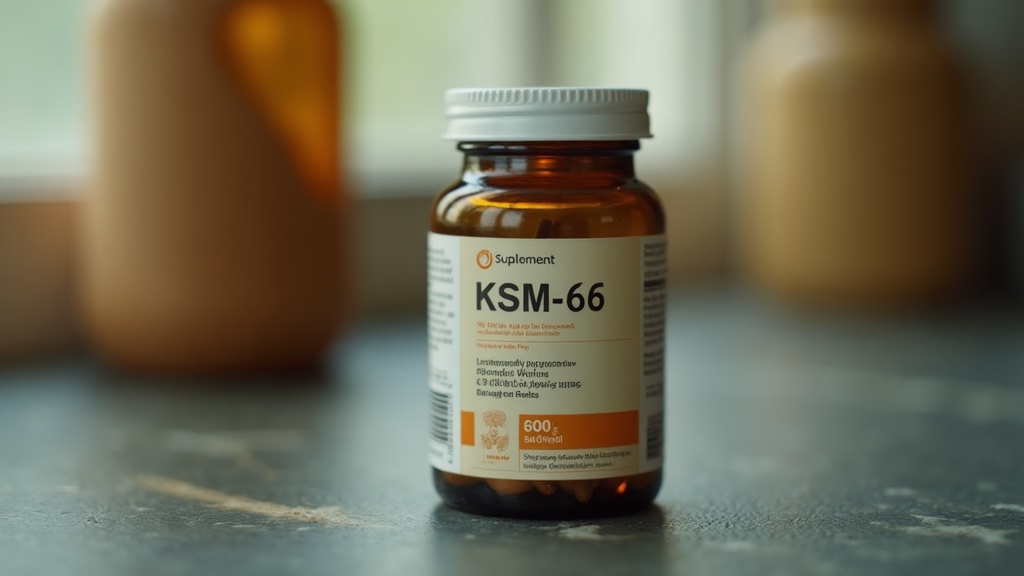
The 1-sentence honest answer: for the most common reason adults reach for ashwagandha (perceived stress, sleep quality, cortisol-feel) the studied form is KSM-66 at 300 to 600 mg per day; Sensoril earns its place in the narrower scenario of stress-driven weight and metabolic outcomes at 125 to 250 mg per day.
Best for KSM-66 (Ixoreal, root-only, 5% withanolides):
- Perceived stress and morning cortisol reduction at 300 mg twice daily (Chandrasekhar 2012)
- Sleep onset latency and sleep quality at 600 mg per day (Salve 2019)
- Anxiety and low mood support at 240 mg per day, as an adjunct to clinician care (Lopresti 2019)
- Strength and recovery in resistance-trained adults at 600 mg per day (Wankhede 2015)
Best for Sensoril (Natreon, root + leaf, 10% withanolides):
- Stress-driven weight management at 250 mg twice daily (Choudhary 2017)
- Chronic stress with metabolic markers at 125 to 250 mg per day (Auddy 2008)
Skip: unstandardized "ashwagandha root powder 500 mg" capsules with no withanolide percentage on the label, and adrenal-blend formulas that bury 100 mg of ashwagandha among six other herbs without specifying the extract. You are paying for branding and a clinical-trial reference that the product is not actually delivering.
AVOID without clinician guidance: pregnancy and breastfeeding, diagnosed hyperthyroidism or active levothyroxine titration, autoimmune conditions on immunosuppressive therapy, and chronic dosing above 1,500 mg per day of extract.
What standardization actually means for ashwagandha
Most "bioavailability" articles compare absorption of the same molecule in different delivery systems. Ashwagandha is the odd case where the upstream question, what is actually in the capsule, has not been settled at the retail shelf. Withania somnifera contains a family of steroidal lactones called withanolides: withaferin A, withanolide A, withanoside IV, and roughly forty other characterized compounds. These are the actives that the clinical work points at. A bottle that does not specify withanolide percentage is selling you root powder by mass, not actives by mass, and the ratio varies enormously across raw material sources (about 0.5% to 2% withanolides in unstandardized root).
Mechanistically the withanolides do several distinct things. They modulate the hypothalamic-pituitary-adrenal (HPA) axis with downstream cortisol reduction in chronically stressed adults. They show GABAergic-like binding activity at GABA-A receptors in animal preparations (Mehta 1991), the most-cited mechanistic frame for the sleep and anxiolytic signal. They suppress NF-kB signaling and the inflammatory cytokine cascade. Withaferin A specifically interacts with the Akt/mTOR pathway, which is the basis for both the muscle-protein-synthesis story and some of the safety conversation around chronic high-dose leaf-derived withaferin.
The proxy metrics trials use are serum cortisol (morning, fasted), the perceived stress scale (PSS), and sleep-quality questionnaires. These are surrogate endpoints, not direct measures of intracellular withanolide concentration in target tissues. The shorthand: KSM-66 is root-only, 5% withanolides. Sensoril is root + leaf, 10% withanolides, with 32% oligosaccharides. Generic root powder is unstandardized and variable. These three are not interchangeable doses of "the same thing".
The forms compared
KSM-66 (Ixoreal Biomed, India)
KSM-66 is the most-trialed standardized extract on the market: a root-only extract (no leaf), standardized to a minimum of 5% withanolides by HPLC, produced by Ixoreal in India using a water-and-milk extraction process they describe as solvent-free. Most of the published human RCTs on ashwagandha cortisol, stress, sleep, anxiety, and resistance-training outcomes from the last fifteen years use KSM-66. Trial doses cluster at 300 mg twice daily (Chandrasekhar 2012, Wankhede 2015, Salve 2019) or 240 mg once daily (Lopresti 2019). Cost in 2026 runs roughly $0.20 to $0.40 per 600 mg dose for reputable third-party-tested brands carrying the KSM-66 logo (Jarrow Formulas KSM-66, NOW Foods Ashwagandha KSM-66, Sports Research KSM-66).
Sensoril (Natreon, USA-patented, Indian-sourced)
Sensoril is a root-and-leaf extract standardized to a minimum of 10% withanolides and 32% oligosaccharides. The higher withanolide concentration is the headline claim, but it is achieved partly by including leaf material that is naturally richer in withaferin A. The trial dose is correspondingly lower: 125 to 250 mg per day in the published work, not 600 mg. The published Sensoril RCTs sit primarily in the stress-driven weight management and chronic-stress-with-metabolic-markers space (Auddy 2008, Choudhary 2017). Two caveats: traditional Ayurvedic ashwagandha is a root preparation, not a leaf preparation, and the chronic safety conversation around high-dose withaferin A is a reasonable reason to stay at the studied dose and not double up. Cost in 2026 runs roughly $0.30 to $0.60 per 250 mg dose.
Generic unstandardized root powder, and Shoden
The cheapest tier on most retail shelves is "ashwagandha root powder, 500 mg" with no withanolide percentage stated. These are essentially un-trialed at any specific dose. Withanolide content in unstandardized root varies from about 0.5% to 2%, which means a 500 mg capsule could deliver about 2.5 to 10 mg of withanolides; the KSM-66 600 mg dose at 5% delivers 30 mg. The order-of-magnitude difference in active delivery is the reason consumers comparing prices often conclude ashwagandha "did nothing" on the cheap bottle.
Shoden (Arjuna Natural) is a newer extract standardized to 35% withanolides, dosed at about 120 mg per day. The trial footprint is much smaller than KSM-66 or Sensoril. Defensible as a third option, not a first-line pick.
| Form | Withanolide Standardization | Plant Part | Typical Trial Dose | Cost Per Dose |
|---|---|---|---|---|
| KSM-66 (Ixoreal) | 5% | Root only | 300 to 600 mg | $0.20 to $0.40 |
| Sensoril (Natreon) | 10% | Root + leaf | 125 to 250 mg | $0.30 to $0.60 |
| Shoden (Arjuna) | 35% | Root | 120 mg | $0.40 to $0.70 |
| Generic root powder | Unstandardized (0.5 to 2%) | Root | Not established | $0.05 to $0.15 |
The RCT evidence per form
For sleep quality, Salve et al. 2019 randomized 80 adults with self-reported insomnia to 300 mg KSM-66 twice daily (600 mg total) or placebo for 8 weeks. The active arm showed improved sleep onset latency, total sleep time, and Pittsburgh Sleep Quality Index scores versus placebo. The effect size is modest, but the separation from placebo is real and the trial uses validated endpoints rather than only self-report.
For anxiety and low mood, Lopresti et al. 2019 randomized 60 chronically stressed adults to 240 mg KSM-66 once daily or placebo for 60 days. The active arm showed reduced Hamilton Anxiety scale scores and reduced morning serum cortisol. Important hedge: anxiety and depression are clinician-managed diagnoses, not supplement-managed conditions. The Lopresti dose supports ashwagandha as an adjunct in mild-to-moderate stress symptomatology, not as a substitute for evaluation when symptoms interfere with work, relationships, or safety. If your stress symptoms are severe enough to interfere with daily function, evaluation by a primary care clinician or mental health professional is the more honest first step.
For resistance training, Wankhede et al. 2015 randomized 57 untrained young men to 300 mg KSM-66 twice daily or placebo, alongside an 8-week resistance training program. The KSM-66 arm showed larger gains in bench press 1RM, leg extension 1RM, and arm circumference, and reduced exercise-induced muscle damage as measured by serum creatine kinase. The trial is short and the population is young untrained men, but the effect is consistent with the mTOR mechanistic story.
For cortisol specifically, Chandrasekhar et al. 2012 randomized 64 chronically stressed adults to 300 mg KSM-66 twice daily or placebo for 60 days. Morning serum cortisol fell about 28% in the KSM-66 arm versus placebo. This is the most-cited cortisol RCT in the literature.
For Sensoril, Choudhary et al. 2017 randomized 52 chronically stressed adults with elevated body weight to 300 mg Sensoril twice daily or placebo for 8 weeks, showing reduced perceived stress, reduced morning cortisol, and reduced body weight, with the weight change attributed partly to lower food cravings. The earlier dose-ranging Auddy et al. 2008 trial tested Sensoril at 125, 250, and 500 mg per day; the 125 and 250 mg arms reduced perceived stress, morning cortisol, and inflammatory markers, while 500 mg did not consistently outperform 250 mg. That is the basis for the standard Sensoril clinical dose landing at 125 to 250 mg per day.
The animal vs human distinction matters here. The full historical pharmacology of withanolides at GABA-A, NF-kB, and Akt/mTOR is largely animal and in-vitro work. The human RCT footprint is smaller and shorter (60 to 90 days, n=50 to 80, surrogate endpoints). What the human RCTs do consistently show is a stress-and-cortisol signal at the studied doses with the studied forms.
Cost-vs-standardization decision matrix
The honest math: KSM-66 at 600 mg per day works out to roughly $0.25 to $0.45 per day for the studied dose at a reputable brand. Sensoril at 250 mg per day works out to roughly $0.30 to $0.60 per day. Generic unstandardized ashwagandha at 500 mg per day costs $0.05 to $0.15 per day, but the active delivery is unknown and probably an order of magnitude below the trial dose. The premium for a patented standardized extract is largely justified because that is the form the trial used. Paying $9 for a generic bottle to save $5 per month and then concluding "ashwagandha doesn't work" is the most common consumer failure mode in this category.
When the patented form is worth it: any time you intend to reproduce a specific RCT outcome (stress, cortisol, sleep, strength adjunct), match dose to a clinical reference, or run an 8 to 12 week trial where you want to know whether ashwagandha did anything or whether your capsule simply did not contain enough withanolides to test the question.
A simple way to decide which patented form: are you primarily after stress, sleep, cortisol, or strength outcomes? KSM-66. Stress-driven weight or metabolic-stress outcomes? Sensoril. Most readers will land on KSM-66.
How to choose the right form for your goal
If your priority is perceived stress and morning cortisol
Choose KSM-66 at 300 mg twice daily (600 mg total), taken with breakfast and dinner. This is the Chandrasekhar 2012 protocol. Run an 8 to 12 week trial. If perceived stress and sleep have not noticeably improved by week 8, the supplement is unlikely to be your answer.
If your priority is sleep onset and sleep quality
Choose KSM-66 at 300 mg twice daily, with the second dose 60 to 90 minutes before bed. The Salve 2019 protocol used 600 mg total daily. Pair with consistent sleep hygiene; ashwagandha is an adjunct, not a substitute for behavioral sleep work.
If your priority is anxiety and low mood
Talk to a clinician first. If your symptoms are mild and you are working with a provider, the Lopresti 2019 regimen of 240 mg KSM-66 once daily is the trial-tested dose. Severe anxiety, panic, or depressive symptoms that interfere with daily function warrant evaluation, not a supplement trial.
If your priority is resistance training adaptation
Choose KSM-66 at 300 mg twice daily, on training days and rest days alike. The Wankhede 2015 protocol used 600 mg total daily across an 8-week training program. The effect is modest but real in the trial population.
If your priority is stress-driven weight management
Choose Sensoril at 250 mg per day (or 125 mg twice daily), with meals. The dose-ranging Auddy 2008 work supports 250 mg per day as the cost-effective dose; brands such as Jarrow Formulas Sensoril carry the studied ingredient.
If you want to skip ashwagandha entirely
Skip if you are pregnant or nursing (uterine-contraction concerns and traditional contraindication, no human RCTs in pregnancy). Skip if you have diagnosed hyperthyroidism or are titrating levothyroxine, because ashwagandha can elevate T4 and confound your TSH labs. Skip if you are on immunosuppressive therapy for an autoimmune condition, because of mixed immunomodulatory signals.
FAQ
Is the KSM-66 versus Sensoril difference actually meaningful or is it brand marketing?
It is real. KSM-66 and Sensoril are different extracts of the same plant, with different standardization, different plant-part sourcing, different studied doses, and different published outcome profiles. The "ashwagandha vs ashwagandha" framing flattens out a real biochemical and clinical difference. Pick the form that matches the studied outcome you are after.
Why does the generic ashwagandha bottle deliver "nothing" when the same milligram dose of KSM-66 works?
Because the milligrams are not equivalent. An unstandardized 500 mg root capsule may deliver about 2.5 to 10 mg of withanolides; a KSM-66 600 mg capsule at 5% delivers about 30 mg. The dose-trial-supplement gap on unstandardized ashwagandha is the most consistent failure pattern in this category.
Does ashwagandha interact with prescription medications?
Yes. According to the Drugs.com ashwagandha monograph, ashwagandha may potentiate the effect of levothyroxine and other thyroid hormones (elevated T4 in case reports), can produce additive sedation with benzodiazepines and other CNS sedatives, may interact with immunosuppressants because of immunomodulatory activity, and may mildly lower blood glucose in people on diabetes medications. Rare hepatotoxicity case reports have been documented in post-marketing surveillance. Anyone on prescription medication, especially levothyroxine, sedatives, or immunosuppressants, should review the interaction profile with a clinician or pharmacist before starting.
How long should I trial ashwagandha before deciding it does nothing for me?
8 to 12 weeks at the studied dose of a standardized form. The trials in the literature consistently use 60 to 90 day designs and the separation from placebo is visible by week 6 to 8 in the responder population. If you have run a fair 12-week trial of KSM-66 at 600 mg per day or Sensoril at 250 mg per day and felt nothing, the probability that a longer trial or a higher dose will work is low.
Is the patented KSM-66 designation actually meaningful or just a label?
In this case yes, the brand designation is meaningful. KSM-66 refers to a specific extract produced by Ixoreal Biomed and used in essentially all of the published KSM-66 RCT literature. A product labeled "KSM-66 Ashwagandha" is the studied ingredient. Generic "ashwagandha root extract" without the KSM-66 or Sensoril designation is a different (and probably differently-standardized) product, even if the front of the bottle looks similar.
Conclusion: the bottom line on ashwagandha standardization
For the most common reasons adults reach for ashwagandha (perceived stress, sleep, cortisol, strength adjunct), the trial-grade form is KSM-66 at 300 to 600 mg per day, and the RCT base justifies the modest premium over generic root powder. For stress-driven weight and metabolic-stress outcomes, the trial-grade form is Sensoril at 125 to 250 mg per day. Generic unstandardized root powder bottles without a withanolide percentage on the label are best treated as un-trialed at any specific dose and are the most likely reason a reader concludes ashwagandha "did nothing" on a previous bottle.
If you are starting from scratch, the cost-effective default is 600 mg of KSM-66 per day for 8 to 12 weeks, evaluated against your own perceived stress and sleep quality at week 8. If the effect is real you will know. If it is not, the standardized dose at the trial form removes the most common false-negative reason and lets you move on with confidence.
Next steps:
- Read our supplement review methodology to see how we evaluate standardization claims and assign confidence levels to brand-and-extract designations.
- Visit Maria Rodriguez's author page for more nutrient and herb form-science deep dives on the cognitive and mood side of the supplement market.
- For the broader category context of where ashwagandha fits among other stress-and-cortisol botanicals, see our complete guide to adaptogens.
Reviewed by Maria Rodriguez, MS Nutrition Science, focused on cognitive and mood biochemistry.
This article is for informational purposes and not medical advice. Ashwagandha can interact with levothyroxine, sedatives, immunosuppressants, and diabetes medications, and rare hepatotoxicity has been reported in post-marketing surveillance. Pregnancy and breastfeeding are contraindications. Consult a licensed physician before starting any supplement, particularly if you are pregnant, nursing, taking prescription medications, or managing a chronic condition. If you are experiencing suicidal thoughts or a mental health crisis, contact the 988 Suicide and Crisis Lifeline (in the US) or your local emergency services immediately; supplements are not a substitute for crisis care.
Recommended Products


As an Amazon Associate, UsefulVitamins.com earns from qualifying purchases at no extra cost to you. We only recommend products supported by published research or third-party testing.
