
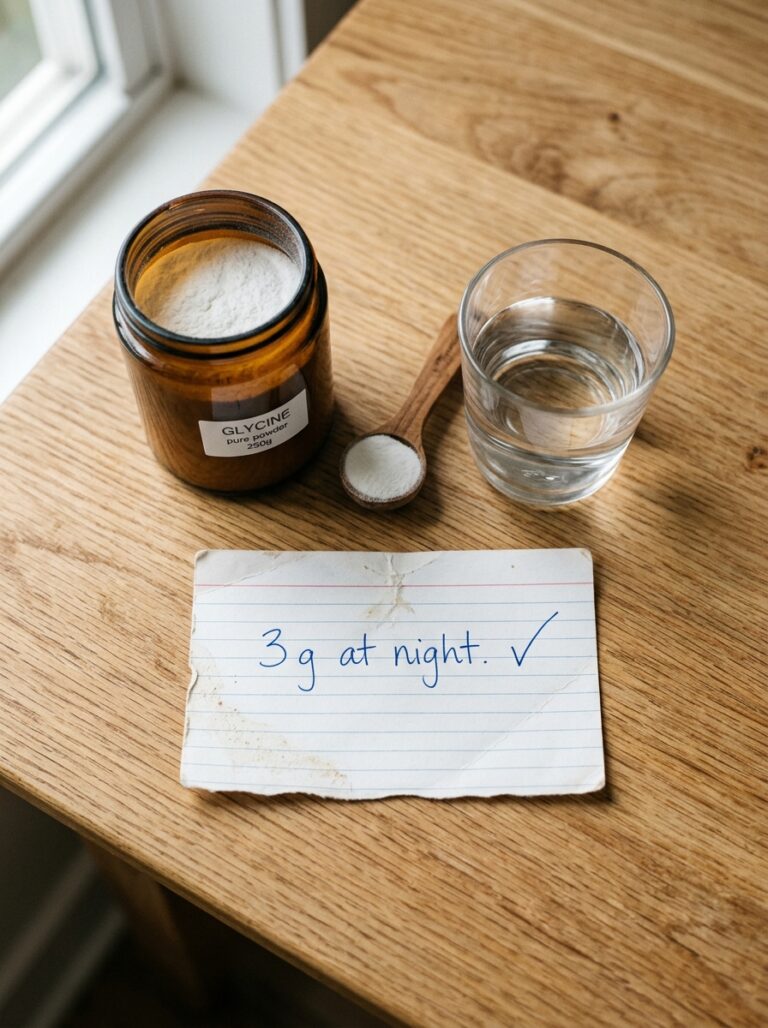
Glycine is one of the few supplements where the cheapest version is also the best version, and almost nobody selling it wants you to know that. It's a simple amino acid that costs pennies per dose as a plain powder, yet it gets repackaged into premium "sleep" and "anti-aging" capsules at five to ten times the price. The three products at the bottom are the ones I'd actually keep in my own family's cabinet, picked for honest dosing and clean labels rather than marketing.
This guide walks through what glycine does in the body, where the human evidence is genuinely strong, and why a $15 bag of powder usually beats a $40 bottle of capsules.
Affiliate disclosure: this article contains affiliate links. As an Amazon Associate, UsefulVitamins.com earns from qualifying purchases at no extra cost to you.
Before you decide
Glycine is widely available and generally well tolerated in healthy adults, but a few groups should not start it on their own. If you take clozapine, are managing a serious psychiatric or seizure condition, have significant kidney or liver disease, or are pregnant or breastfeeding, clear it with your physician first.
The reason is mechanistic, not alarmist. Glycine is a neurotransmitter that acts on both inhibitory glycine receptors and excitatory NMDA receptors, so it isn't a neutral inert nutrient the way a vitamin often is. That same reach is why it interacts with a handful of psychiatric medications.
If your real problem is chronic insomnia rather than the occasional rough night, a supplement is the wrong first move. Persistent insomnia deserves a clinical workup and cognitive behavioral therapy for insomnia (CBT-I), which is the actual first-line treatment, not an amino acid you read about online.
You can see how I weigh mechanism against human-trial reality on the how we review supplements page, and more about my background on my author bio.
What glycine actually does
Glycine is the smallest amino acid, and that tiny size is the whole story. In your nervous system it's a major inhibitory neurotransmitter in the brainstem and spinal cord, but it also sits at the NMDA receptor as a required co-agonist alongside glutamate — so it can quiet or assist excitatory signaling depending on where it acts.
In the body's structural tissue it plays a completely different role. Glycine is every third amino acid in the collagen triple helix, because it's the only residue small enough to pack into the center of that tightly wound rope (the StatPearls chapter on collagen biochemistry lays this out clearly).
That packing constraint is non-negotiable. Glycine, proline, and hydroxyproline together make up well over half of collagen's amino acids, and collagen simply cannot fold into a stable helix if anything bulkier than glycine tries to occupy that central position. This is why glycine gets marketed for skin, joints, and "healthy aging."
Glycine is also a building block for glutathione, your cells' main antioxidant, which is the thread that connects it to the aging research below. Your body makes glycine on its own, so it's classed as non-essential, but several researchers argue the body's own synthesis may fall short of the amount tissues actually use — which is the rationale for supplementing.
That shortfall argument has real numbers behind it. A widely cited metabolic-flux analysis estimated that endogenous synthesis (about 3 g a day) plus a typical diet (roughly 1.5 to 3 g) leaves a 70 kg adult around 10 g short of the glycine needed for collagen turnover alone (a 2009 metabolic-flux analysis by Meléndez-Hevia and colleagues). The authors argued glycine is better thought of as "conditionally essential" — interesting context, though it's a theoretical calculation, not proof a daily scoop fixes anything you'd notice.
What the research shows
The cleanest human signal for glycine is sleep, and it's remarkably specific about the dose. Across small randomized trials, 3 g of glycine taken about an hour before bed improved subjective sleep quality and next-day fatigue in people with unsatisfactory sleep, and a polysomnography study found it shortened the time to fall asleep and to reach slow-wave sleep without distorting overall sleep architecture, as a 2007 polysomnography trial by Yamadera and colleagues reported.
That polysomnography study is worth knowing in detail, because it's the one piece of objective data here. In 11 volunteers with self-reported poor sleep, 3 g of glycine at bedtime measurably shortened the latency to both sleep onset and slow-wave sleep, raised sleep efficiency, and improved Pittsburgh Sleep Quality Index scores — and the same people scored lower on daytime sleepiness and better on a memory-recognition task the next day. The sample is tiny, but objective electrodes agreeing with the subjective diaries is the kind of internal consistency I look for.
A follow-up trial in partially sleep-restricted healthy volunteers found that the same 3 g bedtime dose significantly reduced daytime fatigue and improved reaction time on a psychomotor vigilance test the next day. The effect isn't dramatic, but it's repeatable across these studies, and the consistency of that one specific 3 g dose is part of why I trust it more than most sleep-supplement claims.
Here's the mechanism part I find genuinely interesting, and it's where animal and human evidence diverge. In rodents, glycine promotes sleep by acting on NMDA receptors in the suprachiasmatic nucleus — the brain's master clock — triggering peripheral vasodilation that lowers core body temperature, which is itself a sleep-onset signal, according to a 2015 receptor study in rodents. That falling-temperature pathway is the leading explanation for the human results, but the receptor-level work was done in animals, so treat the "how" as well-supported theory rather than proven in people.
The honest caveat: the human sleep trials are small, short, and carry a high risk of bias, as a 2023 systematic review of glycine in human adults concluded. The direction of effect is consistent and the safety profile at 3 g is reassuring, but this is "promising," not "settled."
For aging, the headline research is GlyNAC — glycine combined with N-acetylcysteine to rebuild glutathione. In a 16-week randomized trial of 24 older adults against an isonitrogenous alanine placebo, GlyNAC corrected glutathione deficiency and improved oxidative stress, mitochondrial fuel oxidation, inflammation, muscle strength, and gait speed, while young controls saw no change, the GlyNAC randomized clinical trial in older adults found. The catch matters: this is the classic dose-trial-versus-supplement gap.
The effect sizes are eye-catching, which is exactly why they need context. Gait speed in the older adults rose by roughly 19% and several aging biomarkers shifted toward the younger group's range over the 16 weeks. Encouraging — but it's a single small trial, the placebo was matched only for nitrogen rather than blinding glutathione effects, and the same lab produced most of the GlyNAC literature, so I'd hold it as a strong hypothesis rather than established fact.
The reason it doesn't translate to your nightstand is the dose. The GlyNAC trial used weight-based amounts — 1.33 mmol/kg of glycine daily (around 7 g for a 70 kg adult) plus 0.83 mmol/kg of N-acetylcysteine — so the active arm took roughly double a sleep scoop's worth of glycine and added NAC on top. A nightly 3 g of plain glycine is a sleep dose, not the aging protocol, and no off-the-shelf "glycine for longevity" capsule replicates what those studies actually tested. If healthy aging is your goal, our longevity supplements guide covers where the evidence sits.
What to look for when buying
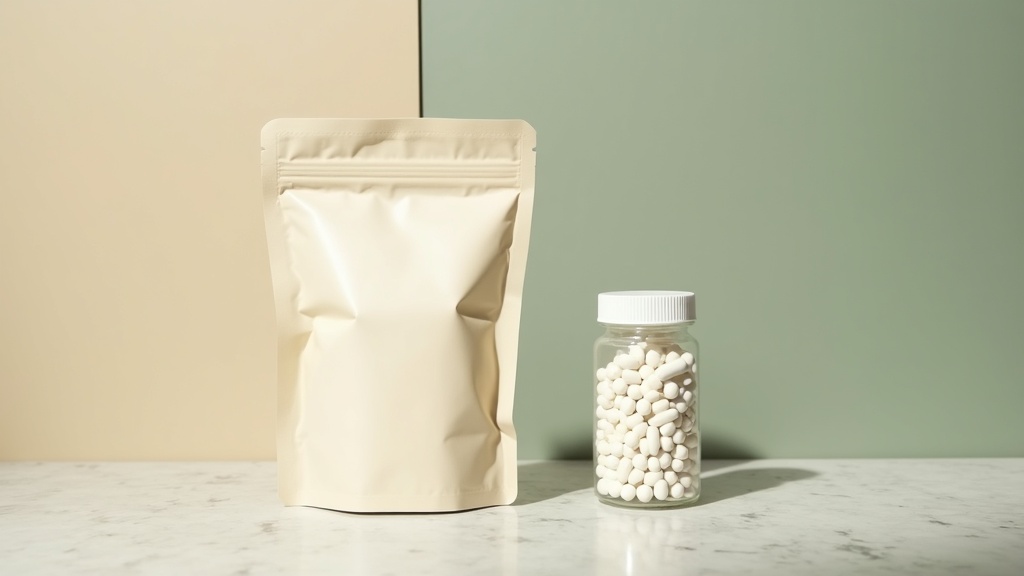
This is the section that saves you money, so I'll be blunt. Glycine has no meaningful "forms" to pay extra for — it's a single amino acid, and a gram of pharmaceutical-grade glycine powder is chemically identical whether it costs three cents or thirty. There is no glycinate-versus-citrate bioavailability story here the way there is with a mineral like taurine's neighbors.
So the real choice is format and price, not chemistry. Bulk powder is dramatically cheaper per gram, mixes into water with a faintly sweet taste, and lets you measure the exact 3 g the studies used with a cheap scoop. Capsules cost more, often pack only 500 to 1000 mg each, and quietly push you toward swallowing six pills to hit the studied dose.
The cost gap is bigger than people expect once you do the arithmetic. A typical 1 kg bag of glycine powder runs about $15 to $20 and holds 333 doses of 3 g, which works out to roughly four to six cents a night; a capsule bottle delivering the same 3 g often lands closer to fifty cents to over a dollar per night — a ten-fold-plus markup for putting the identical molecule in a gelatin shell. Over a year of nightly use, that's a difference of well over a hundred dollars for no added benefit.
Taste is the only genuine reason most people reach for capsules, and it's a mild one. Glycine's name comes from the Greek for "sweet," and at 3 g in a glass of water it tastes faintly like very weak sugar water — most people find it pleasant or neutral, but if even that bothers you, stirring it into tea or a small amount of juice hides it completely. There's no bitterness or chalkiness to mask the way some powders demand.
| Format | Cost per 3 g dose | Best for | The catch |
|---|---|---|---|
| Plain bulk powder | Roughly $0.05 to $0.15 | Anyone who’ll measure 3 g and doesn’t mind a scoop | You need a teaspoon or gram scale; loose powder is less travel-friendly |
| Capsules (500 to 1000 mg) | Roughly $0.50 to $1.20 | Travel and people who hate measuring | 3 g means 3 to 6 capsules; many people underdose without realizing |
| Branded “sleep” or “longevity” blend | Often $1 to $3+ per serving | Rarely the best value | You pay for marketing and filler ingredients; glycine dose may be hidden in a proprietary blend |
Two label details still matter even on cheap powder. Look for a single-ingredient product (just glycine, no proprietary blend) and a third-party testing seal, because purity and heavy-metal screening are the only places a budget product can actually fall short. Everything else is packaging.
Recommended Products
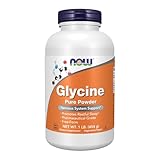


As an Amazon Associate, UsefulVitamins.com earns from qualifying purchases at no extra cost to you. We only recommend products supported by published research or third-party testing.
FAQ
How much glycine should I take for sleep?
The studied dose is 3 g, roughly one level teaspoon of powder, taken about an hour before bed. That's the amount used across the human sleep trials, so going higher doesn't buy you a bigger effect and a very large single bolus has actually impaired cognition in healthy people.
Is glycine powder really as good as capsules?
Yes — chemically they're the same molecule, and powder just costs far less per gram. Capsules win only on convenience; if you're happy measuring a scoop into water, the powder is the better value with no downside in effect.
Will glycine make me dependent or groggy like a sleep aid?
It's not a sedative and isn't habit-forming the way prescription hypnotics can be. It appears to work by gently lowering core body temperature to ease sleep onset rather than knocking you out, so morning grogginess is uncommon at 3 g.
Can glycine reverse aging or boost my glutathione?
The GlyNAC research is genuinely interesting but uses high, weight-based doses with N-acetylcysteine — not a nightly sleep scoop. A standalone glycine supplement is a reasonable amino acid to take, but don't expect a 3 g dose to replicate a 16-week clinical aging protocol.
When should I take glycine, and does it matter on a full stomach?
For the sleep effect, take it about an hour before bed; for collagen or general use, timing is far less critical. A large meal can blunt how quickly it's absorbed, but the bedtime trials weren't strict about fasting, so a light dinner beforehand is fine. Consistency over a couple of weeks matters more than getting the clock exact.
Should I take glycine or magnesium glycinate for sleep?
They overlap but aren't the same purchase — magnesium glycinate is mostly a magnesium supplement that happens to use glycine as the carrier, and the glycine dose in it is usually small. If your goal is the studied 3 g glycine sleep effect, plain glycine delivers it for less; if you're also low on magnesium, the glycinate form is a gentle way to fix both, just don't assume it provides a full sleep dose of glycine.
Is it safe to take glycine every night?
For healthy adults, 3 g nightly has a reassuring short-term safety record in trials, with no serious adverse effects reported. Long-term daily-use data is thinner, so if you have kidney or liver disease, take clozapine, or are pregnant, check with your clinician first.
The bottom line on glycine
Glycine is the rare supplement where being a savvy buyer mostly means refusing to overpay. Its strongest human evidence is for sleep quality at a specific 3 g bedtime dose, and that exact dose costs almost nothing as plain powder, so the premium "sleep" and "anti-aging" capsules are usually selling you convenience and marketing rather than a better molecule.
If you want to try it, buy a single-ingredient, third-party-tested powder, measure 3 g into water about an hour before bed, and give it a couple of weeks. For healthy aging, understand that the exciting GlyNAC data comes from a far higher, NAC-paired protocol that no bedtime scoop reproduces — so set your expectations to "supports better sleep," not "rewinds the clock."
And if your sleep problem is chronic rather than occasional, the most evidence-backed move isn't on a supplement shelf at all: it's a conversation with your doctor about CBT-I.
Reviewed by Maria Rodriguez, MS Nutrition Science, focused on cognitive and mood biochemistry. See more from Maria Rodriguez. This article is educational and is not a substitute for individualized medical advice; talk to your doctor before starting a supplement, especially if you are pregnant, take psychiatric medication, or manage a kidney, liver, or sleep disorder. As an Amazon Associate we earn from qualifying purchases.
