

If you've picked up a vitamin C bottle lately, you've seen the upsell: "with citrus bioflavonoids" or "with rose hips," usually at a higher price than the plain ascorbic acid next to it. The pitch is that these plant compounds help your body absorb and use the vitamin C better. It's a tidy story because whole oranges contain both.
The question is whether buying them together in a pill actually changes how much vitamin C reaches your blood, and the honest answer is that it barely does, if at all.
Before you decide
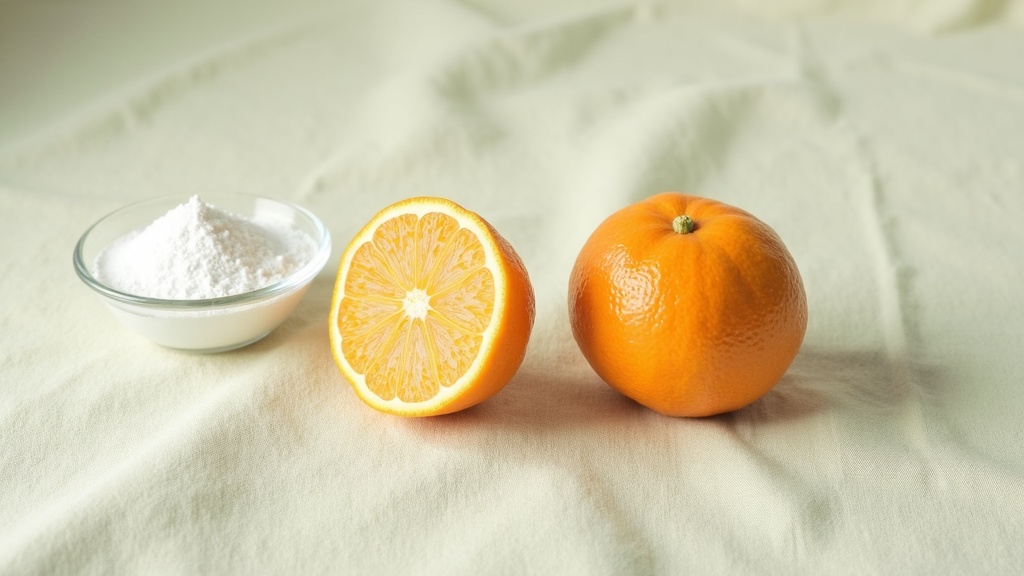
A quick reality check first: most adults who eat any fruits or vegetables are not vitamin C deficient, and the reference intake is modest. The RDA is 90 mg per day for men and 75 mg for women, amounts you can hit with a single orange and a serving of bell pepper.
Frank deficiency, scurvy, is rare in developed countries and shows up mainly in people with very restricted diets, heavy alcohol use, or certain malabsorption conditions. If you suspect you're genuinely low rather than just curious about supplements, that's a conversation with your doctor, who can check your status rather than have you guess. You can see how I weigh evidence and conflicts of interest on the how we review supplements page.
To judge the bioflavonoid claim fairly, it helps to know how vitamin C is actually absorbed. Ascorbic acid is taken up in the small intestine through sodium-dependent vitamin C transporters (SVCT1), an active, saturable system. That word "saturable" is the whole story here: your gut regulates uptake tightly.
At low to moderate doses, roughly 30 to 180 mg, absorption is highly efficient at around 70 to 90 percent, according to the NIH Office of Dietary Supplements. Push the dose past about 1,000 mg and fractional absorption drops below 50 percent, with the excess passing into urine.
The proxy metric most of these studies use is the plasma concentration curve over time (the area under the curve, or AUC) and urinary excretion. Keep that saturable transporter in mind, because it's the reason any "absorption enhancer" has limited room to work when the system is already running near its ceiling.
What bioflavonoids actually are
Bioflavonoids, or flavonoids, are a large family of plant pigments and antioxidants found in citrus, berries, tea, onions, and many other plants. In supplements you'll most often see "citrus bioflavonoids" (a mix including hesperidin, rutin, and quercetin) or rose hip extract paired with the vitamin C.
The marketing logic rests on two ideas. First, oranges naturally contain both, so the pairing looks like nature's intended package. Second, because flavonoids are antioxidants, the proposal is that they "spare" vitamin C by absorbing oxidative stress themselves, leaving more intact ascorbate available to your tissues.
Both ideas are biologically plausible, and plausibility is exactly where a lot of supplement marketing lives. The fact that two compounds occur together in food does not mean one improves the absorption of the other when swallowed as a pill.
And "spares vitamin C" describes a possible antioxidant interaction, not a measured increase in how much vitamin C crosses your gut wall. The way to settle a plausible mechanism is to measure it in people, which is what the next sections cover.
The one study everyone cites
Almost every bioflavonoid-and-vitamin-C marketing claim traces back to a single 1988 bioavailability paper by Vinson and Bose. They gave eight fasting subjects a 500 mg dose of ascorbic acid, either alone or inside a natural citrus extract that contained bioflavonoids along with proteins and carbohydrates, and measured plasma over time.
The citrus extract was about 35% more absorbed than plain ascorbic acid based on the plasma curves, and it was absorbed more slowly. On paper, that's the headline the supplement industry has leaned on for over thirty years.
There are real limits to lean on it that hard. It was eight people. It tested a single dose, not steady-state status over weeks, which is what matters for your actual vitamin C stores.
And critically, the comparison wasn't ascorbic acid versus ascorbic acid plus isolated bioflavonoids; it was ascorbic acid versus a whole citrus extract that also contained protein and carbohydrate, any of which could slow gastric emptying and change a single-dose absorption curve. So even taking the result at face value, it doesn't cleanly show that bioflavonoids are the active ingredient.
As the Linus Pauling Institute notes, Vinson and Bose remain the only investigators to have shown increased vitamin C uptake in the presence of citrus extract using this kind of pharmacokinetic design.
What the rest of the evidence says

When other researchers looked, the effect mostly evaporated. The Linus Pauling Institute's review of supplemental forms covered roughly ten clinical studies comparing vitamin C alone against vitamin C with flavonoid-containing foods or extracts and found no appreciable differences in ascorbic acid bioavailability; some studies even showed slightly lower plasma ascorbate when flavonoids were present. Their summary is blunt: the overall impact of flavonoids on vitamin C bioavailability "seems to be negligible."
The whole-food comparisons point the same way. A 2013 randomized crossover study compared synthetic vitamin C tablets against kiwifruit-derived vitamin C, kiwifruit being a flavonoid-rich food matrix. Plasma uptake was comparable between the two, and although urinary excretion was modestly higher with kiwifruit (about 50% of the dose versus 40% for tablets), the authors judged that roughly 10% difference "unlikely to be physiologically significant."
Their earlier six-week steady-state work found no differences in plasma, urine, leukocyte, or tissue vitamin C between the natural and synthetic sources. A 2025 randomized crossover study went further and found that flavonoid-rich whole fruits and vegetables did not out-absorb their juices; in fact the juice produced the highest plasma AUC, with the authors concluding that food matrix components like flavonoids "may slightly affect absorption kinetics" but overall bioavailability stays comparable across forms.
This is also where the broader "enhanced vitamin C" category gets sorted out. A 2025 systematic review of alternative supplement forms found modest, study-specific advantages for a couple of genuinely different formulations (calcium ascorbate with metabolites and liposomal vitamin C), but it did not substantiate a meaningful bioavailability edge for bioflavonoid pairings. If you want the deeper comparison of those reformulated options, I cover them in Ester-C vs ascorbic acid vs buffered, and the broader picture lives in the complete guide to vitamin C.
| Marketing claim | What the evidence shows | Verdict |
|---|---|---|
| “Bioflavonoids boost vitamin C absorption” | One small 1988 single-dose study (n=8) found 35% more, using a whole citrus extract with protein and carbs, not isolated flavonoids (PMID 3414575) | Weak, not replicated |
| “Natural food-source vitamin C absorbs better” | Kiwifruit vs synthetic showed comparable plasma uptake and no steady-state difference over six weeks (PMID 24284610) | No meaningful difference |
| “The whole-food matrix improves uptake” | Flavonoid-rich whole produce did not out-absorb juice; overall bioavailability comparable across forms (PMID 41228404) | Not supported |
| “Reviews confirm enhanced delivery” | Systematic review credited some reformulated forms but not bioflavonoid pairings; LPI calls the flavonoid effect “negligible” | Negligible |
Why the effect is small to begin with
Step back to that saturable transporter. At the doses most people actually take, 75 to 200 mg, your gut is already absorbing 70 to 90 percent of the ascorbic acid you swallow. There simply isn't much headroom for an "enhancer" to add. You can't push absorption from 85 percent to 130 percent; the ceiling is the ceiling.
This is the same physiology that makes mega-doses inefficient: as you climb past a gram, the fraction absorbed falls and the surplus is excreted. The NIH Office of Dietary Supplements puts it plainly, noting that the ascorbic acid in supplements has a bioavailability equivalent to the ascorbic acid that occurs naturally in foods.
So the bioflavonoid pitch is trying to optimize a step that's already efficient. Even if there's a small real effect in some people under some conditions, it lands on top of an absorption process that doesn't have much slack.
There's a difference between the dose that closes a real gap and the formulation tweak that just makes the label more expensive, and this is squarely the second kind. If your dietary vitamin C is already at or above the RDA, more sophistication in the pill doesn't translate into more vitamin in your tissues.
How to choose, and when to bother
For the large majority of readers, the practical answer is to buy plain ascorbic acid at a sensible dose and not pay extra for the bioflavonoid label.
If you're a healthy adult topping up: plain ascorbic acid, 75 to 250 mg per day, is fine and well absorbed. The bioflavonoid version offers no reliable absorption advantage to justify the markup.
If you get stomach upset from ascorbic acid: the issue is usually acidity, not absorption. A buffered form (mineral ascorbate) is the evidence-relevant fix, not bioflavonoids. I compare those in Ester-C vs ascorbic acid vs buffered.
If you want the flavonoids for their own sake: that's a different and legitimate reason. Flavonoids are studied for their own potential roles, separate from vitamin C absorption. But you'll get them, plus fiber and other nutrients, more cheaply and reliably from eating actual fruits and vegetables than from a supplement add-on.
If you suspect a real deficiency: don't reach for the fancier pill, get your status checked. Ask your doctor about your vitamin C intake and overall diet before assuming a formulation will fix something a blood-relevant assessment should define first.
FAQ
Is vitamin C with bioflavonoids a scam?
Not a scam, but oversold. The absorption-boost claim rests on one small study that newer and larger work hasn't replicated. You're usually paying more for a benefit the evidence calls negligible.
Do bioflavonoids do anything useful at all?
Possibly, but for their own antioxidant and plant-compound roles, which are studied separately from vitamin C uptake. That's a reason to eat colorful produce, not necessarily to buy a combination pill.
Does food-source vitamin C beat synthetic ascorbic acid?
For absorption, no. Controlled comparisons, including kiwifruit versus synthetic, show comparable plasma and tissue vitamin C. The NIH notes supplemental ascorbic acid is equivalent in bioavailability to the natural form.
Should I take more vitamin C to compensate for "poor absorption"?
No. Absorption is already efficient at moderate doses and falls off at high ones, with the excess excreted. Mega-dosing doesn't raise tissue levels proportionally and can cause GI upset.
Will bioflavonoids help me get over a cold faster?
There's no good evidence that the bioflavonoid pairing specifically does this. Vitamin C's modest role in colds is its own topic, and adding flavonoids to the pill hasn't been shown to change it.
The bottom line on bioflavonoids and vitamin C
The bioflavonoid absorption claim is a good example of a plausible idea that didn't hold up under measurement. One small 1988 study using a whole citrus extract showed more absorption, and the supplement industry has cited it ever since, but the studies that followed, including controlled whole-food comparisons and a 2025 systematic review, found the effect on vitamin C bioavailability negligible to nonexistent.
The underlying physiology explains why: at the doses people actually take, your gut already absorbs the large majority of the ascorbic acid you give it, leaving little room for an enhancer to matter.
For most adults, plain ascorbic acid at 75 to 250 mg per day is the sensible buy, and the premium for "with bioflavonoids" is money better kept. If you genuinely want flavonoids, eat the fruit.
If you suspect you're actually deficient, that warrants checking your status with your doctor rather than upgrading the bottle. None of this is a cure claim for anything; vitamin C supports normal nutrition within standard care, it doesn't replace it.
Reviewed by Sarah Thompson, Registered Dietitian, focused on vitamin and mineral nutrition. See more from Sarah Thompson. This article is educational and is not a substitute for individualized medical advice; talk to your doctor before starting a supplement, especially if you are pregnant, managing a diagnosed condition, or suspect a true deficiency.
