
Affiliate disclosure: this article contains affiliate links. As an Amazon Associate, UsefulVitamins.com earns from qualifying purchases at no extra cost to you.
You are in the supplement aisle holding two tubs. One says Creatine Monohydrate, costs almost nothing, and has been around since the 1990s. The other says Creatine HCl, costs two to three times more per gram, and promises better solubility, a smaller scoop, and less bloating.
The marketing frames HCl as the upgrade. The label will not tell you the catch: that upgrade mostly solves a problem you do not have.
Before you buy
The real question behind "HCl vs monohydrate" is not which form sounds fancier. It is whether HCl's better solubility actually puts more creatine inside your muscle cells. That single thing – muscle creatine saturation – is what drives the strength, power, and lean-mass results people take creatine for.
Everything else in the pitch (mixes clear, smaller scoop, gentler on the gut) hangs off that one question. If HCl saturates muscle better, the premium earns its keep. If it just dissolves nicer in the cup but lands in the same place, you are paying extra for a tidier drink.
So this guide does three things. It explains what each form actually is, traces the solubility-versus-absorption confusion the whole HCl story rests on, and lands a verdict based on what human trials and the International Society of Sports Nutrition position stand found – not what a brand blog claims.
What each form actually is
Creatine itself is the active molecule. Your body makes some, you get some from meat and fish, and a supplement tops up the rest so your muscles run closer to full. Monohydrate and HCl are just two delivery packages for the same molecule.
Creatine monohydrate is a creatine molecule bound to a single water molecule, which is what "monohydrate" means. It is roughly 88% creatine by weight, so a standard 5 g scoop delivers about 4.4 g of actual creatine. It has been the workhorse of nearly every creatine study for thirty years.
Creatine HCl is creatine bound to hydrochloric acid, forming a hydrochloride salt. That acid group is what makes it far more water-soluble – lab numbers put HCl's solubility many times higher than monohydrate's. Brands lean on that solubility figure as the headline selling point.
Here is the part worth sitting with. The entire difference between these two products is the carrier attached to the creatine, not the creatine itself. Once it is in your bloodstream, your body cannot tell which tub it came from.
Absorption vs solubility – clearing up the confusion
This is the crux, so it is worth slowing down.
Solubility is how well a powder dissolves in a glass of water on your counter. Absorption (bioavailability) is how much of the dose crosses your gut wall and reaches your bloodstream. The HCl pitch quietly treats these as the same thing. They are not.
Why does solubility barely matter for creatine? Because monohydrate's solubility is already good enough. Even when it dissolves slowly and leaves a few grains at the bottom of the glass, studies show monohydrate is absorbed almost completely – bioavailability sits near 100%.
Those leftover grains finish dissolving in the much larger, warmer, churning environment of your stomach and small intestine. The glass is not the bottleneck. There is no bottleneck.
So when a label brags that HCl is "many times more soluble," the honest follow-up is: more soluble than something already absorbed almost completely. You cannot beat 100%. Speeding up the part that happens in the cup does not get more creatine into muscle.
The NIH Office of Dietary Supplements and the ISSN are blunt here. The ISSN states that claims other forms "are degraded to a lesser degree than creatine monohydrate in vivo or result in a greater uptake to muscle are currently unfounded." That is the governing body of sports-nutrition science saying the core HCl claim has no support.
What the head-to-head evidence shows
When researchers put the two forms side by side and match the creatine content, the results land where the mechanism predicts: about the same.
A 2015 trial in recreational weightlifters compared HCl and monohydrate. All creatine groups improved leg-press strength, with no statistically significant strength difference between forms. The HCl arms showed some favorable body-composition shifts, but one HCl group was dosed at just 1.5 g against 5 g for the others and the sample was small, so that signal is suggestive at best. You can read the 2015 weightlifter trial for the full design.
More recently, a 2025 trial in elite team-sport athletes gave both forms at a matched 5 g per day for eight weeks. It found no statistically significant differences on neuromuscular performance or body composition. Both creatine groups improved; neither form pulled ahead.
That is the steady pattern across the limited human literature. When the actual creatine dose is matched, HCl and monohydrate produce comparable results. No trial has cleanly shown HCl building more muscle, strength, or power.
If you want to know why "the form a nutrient comes in" matters for some supplements but not this one, our breakdown of bioavailable nutrient forms walks through where carrier chemistry genuinely changes outcomes. Creatine is a textbook case of where it does not.
So why does HCl persist? Two reasons, and only one is about you. Some people report less stomach discomfort on the smaller HCl dose – a real, if individual, tolerance benefit. The other reason is margin: a pricier form with a premium story is good business.

Dosing and the optional loading phase
Dosing works the same way for both forms because the goal is the same: saturate your muscle stores and keep them topped up.
The fastest protocol is a loading phase of about 20 g a day, split into four doses, for 5 to 7 days, then 3 to 5 g a day to maintain. The simpler route – and the one most people should pick – is to skip loading and take 3 to 5 g a day from the start. You reach the same saturation in roughly 3 to 4 weeks, with fewer digestive complaints.
Loading only buys you a head start of a couple of weeks. It is optional, not required.
HCl is marketed at a lower dose (often 1.5 to 3 g) on the logic that better solubility means you need less. The honest read: matched-content studies do not confirm a precise lower-dose equivalence, so the safe move with HCl is still to hit an effective creatine amount rather than trust a small "absorbs better, take less" scoop.
Timing barely matters. Daily consistency is what saturates muscle, which is why creatine is a backbone of any sensible supplement stacking plan and a staple in our guide to workout recovery supplements.
One note worth flagging: creatine is now studied for preserving muscle during rapid weight loss, including on GLP-1 medications. If that is you, our piece on supplements for GLP-1 muscle loss covers how it fits. The form question does not change there either – monohydrate is still the studied, sensible choice.
How they compare at a glance
| Factor | Creatine monohydrate | Creatine HCl |
|---|---|---|
| Evidence base | Decades of trials; the reference form in nearly all creatine research | Far fewer studies; matched-dose trials show parity, not superiority |
| Solubility | Lower; may leave a few grains in the glass | Much higher; mixes clear |
| Muscle uptake | Near-complete; ISSN says no form beats it | No proven advantage over monohydrate in humans |
| Typical dose | 3 to 5 g a day; optional 20 g a day loading for 5 to 7 days | About 1.5 to 3 g as marketed; aim for an effective creatine amount |
| Stomach comfort | Most tolerate it; a minority report bloating, often dose-related | Some report less discomfort on the smaller dose |
| Cost per serving | Around $0.20 to $0.30, as of writing; check current price | Often 2 to 3 times higher per gram of creatine |
| Best for | Almost everyone | People who get real GI relief and do not mind paying more |
Quality and third-party testing
Once you have settled on a form – monohydrate, for most readers – the next decision matters more than the form ever did: is the tub actually pure and accurately labeled?
Creatine is a commodity ingredient, so the real quality questions are purity and label accuracy. Does the tub hold what it says, free of contaminants or banned-substance surprises? The cleanest way to check is a third-party certification.
NSF Certified for Sport and Informed Sport both test product batches for label accuracy and banned substances. You can confirm a specific product in the NSF Certified for Sport database before you buy. On the raw-material side, Creapure is a German-made creatine monohydrate known for high purity; many premium tubs advertise it.
You do not strictly need a certified tub to benefit. Plain monohydrate from a reputable brand is fine for most people. But if you compete in tested sport, or simply want the reassurance, certification is the lever worth a little extra – not the HCl form.
Where to buy and our value pick
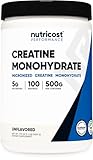
For most people the math is short: buy a tub of micronized creatine monohydrate, take 3 to 5 g a day, and keep the difference. Want extra purity assurance? Step up to a Creapure or NSF-certified monohydrate.
Only reach for HCl if monohydrate genuinely upsets your stomach and the smaller dose fixes it. That is a tolerance choice, not a performance upgrade.


As an Amazon Associate, UsefulVitamins.com earns from qualifying purchases at no extra cost to you.
UsefulVitamins earns a commission from qualifying Amazon purchases at no extra cost to you. It does not change our verdict – we point to the cheaper, proven option here because it is the right call.
FAQ
Is creatine HCl better absorbed than monohydrate? No. HCl dissolves better in water, but monohydrate is already absorbed almost completely in humans. The ISSN says claims of greater muscle uptake for alternative forms are unfounded, and matched-dose trials show no absorption edge for HCl.
Does creatine HCl cause less bloating? Some people do report less stomach discomfort on HCl, partly because the marketed dose is smaller. That is a real but individual tolerance benefit, not a sign it works better. If monohydrate bloats you, splitting it into smaller daily doses often solves it too.
Do I need to load creatine? No. Loading (about 20 g a day for 5 to 7 days) saturates muscle faster, but 3 to 5 g a day from the start reaches the same saturation in roughly 3 to 4 weeks with fewer digestive issues.
How much does creatine HCl cost compared to monohydrate? Per gram of actual creatine, HCl typically runs two to three times more. Monohydrate often works out to around $0.20 to $0.30 a serving as of writing, so check current price, but HCl rarely justifies the premium for most users.
Is Creapure or NSF-certified creatine worth the extra money? If you compete in tested sport or want verified purity and label accuracy, yes. For general use, plain monohydrate from a reputable brand still works; certification buys assurance, not better results.
Can I switch from HCl to monohydrate without losing progress? Yes. Both deliver the same creatine molecule, so switching changes nothing about your saturation as long as you keep taking an effective daily dose. Plenty of people switch to monohydrate purely to save money.
The verdict
Buy monohydrate. For the large majority of people, creatine monohydrate is the better and cheaper choice. It is the most-studied form in sports nutrition, it reliably works, and it costs a fraction of HCl. The HCl pitch rests on solubility, and solubility is not absorption.
Creatine HCl is not a scam and it is not useless. It is a pricier package for the same active molecule, with one genuine but narrow upside: if monohydrate keeps upsetting your stomach, HCl's smaller dose may sit better. That is the one honest reason to choose it.
Everyone else should grab the plain tub, add a third-party certification if they want peace of mind, and put the savings toward the rest of their training.
This article is for general information and is not medical advice. Creatine is well-studied and safe for most healthy adults, but talk to a clinician or pharmacist before starting any supplement, especially if you have kidney concerns, are pregnant, or take medication. Prices, formulas, and certifications change – verify current details before you buy.
Reviewed by the UsefulVitamins Editorial Team.
