
If you're losing weight on a GLP-1 and worried about losing muscle along with it, the short answer is: yes, you will lose some, and the only thing that meaningfully changes that is protein and resistance training. Supplements support, they do not replace. That distinction matters because the supplement industry has spotted a growing market of people on semaglutide or tirzepatide and is selling them expensive stacks with a lot of marketing copy and thin evidence. This article cuts through that. It covers what the clinical trial data actually show about how much lean mass GLP-1 drugs cost you, what protein targets the research supports, where creatine fits, and how whey and essential amino acids compare. The goal is a plan you can act on this week, not a supplement haul.
Affiliate disclosure: this article contains affiliate links. As an Amazon Associate, UsefulVitamins.com earns from qualifying purchases at no extra cost to you.
Summary: Quick Answer on GLP-1 Muscle Loss and Supplements
GLP-1 medications cause real but manageable lean mass loss. Roughly 25% of weight lost on these drugs comes from muscle and connective tissue, not fat. The interventions with the strongest evidence are high-protein eating (1.6-2.2 g/kg of body weight daily) and resistance training at least three times per week. Creatine monohydrate adds a meaningful but modest bonus on top of that. Whey protein isolate and essential amino acid (EAA) supplements are practical tools for hitting protein targets when appetite is suppressed.
Best for: People currently taking a GLP-1 receptor agonist (semaglutide, tirzepatide, or liraglutide) who want to preserve strength and metabolic rate during active weight loss.
Not ideal for: Anyone looking for a supplement shortcut that sidesteps protein and exercise. The evidence does not support that approach.
What to look for: Whey protein isolate with at least 25 g protein and 2.5 g leucine per serving; creatine monohydrate (not "enhanced" blends) at 3-5 g daily; EAA supplements with a full leucine, isoleucine, and valine profile if you are lactose intolerant or plant-based.
Decision shortcut: If you can only do one thing, hit your daily protein target. If you can do two, add resistance training. Creatine is step three, not step one.
How GLP-1 Drugs Actually Cause Muscle Loss
GLP-1 receptor agonists work by slowing gastric emptying, amplifying satiety signals in the hypothalamus, and blunting the post-meal glucagon spike. That combination is powerful for weight loss and for blood sugar control. The problem is that the same appetite suppression that makes these drugs effective also makes it easy to eat far too little protein.
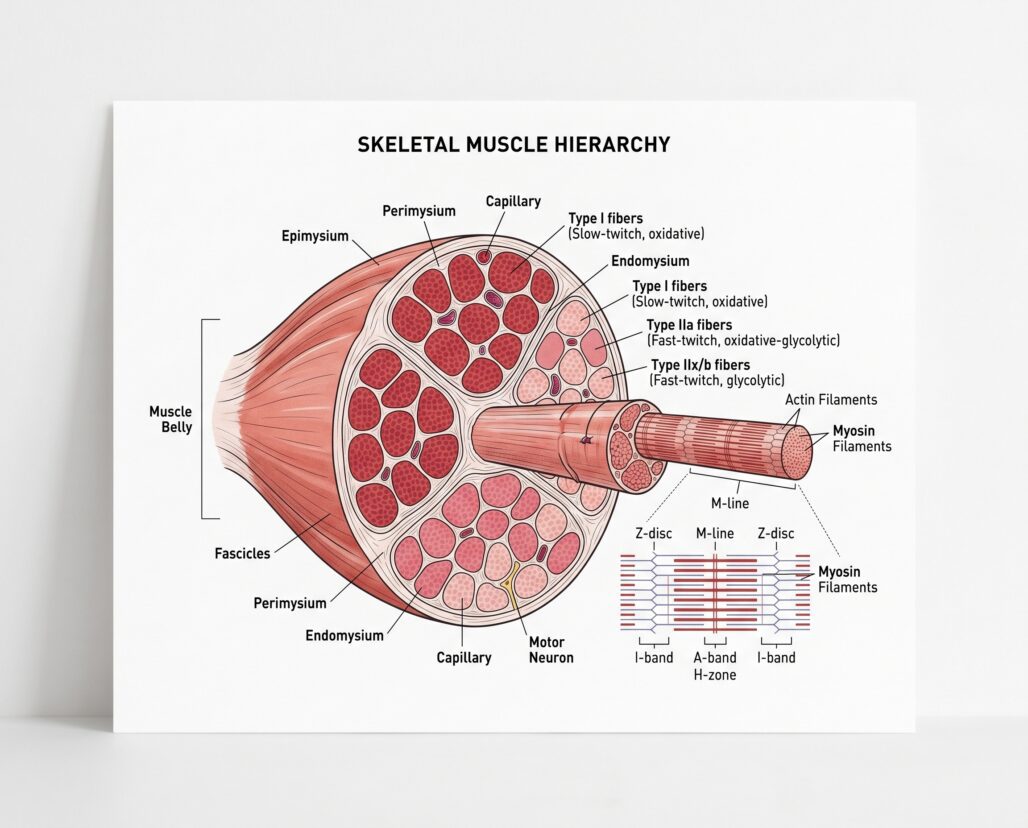
When you cut total calories aggressively, your body looks for energy anywhere it can find it. If protein intake is low and resistance exercise is absent, muscle breakdown accelerates. The clinical trial numbers make this concrete.
The STEP-1 body composition substudy (PMID 33567185) randomized 1,961 adults with obesity to weekly subcutaneous semaglutide 2.4 mg or placebo for 68 weeks. In the 140-person DXA imaging subset, semaglutide produced 15% total body weight loss. Fat mass fell by 19.3% and visceral fat dropped 27.4%. Total lean body mass declined 9.7% in absolute terms. When researchers framed this proportionally, the lean-to-fat ratio actually improved, because more weight was lost as fat than as muscle. But the absolute lean loss was real and clinically relevant for people who started with limited muscle reserve.
Tirzepatide (Mounjaro, Zepbound) tells a similar story. The SURMOUNT-1 body composition substudy (PMID 39996356) measured DXA changes at 72 weeks in 160 participants. Tirzepatide produced 21.3% total weight loss, with fat mass falling 33.9% and lean mass falling 10.9%, equaling an absolute lean mass loss of 5.6 kg. The researchers noted that approximately 75% of weight lost was fat mass and 25% was lean mass, a ratio consistent across age, sex, and weight loss subgroups. That 75/25 split is actually similar to what you see with conventional caloric restriction and without drugs, which suggests the lean mass loss is a consequence of the caloric deficit itself, not a unique pharmacological effect of the drug.
A 2024 narrative review (PMID 41022269) put it plainly: GLP-1 receptor agonists reduce appetite so effectively that total protein intake often falls well below the minimum needed to signal muscle protein synthesis. In older adults, people with existing low muscle mass, or those who are sedentary, that deficit compounds quickly into meaningful functional loss.
YMYL note: Semaglutide (Ozempic, Wegovy) is FDA-approved for type 2 diabetes and chronic weight management respectively. Tirzepatide (Mounjaro, Zepbound) is FDA-approved for type 2 diabetes and obesity. Liraglutide (Saxenda) is FDA-approved for chronic weight management. Retatrutide is currently in clinical trials and is not approved for any indication. Never purchase compounded or grey-market versions of these medications. The FDA has issued warnings about compounded semaglutide products, including those from pharmacies advertising on social media, due to dosing errors and contamination risks.
The Protein Target You Actually Need on a GLP-1
The default dietary reference intake for protein is 0.8 g/kg of body weight per day. That number was set to prevent deficiency in sedentary adults, not to preserve muscle during active weight loss. For people on GLP-1 medications, it falls short.
A 2022 meta-analysis of 105 randomized controlled trials (PMID 35187864) examined protein intake across a wide range of populations and found that intakes between 1.6-2.2 g/kg per day provided the most reliable support for lean mass retention during caloric restriction. A joint advisory from the American College of Lifestyle Medicine, the American Society for Nutrition, the Obesity Medicine Association, and the Obesity Society (PMC 12125019) specifically addressed GLP-1 users and recommended at least 1.2-1.6 g/kg/day during active weight reduction, with the note that protein needs should be calculated from fat-free mass rather than total body weight in people with obesity to avoid underestimating need.
What does this look like in practice? For a 90 kg person trying to preserve muscle on a GLP-1, 1.6 g/kg means roughly 144 g of protein daily. That is a significant amount when your appetite is suppressed to the point where you feel full after a few bites. This is precisely where protein supplements earn their place, not because protein powder is magic, but because it is calorie-efficient and easy to consume when solid food feels unappealing.
GLP-1 drugs also slow gastric emptying, which means large meals sit in the stomach longer. Spreading protein across 3-4 smaller meals matters here. One protein-rich meal per day is not enough to keep the anabolic signal running through the day, even if total daily intake looks adequate on paper.
Resistance Training: The Non-Negotiable Mechanism
No supplement stack preserves muscle if you are not providing a mechanical reason for the body to keep it. Resistance training is the primary anabolic signal. Protein and creatine work within that context; they do not create it from scratch.
The advisory from the four nutrition and obesity societies cited earlier recommended structured resistance training at least three times weekly, combined with at least 150 minutes of moderate aerobic activity per week. One randomized trial they reviewed found that combining GLP-1 therapy with exercise training preserved bone mineral density, while GLP-1 therapy alone decreased it. Muscle is not different from bone in this respect: use it or lose it is not a metaphor, it is physiology.
A review on GLP-1 receptor agonists and exercise (PMC 12683586) found that exercise added to GLP-1 therapy consistently shifted the body composition ratio toward fat loss and away from lean loss. The magnitude of the shift depended on exercise volume and protein intake together, not either factor alone.
The practical takeaway: if you are considering creatine, whey protein, or EAAs, book your resistance training sessions first. Three sessions of 30-45 minutes targeting major muscle groups, done consistently, will do more for lean mass retention than any combination of supplements done without it.
Creatine: What the Meta-Analyses Actually Show
Creatine monohydrate has one of the strongest evidence bases of any performance supplement. The mechanism is well understood: creatine increases phosphocreatine stores in muscle, which supports ATP regeneration during high-intensity efforts and also promotes muscle cell hydration and satellite cell activity, both of which support hypertrophy.
A systematic review and meta-analysis (PMID 39074168) synthesized 60 effect sizes from 52 studies and found that creatine supplementation combined with resistance training produced a weighted mean difference of approximately 0.89 kg more lean body mass compared to resistance training alone. That is a modest but real and consistent effect across a broad literature.
A 2024 study by Desai, Hagstrom, Candow, Smith-Ryan and colleagues (PMC 11944689) provided a nuance worth understanding. When creatine was combined with resistance training for 12 weeks, both the creatine and placebo groups gained roughly 2 kg of lean mass, with no statistically significant difference between groups. The prior meta-analyses showing approximately 1 kg additional gain from creatine may partly reflect studies that did not separate the initial water-retention effect from genuine muscle accrual. Even accounting for that, the researchers still found that creatine led to meaningful lean mass differences when resistance training was not yet underway, suggesting it buffers early catabolism during the transition period.
For GLP-1 users specifically, that transition period matters. When someone first starts semaglutide or tirzepatide, appetite drops sharply before eating habits and exercise routines adapt. Creatine during that initial weeks-long adjustment may help maintain muscle cell volume and anabolic signaling while lifestyle changes catch up.
Standard dosing: 3-5 g of creatine monohydrate per day, no loading phase required. Creatine ethyl ester and "buffered" forms have no meaningful advantage over monohydrate in the literature and cost considerably more.
Safety note: For individuals with existing kidney disease or reduced kidney function, creatine supplementation requires physician clearance before starting. The kidneys process creatinine (a metabolite of creatine) and additional creatine load may not be appropriate in compromised renal states.
Whey Protein vs. Essential Amino Acids: Which One to Use
Both whey protein isolate and essential amino acid (EAA) supplements can help you hit your daily protein target. They work through different mechanisms and suit different situations.
Whey protein isolate is a complete protein, meaning it contains all nine essential amino acids in proportions that support muscle protein synthesis. Its leucine content is particularly relevant. Leucine acts as an anabolic trigger: when plasma leucine rises above a threshold, it activates the mTOR pathway and accelerates muscle protein synthesis. Research suggests the effective threshold is approximately 2.5 g of leucine per meal for younger adults, and closer to 3 g per meal for older adults, who experience "anabolic resistance" requiring a stronger leucine signal to achieve the same synthetic response (PMID 34307436). A quality whey isolate serving of 25-30 g typically delivers 2.5-3 g of leucine, which puts it squarely in the effective range.
A study published in the Journal of the International Society of Sports Nutrition (PMID 32041644) found that a combination of EAAs with whey protein produced a greater anabolic response than whey alone, dose for dose. The free-form amino acids in EAA supplements are absorbed more rapidly than protein-bound amino acids in whey, producing a faster and larger plasma leucine peak.
Essential amino acids are useful when you are lactose intolerant, following a plant-based diet, or find the volume of a full protein shake unappealing. Because GLP-1 users often feel nauseated or overly full, a compact EAA drink with no additional macronutrients can deliver the anabolic signal without the bulk. The trade-off is that EAA supplements do not provide the broader nutritional matrix of whole protein, including non-essential amino acids that support connective tissue and immune function.
The practical split: Whey protein isolate is the better default for most people. Use EAAs as a targeted tool when a full shake is not tolerable, or as an addition around resistance training sessions to amplify the leucine peak.
A Sample Daily Plan for GLP-1 Users
This is a structure, not a prescription. Adjust portions to your actual protein target calculated from your fat-free mass with a registered dietitian.
Morning (before or with breakfast)
- 25-30 g whey protein isolate in water or blended into a small smoothie
- 3-5 g creatine monohydrate stirred in
Midday (lunch)
- 25-30 g protein from whole food sources: eggs, chicken, Greek yogurt, cottage cheese, or canned fish
- Aim for a meal you can actually finish given appetite suppression; smaller is fine if protein density is high
Pre-workout (on training days)
- 5-10 g EAAs in water 20-30 minutes before lifting
- This primes the leucine signal before the mechanical stress of training
Evening (dinner or post-workout)
- 25-30 g protein from whole food sources or a second shake if appetite is low
- Spreading protein across 3-4 meals throughout the day outperforms front-loading or concentrating intake
Total daily target: 1.6-2.2 g of protein per kg of body weight. For a 80 kg person, that is approximately 130-175 g of protein. Use a simple tracking app for the first two weeks to calibrate your intake; most GLP-1 users discover they are eating far less protein than they estimate.
Frequently Asked Questions
Q: Will supplements stop me from losing muscle on Ozempic? No supplement completely prevents lean mass loss during significant caloric deficit. What protein and creatine do is shift the ratio: more of your weight loss comes from fat, and less from muscle. The difference is meaningful for long-term metabolic rate and physical function, but the effect requires consistent protein intake and resistance training to be realized.
Q: Can I take creatine if I have kidney disease? Only with explicit clearance from your physician. Creatine is generally safe for people with healthy kidneys, but in compromised renal states, the additional creatinine load may be problematic. Do not start creatine based on this article if you have a known kidney condition.
Q: Is it safe to take these supplements if I am pregnant or nursing? Avoid all the supplements discussed in this article during pregnancy or nursing unless your OB-GYN has specifically reviewed and approved them. The research on whey, creatine, and EAAs has not been conducted in pregnant populations, and safety cannot be assumed.
Q: Do I need to take protein supplements, or can I get enough from food? Food first is always the better approach. Many people find it genuinely difficult to eat 1.6-2.2 g/kg of protein from whole foods alone while on a GLP-1, because appetite suppression limits total food volume. Supplements are a practical bridge, not a replacement for a protein-rich diet built around meat, fish, eggs, legumes, and dairy.
Q: What about branched-chain amino acids (BCAAs)? BCAAs (leucine, isoleucine, valine) are a subset of EAAs. They do not contain all essential amino acids and provide a narrower anabolic signal than a full EAA or whey supplement. BCAAs were popular in the 2000s but have largely been superseded by EAA formulations in the research literature. If you already have a BCAA product, it is not harmful, but a full EAA or whey supplement is a better investment of your budget.
Q: How long before I see results from this protocol? Most people notice strength maintenance within four to six weeks when protein and resistance training are both in place. Visible body composition changes take longer, typically twelve weeks or more, because you are simultaneously losing fat and supporting muscle retention rather than building new mass.
If you are managing a protocol like this, StackMyMed (our companion app) keeps your doses, timing, and interaction checks in one place. It does not replace medical advice — bring the log to your clinician.
Conclusion: The Bottom Line on Supplements for GLP-1 Muscle Loss
The data from STEP-1 and SURMOUNT-1 are unambiguous: roughly one quarter of the weight lost on semaglutide or tirzepatide comes from lean tissue. That is not a reason to avoid these medications. For most people who qualify for GLP-1 therapy, the health benefits of significant fat loss substantially outweigh the lean mass cost. But lean mass loss is not inevitable at its worst, and it is absolutely modifiable.
The hierarchy is straightforward. Protein intake at 1.6-2.2 g/kg daily is the foundation. Resistance training three or more times per week is the structure that gives protein a job. Creatine monohydrate at 3-5 g daily adds a consistent, evidence-backed increment of lean mass retention on top of those two. Whey protein isolate or EAA supplements are the most practical delivery vehicles for hitting protein targets when GLP-1 appetite suppression makes whole food challenging.
What the evidence does not support is skipping the protein and exercise fundamentals and expecting creatine or an EAA powder to compensate. Supplements work within a system, not instead of one.
Next steps:
- Read what are peptides for a foundation on how peptide-based drugs like GLP-1 agonists work at the receptor level
- See peptides for weight loss for a full breakdown of GLP-1 mechanisms and clinical outcomes
- Compare protocols in peptides for muscle growth if you are considering additional anabolic strategies alongside your GLP-1 therapy
- Calculate your protein target using your lean body mass, not your total weight, and track intake for two weeks to establish an honest baseline
- Book three resistance training sessions per week before spending a dollar on supplements
As an Amazon Associate, I earn from qualifying purchases. Product recommendations are based on real reviews and independent research.
This article is for informational purposes and not medical advice. Peptides, especially those marketed for therapeutic use, can interact with medications and health conditions. Consult a licensed physician before starting any supplement, particularly if you are pregnant, nursing, taking prescription medications, or managing a chronic condition.
As an Amazon Associate, I earn from qualifying purchases. Product recommendations are based on real reviews and independent research.
