
Affiliate disclosure: this article contains affiliate links. As an Amazon Associate, UsefulVitamins.com earns from qualifying purchases at no extra cost to you.
Where the "liver cleanse" pitch comes from
Scroll any wellness feed and you will find the same promise. A capsule, a tea, or a 10-day "reset" that flushes toxins from your liver and leaves it sparkling.
The story sells because it feels intuitive. You ate badly, you drank too much over the weekend, so surely your liver needs a hand to clear the wreckage.
Here is the problem with the whole frame. Your liver is the detox organ. It does not sit around waiting for a supplement to switch it on.
The liver processes alcohol, drugs, and metabolic byproducts every minute through enzyme pathways, then routes the waste out via bile and urine. Johns Hopkins hepatologists have said plainly that a healthy liver does not need a cleanse, and that they do not recommend these products because they are unregulated and untested in trials. You can read the Johns Hopkins expert Q and A on liver "detox" for the full version.
So the marketing claim and the biology point in opposite directions. That is the first thing to sit with before you spend a cent.
What "liver support" supplements actually contain
The category is not one thing. It is a grab bag, and the ingredients have wildly different evidence.
Most products fall into a few buckets:
- Milk thistle (silymarin) – the one with actual human trials behind it.
- TUDCA – a bile acid, popular with biohackers, with early but real clinical data.
- NAC (N-acetylcysteine) – a genuine hospital drug, marketed here as a general tonic.
- Filler botanicals – dandelion, artichoke, beetroot, turmeric, "detox" blends with no meaningful liver-outcome data.
The trick the category plays is borrowed credibility. A blend will put a real ingredient like milk thistle on the front, then bury it among eight others at doses too small to do anything. That is fairy-dusting, and it is everywhere in this aisle.
Let me grade each one honestly, because lumping them together is exactly how the marketing wins.
Milk thistle: real evidence, modest and narrow
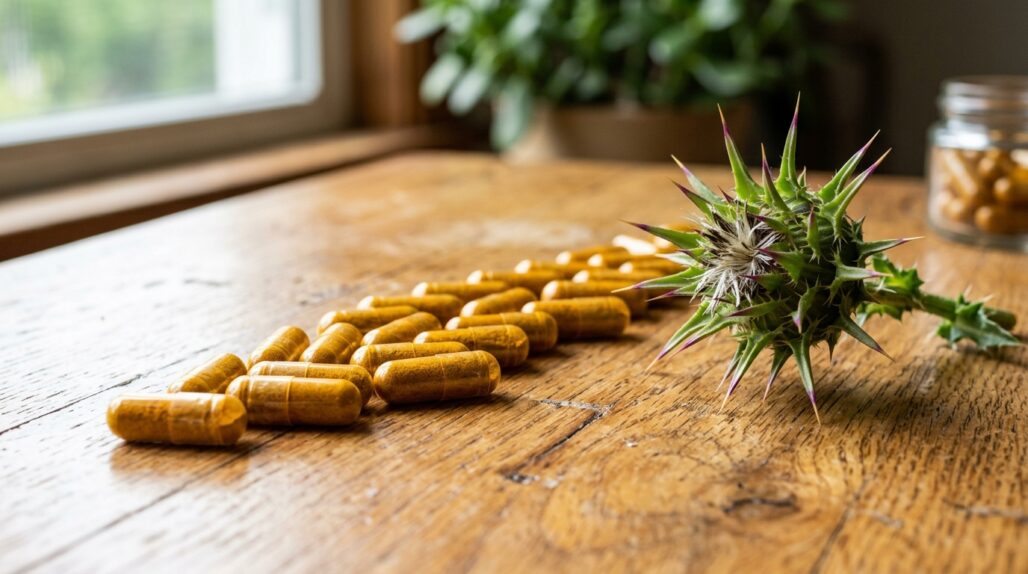
This is the ingredient worth taking seriously. Silymarin, the active flavonolignan complex in milk thistle, has antioxidant and anti-inflammatory effects that are not made up.
But "has effects in a lab" is not the same as "fixes your liver." So what do the human trials show?
In fatty liver disease, the signal is real but small. A meta-analysis of eight randomized controlled trials in 587 patients found silymarin lowered ALT and AST (liver enzymes) more than placebo, on the order of a single-digit-point reduction. You can see that meta-analysis of silymarin in nonalcoholic fatty liver disease for the numbers.
That is a biomarker moving, not proof your liver got healthier in a way you would feel. A well-run, placebo-controlled trial in biopsy-confirmed NASH used a hefty 700 mg of silymarin three times daily for 48 weeks. You can read that randomized silymarin trial in nonalcoholic steatohepatitis for the details.
Now the part the bottles leave off. In alcoholic and viral hepatitis, the best studies found no benefit. The AHRQ evidence review and Cochrane analyses concluded milk thistle did not reduce deaths or reliably change liver enzymes versus placebo in those conditions. Lower-quality studies looked promising; the rigorous ones did not confirm it. The AHRQ evidence report on milk thistle for liver disease lays this out.
The honest read on milk thistle: modest, real evidence for nudging enzymes in fatty liver, safe to take, and not a cure for anything. It is the least bad pick in the category, not a miracle.
TUDCA and NAC: emerging versus borrowed
These two get name-dropped constantly. They deserve separate treatment because one is early and one is being sold dishonestly.
TUDCA (tauroursodeoxycholic acid) is a bile acid. Small human trials in chronic hepatitis and cholestasis showed it lowered liver enzymes meaningfully over a few months, and early NAFLD work suggests it may improve liver fat and stress markers. The catch: the human data is preliminary and small, and there is no good evidence it reverses fatty liver. It is a reasonable, low-risk experiment for a specific reason, not a proven everyday supplement.
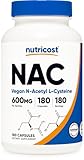
NAC is where the marketing gets slippery. NAC is the only approved antidote for acetaminophen (Tylenol) overdose, and it genuinely saves livers in that emergency by restoring glutathione. The NIH LiverTox monograph on acetylcysteine documents that clinical use.
But that hospital fact gets stretched into "take NAC daily to protect your liver," which the evidence does not support. An IV antidote for a poisoning is not a wellness tonic. Borrowing the drama of the ER to sell a capsule is the oldest move in this category.
| Ingredient | The marketing claim | What the human evidence shows | Evidence grade |
|---|---|---|---|
| Milk thistle (silymarin) | Detoxes and repairs the liver | Modest ALT/AST drop in fatty liver RCTs; no mortality benefit in hepatitis | Human RCTs, modest and narrow |
| TUDCA | Heals and protects liver cells | Lowers enzymes in small hepatitis/cholestasis trials; NAFLD data preliminary | Early human data, promising not proven |
| NAC | Daily liver protection | Proven only as an acetaminophen-overdose antidote in hospitals | Borrowed clinical context, not daily evidence |
| “Detox” blends | Flush toxins, cleanse, reset | No human outcome data; liver self-detoxes; some blends carry injury risk | Unsupported marketing |
The irony: some "liver" supplements can hurt your liver
This is the part that should make you pause at the shelf. The same wellness aisle selling "liver support" also sells the ingredients now showing up in liver-injury reports.
Herbal and dietary supplements have gone from about 7% of drug-induced liver injury cases to roughly 20% over the past two decades in US tracking networks. The usual suspects include green tea extract, turmeric/curcumin, ashwagandha, and garcinia. A review of supplement-induced liver injury covers the pattern.
A few honest caveats so this does not turn into its own scare. Serious injury is rare in absolute terms, the reporting overlaps with genetic susceptibility (an HLA-B*35:01 link for green tea extract), and one widely-quoted 2024 estimate drew criticism for overstating population risk. The point is not "supplements destroy livers." The point is that a product promising to protect your liver is not automatically safe for it, especially as an unregulated multi-ingredient blend.
If your whole reason for buying is "general detox," you are taking on a small, pointless risk for a benefit that is not there.
Who might actually benefit, and who is wasting money
Strip away the hype and the picture is simple.
You are probably wasting money if you are a healthy adult buying a cleanse for prevention, a post-weekend reset, or vague "toxins." Nothing in the evidence supports that purchase. Your money does more for your liver spent on vegetables, less alcohol, and not buying it at all.
A conversation with your doctor might be reasonable if you have a diagnosed condition like nonalcoholic fatty liver disease, where silymarin has that modest enzyme signal as an add-on. Even then it is an adjunct, not a treatment, and it does not replace the things that actually move fatty liver: weight loss, less alcohol, blood-sugar control.
One line that matters more than any supplement. Liver disease is a medical condition and belongs to a clinician, not a capsule. If you have symptoms, abnormal liver tests, or a diagnosis, that is a doctor's job. Do not self-treat it, and never start or stop a prescribed medication to take a supplement.
Cost versus value
A bottle of a decent standardized milk thistle runs around $15 to $30 a month as of writing, so check current pricing. A "premium liver detox complex" with a dozen ingredients often costs more and delivers each one at a token dose.
You are usually paying extra for a longer label, not a better result. The price scales with the marketing, not the evidence.
If you still want to try something in this category, the honest move is to buy the one ingredient with data, verify it is tested, and skip the blend.


As an Amazon Associate, UsefulVitamins.com earns from qualifying purchases at no extra cost to you.
We may earn a commission if you buy through links on this page, at no extra cost to you. It does not change our verdict or which products we flag as tested.
For most healthy people the better-value "liver support" is not on this list at all. It is the unglamorous stuff: less alcohol, fewer ultra-processed calories, a normal weight, and water. If you want a deeper read on why the cleanse model fails, see our companion piece below, and if you have a diagnosed condition, anchor your plan to a clinician first.
For more context across the category, compare the picks in our guide to the best supplements for liver health, weigh the bile-acid option in our review of TUDCA supplements, and if your real concern is a fatty liver diagnosis, start with our evidence rundown for fatty liver. For the wider pattern of cleanse marketing, our look at whether detox supplements actually work covers the same playbook.
FAQ
Does milk thistle clean out your liver? No. It does not flush toxins. In fatty liver trials it slightly lowered liver enzymes, but a healthy liver already detoxifies on its own and does not need help from a supplement.
Is a 10-day liver cleanse a scam? The “cleanse” premise is unsupported by evidence, and some products contain harsh laxatives or diuretics that cause more harm than good. It is not worth the money for a healthy person.
Should I take NAC for liver health? NAC is a proven hospital antidote for acetaminophen overdose, not a validated daily liver tonic. The everyday “protection” claim is borrowed from that emergency use and is not backed for general supplementation.
Can liver supplements cause liver damage? Rarely, yes. Some botanicals like green tea extract, turmeric, and ashwagandha appear in drug-induced liver injury reports. It is uncommon, but a “liver support” label does not guarantee the product is safe for your liver.
What actually helps a fatty liver? Weight loss, reducing alcohol, and controlling blood sugar are the levers with real evidence. Silymarin may be a modest add-on under a doctor, but it does not replace those changes.
I have abnormal liver tests. Should I buy a supplement? No. Abnormal liver tests need a doctor’s evaluation to find the cause. Do not self-treat with supplements, and do not change any prescribed medication on your own.
The bottom line
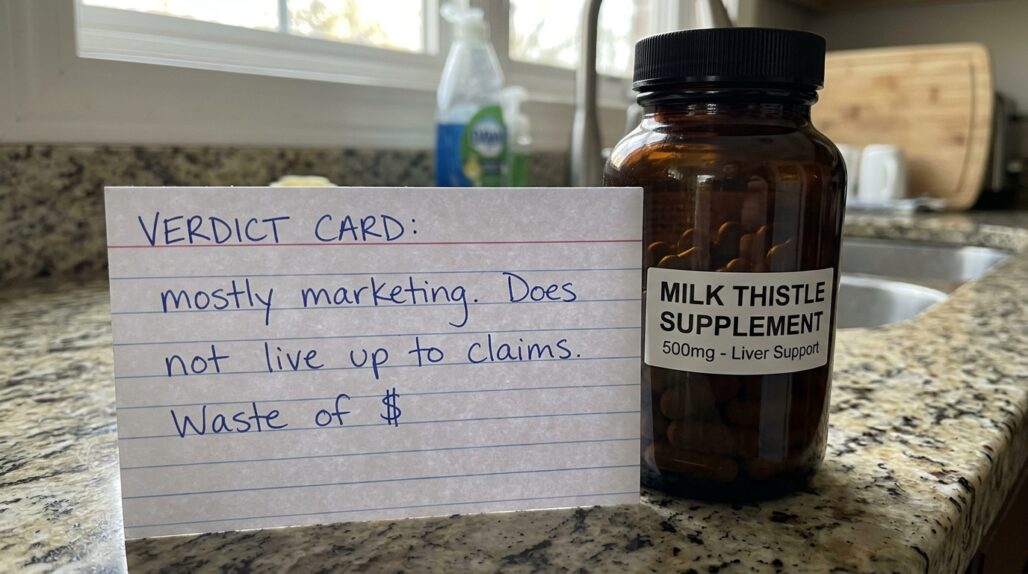
Liver support supplements are mostly a marketing category built on a biology myth, since a healthy liver detoxes itself and does not need rescuing. The "cleanse" and "detox" blends are the clearest waste of money, and a few carry a small, avoidable risk.
The one honest exception is milk thistle, which has modest human evidence for nudging liver enzymes in fatty liver, plus TUDCA as an early, low-risk experiment for specific cases. Neither is a treatment.
Your next step depends on you. If you are healthy, save your money and spend it on the boring habits that work. If you have a diagnosed liver issue, see a doctor first, then ask whether a tested, single-ingredient silymarin makes sense as an add-on rather than a multi-ingredient detox blend.
This article is for general information and is not medical advice. Supplements are not a treatment for any liver condition. Talk to a qualified clinician before starting any supplement, especially if you have a diagnosed liver problem, take medication, or are pregnant.
Reviewed by the UsefulVitamins Editorial Team.
