
Affiliate disclosure: this article contains affiliate links. As an Amazon Associate, UsefulVitamins.com earns from qualifying purchases at no extra cost to you.
Why a normal pillbox fails a supplement stack
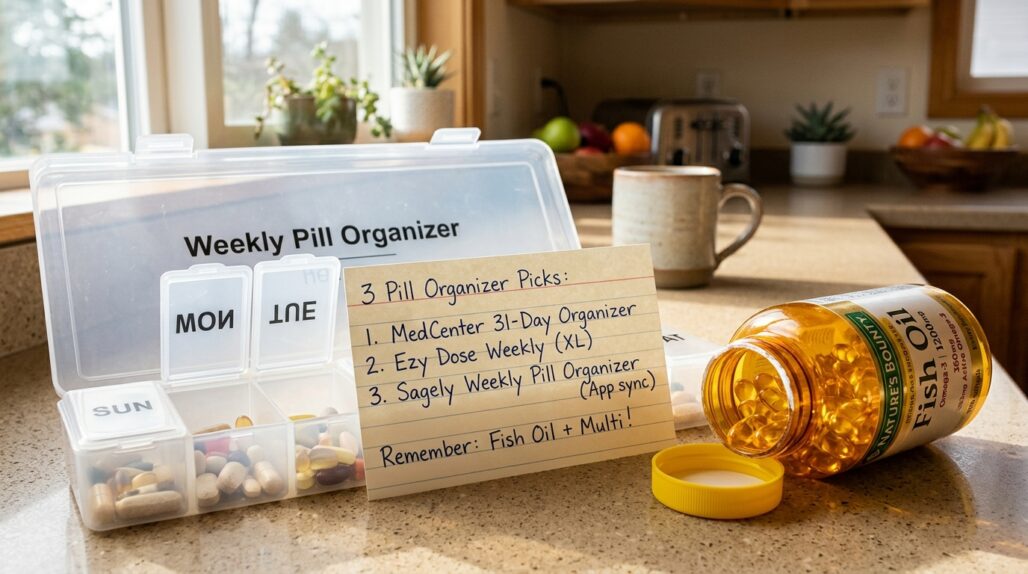
A standard 7-day pillbox was designed around small prescription tablets – a metformin, a statin, a blood-pressure pill. Drop a 1,200 mg fish-oil softgel, a horse-pill magnesium, and a chewy vitamin D into the same compartment and you run out of room fast. The lid won't snap shut, softgels pop into the next day, and you lose track of what you actually took.
Three things break a basic box for supplement users:
- Big softgels. Omega-3, vitamin E, and combined multivitamin softgels are physically large. A typical daily compartment holds 4-6 small tablets but only 1-2 of these.
- AM/PM and multi-dose splits. Magnesium at night, B-complex in the morning, iron away from coffee – a single daily slot can't hold a routine that's split across the day.
- Volume. Once you're past 8-10 items, a weekly box becomes a packing puzzle. People give up and go back to grabbing from bottles, which is where doses get missed or doubled.
A simple organizer genuinely helps people remember. In a 2025 pilot in older adults, a labeled manual pill organizer was used independently by about three-quarters of participants, who valued the visual reminder and the easy way to spot a missed dose. The catch is that the box has to actually fit your routine, or it gets abandoned. That is the whole problem this page solves.
The three picks, compared
The right box depends less on brand and more on fit: the size of your softgels, whether you split morning and evening, and whether you travel. Here is how the three formats stack up for a supplement-heavy routine. Prices are rough ranges as of writing; check the current price before you buy.
| Pick | Best for | Compartment fit | Rough price | The trade-off |
|---|---|---|---|---|
| Extra-large weekly organizer | A big stack you want sorted across the day and the whole week | Deep wells that swallow large softgels and still close flat | Around $12-20 | Four slots per day means each well is a bit smaller – confirm your biggest softgel still fits one |
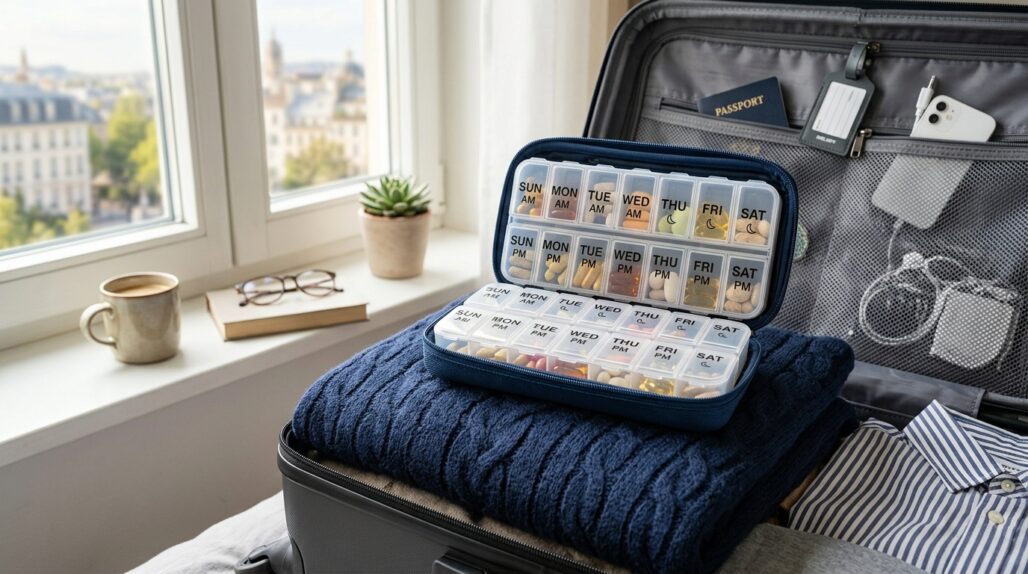
| AM/PM large-compartment organizer | Routines split across morning and evening | Two roomy rows per day, sized for mixed tablets and softgels | Around $15-25 | Each individual well is a little smaller than a single-row box |
| Large travel pill case | Commuting, gym bags, trips, a desk drawer at work | Stackable jars or a zippered case that protects from crushing | Around $10-18 | Holds fewer days, so you refill more often |
If you want one box that holds a big stack and covers a full week of detachable daily trays, the extra-large weekly organizer is the pick. If your routine is genuinely split – iron and B-vitamins early, magnesium and fish oil at night – the AM/PM two-row version saves you from guessing later. The travel case is a second box, not a replacement: keep it for the days you are not at home.
A quick reality check on the upgrade above this category. A locked, alarm-equipped automatic dispenser is a different product for a different person – someone managing dementia risk, wandering, or a large prescription load. If that is who you are shopping for, the honest comparison lives on our guide to automatic dispensers versus blister packs versus a simple pillbox. For a self-sufficient adult sorting their own supplements, that hardware is overkill and overpriced.
How to fill it without ruining your supplements
A box only helps if what's inside it stays good. A few habits keep your stack effective:
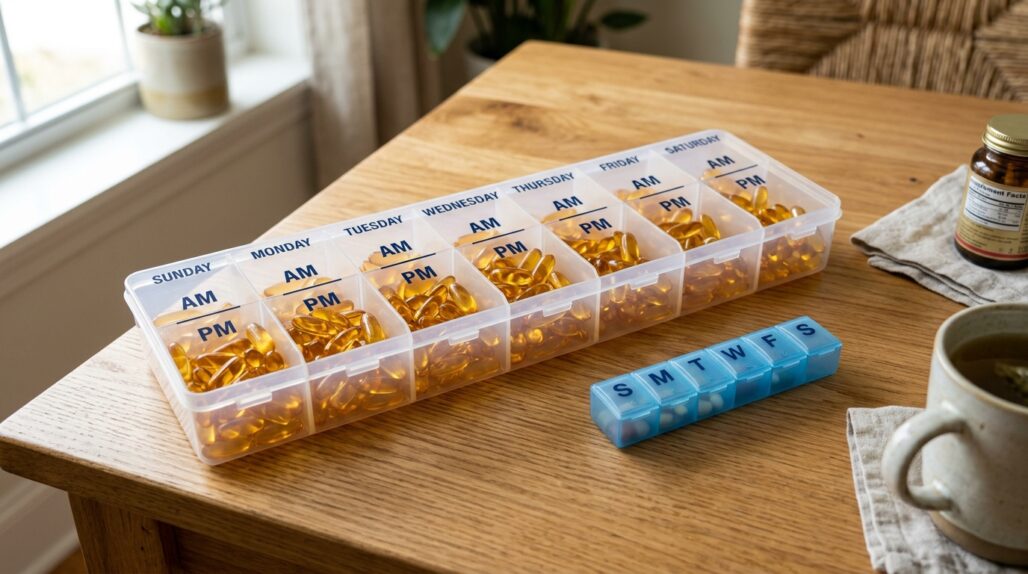
- Keep fish oil and other oils cool, dark, and capped. Heat speeds up rancidity fast. Industry storage guidance notes the oxidation rate roughly doubles with every 10C rise in temperature, and the FDA's manufacturing rules already require supplements be held under controlled temperature, humidity, and light. Once you transfer softgels into a clear weekly box on a sunny windowsill, you lose that protection. Pre-fill only a few days at a time, store the box away from heat and direct light, and leave the bulk of the bottle sealed in a cupboard.
- Do not crush or split a softgel or a coated tablet to make it fit. If it does not fit, you need a bigger compartment, not a smaller pill. Crushing can wreck a timed-release coating or just make a mess.
- Watch what sits next to what. This is the part worth a moment of thought. Some pairings work against each other when taken at the same time. The NIH Office of Dietary Supplements notes that calcium can interfere with iron, so experts suggest you take calcium and iron supplements at different times of day. Sorting them into the same daily slot quietly defeats that. Our explainer on which supplements to take together versus separate walks through the common pairs.
- Keep one original bottle accessible. You still need the label – the lot number, the expiry, the exact dose – if a question comes up. Organizers do not replace labels.
If you are juggling a long list and want a repeatable method rather than a one-off fill, our step-by-step on building a medication and supplement system covers the whole routine, from layout to refill day.
Which to buy
Pick by fit, not by feature count. Match the box to your real routine, then sort it once and keep the bottles labeled.


As an Amazon Associate, UsefulVitamins.com earns from qualifying purchases at no extra cost to you.
We may earn a commission from purchases made through the links below, at no extra cost to you. We only list products that fit the use cases above.
The short version: buy the extra-large weekly box if your stack is big but single-time-of-day, the AM/PM two-row box if you split morning and evening, and add the travel case only as a second container for life away from home. None of these is a medical device, and none of them tracks interactions – they hold pills, nothing more.
The free alternative, and where a box stops helping
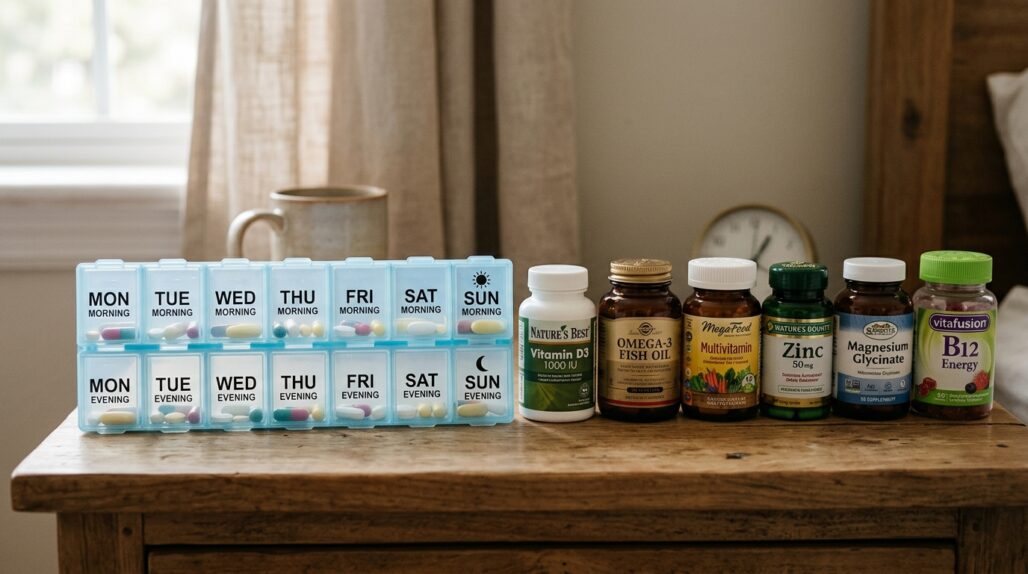
You do not have to spend anything. A row of labeled containers, or even the original bottles lined up left to right in the order you take them, does the same reminding job for free. The point is a fixed visual system, not the plastic.
What a pillbox cannot do is catch a problem. It will happily let you sort a pill into the wrong slot, double a dose, or place two things together that should be hours apart. A box organizes; it does not check. For that you need a written list you keep current – a note in your phone or a paper card in your wallet works fine – or a tracking system that flags timing and overlap. If you care for a parent across several prescribers, a single shared master medication list is the highest-value, lowest-cost upgrade you can make.
And when your real bottleneck is the physical act of filling a busy weekly box without errors, our walkthrough on filling a weekly organizer safely with many medications is the next thing to read.
When to check with a pharmacist or doctor
This is a low-stakes product page, but a couple of situations deserve a real professional's input before you re-sort anything:
- Timing-sensitive prescriptions. Levothyroxine is the classic example – the NHS advises leaving at least 4 hours between levothyroxine and calcium or iron, and to ask your pharmacist about spacing other medicines. If you sort a thyroid tablet into the same slot as your calcium, the box has quietly worked against the medication. A pharmacist can map your routine for free.
- Controlled or high-risk medications. For opioids, sedatives, or anything where a double dose is dangerous, loop in the pharmacist or doctor on the storage and safety plan rather than relying on a box alone.
- Cognitive decline or memory loss. If forgetting is the real issue – not just clutter – a passive box may not be enough. That is a conversation for the doctor about a locked dispenser or pharmacy blister packing, not a $15 organizer.
A pill organizer is an aid, not a safety system. It does not diagnose, dose, or decide anything. Keep those decisions with the people who can see your whole picture.
FAQ
Will big fish-oil softgels actually fit a standard 7-day pillbox? Usually only one or two per compartment, which is the core problem. Look for a box described as extra-large or deep-well, and confirm the lid closes flat over your biggest softgel before you commit to a week’s fill.
Is it bad to store fish oil in a clear plastic organizer? For a day or two it is fine. For longer, light and heat speed up oxidation, so keep the box out of direct sun and warm spots, and pre-fill only a few days at a time rather than emptying the whole bottle into clear plastic.
Can I put my prescription pills and my supplements in the same box? Often yes, but check timing first. Some pairings need spacing (calcium and iron, or levothyroxine and minerals), so ask your pharmacist before you mix everything into one daily slot. Fish oil in particular prompts common questions, like whether you can take fish oil with blood pressure medication or combine fish oil with metformin, both worth a quick check before you sort them together.
Should I crush a capsule that does not fit? No. Crushing can break a timed-release coating and change how the supplement or medicine works. If it does not fit, get a bigger compartment instead.
Do I still need the original bottles if everything is in a box? Yes. Keep at least one labeled bottle so you can check the dose, lot number, and expiry, and so anyone helping you can see exactly what you take.
Is an automatic dispenser worth the monthly cost over a cheap box? Only for specific needs like memory loss, wandering risk, or a very large prescription load. For a self-managed supplement stack, a deep weekly box plus a written list does the same job for a fraction of the price.
The bottom line
Most pillboxes fail a supplement routine for one boring reason: the compartments are too small. Measure your biggest softgel and your busiest day, then buy for compartment depth and an AM/PM split rather than for the number of days. The extra-large weekly box suits a big single-time stack, the two-row AM/PM box suits a split routine, and the travel case is a useful second container. Keep oils cool and capped, do not crush capsules to force a fit, keep one labeled bottle, and pair the box with a current written med list so something is actually checking for timing and overlap. If a prescription with strict timing is in the mix, run your plan past a pharmacist first.
This article is for general education and is not medical advice. Pill organizers are storage aids, not medical devices, and do not check for interactions or correct dosing. Talk to your pharmacist or doctor about medication timing, storage, and safety for your specific situation.
Reviewed by the UsefulVitamins Editorial Team.
