
If you're looking for the best adaptogens for anxiety, the honest answer is: ashwagandha and saffron have the strongest anxiolytic RCT data among herbs commonly marketed as adaptogens, but effect sizes are modest, onset is weeks not days, and none of them work the way benzodiazepines or SSRIs work. This article ranks the main candidates by evidence tier for anxiety specifically, explains what the research actually measured, and gives you the full drug-interaction picture that most roundup articles omit. You will also learn why "adaptogen for anxiety" as a category requires careful framing, since anxiety as a clinical diagnosis is YMYL territory where supplement marketing routinely outpaces the science.
Affiliate disclosure: this article contains affiliate links. As an Amazon Associate, UsefulVitamins.com earns from qualifying purchases at no extra cost to you.
Summary: quick answer on adaptogens for anxiety
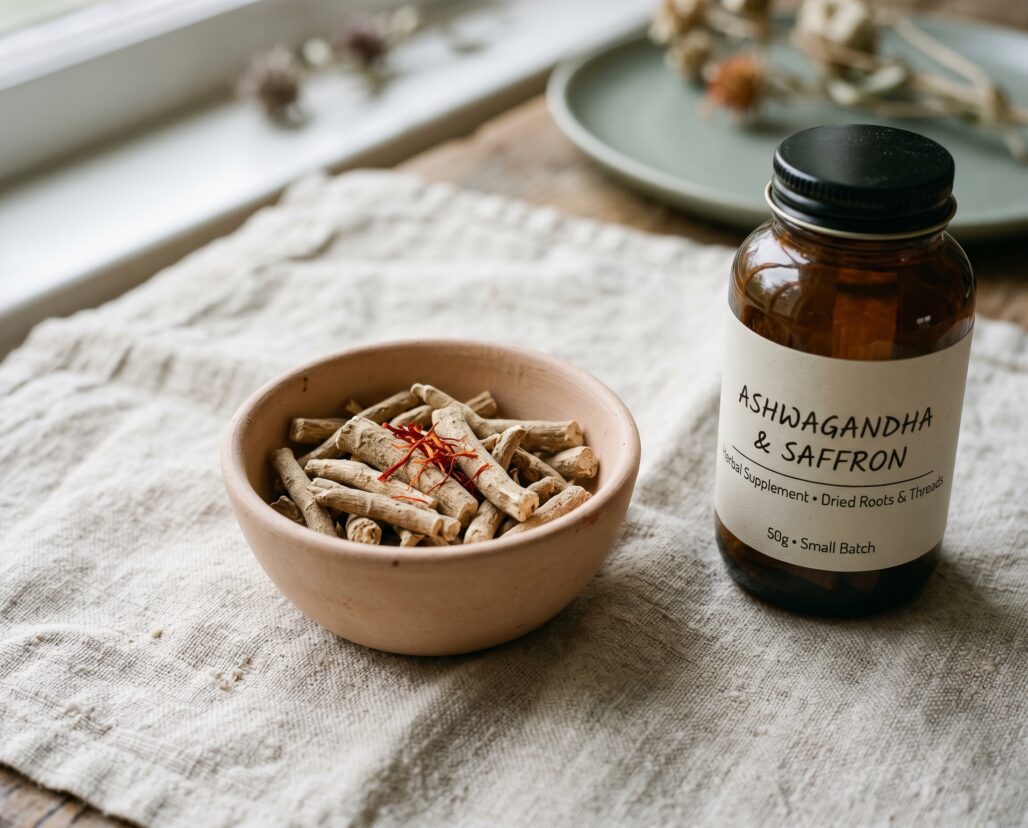
The best-studied adaptogens for anxiety symptoms are ashwagandha (multiple RCTs, consistent signal in stressed adults) and saffron (several small RCTs showing anxiolytic and antidepressant effects). Lion's mane and holy basil have limited but real human data. Rhodiola's primary RCT evidence is for fatigue and cognitive performance, not anxiety directly.
Best for: Adults with chronic, low-grade stress-driven anxiety (lasting three or more months) who are not currently on psychiatric medications and want a gradual, non-sedating adjunct. Most benefit appears at the 4-8 week mark.
Not ideal for: Anyone with a diagnosed anxiety disorder currently managed with SSRIs, SNRIs, benzodiazepines, or MAOIs — the interaction risks are real and specific (see the drug-interactions section). Anyone expecting fast relief comparable to anxiolytics. Pregnant or breastfeeding individuals.
What to look at before buying: Whether the product specifies a standardized extract (KSM-66 or Sensoril for ashwagandha, standardized saffron for Crocus sativus) and a disclosed active-marker percentage. "Ashwagandha root powder" alone is not the same product used in the clinical trials.
Decision shortcut: These are not a replacement for therapy, medication, or lifestyle work on sleep and caffeine. If your anxiety is severe, interfering with daily function, or newly onset, consult a clinician before adding herbs. If your anxiety is chronic, low-level, and stress-driven, the evidence is more supportive.
What you'll find in this guide
- Why adaptogens are not the same as anxiolytics
- Tier 1: ashwagandha — the strongest human RCT data for anxiety
- Tier 1: saffron — underrated anxiolytic and antidepressant RCT data
- Tier 2: lion's mane and holy basil — real but limited human data
- Tier 3: rhodiola — fatigue and cognition evidence, less direct anxiety data
- Side effects and drug interactions
- Product picks
- Frequently asked questions
- Related reading
Why adaptogens are not the same as anxiolytics {#not-same-as-anxiolytics}
A benzodiazepine like lorazepam binds GABA-A receptors and produces noticeable anxiolytic effects within an hour. Adaptogens don't work that way. Not one of the herbs in this article has demonstrated acute anxiolytic effects in human trials. Their proposed mechanisms involve the HPA axis and cortisol regulation, NGF (nerve growth factor) stimulation, serotonin modulation, or immune-inflammatory pathways — changes that accumulate over weeks, not hours.
Think of it this way: if cortisol is a thermostat stuck on high, an adaptogen like ashwagandha works on recalibrating the setpoint over 6-8 weeks. A benzodiazepine turns down the volume on the alarm while the thermostat stays wherever it is. They are not interchangeable tools, and an adaptogen taken while on a prescribed anxiolytic is not a substitute — it's a concurrent input that may add risk.
This distinction matters for expectation-setting. Participants in ashwagandha RCTs showed anxiety-score improvements at 60 days, not at day 7. Anyone marketing an adaptogen as "immediate stress relief" is misrepresenting the evidence.
Actionable takeaway: If you are considering adaptogens for anxiety, treat them as a weeks-long adjunct to lifestyle work (sleep, caffeine, movement), not a standalone rescue treatment. For anything meeting the threshold of a clinical anxiety disorder, discuss with a licensed provider before starting.
Tier 1: ashwagandha — the strongest human RCT data for anxiety {#tier-1-ashwagandha}
The Chandrasekhar 2012 trial
Anxiety is a secondary outcome in several ashwagandha RCTs, and the signal is consistent. In a 2012 double-blind, placebo-controlled RCT (Chandrasekhar et al., n=64), adults with chronic stress histories were given 300mg KSM-66 twice daily for 60 days. In addition to a 44% reduction in Perceived Stress Scale scores and a 28% reduction in serum cortisol, the treatment group showed significant improvement on the General Health Questionnaire-28 anxiety subscale versus placebo (p<0.0001). This was a standardized, blinded RCT with biomarker verification — a methodological bar most adaptogen research does not clear.
Choudhary 2017 — cognitive anxiety in healthy adults
A 2017 double-blind RCT (Choudhary et al., n=50) administered KSM-66 300mg twice daily for eight weeks to healthy adults concerned about memory and cognitive function. Beyond the cognitive outcomes, the trial found significant reductions in Anxiety Inventory scores and perceived stress versus placebo. The population was healthy, not clinically anxious, which is a key limitation — but it does confirm the anxiolytic signal extends beyond populations with high baseline stress.
Lopresti 2019 — overweight adults with anxiety and depression
A 2019 RCT (Lopresti et al., n=60) enrolled overweight adults experiencing stress, anxiety, and low mood. Participants given KSM-66 at 240mg twice daily for eight weeks showed significant reductions on the Depression Anxiety Stress Scale (DASS-21) versus placebo, including the anxiety subscale. Cortisol reductions were also significant. This trial is notable because it enrolled a population with both anxiety and mood symptoms, not just stress — a demographic closer to the people likely to consider this supplement.
Why Sensoril is less-studied for anxiety specifically
Sensoril (root-and-leaf extract, 10% withanolides) has strong cortisol data but fewer trials specifically measuring anxiety scales. For anxiety applications, KSM-66 is the better-evidenced extract.
Actionable takeaway: Across three independent RCTs in different populations (chronic stress adults, healthy adults, overweight adults with mood symptoms), KSM-66 ashwagandha shows consistent, statistically significant reductions in anxiety scale scores at 60 days. The effect size is real but modest — not transformative, and not equivalent to anxiolytic medication.
Tier 1: saffron — underrated anxiolytic and antidepressant RCT data {#tier-1-saffron}
Saffron (Crocus sativus L.) is often overlooked in adaptogen roundups because it is not traditionally classified as an adaptogen. But it belongs in this article: it has more direct RCT evidence for both anxiety and depression than several herbs that dominate the supplement shelf.
The anxiolytic and antidepressant RCT base
A 2014 double-blind RCT (Lopresti & Drummond, n=60) gave adults with major depressive disorder either 30mg/day standardized saffron extract or placebo for 12 weeks. Both the DASS-21 depression and anxiety subscales showed significant improvement in the saffron group (p<0.01). A 2018 randomized controlled trial in children and adolescents (Lopresti et al., n=68) using 14mg/day saffron for eight weeks found significant reductions in anxiety and separation anxiety scores versus placebo.
The proposed mechanism involves serotonin reuptake inhibition by safranal and crocin, the active compounds in saffron. This is the same target as SSRIs — which is exactly why the drug interaction below is critical.
Evidence limitations
Saffron trials tend to be small (n=30-66), short (8-12 weeks), and conducted by a limited number of research groups. Industry funding is present in several trials. The effect sizes for anxiety are real in these studies, but the evidence base is narrower than for major antidepressants. Still, for a single herb, the anxiety and mood data are unusually consistent compared to most adaptogens.
Tier 2: lion's mane and holy basil — real but limited human data {#tier-2-mid-evidence}
Lion's mane: the Nagano 2010 menopausal anxiety trial
Lion's mane (Hericium erinaceus) is primarily researched for cognitive function and neurogenesis via nerve growth factor stimulation. One RCT directly measured anxiety and depression outcomes: a 2010 double-blind, placebo-controlled trial (Nagano et al., n=30) gave menopausal women either 500mg lion's mane fruiting body extract four times daily or placebo for four weeks. The treatment group showed significant reductions in self-reported anxiety and depression scores versus placebo. Concentration, irritation, and palpitation scores also improved.
The real question is not whether lion's mane "works in lab rats" — the NGF and BDNF mechanisms are documented in animal models. The question is whether a single small RCT in menopausal women generalizes to other populations. n=30 is too small to draw firm conclusions. Treat this as a promising signal worth watching, not established evidence.
Lion's mane's nerve-growth-factor effect works more like fertilizer for an existing plant than a transplant. Neuroplasticity changes take time; don't expect anxiety relief in week one.
Actionable takeaway: Lion's mane has one direct anxiolytic RCT (Nagano 2010), with a specific population and short duration. Promising but preliminary. Third-party testing for fruiting-body content versus mycelium-on-grain is the critical quality check — most lion's mane products on the market are mycelium-on-grain and are not comparable to the fruiting-body extract used in trials.
Holy basil (tulsi): stress-and-anxiety signal in a larger trial
Holy basil (Ocimum sanctum or Ocimum tenuiflorum) has Ayurvedic roots as a rasayana but also one of the more substantial RCTs in the adaptogens field. A 2008 RCT (Bhattacharyya et al., n=158) — larger than most adaptogen trials — gave participants with generalized anxiety disorder either 500mg holy basil extract twice daily or placebo for 60 days. The treatment group showed significant improvement on the Hamilton Anxiety Rating Scale (p<0.001) and cognitive performance tasks. The trial is notable for its relatively large n and its use of a clinical anxiety population, not just a stressed-adult sample.
But traditional use is not the same as RCT evidence, and Bhattacharyya 2008 remains the primary human RCT for holy basil anxiety. Replication is absent. The thyroid interaction warning (see below) also applies.
Tier 3: rhodiola — fatigue and cognition evidence, less direct anxiety data {#tier-3-rhodiola}
Rhodiola rosea has a solid human RCT base — but for fatigue, cognitive performance, and occupational burnout, not anxiety directly. The best-known trial (Olsson et al., 2009, PMID 19016404) gave 576mg/day SHR-5 rhodiola extract to burnout patients for 28 days and found significant improvement on the Multidimensional Fatigue Inventory but did not measure anxiety scales as a primary outcome. A 2016 RCT (Anghelescu et al., PMID 27013349) compared rhodiola to sertraline for mild-to-moderate depression and found rhodiola better tolerated but less effective — noteworthy for honesty about the limits of herbal anxiolytics versus pharmaceuticals.
If your core symptom is anxiety alongside fatigue and cognitive fog, rhodiola may address the fatigue-cognitive component. That may be appropriate for occupational stress, but the direct anxiolytic evidence is much weaker than for ashwagandha or saffron. Don't assume "adaptogen" means evidence for anxiety across all herbs in the category.
Side effects and drug interactions {#side-effects-interactions}
This section is the one most adaptogen roundup articles handle vaguely or omit entirely. For a topic in mental health territory, that is a significant problem.
Ashwagandha interactions
SSRIs and SNRIs: Ashwagandha has serotonin-modulating properties in animal models. Concurrent use with serotonergic antidepressants (sertraline, escitalopram, venlafaxine, duloxetine) has not been studied in human trials. The theoretical risk of additive serotonergic effects is present, though clinical reports are limited. Do not combine without discussing with your prescribing physician.
Benzodiazepines: Ashwagandha has documented GABA-A modulatory activity in animal models. The NCCIH ashwagandha fact sheet flags potential additive sedation with benzodiazepines (lorazepam, clonazepam, alprazolam) and other CNS depressants. Combination without medical supervision risks compounded sedation.
MAOIs: No clinical trials have assessed ashwagandha-MAOI interaction. Given withanolide activity on serotonin and dopamine pathways in animal models, MAOI concurrent use is contraindicated without prescriber oversight.
Thyroid medication: Withanolides have been associated with TSH suppression in case reports and animal data. Per Memorial Sloan Kettering's integrative herbs database, patients on levothyroxine or other thyroid hormone replacement should not take ashwagandha without thyroid monitoring.
Immunosuppressants: Withanolides modulate immune function. Concurrent use with tacrolimus, cyclosporine, mycophenolate, or biologics is a documented interaction risk. The NCCIH ashwagandha fact sheet explicitly flags this.
Adverse effects in trials: Most KSM-66 trials reported mild GI symptoms (nausea, loose stools) in a minority of participants. Rare case reports of liver injury exist, though causality has not been established.
Saffron interactions
SSRIs — critical interaction: Saffron's proposed anxiolytic mechanism involves serotonin reuptake inhibition. Combining saffron with SSRIs or SNRIs is a real serotonin-additive risk. This is not theoretical: the mechanism is the same target. Anyone already on an SSRI or SNRI should not add saffron without their prescriber's knowledge. The risk of serotonin syndrome, though rare, is real.
MAOIs: Saffron serotonergic activity is incompatible with MAOI concurrent use without medical supervision.
Anticoagulants: At doses well above the clinical trial range, saffron has shown antiplatelet activity in animal models. Per Memorial Sloan Kettering's herbs database, patients on warfarin or antiplatelet agents should inform their provider.
Pregnancy: Saffron has historically been used as an abortifacient in high doses. Clinical trial doses (14-30mg/day) are below that threshold, but pregnancy safety data are absent. Do not use during pregnancy.
Holy basil interactions
Thyroid medication: Like ashwagandha, holy basil has been associated with thyroid hormone modulation in animal and in vitro studies. Patients on levothyroxine or methimazole should not combine without monitoring.
Blood-thinning medications: Holy basil has mild antiplatelet activity. Inform your prescriber if you are on warfarin, aspirin (therapeutic dose), or direct oral anticoagulants.
Pregnancy: Insufficient safety data. Avoid during pregnancy and breastfeeding.
Rhodiola interactions
Stimulants and caffeine: Rhodiola has biphasic dosing behavior — at lower doses it is energizing, at higher doses it may become sedating. More herb is not always more useful; some adaptogens lose effect or shift character at higher doses. Combined with stimulant medications or high-caffeine intake, the lower-dose stimulant effect may compound.
CYP3A4 and CYP2C9 substrates: Rhodiola has been shown to inhibit these liver enzymes in in vitro studies, which could theoretically raise blood levels of medications processed through those pathways (including some statins, calcium channel blockers, and oral contraceptives). Per Memorial Sloan Kettering's herbs database, clinical significance in humans is not established but warrants caution.
The EXPLICIT statement on psychiatric medication
Do not replace or reduce prescribed anxiety medication with an adaptogen without working with your prescribing physician. These herbs are not equivalent to prescription anxiolytics in mechanism, speed, or effect size. Abrupt discontinuation of benzodiazepines or antidepressants carries real risks, including withdrawal syndromes. The decision to adjust psychiatric medication is a clinical one.
A pre-purchase screening table
Before buying any adaptogen for anxiety, run through this:
| Question | Implication if yes |
|---|---|
| Are you currently on an SSRI, SNRI, or MAOI? | Saffron is contraindicated without prescriber oversight; ashwagandha needs discussion |
| Are you on a benzodiazepine? | Ashwagandha may add sedation; discuss first |
| Do you take thyroid medication? | Ashwagandha and holy basil require TSH monitoring |
| Are you pregnant or trying to conceive? | Avoid all adaptogens without obstetric clearance |
| Is your anxiety acute or newly onset? | See a clinician before adding herbs |
| Has your anxiety lasted less than 4 weeks? | No adaptogen has evidence for acute-onset anxiety |
Product picks {#product-picks}
Ashwagandha
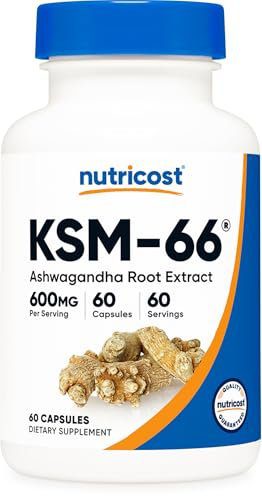
Our pick for ashwagandha: Nutricost KSM-66 Ashwagandha — because it specifies the KSM-66 proprietary extract (the form used in Chandrasekhar 2012, Choudhary 2017, and Lopresti 2019), discloses the withanolide standardization, and is third-party tested. Standardized to X% withanolides is meaningful; "ashwagandha root powder" alone tells you nothing about withanolide content and is not comparable to the clinical trial intervention.
Skip if: you are on thyroid medication, immunosuppressants, benzodiazepines, or any serotonergic antidepressant without medical approval. Pregnant or breastfeeding individuals should not use it.
Saffron
Best for anyone with anxiety symptoms accompanied by low mood: Pure Encapsulations Saffron — because it uses a standardized saffron extract at a dose range consistent with the clinical trials (generally 15-30mg/day), and Pure Encapsulations has a strong third-party testing record. An adaptogen brand can have impressive marketing and still miss third-party testing for the active marker compound — this one doesn't.
Skip if: you are on any SSRI, SNRI, or MAOI. The serotonergic mechanism overlap is real and not theoretical.
Lion's mane
Best for cognitive-anxiety overlap: Real Mushrooms Lion's Mane — because it specifies fruiting-body extract, not mycelium-on-grain, and discloses beta-glucan content. Buying mushroom supplements without checking fruiting-body content is like buying olive oil labeled "Mediterranean blend" — the label tells you everything except what's actually in it. Most lion's mane products on the market are mycelium-on-grain, which is not the form studied in Nagano 2010.
Skip if: you are on immunosuppressants or blood-thinning medications without medical approval.
Holy basil
Best for stress-driven anxiety with mild GI sensitivity: Now Foods Holy Basil Extract — because it is standardized to ursolic acid content (the marker compound associated with the herb's anti-stress activity), is widely available, and is third-party tested. Now Foods is one of the more transparent budget-tier supplement brands for herbal standardization.
Skip if: you are on thyroid medication or anticoagulants without discussing first.
Frequently asked questions {#faq}
Can adaptogens replace my prescribed anxiety medication?
No. Adaptogens are dietary supplements with modest, slow-onset effects on stress-related anxiety symptoms in non-clinical populations. They are not equivalent to prescription anxiolytics in mechanism, speed, or effect size. Abruptly stopping prescribed medication to replace it with an herb carries real risks. Any medication adjustment is a clinical decision — discuss it with your prescribing physician.
How long before adaptogens work for anxiety?
The best-evidenced answer comes from ashwagandha RCTs: measurable anxiety-scale improvements appeared at 60 days in Chandrasekhar 2012 and Lopresti 2019. Some participants reported subjective improvement by week 4. If you see no benefit at 8 weeks using a standardized extract at the trial dose, the herb is unlikely to work for you. Expecting week-one relief is not supported by the evidence.
Is saffron safe to take with my antidepressant?
Not without your prescriber's knowledge. Saffron has documented serotonin reuptake inhibition as a proposed mechanism, which overlaps with SSRI and SNRI mechanisms. Combining them without medical oversight carries serotonin-additive risk. Always disclose supplements to your prescriber.
What is the difference between adaptogens for anxiety versus adaptogens for stress?
"Stress" and "anxiety" overlap significantly in the adaptogen literature. Most RCTs enroll "chronically stressed" adults and measure outcomes including anxiety scales. The key difference is diagnostic threshold: clinical anxiety disorders (GAD, panic disorder, social anxiety disorder) involve more severe, persistent, and functionally impairing symptoms than the chronic-stress profiles in most adaptogen trials. Adaptogens for stress have better evidence than adaptogens for diagnosed anxiety disorders. For a broader view of the stress-focused evidence, see Best Adaptogens for Stress: What the Research Actually Shows.
Can I take ashwagandha every day?
Most clinical trials used daily dosing for 8-12 weeks. Some practitioners suggest cycling (five days on, two off) to avoid receptor downregulation, though no human RCT has tested this approach. If you take thyroid medication, daily ashwagandha can affect TSH — consult your prescriber before starting.
Is lion's mane good for anxiety?
One small RCT (Nagano 2010, n=30) in menopausal women found significant anxiety and depression score reductions with four weeks of lion's mane fruiting body. That is a promising signal in a specific population, not broadly established evidence. Third-party testing for fruiting-body content (versus mycelium-on-grain) is the most important quality check when buying lion's mane.
Do any adaptogens work like Xanax?
No. Benzodiazepines bind GABA-A receptors and produce anxiolytic effects within an hour via direct CNS suppression. Adaptogens do not have this mechanism. Ashwagandha has GABA-modulatory activity in animal models, but the clinical anxiety signal is slow-onset and modest, not acute sedation. They are categorically different tools.
As an Amazon Associate, I earn from qualifying purchases. Product recommendations are based on real reviews and independent research.
Related reading {#related-reading}
- Best Adaptogens for Stress: What the Research Actually Shows
- Adaptogens vs SSRIs: What the Evidence Says About Combining Them
- Lion's Mane for Anxiety: What One RCT Actually Found
- Ashwagandha for Women: The Honest 2026 Guide to Hormones, Sleep, and Cycle Effects
Conclusion: the bottom line on adaptogens for anxiety {#conclusion}
Ashwagandha (KSM-66 extract) and saffron lead this category on RCT evidence for anxiety symptoms. Both show consistent anxiety-scale reductions in placebo-controlled trials, with effects materializing at 4-8 weeks. Lion's mane and holy basil have real but limited human data — promising signals in specific populations, not broadly established evidence. Rhodiola's primary RCT base is for fatigue and cognition, not anxiety directly.
None of these herbs work like prescription anxiolytics. Mechanism, onset, and effect size are different. They are not a replacement for medical treatment of diagnosed anxiety disorders.
Next steps:
- If you are on any psychiatric medication, discuss supplement additions with your prescriber before starting
- Check for the KSM-66 or Sensoril designation on any ashwagandha product, and a standardized-extract label on saffron
- Commit to an 8-week trial before evaluating whether the herb is working for you
- For a broader view of how adaptogens interact with prescription medications, see Adaptogens vs SSRIs: What the Evidence Says About Combining Them
This article is for informational purposes only and is not medical advice. Anxiety, when persistent and functionally impairing, is a medical condition that warrants clinical evaluation — not supplement optimization. Adaptogens discussed here can interact with SSRIs, SNRIs, MAOIs, benzodiazepines, thyroid medications, anticoagulants, and immunosuppressants. Do not add or remove any supplement without informing your prescribing physician, particularly if you are currently managing anxiety, depression, or any other mental health condition with medication. This is not optional precautionary language — these interactions are real. Consult a licensed physician before starting any adaptogen if you are pregnant, nursing, taking prescription medications, or managing a chronic health condition.
As an Amazon Associate, I earn from qualifying purchases. Product recommendations are based on real reviews and independent research.
This article is for informational purposes and not medical advice. Herbal adaptogens, even traditional ones, can interact with thyroid medication, antidepressants, anticoagulants, immunosuppressants, blood-pressure drugs, and more. Consult a licensed physician before starting any adaptogen, particularly if you are pregnant, nursing, taking prescription medications, or managing a chronic condition.
