
If you have searched "best protein powder for women," you have probably noticed the pink tubs, the lower scoop sizes, and the promises of "lean tone" instead of "bulk." Here is the part the marketing leaves out: the protein inside a women's tub is the same protein inside any other tub. What actually changes your result is how much you take, matched to your bodyweight and your stage of life.
I will show you where a "women's" label is genuinely useful, where it is pink-tax dressing, and which tubs I would actually keep in my own family's cabinet for the women in it.
Affiliate disclosure: this article contains affiliate links. As an Amazon Associate, UsefulVitamins.com earns from qualifying purchases at no extra cost to you.
Before you decide
Most healthy women do not need a protein powder at all to meet the baseline requirement. Powder is a convenience, not a treatment. If you eat eggs, dairy, fish, poultry, legumes, or tofu across the day, you may already be close to where you need to be.
A powder earns its place when you are short on the requirement, recovering from training, eating plant-based, or moving through a life stage that raises your needs. It is a tool for closing a gap, not a daily ritual every woman must adopt.
A few people should clear this with a clinician first. If you have chronic kidney disease, are on a protein-restricted medical diet, or have phenylketonuria, do not add concentrated protein on your own. Talk to your doctor or dietitian about your target first.
If you are pregnant or breastfeeding, protein needs genuinely rise, but a food-first plan covers most women, and a powder should fit around that rather than replace meals. You can see how I weigh evidence and conflicts of interest on the how we review supplements page.
Do women need a different protein?
The honest answer, for the underlying nutrient, is mostly no. Protein requirements in the reference standards are set per kilogram of bodyweight, not by sex. The analysis of protein intake units in human health puts the RDA at 0.8 g per kg of bodyweight per day, with the same figure applied across age and sex.
Where men and women differ is mostly size, not biochemistry. A 60 kg woman needs roughly 48 g of protein a day at the baseline RDA, while a 90 kg man needs about 72 g. Same target per kilogram, different total because the bodies are different sizes.
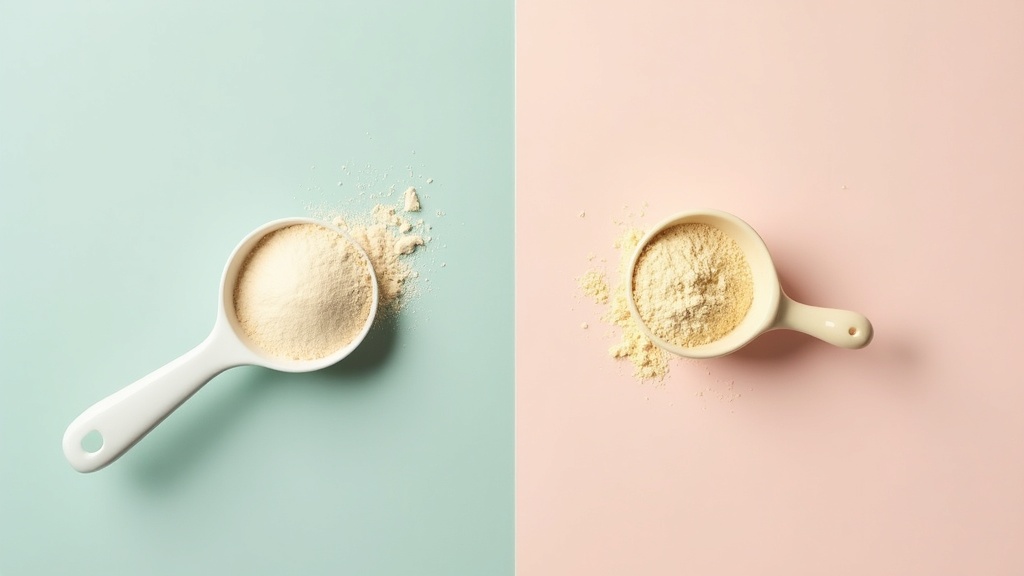
That is the entire story behind "women's protein" having smaller scoops. A smaller scoop is not a different formula; it is a smaller dose of the identical powder. You could buy the standard tub and use less of it for the same effect, often at a lower cost.
The "lean tone, not bulk" promise is also marketing. Whey or plant protein does not make anyone bulky; that is a function of training and total calories, not the tub you bought. As a dietitian, I would rather you ignore the color of the packaging and look at one number: grams of protein per scoop.
It helps to name the specific tricks. The most common are a smaller scoop, a sprinkle of "women's" micronutrients like iron, folate, or biotin, a "skinny" or "tone" word on the front, and a few grams of collagen for skin and hair. Each one is real on its own, but none of them changes the protein, and together they usually justify a higher price per gram than the plain tub on the next shelf.
Take the micronutrient angle. A few milligrams of iron or folate dusted into a protein tub is not a sensible way to dose either one; if you are low on iron, a deliberate supplement or food sourcing fixes it far better than a shake you might skip on rest days. The added collagen is the same story, useful for skin claims but, as the table below notes, not muscle protein. So I do the arithmetic that the front of the tub hopes you will not. Divide the price by the grams of actual protein in the whole tub, compare that to a standard product, and the "women's" version often costs more per gram of protein for less protein per scoop.
Most people, women included, do better aiming above the bare RDA when they are active. Reviews of protein requirements with aging and activity suggest 1.0 to 1.2 g per kg supports muscle better than 0.8, and strength-training women often sit higher still. The dose, not the gender label, is doing the work.
Where it genuinely matters
There are three windows where a woman's protein needs really do diverge, and they are worth taking seriously. None of them is solved by a pink tub; they are solved by eating more protein, full stop.
The clearest one is perimenopause and menopause. Falling estrogen across the transition is linked to lean-mass loss, with studies citing roughly a 2.5% drop in perimenopause and around 5.7% by postmenopause. Protein becomes a defensive tool here, not an optional extra.
Work on muscle and bone health in postmenopausal women found that protein and vitamin D combined with resistance training supports muscle and bone better than diet alone. A powder is one easy way to lift daily protein toward the 1.0 to 1.2 g per kg range when appetite and cooking time are both shrinking.
The bone angle is easy to underrate. Estrogen withdrawal accelerates bone turnover at the same time muscle is slipping, and muscle pulling on bone is part of what keeps bone dense. Protecting lean mass with adequate protein and loading the skeleton with resistance work are not two separate projects; they are the same one, which is why the studies pair them rather than testing protein in isolation.
There is also an appetite angle. A 2024 paper on weight gain and protein leverage in menopause proposed that as the body breaks down more lean tissue, it drives a specific appetite for protein. If protein stays diluted in the diet, women may overeat total calories chasing it, so concentrating protein can help with both muscle and weight.
This is the practical reason I reach for a powder more readily in this window than any other. The protein target goes up exactly when appetite, time, and energy to cook all tend to go down, and a 30 g scoop in a morning coffee or post-walk shake closes that gap without asking a tired body to assemble another full meal.
Pregnancy and breastfeeding are the second window. Requirements rise meaningfully, and the research on protein needs during pregnancy sets the RDA at about 1.1 g per kg, with newer indicator-amino-acid work suggesting 1.2 to 1.52 g per kg in later pregnancy. This is a real, evidence-based increase, but it is one to manage with your prenatal team, food-first, with powder only filling the gap.
Breastfeeding may push the need higher still. The current guideline adds roughly 25 g a day, but a small IAAO study found protein requirements in lactating women are higher than current recommendations, landing near 1.7 to 1.9 g per kg at 3 to 6 months postpartum versus the standard EAR of about 1.05 g per kg. The exact number is still debated, but the direction is clear: making milk is protein-expensive, and underfueling it is common in the chaos of new parenthood. A clean unflavored powder stirred into oats or yogurt is a low-effort way to keep up while you are short on both sleep and cooking time, used alongside meals rather than instead of them.
Older women are the third. The same age-related muscle loss that affects everyone hits harder when intake is low, and meeting or exceeding the protein RDA helps preserve muscle and function. In all three windows the fix is more protein dosed to bodyweight, which any honest powder can provide.
What to look for when buying
Forget the color of the tub and read the panel. The single most useful number is grams of protein per scoop, because that, divided by your daily target, tells you how many scoops you actually need.
Per-meal dosing matters too. Muscle is built in steps, and a whey dose-response study found muscle protein synthesis rose with the protein dose and plateaued somewhere between 20 and 40 g per serving. Aim for roughly 20 to 40 g of protein in a serving rather than spreading a token amount thinly.
There is a cleaner way to set that per-serving target by bodyweight. The ISSN position stand on protein and exercise recommends about 0.25 g per kg per meal, spread every three to four hours, with total daily protein the strongest predictor of muscle gain. For a 65 kg woman that is roughly 16 g per eating occasion, so a single 25 g scoop comfortably clears the per-meal threshold and you can let food cover the rest.
Working a full day through makes the powder's job obvious. A 65 kg woman training for muscle might target around 1.4 g per kg, or about 91 g of protein, which three solid meals of 25 to 30 g largely cover; one scoop then closes the last gap rather than carrying the whole load. Note the per-day total drives the result far more than nailing any single serving perfectly, so consistency beats precision.
Clean label beats fancy label. Look for a short ingredient list and a third-party-tested seal such as NSF or Informed Sport, which independently checks identity, contaminants, and banned substances. A risk assessment of heavy metals in protein powders found typical exposure is generally within safety limits, but testing varies by product, so the seal is a real signal, not a gimmick.
Match the source to your diet, not the marketing. Whey is fast-digesting and complete; soy and pea-rice blends are complete enough for plant-based eaters; collagen is not a muscle protein and should not be your main source. The table below sorts the real differences from the pink-tax ones.
| What’s on the label | What it actually tells you | Worth paying for? |
|---|---|---|
| Protein grams per scoop | How many scoops hit your bodyweight target | Yes, the number that matters most |
| Third-party tested (NSF, Informed Sport) | Independent check on purity and contaminants | Yes, a genuine quality signal |
| “For women” / “lean tone” / pink tub | A marketing segment, not a different protein | No, often a smaller dose at a higher price |
| Whey vs plant blend | Digestion speed and fit for your diet | Match to your diet, not the marketing |
| Collagen as the headline protein | Incomplete for muscle; low leucine | No, not as your main protein source |
One more dietitian's note: a powder is a supplement to a food-first plate, not a meal replacement. I would rather see most of your protein come from eggs, dairy, fish, poultry, and legumes, with powder closing whatever gap is left.
Recommended Products


As an Amazon Associate, UsefulVitamins.com earns from qualifying purchases at no extra cost to you. We only recommend products supported by published research or third-party testing.
FAQ
Is "women's protein" different from regular protein?
Not in any way that changes your result. The protein is the same; women's tubs usually just have smaller scoops, sometimes added iron or folate, and a higher price. Buy on protein-per-scoop and a third-party seal, then dose it to your bodyweight.
How much protein do I actually need per day?
Start from your bodyweight, not the scoop. The RDA is 0.8 g per kg, but active women and those in midlife often do better at 1.0 to 1.2 g per kg. A 60 kg woman targeting 1.2 g per kg needs about 72 g of protein across the day from all sources.
Will protein powder make me bulky?
No. Bulk comes from heavy training plus a calorie surplus, not from drinking protein. For most women, adequate protein during strength training does the opposite, helping preserve lean muscle while you lose fat.
Whey or plant protein, which is better for women?
Whichever fits your diet and digestion. Whey is fast and complete; soy or a pea-rice blend is a solid complete option for plant-based eaters. Both build muscle when dosed to your target; pick the one you will actually use daily.
Do I need more protein in perimenopause and menopause?
Often yes, because lean mass tends to fall as estrogen declines. Aiming toward 1.0 to 1.2 g per kg alongside resistance training helps protect muscle and bone. A powder is one convenient way to reach that target when appetite is lower.
Is protein powder safe while pregnant or breastfeeding?
A plain, third-party-tested powder is generally fine as a top-up, but clear it with your prenatal team first. Needs do rise in both stages, yet the goal is food-first with powder filling any gap. Avoid tubs loaded with stimulants, herbal "fat-burner" extras, or unverified ingredients during this window.
How many scoops of protein powder per day is too many?
There is no fixed scoop limit; judge it by your total daily protein and the rest of your diet. Most women only need one to two scoops to close a gap that food has not. If powder is supplying the bulk of your protein, that is a sign to rebalance toward whole foods, and anyone with kidney disease should set a target with a clinician.
The bottom line on protein for women
The phrase "best protein powder for women" sells a lot of tubs, but the nutrient inside is not gendered. The protein is the same; what changes your outcome is the total daily dose matched to your bodyweight, your training, and your life stage.
Ignore the pink-tax framing and judge a powder on three things: grams of protein per scoop, a third-party-tested seal, and a source that fits your diet. A smaller "women's" scoop is just less of the same powder, often at a worse price per gram.
Where being a woman genuinely shifts the math is perimenopause, menopause, pregnancy, and older age, when protein needs rise and muscle is harder to keep. In those windows a clean, well-dosed powder earns its place. Before you assume you are falling short, total up your food protein for a few typical days, and ask your doctor about a check-in if you have kidney concerns or a complex history.
Reviewed by Sarah Thompson, Registered Dietitian, focused on vitamin and mineral nutrition. See more from Sarah Thompson, read the complete guide to protein powder, and if strength is your goal, the best creatine for women. This article is educational and is not a substitute for individualized medical advice; talk to your doctor before adding concentrated protein if you are pregnant or managing a kidney condition.
As an Amazon Associate we earn from qualifying purchases. This does not affect the price you pay or the independence of our recommendations.
