
Affiliate disclosure: this article contains affiliate links. As an Amazon Associate, UsefulVitamins.com earns from qualifying purchases at no extra cost to you.
Why semaglutide changes what you need to eat, not what your pills must dodge
Most "supplements for medication X" guides are about a drug that blocks or burns through a nutrient. Semaglutide is different. It does not bind vitamins in your gut or flush minerals through your kidneys. It turns your appetite down and slows how fast your stomach empties, so you eat far less and lose weight quickly. The nutrition fallout follows from that.
Two things matter for a reader who is already on Ozempic, Wegovy or oral semaglutide. First, when you eat less, you take in less of everything, and rapid weight loss strips muscle along with fat. Second, the spacing rules people fear from other drugs mostly do not apply here. Injectable semaglutide has no oral-medication separation requirement. So this page is mainly about defending muscle, covering a couple of likely gaps, and not getting sick from stacking copycat "fat-loss" capsules.
None of this is a reason to change your dose. The drug is doing the job your doctor prescribed it for. Supplements support the person on the drug.
What Ozempic, Wegovy and semaglutide actually affect
Here is the evidence, graded honestly.
Muscle and lean mass – the headline. This is the best-documented effect. Mayo Clinic patient education notes that 25 to 40 percent of the weight lost on a GLP-1 can be lean mass, meaning muscle, organ tissue, bone and water rather than fat. That is normal for any fast weight loss, but it is the thing worth protecting, because losing muscle costs you strength, slows your metabolism and hurts your long-term health. The fix is not a pill. It is eating enough protein and lifting.
Micronutrient gaps – well documented, intake-driven. A February 2026 narrative review in the journal Clinical Obesity, summarized by Harvard Health, looked at six studies covering about 480,825 adults on GLP-1 drugs (most of the deficiency data came from two large cohorts). In the largest cohort, about 12.7 percent had a new nutritional deficiency diagnosed by 6 months. Vitamin D was the most common gap specifically – roughly 7.5 percent at 6 months rising to about 13.6 percent at 12 months – followed by nutritional anemia (around 4 percent), iron deficiency (about 3.2 percent) and B-vitamin deficiency (about 2.6 percent). Calcium, zinc and selenium intake fell short in smaller diet-tracking work too. Read that carefully: these are deficiencies that show up because people are eating less, not because semaglutide chemically removes the nutrient.
What this is not. Semaglutide does not deplete a single nutrient the way metformin lowers B12. If a product page claims "Ozempic drains your magnesium" as a pharmacologic fact, that is an overclaim. The real driver is low intake plus rapid loss. That distinction changes how you should respond: you fix the food and the muscle first, then test and top up specific gaps.
The supplements worth adding, and how to take each
Three additions have real backing and do not interact with semaglutide. They are about protecting muscle and covering the most likely gap, not about helping you lose more weight.


As an Amazon Associate, UsefulVitamins.com earns from qualifying purchases at no extra cost to you.
Some links below are affiliate links. If you buy through them we may earn a small commission, at no extra cost to you. It never changes what we recommend.
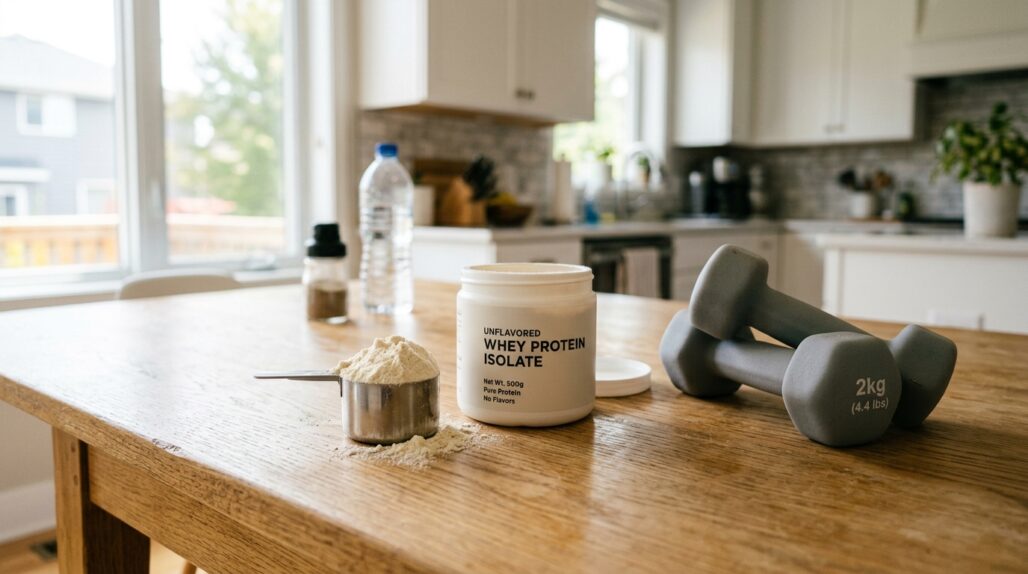
Protein first. It is the one addition that earns its place here. Aim for roughly 1.2 to 1.6 g of protein per kilogram of body weight per day, which works out to about 90 to 120 g for many adults, spread across meals rather than dumped into one shake. When your appetite is low, a protein powder is a practical way to hit that number without forcing a large meal. Whey isolate and good plant blends both work. Pair it with resistance training, because protein without lifting does not protect muscle.
Creatine monohydrate. It is cheap, well-studied and genuinely useful when you are losing weight. Reviews of creatine combined with resistance training show it adds lean body mass and limits the fat-free-mass loss that happens in a calorie deficit, which is exactly the situation a GLP-1 user is in. The plain monohydrate form at 3 to 5 g a day is all you need; the fancy versions are not better. It works through training, so it is only worth it if you are actually lifting. Drink enough water, which matters more than usual on this drug.
Vitamin D3. The most common documented gap on GLP-1 therapy. Take it with a meal that has some fat for absorption, and ideally dose it to a blood level rather than guessing. A combined D3 with K2 is fine for most people. If you want help picking a dose against a 25-OH-D result, our GLP-1 support stack calculator is a starting point, but a real blood test beats any calculator.
Two practical notes. None of these three needs special spacing from an injectable semaglutide dose. And if you also take levothyroxine and you are on oral semaglutide (Rybelsus), see the spacing section below before you change anything.
| Supplement | What it helps with | How to take it (timing/spacing from your dose) | Caution |
|---|---|---|---|
| Protein (whey isolate or plant) | Protects the muscle GLP-1 weight loss strips away | 1.2 to 1.6 g/kg/day, split across meals; no separation from an injectable dose | Sip slowly if early fullness is a problem; check with your doctor if you have kidney disease |
| Creatine monohydrate | Strength and lean body mass when paired with resistance training | 3 to 5 g/day any time, with extra water; no separation needed | Only worth it if you lift; stay hydrated, which matters more on this drug |
| Vitamin D3 (with K2) | The most common documented deficiency on GLP-1 therapy | With a meal containing some fat; dose to a blood level if you can | Do not megadose blindly; confirm dose against a 25-OH-D test |
You can log your prescription and every supplement in one place with StackMyMed (our own free app) so that overlaps and possible interactions get flagged for you to ASK your pharmacist about. It does not give medical advice or diagnose anything; it just surfaces things to raise. If you would rather skip the app, the low-tech version works just as well: write your full list on paper and show it to your pharmacist at your next visit. Either way, the decision is theirs, not the tool's.
What to avoid or space apart
This is the section that keeps you safe. None of these belong in your cart as a "GLP-1 supplement."
"Natural Ozempic" appetite-suppressant stacks. Berberine, glucomannan, chromium and high-dose fiber blends are sold as drug substitutes or boosters. On top of semaglutide they pile on the same appetite suppression and gut slowdown, which worsens nausea, early fullness and dehydration. Berberine and chromium can also deepen low blood sugar if you take insulin or a sulfonylurea. Do not stack these to push the drug harder, and never use them to cut your prescribed dose. Talk to your prescriber first.
Psyllium and soluble fiber. Reasonable for the constipation many people get, but take it with a full glass of water and keep it 2 to 4 hours away from oral medications and oral supplements. Semaglutide already slows gastric emptying, and fiber can further blunt the absorption of pills swallowed at the same time. Start with a small dose and add fluids.
High-dose potassium and salt substitutes. If you are having bouts of vomiting or diarrhea, your kidneys can take a hit (more on that below). Adding a potassium load (KCl supplements or "NoSalt"-type substitutes) during that is risky. Let rehydration and lab values guide potassium, not a supplement bottle. This is a hard caution if you also take an ACE inhibitor, an ARB or a potassium-sparing diuretic, where extra potassium can push you toward dangerous hyperkalemia.
Oral semaglutide (Rybelsus) only. The tablet has a strict routine the injectables do not. Take it first thing on an empty stomach with no more than 4 oz of plain water, then wait at least 30 minutes before any food, drink, other oral medicine or supplement. A published interaction study also found oral semaglutide raised total levothyroxine exposure by about 33 percent, so if you take thyroid medicine, keep it well separated, do not start or stop minerals around it casually, and let your doctor recheck your TSH. Injectable Ozempic and Wegovy do not need any of this spacing.
Bleeding-risk supplements if your weight loss is destabilizing warfarin. Fish oil, vitamin E and high-dose ginkgo have no direct interaction with semaglutide, but big shifts in appetite, weight and gut function can move your INR. Keep these steady and let your anticoagulation clinic monitor your INR more closely while you are actively losing weight.
Can you cover it with food instead
Largely, yes, and food should come first.
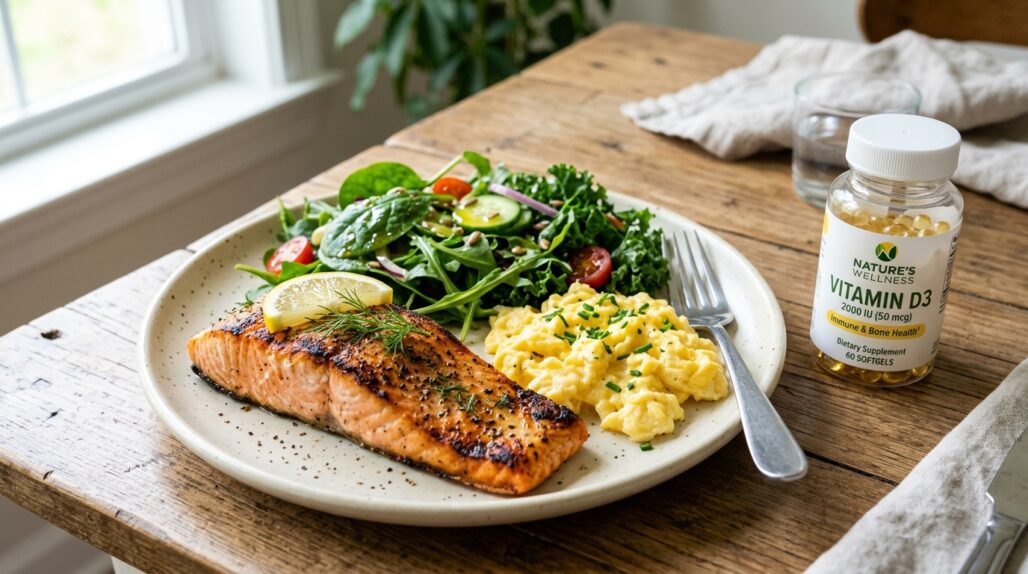
Put protein at every meal – eggs, fish, poultry, dairy, tofu, beans – because that is what protects muscle, and a shake is just a convenient backup when you cannot face a plate. Keep 7 to 10 g of fat per meal so your gallbladder keeps contracting, which matters because gallstones are more common on these drugs. Drink fluids and electrolytes across the day to head off dehydration. For vitamin D, sensible sun and oily fish help, but a tested-low level usually needs a supplement to correct.
Supplements fill the gaps that food and a good dietitian cannot fully close on a low-appetite week. They are not the foundation, and they will not shortcut the work.
The pharmacist routing and the red flag
This page is education, not a prescription change. Before you add anything, bring your full list to your doctor or pharmacist, especially if you take insulin, a sulfonylurea, warfarin or thyroid medicine. A short medication review is free at many pharmacies and catches the overlaps a label will not.
See a doctor promptly if you have persistent vomiting or diarrhea with signs of dehydration – dizziness on standing, dark or reduced urine, a racing heart. The FDA Ozempic label warns of acute kidney injury from this kind of volume loss, so it is not something to wait out. Separately, sudden severe pain in the upper-right abdomen, often with nausea or fever, can mean gallstones or gallbladder disease, which are also more common on GLP-1 drugs – seek care the same day.
For the muscle-protection rationale and protein targets, our protein powder guide for GLP-1 users goes deeper, and the vitamin D guide for Wegovy and Zepbound users covers dosing against a blood level. If you want the broader picture of what to combine, see our companion roundup on supplements to take with Ozempic.
FAQ
Does Ozempic deplete vitamins directly? No. It does not bind or burn through nutrients. Deficiencies show up because you eat much less and lose weight quickly. Vitamin D, iron and B vitamins are the most common gaps, and the fix is more food plus testing, not blaming the drug.
What is the single best supplement to add on semaglutide? Protein, paired with resistance training, because the main risk is losing muscle along with fat. Creatine and vitamin D are useful next steps, but none of them replace or reduce your prescribed dose.
Can I take berberine with Ozempic to lose more weight? No, not on your own. Berberine and similar “natural Ozempic” supplements add to the same appetite suppression and gut slowdown, worsening nausea and dehydration, and can deepen low blood sugar if you also take insulin or a sulfonylurea. Ask your prescriber before adding it.
Do I need to space my supplements away from my injection? Not for injectable Ozempic or Wegovy. The exception is oral semaglutide (Rybelsus), which must be taken on an empty stomach with a little plain water, 30 minutes before anything else, including supplements and thyroid medicine.
Is creatine safe while losing weight on a GLP-1? For most healthy people, yes, at 3 to 5 g a day with enough water, and it helps preserve lean mass when you lift. Skip it or check first if you have kidney disease, and clear it with your pharmacist alongside the rest of your list.
Should I take electrolytes or potassium for the nausea? Plain rehydration and balanced electrolytes are sensible during GI upset, but do not self-dose high potassium, especially if you take an ACE inhibitor, an ARB or a potassium-sparing diuretic. Let blood work guide potassium, not a supplement.
The bottom line
Semaglutide does not steal nutrients; it changes how much you eat, and that is what to plan around. Protein plus resistance training is the highest-value add, with creatine and a tested dose of vitamin D close behind. The most important thing to avoid is stacking "natural Ozempic" appetite suppressants like berberine, glucomannan or high-dose fiber, which compound the nausea and dehydration the drug already causes. Watch for persistent vomiting or diarrhea with dehydration signs and call your doctor promptly. Bring your full list – prescription and supplements – to your pharmacist before you add anything, and never use a supplement to lower or replace your dose.
This article is educational and is not medical advice or a prescription change. Talk to your own doctor or pharmacist before starting, stopping or adjusting any medication or supplement.
Reviewed by the UsefulVitamins Editorial Team.
