
Affiliate disclosure: this article contains affiliate links. As an Amazon Associate, UsefulVitamins.com earns from qualifying purchases at no extra cost to you.
Before you decide
This is general information, not medical advice for your situation. Nutrient needs depend on your diet, your other medications, your health history and how long you have been on a hormonal contraceptive.
The people most likely to notice a real effect are long-term pill users, those eating a restricted or low-variety diet, and anyone who plans to stop the pill to conceive. Vegetarians and vegans already running low on B12 are also worth flagging here.
If a label or influencer tells you the pill is "draining" your body and you need a long stack to fix it, slow down. The honest picture is more measured: real but mostly modest changes, with one preconception scenario that deserves more attention than the rest.
What the depletion evidence actually shows
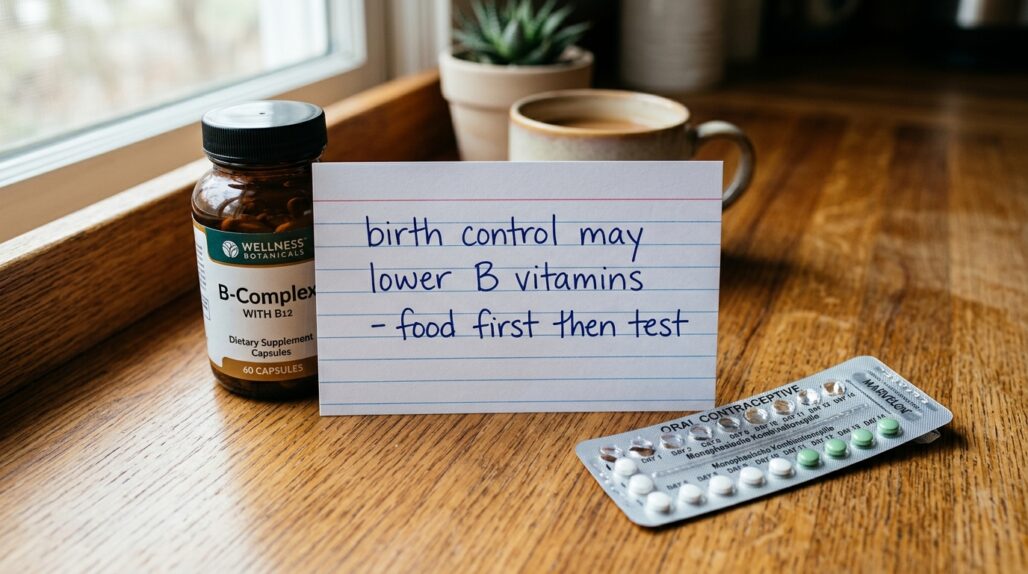
The most cited summary is the 2013 review by Palmery and colleagues on oral contraceptives and nutritional requirements, which gathered decades of studies. It reported that pill users tend to show lower average levels of folate, vitamin B2, B6, B12, vitamin C, vitamin E, magnesium, selenium and zinc.
That is a long list, but "lower on average" is not the same as "deficient." Most of these differences are small group-level shifts, and many users stay comfortably inside the normal range. The review framed supplementation as something to consider, not a blanket prescription.
Newer work sharpened the picture for the B vitamins specifically. A 2013 study in Nutrients on oral contraceptives and B6, B12 and folate status found the clearest signal was for B12: pill users had markedly lower serum B12, and about half sat below the reference range despite having no symptoms. The same study found minimal effect on B6 and folate in those participants.
That nuance matters. The B12 drop may partly reflect a redistribution of the vitamin rather than true tissue depletion, which is why a low number on a standard B12 test in a pill user does not automatically mean you are deficient or that you need a high-dose fix.
For vitamin B6, the picture is the reverse of what you might expect. A 2011 review in Nutrition Reviews on the impact of oral contraceptives on folate, B6 and B12 reached a conclusion that often gets flipped online. It found that current low-dose pills no longer appear to harm folate status, because the older negative folate findings came from higher-dose, high-estrogen pills that are not what most people take now. But it concluded that today's low-dose pills may still modestly lower vitamin B6 (measured as plasma PLP), which is worth keeping in mind if you stop the pill to conceive.

How big is the effect, really?
Think in tiers rather than treating every nutrient as equally at risk.
| Nutrient | Strength of evidence | Practical takeaway |
|---|---|---|
| Vitamin B12 | Lower serum levels fairly consistent | Worth checking if symptomatic or vegan; may be redistribution |
| Folate | Mixed; lower in some studies, neutral in others | Matters most if you may conceive after stopping |
| Vitamin B6 | Current low-dose pills may still modestly lower B6 (PLP) | Covered by a B-complex; do not megadose |
| Magnesium | Lower serum levels in several reports | Food first; a glycinate supplement is reasonable if symptomatic |
| Zinc | Modestly lower plasma levels reported | Food first; low-dose if needed, watch copper balance |
For magnesium, some studies report a measurable drop in serum levels over months of pill use, possibly from increased urinary loss. But serum magnesium is a crude marker of whole-body stores, so the practical signal is weaker than the numbers suggest.
For zinc, plasma levels run modestly lower in some pill users, which is one reason zinc shows up in conversations about the pill and the skin or immune system. Again, the effect is usually small and food-responsive.
Why it happens (the mechanisms)
There is no single explanation, which is part of why effect sizes are inconsistent.
The leading ideas include estrogen changing the activity of vitamin-dependent enzymes, shifts in how nutrients bind to carrier proteins in the blood, altered absorption in the gut, and increased urinary excretion of some water-soluble vitamins and minerals.
That mechanistic messiness is exactly why a clinician will often test rather than assume. A low reading might mean genuine depletion, or it might reflect a hormone-driven shift in how the nutrient is distributed and measured.

Who is most at risk
Most pill users do not need a corrective stack. The groups that deserve closer attention are clearer.
- Anyone planning a pregnancy after stopping the pill, where folate status is the priority.
- Long-term users, since some mineral reductions appear to track with duration of use.
- People on low-variety, restrictive or vegan diets, who may already be marginal in B12, zinc or magnesium.
- Those with symptoms that overlap with deficiency: persistent fatigue, tingling in hands or feet, mouth sores, or anemia findings on bloodwork.
If none of these fit you and you eat a reasonably varied diet, the realistic conclusion is that the pill is unlikely to push you into deficiency on its own.
The folate-before-pregnancy point that matters most
This is the one place where caution is genuinely warranted, and it is not really about depletion at all.
Neural tube defects form in the first few weeks after conception, often before a pregnancy is confirmed. The CDC recommends 400 mcg of folic acid daily for anyone who could become pregnant, ideally starting at least one month before conception.
The USPSTF folic acid recommendation puts the daily range at 0.4 to 0.8 mg (400 to 800 mcg), continued through the first two to three months of pregnancy.
So if you are coming off the pill to try for a baby, do not wait until you stop. The practical move is to start a prenatal early, well before you conceive. We cover the folic acid timeline before stopping birth control separately because the timing question comes up so often.

What to take, and in which forms


As an Amazon Associate, UsefulVitamins.com earns from qualifying purchases at no extra cost to you.
UsefulVitamins may earn a commission from purchases made through links on this page, at no extra cost to you. This never changes which products we recommend.
For most pill users, the smartest base is food first: leafy greens and legumes for folate and magnesium, eggs, dairy and fish or fortified foods for B12, and seafood, meat or seeds for zinc. A varied plate closes most of the gap.
If you want insurance, a quality prenatal or B-complex covers the B vitamins in one product without megadosing. When picking forms, a few choices are worth knowing about.
- Folate: L-methylfolate (the active form) is a reasonable choice, especially for the folate question around MTHFR, though plain folic acid remains the form with the strongest neural-tube evidence.
- B12: methylcobalamin or cyanocobalamin both work; see our B12 supplement guide for the practical differences.
- Magnesium: glycinate or citrate are gentle, well-absorbed options if you choose to supplement.
- Zinc: a low daily dose is enough; high-dose zinc can deplete copper over time, so do not run a big dose indefinitely.
One caution on B6: more is not better. The NIH Office of Dietary Supplements sets the upper limit at 100 mg per day, and sustained high-dose pyridoxine has been linked to nerve damage (peripheral neuropathy). A B-complex keeps you far below that. The full B-vitamin overview walks through sensible ranges.
If you want to keep your contraceptive, your prenatal and any extras in one place so a pharmacist can scan the whole list, the free StackMyMed app lets you log a stack and flag possible overlaps to raise at your next visit. It is a prompt for that conversation, not a substitute for clinical judgment.
When to see a clinician
Testing beats guessing here, because a low blood level on the pill does not always mean true depletion.
Ask your doctor or pharmacist about checking B12, folate or ferritin if you have ongoing fatigue, tingling, mouth sores, or anemia flagged on routine bloodwork. Bring up your full supplement list so nothing doubles up.
Seek prompt care for numbness or tingling that is spreading, signs of significant anemia such as breathlessness on light activity, or any new neurological symptom. And never stop a prescribed contraceptive to "reset" your nutrients without talking to the prescriber first.
For the bigger map of how supplements and medications interact, our drug-supplement interaction checker and the ultimate drug-supplement interactions guide are good starting points.
FAQ
Does the pill cause vitamin deficiency in everyone? No. It is linked to lower average levels of several nutrients, but most users with a varied diet stay within normal ranges and never become deficient.
Which nutrient should I worry about most? Folate, but mainly if you plan to conceive after stopping. Start folic acid early because neural tube defects form before most people know they are pregnant.
Do I need a special “pill” supplement? Usually not. A quality prenatal or B-complex covers the B vitamins, and food handles most of the minerals. Targeted single supplements are for documented low levels.
Can low B12 from the pill be missed? It can. Many pill users with below-range B12 have no symptoms, and the drop may partly reflect redistribution rather than true depletion, so testing in context matters.
Is high-dose B6 a good idea for pill-related symptoms? No. Sustained high-dose B6 can cause nerve damage, and the upper limit is 100 mg per day. A B-complex keeps you safely below that.
Should I stop the pill to protect my nutrient levels? Not on your own. The changes are mostly modest and manageable with diet or a basic supplement. Discuss any contraceptive change with your prescriber.
Conclusion: modest dips, one real priority
The pill is genuinely linked to lower B6, B12, folate, magnesium and zinc in some users, but for most people the effect is small and easily covered by food plus a basic prenatal or B-complex. The headline-grabbing depletion lists overstate the day-to-day risk.
The one scenario that deserves real attention is folate before a planned pregnancy. If you are coming off the pill to conceive, start folic acid early and bring your full supplement list to a clinician who can test rather than guess.
This article is for general education and does not replace personalized advice from your doctor or pharmacist. Do not change a prescribed contraceptive or start a new supplement based on this page alone.
Reviewed by the UsefulVitamins Editorial Team.
