
Affiliate disclosure: this article contains affiliate links. As an Amazon Associate, UsefulVitamins.com earns from qualifying purchases at no extra cost to you.
Before you decide
This article is general information, not medical advice, and it does not replace a conversation with your doctor or pharmacist. Zinc status is individual, and only a clinician who knows your history should set a dose for you.
The people most likely to notice a zinc dip are those on combined estrogen-progestin pills for a long stretch, anyone eating little meat or seafood, and those who already run low on zinc. Vegetarians and vegans absorb less zinc from food because grains and legumes carry phytates that bind it.
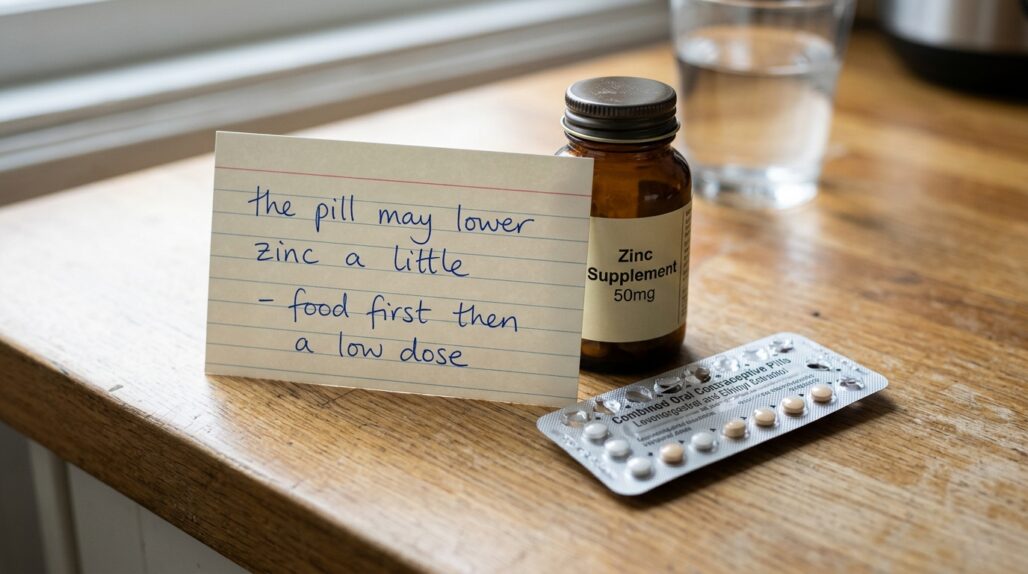
If you only want the practical answer: the pill nudges zinc down, the effect is real but usually small, and food plus a sensible prenatal or multivitamin handles it for most people. The rest of this piece explains the evidence and where the genuine cautions sit.
What the research actually shows about the pill and zinc
The link between oral contraceptives and lower zinc is not new. In a 1980 study published in Fertility and Sterility, serum zinc fell within days of starting combined pills while serum copper rose, and the change held regardless of dose or formulation. That mirror-image pattern, zinc down and copper up, shows up repeatedly in the contraceptive literature.
A broad 2013 review in the European Review of Medical and Pharmacological Sciences pulled this evidence together. The authors describe oral contraceptives lowering several nutrients including zinc and magnesium. Whether the zinc dip deepens with longer use is less clear: the 1980 study above found the change held regardless of how long someone had been on the pill beyond about 3 months, so treat any duration effect as uncertain rather than settled.
Two caveats keep this honest. First, serum zinc is an imperfect marker; the body holds most zinc inside cells, and blood levels do not capture total stores well. Second, the measured drops are often modest and do not automatically mean you are deficient.
The takeaway is reasonable, not alarmist. The pill can shift you toward lower zinc, but for someone eating a varied diet it rarely tips into true deficiency on its own.

Why a small zinc shift can matter: skin, immunity and mood
Zinc runs hundreds of enzymes, so even a modest shortfall can surface in places people do not connect to a mineral.
Skin and acne is the most searched angle. People with acne tend to carry lower zinc than people without it. In a 2024 case-control study, acne patients had markedly lower mean serum zinc than controls, and lower levels tracked with worse disease. A 2020 systematic review and meta-analysis went further and found that zinc therapy reduced inflammatory acne lesions across pooled trials. Zinc is not a cure for acne, but the signal is consistent.
Immunity is the second piece. Zinc is needed for both the fast innate response and the slower adaptive one. A 2017 review framed zinc as a gatekeeper of immune function, describing how deficiency weakens neutrophils, natural killer cells and T-cell signaling. People who are low on zinc are more prone to infections, and healing tends to slow.
Mood is the most tentative link, so treat it gently. Some work has reported lower zinc and higher copper in people with anxiety, and zinc has a role in glutamate and GABA signaling. This is association, not proof, and it does not mean zinc is a treatment for any mood condition. Still, it is one more reason not to let zinc run chronically low.
The copper trade-off: why more is not better
Here is the part that trips people up. The pill raises copper while lowering zinc, and piling on high-dose zinc can push that imbalance the other way.
Zinc and copper compete for absorption in the gut. When zinc intake stays high, copper loses, and over weeks that can produce copper deficiency, which itself causes anemia and nerve problems. The Linus Pauling Institute notes that around 60 mg/day of total zinc for ten weeks produced signs of copper deficiency in studied volunteers.
The numbers that matter:
- The adult zinc RDA is 8 mg/day for women and 11 mg/day for men.
- The tolerable upper intake level is 40 mg/day for adults, counting food plus supplements.
- Long-term intakes near or above that ceiling are where the copper risk lives.
So the goal is to gently top up zinc, not to chase a high number. A common-sense supplemental range sits well below the upper limit, and some products pair a little copper with zinc to keep the ratio sensible. Do not megadose, and do not stack a standalone zinc tablet on top of a multivitamin without checking the combined total.
| Zinc intake level | Daily amount | What it means for pill users |
|---|---|---|
| RDA (women) | 8 mg | Baseline target met by a varied diet for most people |
| Typical low-dose top-up | 15-25 mg | Reasonable short-term support if intake is low or symptoms appear, paired with food |
| Upper limit (UL) | 40 mg | Stay under this from all sources combined to protect copper status |
| Copper-risk zone | 50-60 mg+ | Linked to copper deficiency over weeks; avoid without medical supervision |
What to take: food first, then a modest dose


As an Amazon Associate, UsefulVitamins.com earns from qualifying purchases at no extra cost to you.
UsefulVitamins may earn a commission from purchases made through links on this page, at no extra cost to you. This never changes which products we recommend.
Start with the plate, because dietary zinc comes with built-in balance and almost never causes overload.
- Oysters are the densest source by a wide margin; a single serving covers days of need.
- Beef, crab, lobster, poultry and eggs are reliable everyday sources.
- Pumpkin seeds, cashews, chickpeas, lentils and whole grains help, though phytates lower how much you absorb. Soaking, sprouting or fermenting these foods improves uptake.
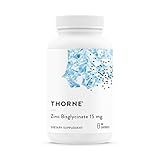
If you choose to supplement, keep it modest and well-formed. Zinc picolinate, citrate, gluconate and bisglycinate are all reasonable; the exact form matters less than the total daily amount. Take zinc with food if it upsets your stomach, and separate it by about two hours from iron, calcium and high-fiber meals, which can blunt absorption.
A practical pattern for pill users who eat little zinc: a quality prenatal or multivitamin that already includes 8-15 mg of zinc, which usually covers the gap without extra pills. Reach for a standalone zinc tablet only with a reason, and prefer one that includes a small amount of copper if you plan to take it for more than a few weeks. Zinc is only one piece of the picture, so it helps to see how it fits among the best supplements for birth control users before adding anything new.
When to test and when to see a clinician
You do not need a zinc test just because you take the pill. Testing makes sense when symptoms point that way: stubborn acne, frequent colds, slow-healing cuts, hair shedding, loss of taste or smell, or low mood that has no clearer cause.
Ask a clinician to interpret the result, because serum zinc is a weak gauge of true status and is influenced by recent meals, infection and inflammation. A normal number does not rule out a functional shortfall, and a slightly low one does not always need treatment.
Seek prompt medical advice if you have signs of copper deficiency after a stretch of high-dose zinc, such as unusual fatigue, numbness or tingling, or anemia on bloodwork. And never stop a prescribed contraceptive to fix a supplement question; the pill's job is unrelated to your zinc level, and contraceptive decisions belong with your prescriber.
If you juggle several supplements alongside the pill, logging them in one place makes the pharmacist conversation faster. A tool like StackMyMed lets you record your stack and flag possible overlaps to raise with a professional. It organizes the conversation; it does not replace clinical judgment.

FAQ
Does the pill cause zinc deficiency? It can lower serum zinc, often modestly, but a measured dip is not the same as clinical deficiency. Most people on a varied diet stay in range, and the effect tends to grow with longer pill use.
How much zinc should I take if I am on birth control? There is no fixed pill-user dose. Food first, then a modest 15-25 mg/day only if intake is low or symptoms appear, staying under the 40 mg adult upper limit. Ask your clinician or pharmacist to confirm a number for you.
Will zinc make my birth control less effective? No. There is no evidence that zinc reduces how well oral contraceptives prevent pregnancy. The interaction runs the other way, with the pill nudging your zinc down.
Can low zinc from the pill cause acne? Possibly contribute. People with acne tend to have lower serum zinc, and zinc therapy has reduced inflammatory lesions in pooled trials. Zinc is one factor among many, not a standalone acne cure.
Why does too much zinc cause problems? High zinc blocks copper absorption, and sustained intakes near or above 40 mg/day can lead to copper deficiency over weeks, which causes anemia and nerve issues. Keep doses modest and consider a little paired copper for longer use.
Do I need a zinc blood test? Not routinely. Test when symptoms suggest it, and let a clinician read the result, because serum zinc is an imperfect marker affected by meals, infection and inflammation.
Conclusion: a modest dip, an easy fix
Combined birth control can lower your zinc, the change is usually small, and it has nothing to do with the pill's contraceptive reliability. Cover it with zinc-rich food, add a modest dose only if you have low intake or real symptoms, and keep total intake comfortably under 40 mg/day so you protect copper.
Your next step is simple: look at your diet, decide whether a supplement is actually warranted, and bring any persistent skin, immune or mood symptoms to a clinician who can test and advise. For the wider picture of how the pill affects other nutrients, see our guide to birth control and B vitamin depletion and the deeper complete guide to zinc. You can also screen your full routine with our drug-supplement interaction checker or browse the ultimate drug-supplement interactions hub.
This content is for general education only and is not a substitute for personalized medical advice. Talk with your doctor or pharmacist before starting, stopping or changing any supplement or medication.
Reviewed by the UsefulVitamins Editorial Team.
