
If you've landed here after seeing TikTok videos about "cortisol face," "cortisol belly fat," or supplement protocols that promise to melt stress weight, the short answer is: the cortisol-adiposity link is real, but the TikTok framing oversimplifies the biology, and the supplements have weaker evidence than the marketing suggests. This article will break down what chronic stress actually does to fat distribution, review the three most heavily marketed cortisol supplements (ashwagandha, phosphatidylserine, and Relora), and give you an honest reading of the clinical evidence. You'll also get the drug-interaction picture for each compound, because several of these are not benign when combined with common prescriptions.
Affiliate disclosure: this article contains affiliate links. As an Amazon Associate, UsefulVitamins.com earns from qualifying purchases at no extra cost to you.
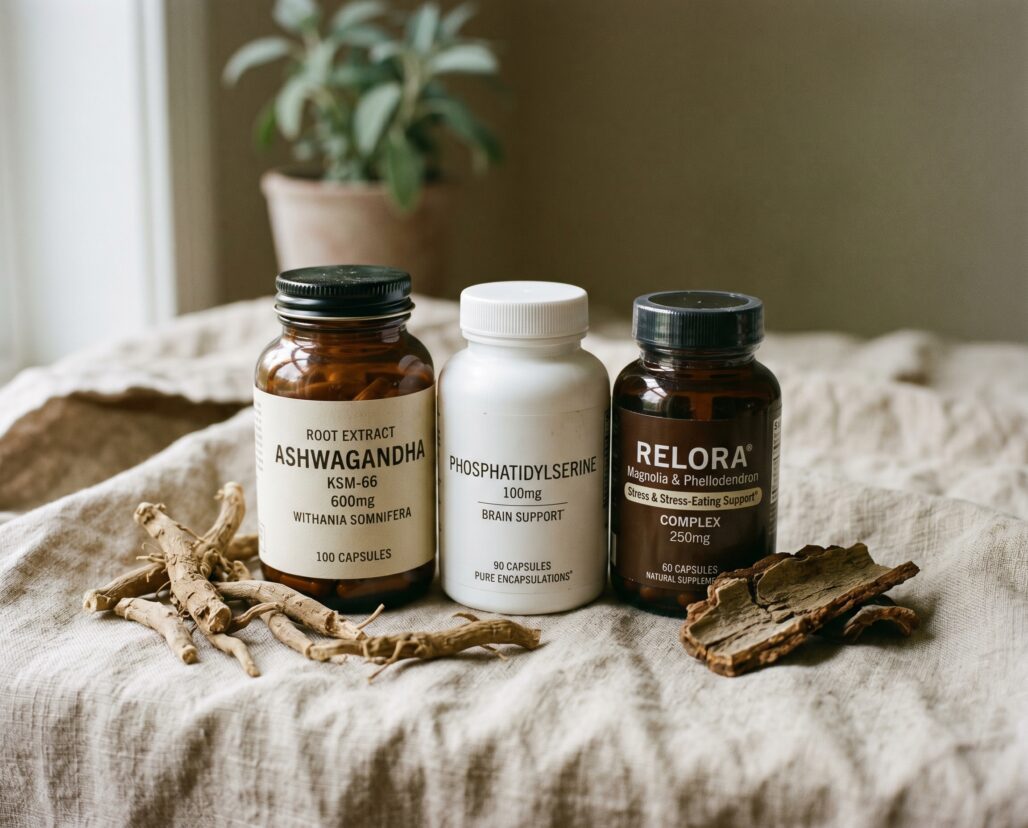
Summary: quick answer on cortisol belly fat supplements
Cortisol does influence fat distribution, particularly at sustained pathological elevations. The supplements most often marketed for cortisol control have modest, mixed, or preliminary evidence in healthy stressed adults, and none has demonstrated clinically meaningful fat loss as a primary outcome.
Best for: Adults with documented chronic stress, normal thyroid function, no relevant drug interactions, who have already addressed sleep, caffeine load, and caloric intake. These supplements may offer modest cortisol modulation as an adjunct, not a fix.
Not ideal for: People expecting significant fat loss from supplementation alone. Anyone on thyroid medication, sedatives, benzodiazepines, or immunosuppressants without physician oversight. Anyone applying a Cushing's-syndrome framework to normal stress.
What to look at before buying: Whether the ashwagandha product discloses withanolide content (KSM-66 and Sensoril are the two extracts with the most clinical data). Whether Relora discloses the magnolia and phellodendron extract ratio. Whether the phosphatidylserine product specifies soy-derived vs sunflower-derived and the mg-per-serving dose.
Decision shortcut: If weight loss is your primary goal, a supplement marketed through a cortisol narrative is not the direct path. If cortisol-related symptoms (poor sleep, elevated perceived stress, fatigue) are the primary complaint, ashwagandha has the best evidence for cortisol reduction, with meaningful caveats.
What you'll find in this guide
- The cortisol-and-fat connection: what's real vs TikTok narrative
- Ashwagandha for cortisol: what the RCTs show
- Phosphatidylserine: the exercise-recovery compound repurposed for stress
- Relora: magnolia and phellodendron, small trial, big marketing
- Who these supplements actually fit
- Dosing context from clinical trials
- Side effects and drug interactions
- Product options
- Frequently asked questions
- Related reading
The cortisol-and-fat connection: what's real vs TikTok narrative {#cortisol-fat-biology}
Cortisol is a glucocorticoid hormone produced by the adrenal cortex. Its role in fat metabolism is well-established at the pharmacological and pathological levels. The confusion arises when those pathological findings get applied to the much milder cortisol elevations that most stressed adults experience.
The clearest human example of cortisol-driven central adiposity is Cushing's syndrome, a condition involving chronically elevated cortisol from a pituitary tumor, adrenal tumor, or long-term exogenous glucocorticoid use. People with Cushing's develop characteristic trunk-centered fat accumulation (the "buffalo hump," supraclavicular fat pads, and rounded abdomen) alongside muscle wasting, purple striae, and other specific features. Per the NCCIH's overview of cortisol and stress, cortisol's effect on adipose tissue in Cushing's involves direct receptor-mediated fat redistribution that is not characteristic of typical chronic-stress cortisol patterns.
In people without Cushing's, the relationship between stress, cortisol, and fat distribution is more complicated. Research has found that chronic psychological stress is associated with higher visceral fat in some populations, but the mechanism involves multiple variables: sleep disruption, altered eating behavior under stress, reduced physical activity, and HPA axis dysregulation working together. Attributing the visceral fat accumulation to cortisol alone, and then targeting cortisol with a supplement to reverse it, is a significant logical leap from what the research actually shows.
Think of cortisol's role in stress-related weight like weather in a car accident: it can be a contributing factor without being the whole cause. Treating it as the single controllable lever misses most of the mechanism.
That said, cortisol is a legitimate variable. The question is whether any of these supplements move it meaningfully in healthy stressed adults.
Ashwagandha for cortisol: what the RCTs show {#ashwagandha-evidence}
Ashwagandha (Withania somnifera, family Solanaceae) is the best-studied of the three compounds for cortisol reduction in humans. The foundational trial is a 2012 double-blind, placebo-controlled RCT (Chandrasekhar et al., n=64). Participants received 300mg of KSM-66 ashwagandha root extract twice daily for 60 days. The primary outcome was the Perceived Stress Scale (PSS). The results showed a 44% reduction in PSS scores versus placebo. Secondary outcomes included serum cortisol, which dropped by 28% from baseline in the ashwagandha group versus 7.9% in placebo, a statistically significant difference.
The weight-related secondary outcome in this trial is worth examining carefully. The Chandrasekhar 2012 study reported improvements in Food Cravings Questionnaire scores and body weight, with the ashwagandha group showing a statistically significant reduction in body weight compared to placebo. The mean weight change was modest and the trial duration was 60 days. This is the primary RCT cited in most ashwagandha-for-cortisol-belly-fat marketing. It is a real finding, but it's a secondary outcome in a stress study, not a weight-loss trial, and the effect size was small.
A 2019 RCT (Salve et al., n=60) using KSM-66 at 240mg per day for 60 days similarly found cortisol reduction alongside improvements in sleep quality and serum DHEA-S. The weight or BMI outcome was not a primary endpoint.
Standardization labels matter more than pretty branding. An ashwagandha product that simply says "ashwagandha root powder" without disclosing withanolide content tells you nothing about dose equivalency to the Chandrasekhar trial. KSM-66 and Sensoril are the two proprietary extracts with disclosed standardization and clinical-trial replication; generics with no withanolide disclosure are a different product.
Actionable takeaway: If cortisol reduction is the goal, ashwagandha standardized to KSM-66 or Sensoril at doses matching the Chandrasekhar 2012 trial (300mg twice daily) has the strongest evidence of the three options here. The secondary weight and craving effects are real but modest.
Phosphatidylserine: the exercise-recovery compound repurposed for stress {#ps-evidence}
Phosphatidylserine (PS) is a phospholipid that makes up a substantial portion of neuronal cell membranes. Its best-documented role in humans is as a moderator of the cortisol and ACTH response to intense exercise. The most relevant human RCT for the stress-and-cortisol narrative is a 2008 study (Starks et al., n=16, PMID 18326601). Healthy young men given 600mg per day of soy-derived PS for 10 days showed attenuated cortisol response to acute exercise stress compared to placebo. The ACTH response was also blunted. The study population was exercising men, the duration was 10 days, and the outcome was acute exercise-induced cortisol, not chronic resting cortisol.
An earlier 1990 study (Monteleone et al., n=8, PMID 2406018) showed that intravenous BC-PS (bovine cortex PS) at doses of 50–75mg blunted ACTH and cortisol responses to physical stress. This study used intravenous administration and bovine-derived PS, not the oral soy-derived formulations sold as supplements today.
The real question isn't whether phosphatidylserine works in lab conditions with IV administration, it's whether the oral dose in a stressed adult proves out. The translation from IV pharmacology to oral supplement is not automatic, and the evidence for oral PS in non-exercising, chronically stressed adults is considerably thinner. No large, adequately powered RCT has tested oral PS for chronic resting cortisol reduction in a general stressed population. The FDA has permitted a qualified health claim for PS and cognitive function, but explicitly describes the evidence as "limited" and "not conclusive."
Actionable takeaway: Phosphatidylserine has a plausible mechanism and some evidence for blunting cortisol response to acute exercise stress. The chronic stress and fat-loss application rests on much weaker extrapolation.
Relora: magnolia and phellodendron, small trial, big marketing {#relora-evidence}
Relora is a patented combination of magnolia bark extract (Magnolia officinalis) and phellodendron bark extract (Phellodendron amurense). Magnolia bark contains honokiol and magnolol, compounds with demonstrated anxiolytic activity in animal models. Phellodendron bark contains berberine alkaloids and has been used in Traditional Chinese Medicine. That traditional use is context, not evidence.
The primary human RCT cited for Relora and cortisol is a 2013 open-label trial (Talbott et al., n=56). Adults with self-reported moderate stress were randomized to 500mg Relora or placebo for 4 weeks. The Relora group showed a 18% reduction in salivary cortisol and statistically significant improvements on the Profile of Mood States (POMS). Body weight was not a primary outcome; body composition was not measured.
The limitations of this trial are significant and under-discussed in supplement marketing. It was an open-label design, meaning participants knew what they were taking. The n was 56. Four weeks is a short duration. Salivary cortisol, while informative, has higher within-person variability than serum cortisol. The research team included individuals with commercial ties to the Relora product, a conflict of interest that is typical for proprietary extract research and worth weighing.
As of 2026, no independent replication of the Talbott 2013 findings has been published. The NCCIH does not maintain a factsheet for Relora specifically, and Memorial Sloan Kettering's integrative database does not include a Relora-combination entry. Individual entries for magnolia bark note that "clinical evidence is insufficient to support recommendations for any indication" as of the most recent update.
Actionable takeaway: Relora has a single small open-label trial suggesting cortisol-modulating effects. The evidence tier is preliminary at best. Claims connecting it to belly fat reduction have no direct clinical support.
Who these supplements actually fit {#who-fits}
Strong fit for ashwagandha: Adults with chronic stress lasting three months or more, elevated perceived stress on validated measures, normal thyroid function, no relevant drug interactions (see below). The Chandrasekhar 2012 cohort was generally healthy adults with chronic occupational stress. That profile is the evidence base.
Possible fit for phosphatidylserine: Athletes or regularly exercising adults who want to attenuate the cortisol spike from intense training sessions. The evidence is better here for this specific use than for chronic resting cortisol.
Marginal fit for Relora: Adults who prefer a combination formula and are already managing stress through other means. Relora is unlikely to cause harm in the short term at labeled doses, but it should not be the primary intervention for anything.
Skip if: You take levothyroxine or any thyroid medication (ashwagandha specifically). You take sedatives, benzodiazepines, or prescription anxiolytics (Relora's honokiol has sedative-adjacent activity). You are on immunosuppressants (ashwagandha can modulate immune function). You are pregnant or breastfeeding. You are looking for a substitute for sleep, diet, and exercise improvements.
Dosing context from clinical trials {#dosing-context}
Dosing here is framed as what trials used, not as prescriptions.
In the Chandrasekhar 2012 trial, participants took 300mg KSM-66 ashwagandha root extract twice daily (600mg total) for 60 days. The Salve 2019 trial used 240mg KSM-66 once daily for 60 days, with cortisol reduction as a secondary outcome. Most observed stress effects in ashwagandha trials appeared by weeks 4 to 8.
In the Starks 2008 phosphatidylserine trial, the dose was 600mg per day for 10 days. Earlier trials used 300mg per day. Soy-derived PS is the predominant oral form in current supplements; sunflower-derived PS is available for those avoiding soy.
In the Talbott 2013 Relora trial, the dose was 500mg per day of the proprietary combination for 4 weeks.
Look for standardization labels: KSM-66 is standardized to 5% withanolides. Generic "ashwagandha root powder" without withanolide disclosure does not match the clinical-trial product, and the dose equivalency cannot be assumed.
Side effects and drug interactions {#side-effects-interactions}
Ashwagandha
In the Chandrasekhar 2012 and Salve 2019 trials, reported adverse effects were mild and infrequent: drowsiness, GI discomfort, and loose stools at higher doses. More serious concerns come from post-market case reports.
Thyroid medication (critical): Ashwagandha has stimulated thyroid hormone production in case reports and small trials. Per NCCIH's ashwagandha fact sheet, this means ashwagandha can interact with levothyroxine, liothyronine, and other thyroid hormone replacements by altering TSH levels. People on thyroid medication should not take ashwagandha without their prescriber's knowledge.
Immunosuppressants: Withanolides in ashwagandha can modulate immune system activity. This is directly relevant for people taking tacrolimus, cyclosporine, mycophenolate, or biologics for autoimmune conditions or post-transplant management.
Sedatives: Ashwagandha has mild GABAergic activity. Additive sedation with prescription sedatives or benzodiazepines is plausible.
Pregnancy: Ashwagandha has historically been used in Ayurvedic medicine to support pregnancy, but per the NCCIH, it has been associated with abortifacient effects in some animal studies. Avoid in pregnancy.
Phosphatidylserine
Oral PS at doses used in supplement protocols (300–600mg daily) has a limited adverse-effect profile. GI discomfort and insomnia have been reported at higher doses (above 800mg). No significant drug interactions have been established in the peer-reviewed literature, though the possibility of additive effects with anticoagulants (given PS's role in coagulation signaling) has been noted theoretically. The NCCIH does not flag specific drug interactions for oral soy-derived PS at supplement doses.
Relora (magnolia + phellodendron)
Honokiol, the active compound in magnolia bark, has demonstrated GABA-receptor-modulating activity. This is the same receptor class targeted by benzodiazepines and alcohol.
Sedatives and CNS depressants: Combining Relora with prescription benzodiazepines, sedative-hypnotics, or alcohol may produce additive CNS depression. This is a clinically meaningful concern, not a theoretical one. Per Memorial Sloan Kettering's integrative herb database entry for magnolia bark, CNS depressant interactions are listed as a precaution.
Berberine interactions (phellodendron component): Berberine is known to inhibit CYP3A4 and CYP2D6 enzymes. This creates potential for drug-drug interactions with medications metabolized by those pathways, including certain statins, beta-blockers, and some antidepressants. The clinical significance of this at Relora's phellodendron dose is not well-characterized.
Pregnancy: Neither magnolia bark nor phellodendron has adequate safety data for pregnancy. Avoid.
Product options {#product-options}
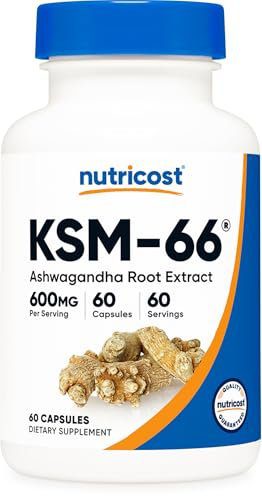
As an Amazon Associate, I earn from qualifying purchases. Product recommendations are based on real reviews and independent research.
When selecting an ashwagandha product, confirm the label states KSM-66 or Sensoril extract with the withanolide percentage disclosed. A product that says "ashwagandha 600mg" without a standardized extract designation may contain withanolide levels that differ significantly from what was used in the clinical trials.
For phosphatidylserine, confirm the source (soy vs sunflower) and the per-serving dose. Many products dose 100mg per capsule, so reaching the 300–600mg range used in exercise trials requires multiple capsules per day.
For Relora, the branded extract combination is what was studied. Generic "magnolia bark" or "phellodendron" products are not equivalent and have not been tested in the combination ratio used in the Talbott trial.
Frequently asked questions {#faq}
Do cortisol supplements actually burn belly fat?
No supplement has demonstrated clinically meaningful reduction in visceral fat as a direct result of lowering cortisol. The mechanisms that connect cortisol and fat distribution operate over long time frames and involve multiple systems. Ashwagandha showed modest secondary weight effects in one 60-day trial; those effects were not characterized as visceral fat specifically.
How long does ashwagandha take to affect cortisol?
In the Chandrasekhar 2012 trial, statistically significant serum cortisol reduction was measured at 60 days. Some participants reported subjective stress improvement at 4 weeks. Expect at least 8 weeks before concluding whether it works for you.
Can I take all three together?
The combination hasn't been studied, and the interaction risk compounds. Ashwagandha plus Relora creates overlapping GABAergic sedative activity; both have CNS-adjacent effects. If you're taking any prescription medication, particularly sedatives or thyroid drugs, stacking these without medical oversight is a poor idea.
Is phosphatidylserine safe long-term?
Most human trials have been 10 to 12 weeks. Long-term safety data beyond three months is limited for oral supplemental PS. Bovine-derived PS was the original clinical form; soy-derived (the current standard) has not been studied identically. No long-term safety signals have emerged, but the data is not robust.
Will Relora make me drowsy?
Honokiol in magnolia bark has sedative-adjacent activity. Some users report drowsiness, particularly at higher doses or when combined with other CNS-active substances. If you take Relora in the evening as many protocols suggest, monitor for excessive sedation.
Is the "cortisol belly fat" concept medically recognized?
The pathological version, Cushing's syndrome, is a recognized medical diagnosis with defined diagnostic criteria. The milder chronic-stress version is a genuine area of research interest but not a diagnosed condition. Using Cushing's-syndrome physiology to explain stress-induced weight gain in healthy adults is a category error that the supplement industry exploits. If you genuinely suspect abnormally elevated cortisol, a 24-hour urinary cortisol test ordered by your physician is the diagnostic path, not a supplement protocol.
Does ashwagandha interact with antidepressants?
There is limited direct evidence, but ashwagandha's mild serotonergic and GABAergic activity creates a theoretical interaction concern with SSRIs, SNRIs, and TCAs. The NCCIH notes potential for additive sedation with CNS-active medications. Consult your prescriber before combining.
Conclusion: the bottom line on cortisol belly fat supplements {#conclusion}
For a use-case article on adaptogens for weight, the honest summary is this: the cortisol narrative is partially real and heavily oversold. Cushing's syndrome demonstrates how extreme cortisol elevation reshapes fat distribution. The gap between that and the cortisol levels a stressed marketing manager experiences on a deadline is enormous, and the evidence for supplementing across that gap is modest.
Of the three compounds reviewed here, ashwagandha (standardized KSM-66 or Sensoril) has the best-designed, most replicated human trial data for cortisol reduction, with secondary observations of modest weight effects. Phosphatidylserine has a solid mechanistic rationale and decent evidence for acute exercise-induced cortisol blunting, with much weaker support for chronic resting cortisol. Relora has one small open-label trial with acknowledged conflicts of interest.
None of them is a fat-loss supplement. None replaces sleep, consistent exercise, and caloric awareness as the primary drivers of body composition. If you choose to try one of these as an adjunct, ashwagandha with disclosed withanolide standardization and no contraindicated medications is the most defensible choice. And if you're on thyroid medication, tell your prescriber before you start.
Next steps:
- To understand where cortisol supplements fit in a broader stress-management protocol, see our guide on best adaptogens for cortisol and chronic stress
- For a complete comparison of stress adaptogens beyond cortisol framing, see Best Adaptogens for Stress: A Practical Guide
- If you're a caregiver looking at adaptogens for a different kind of chronic stress, see Adaptogens for Caregiver Stress: What Actually Helps
- For the safety profile of ashwagandha specifically, including thyroid and medication risks, see Ashwagandha Side Effects: The Complete Safety Guide
Related reading {#related-reading}
- Best Adaptogens for Cortisol: What the Research Actually Shows
- Best Adaptogens for Stress: A Practical Guide
- Adaptogens for Caregiver Stress: What Actually Helps
- Ashwagandha Side Effects: The Complete Safety Guide
This article is for informational purposes and not medical advice. Herbal adaptogens, even traditional ones, can interact with thyroid medication, antidepressants, anticoagulants, immunosuppressants, blood-pressure drugs, and more. Consult a licensed physician before starting any adaptogen, particularly if you are pregnant, nursing, taking prescription medications, or managing a chronic condition.
As an Amazon Associate, I earn from qualifying purchases. Product recommendations are based on real reviews and independent research.
This article is for informational purposes and not medical advice. Herbal adaptogens, even traditional ones, can interact with thyroid medication, antidepressants, anticoagulants, immunosuppressants, blood-pressure drugs, and more. Consult a licensed physician before starting any adaptogen, particularly if you are pregnant, nursing, taking prescription medications, or managing a chronic condition.
