
Cure costs $2.43 per stick. Liquid IV costs $1.56. That 87-cent gap per packet adds up to $26.10 per month at one packet a day, roughly the cost of an entire box of Liquid IV. Whether that premium buys you anything meaningful depends on what your body actually needs from an electrolyte drink, and the answer is not the same for every use case. This guide works through the math, the science, and the cancellation mechanics so you can make the decision once and stop second-guessing it.

Affiliate disclosure: this article contains affiliate links. As an Amazon Associate, UsefulVitamins.com earns from qualifying purchases at no extra cost to you.
The 30-second answer
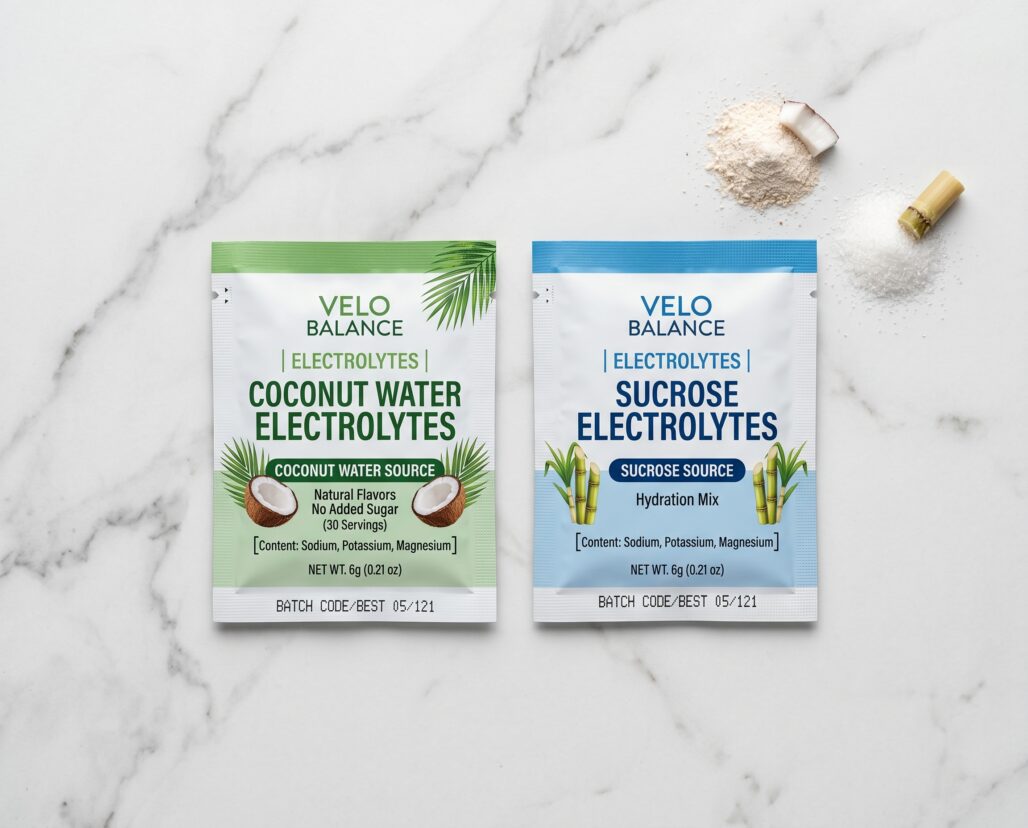
Choose Cure if you are on a low-sugar protocol, following a GLP-1 medication regimen, or specifically avoiding synthetic sweeteners and refined sucrose. You will pay 56% more per stick for 55% less sodium and roughly half the sugar. The plant-based sourcing is real, not cosmetic.
Choose Liquid IV if your primary goal is rapid rehydration from heavy sweat loss, exercise, heat, travel, or illness, and you want the most sodium per dollar. At $1.56/stick with 510 mg sodium and 370 mg potassium, it delivers the electrolyte density that the underlying Cellular Transport Technology formula was designed around.
Neither is a clear default. The right answer depends on your sodium needs, your sugar tolerance, and whether you are replacing a sports drink or upgrading from plain water.

Side-by-side at a glance
| Cure | Liquid IV | |
|---|---|---|
| Price per stick | $2.43 | $1.56 |
| Pack size (standard) | 14 sticks / $34 | 16 sticks / $24.99 |
| Monthly cost (1/day) | ~$73 | ~$47 |
| Sodium | 230 mg | 510 mg |
| Potassium | 300 mg | 370 mg |
| Sugar | 5 g | 11 g |
| Sugar source | Coconut water + coconut sugar | Sucrose + dextrose |
| Plant-based | Yes | No |
| Subscription cancel method | Email (some plans) | Online account |
| Third-party tested | Not publicly disclosed | Not publicly disclosed |
Prices based on standard Amazon pack size as of April 2026. Monthly cost calculated at one packet per day.
Where Cure wins
Lower sugar load, cleaner source
Cure delivers 5 g of sugar per stick versus Liquid IV's 11 g. The gap matters in two contexts: GLP-1 medication users managing glucose sensitivity, and anyone tracking daily added sugar under 25 g (the American Heart Association's daily limit for women) who is already pulling sugar from other sources. Cure's 5 g represents 20% of that daily limit per packet. Liquid IV's 11 g represents 44%.
The sugar source distinction is more nuanced. Cure uses coconut water solids and coconut sugar. Liquid IV uses sucrose (table sugar, a 50/50 glucose-fructose disaccharide) and dextrose (pure glucose). Both types are metabolized. The fructose component in sucrose is processed hepatically, which is a minor distinction at these gram-level doses for most people. But if you are metabolically sensitive or on a GLP-1 drug that already improves insulin signaling, the difference in sugar source is a real formulation choice, not purely marketing.
Cleaner label, fewer synthetic additives
Cure's ingredient deck is shorter. The product does not contain artificial colors, stevia, or monk fruit. If you've switched off sucralose-sweetened sports drinks for taste or tolerance reasons and find that stevia-sweetened alternatives cause GI issues at volume, Cure is one of the few mainstream electrolyte products that avoids both.

Cancellation mechanics (relative advantage)
Cure's subscription terms vary by plan. Some plans require email-based cancellation, a friction layer compared to a one-click account dashboard. That is not an advantage for Cure; it's a disadvantage. But in the context of this comparison, Liquid IV's cancellation is handled through an online account, which is marginally more accessible. If you are evaluating both as subscription commitments, not one-time purchases, Liquid IV wins on cancel friction. We flag this here because the framing of a subscription as a recurring commitment, not a product feature, is worth naming explicitly. At $73/month for Cure versus $47/month for Liquid IV, these are not trial purchases. Know the exit path before you start.
Where Liquid IV wins
Sodium density per dollar
510 mg of sodium per stick is the central reason Liquid IV dominates its category. The World Health Organization's oral rehydration solution standard calls for approximately 2.6 g of sodium per liter. A Liquid IV packet in 16 oz (473 mL) provides 510 mg sodium, a concentration that tracks toward ORS-range density and supports the osmotic gradient that drives water absorption across the intestinal wall. Cure's 230 mg sodium in the same volume is hydrating but is closer to a maintenance or light-activity product than a high-exertion replacement.
If you are losing sodium through heavy exercise sweat (typical range: 460–1,840 mg sodium per liter of sweat), Liquid IV replaces roughly 510 mg per serving. Cure replaces 230 mg. For a 60-minute moderate-intensity workout in warm conditions, Cure's dose may not be sufficient to fully offset losses.
Cost efficiency at volume
At $1.56/stick versus $2.43/stick, Liquid IV is 36% cheaper. At one packet per day, that is $26.10 saved per month. For casual daily use, morning hydration, travel, mild dehydration from alcohol, the extra sodium Liquid IV provides is not a liability, and you are getting more electrolyte delivery per dollar across every metric except sugar reduction.
Potassium at scale
Liquid IV provides 370 mg potassium per stick versus Cure's 300 mg. The gap is 70 mg, not dramatic in a single packet, but at daily use across a month it represents an additional 2,100 mg of potassium, which is a meaningful contribution toward the 3,500–4,700 mg daily adequate intake that most adults fall short of.

The coconut-water angle, are plant-based sugars functionally different from sucrose?
This is the most common question in this comparison, and the honest answer is: mostly no, with a narrow exception.
Coconut water is approximately 6% sugars by weight, predominantly glucose and fructose in roughly equal proportion, with a smaller fraction of sucrose. Coconut sugar is a less-refined cane sugar alternative with a glycemic index of approximately 35 versus table sugar's 65, but at the gram-level doses in a hydration packet (5 g total), the glycemic index difference produces a trivially small absolute glucose area-under-curve effect. You are not meaningfully reducing your glucose spike by choosing coconut sugar at 5 g versus sucrose at 11 g, you are primarily reducing the total sugar load, which is the more relevant variable.
Where the plant-based sourcing does matter:
Trace mineral content. Coconut water solids carry naturally occurring potassium, magnesium, and sodium in addition to the fortified amounts. These are small additions, but they contribute to a slightly richer electrolyte profile than what a sucrose-and-dextrose base provides.
Taste profile and palatability. Coconut water has a mild, slightly sweet flavor that many users find more palatable at higher intake volume than sucrose-forward products. If you are drinking electrolytes twice daily, palatability matters for adherence.
GI tolerance at volume. Dextrose (Liquid IV) is absorbed rapidly via SGLT1 co-transporters and drives the sodium co-transport that makes CTT-style formulas effective. Coconut-water-based sugars absorb similarly but are occasionally better tolerated by users with fructose sensitivity because the dose is lower and the ratio is less extreme than straight sucrose. At 5 g versus 11 g, Cure's lower total sugar load is the dominant GI-tolerance variable, not the sugar source itself.
The bottom line on plant-based: Cure's "plant-based" positioning is accurate. It is not a functional advantage in the electrolyte physiology sense. It is a clean-label formulation choice that matters if your sugar-source preference is real, but it does not change how water moves across your intestinal wall. The sodium concentration does.
Verdict by use case
| Use case | Recommended pick | Reason |
|---|---|---|
| Heavy exercise / high sweat rate | Liquid IV | 510 mg sodium; ORS-adjacent density |
| GLP-1 / Ozempic users | Cure | 5 g sugar, lower glucose impact per packet |
| Daily low-intensity hydration | Liquid IV | Better value; sodium dose appropriate |
| Low-sugar protocol (<25 g/day AHA limit) | Cure | 5 g vs 11 g; fits tighter daily budget |
| Travel and illness recovery | Liquid IV | Higher sodium replaces loss more completely |
| Morning hydration ritual | Cure | Palatability, clean label, lower sugar start |
| Budget-first: value per dollar | Liquid IV | $1.56 vs $2.43; 36% lower cost per stick |
| Plant-based / no synthetic sweeteners | Cure | Coconut-water-based, shorter ingredient list |
| Subscription with easy cancel | Liquid IV | Online account cancel vs email-based friction |
Once you have picked a product, our companion app, StackMyMed, scans its label and tracks it alongside everything else you take, with timing and interaction checks built in.
Related reading
- Is Cure Hydration worth it?
- Is Liquid IV worth it?
- Cure alternatives on Amazon
- Liquid IV alternatives on Amazon
- How we review supplements
For 2026 pricing across DTC supplement subscriptions and their Amazon equivalents, see our DTC supplement pricing reference.
As an Amazon Associate, I earn from qualifying purchases. Product recommendations are based on real reviews and independent research.
This article is for informational purposes and not medical advice. Electrolyte supplements can interact with medications and health conditions, including medications that affect kidney function, blood pressure, or blood sugar. Consult a licensed physician before starting any supplement, particularly if you are taking GLP-1 medications, diuretics, or managing a chronic condition.
As an Amazon Associate, I earn from qualifying purchases. Product recommendations are based on real reviews and independent research.
Editorial independence note: UV earns affiliate commissions from Amazon and (selectively) from DTC brand affiliate programs. Commissions never determine our recommendations — top picks are chosen first; affiliate links are added second. Read our full methodology and editorial independence policy →
Frequently asked questions
Is Cure or Liquid IV better for rehydration?
Liquid IV is better for rapid rehydration from heavy sweat, heat, or illness. Its 510 mg of sodium per stick tracks toward oral-rehydration-solution density; Cure’s 230 mg is a lighter, maintenance-level electrolyte drink.
Is Cure worth its higher price?
Cure costs about 56% more per stick (roughly $73/month versus $47 for Liquid IV). It is worth the premium if you are on a low-sugar or GLP-1 protocol or avoid synthetic sweeteners. For the most sodium per dollar, Liquid IV wins.
What is the sugar difference between Cure and Liquid IV?
Cure has 5 g of sugar from coconut water and coconut sugar; Liquid IV has 11 g from sucrose and dextrose. Cure suits anyone tracking daily added sugar or managing glucose sensitivity on a GLP-1 medication.
