
If you're searching for whether lion's mane mushroom can help with nerve regeneration or peripheral neuropathy, the honest answer is: it can stimulate nerve-growth factor production in cell cultures and rodent models — but direct human evidence for nerve regeneration remains very limited as of 2026. This article breaks down what the NGF research actually shows, where the evidence chain breaks, and what the two most rigorous human RCTs measured (hint: it's cognitive scores and mood, not nerve fiber density). You'll also learn which populations have a plausible case for trying lion's mane, what a realistic dose looks like based on the trial data, and what one drug interaction category makes it a poor choice for certain people.
Affiliate disclosure: this article contains affiliate links. As an Amazon Associate, UsefulVitamins.com earns from qualifying purchases at no extra cost to you.
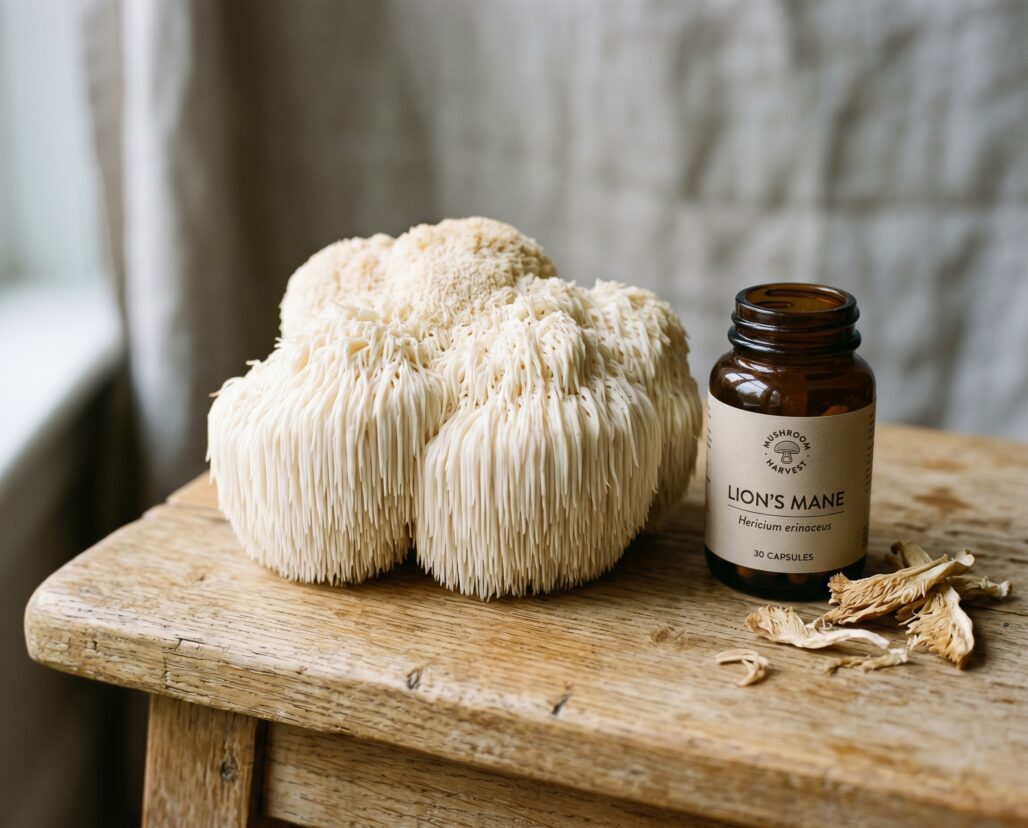
Summary / Quick Answer: does lion's mane support nerve regeneration?
Lion's mane contains compounds that stimulate NGF synthesis in vitro and in animal models; two small human RCTs show cognitive and mood benefits, but no human trial has directly measured peripheral nerve regeneration as a primary outcome.
- Best for: Adults with early cognitive decline or stress-related mood symptoms who want a reasonably safe, low-interaction botanical with an interesting preclinical profile
- Not ideal for: Anyone expecting confirmed peripheral neuropathy reversal, people on anticoagulants (see interactions below), or anyone unwilling to use fruiting-body extracts (the form with the most studied active compounds)
- What to look at before buying: Fruiting body vs. mycelium-on-grain (the active NGF-stimulating compounds hericenones are concentrated in the fruiting body), beta-glucan percentage, third-party testing
- Decision shortcut: If your interest is peripheral neuropathy, the current human evidence does not support lion's mane as a primary treatment. If your interest is supporting cognitive function or general nervous-system health with a low-risk supplement, the evidence is modest but real.
What lion's mane is and how its NGF mechanism works
Lion's mane (Hericium erinaceus) is an edible and medicinal mushroom native to North America, Europe, and Asia. It grows on hardwood trees and produces a distinctive white, shaggy fruiting body. In traditional Chinese medicine it has been used as a tonic, categorized alongside other medicinal mushrooms for general health support. But traditional use is not the same as RCT evidence, and the modern research interest centers on something more specific: two families of bioactive compounds.
Hericenones are found in the fruiting body. Erinacines are found in the mycelium. Both have been shown to stimulate the synthesis of nerve growth factor (NGF) — a signaling protein that promotes the survival, growth, and differentiation of neurons — in cell-based and animal studies. The foundational in vitro work documenting hericenone-driven NGF induction, conducted by Kawagishi and colleagues in the 1990s and refined through the 2000s, is well replicated in cell cultures.
Think of NGF like fertilizer for existing nerve tissue rather than a blueprint for building new nerve pathways from scratch. You cannot swallow enough hericenones to override a severed nerve or compensate for years of diabetic neuropathy by bypassing blood-brain-barrier and systemic delivery constraints. The molecule is interesting; the translation from "stimulates NGF in a petri dish" to "regenerates damaged peripheral nerves in a human" involves a long chain of biological steps that remains unproven in clinical trials.
The real question is not whether lion's mane works in lab rats. It's whether the human dose produces meaningful NGF elevation at peripheral nerves, and whether that elevation translates to functional nerve improvement. That question is largely unanswered.
Actionable takeaway: The NGF-stimulation claim is mechanistically credible and well-supported in cell cultures and animal models. Extrapolating it to peripheral neuropathy in humans is a much larger leap than most supplement marketing acknowledges.
What research actually shows in humans
The Mori 2009 RCT: the strongest human data
The most cited human trial on lion's mane is Mori et al., 2009 (PMID 18844328), a double-blind, placebo-controlled RCT conducted in Japan with adults diagnosed with mild cognitive impairment (n=30, 16 weeks). Participants received 3g of dried fruiting body tablets (1g three times daily) or placebo.
The primary outcome was the Hasegawa Dementia Scale (HDS-R), a Japanese cognitive assessment tool. At weeks 8, 12, and 16, the treatment group showed significantly higher scores than the placebo group (p<0.01 at each timepoint). After the supplement was discontinued, scores declined, suggesting the effect was not permanent. The authors attributed the mechanism to NGF stimulation, but NGF levels were not directly measured in this trial — the link remains inferred rather than confirmed.
Several important limitations: the sample size was small (n=30), the population was already cognitively impaired elderly Japanese adults, and the trial lasted only 16 weeks. It does not tell us whether lion's mane would help a 45-year-old with peripheral neuropathy, or whether the effect generalizes across ethnicities, diets, and extract types.
The Nagano 2010 trial: mood and anxiety in menopause
A second small trial (Nagano et al., 2010 (PMID 20834180)) enrolled 30 menopausal women who consumed lion's mane-infused cookies (0.5g fruiting body equivalent) or placebo cookies for 4 weeks. The treatment group showed significantly lower scores on depression and anxiety subscales versus placebo (p<0.05 for both).
The 0.5g dose is notably lower than the Mori 2009 dose. The delivery mechanism (baked cookie) raises questions about compound stability. And 4 weeks is a short window. The result is plausible given lion's mane's potential role in nervous-system support, but this is a single small pilot, not a definitive finding.
Where are the peripheral neuropathy trials?
As of 2026, no published human RCT has used lion's mane as a primary intervention specifically for peripheral neuropathy, with nerve conduction velocity or nerve fiber density as primary outcomes. There are animal studies — most notably rodent models of chemotherapy-induced neuropathy — where erinacine-containing mycelium extracts have shown some protective effects on peripheral nerve function. But animal neuropathy models are notoriously poor predictors of human clinical response.
The evidence gap here is real and significant. If you have been told by a supplement blog that lion's mane "reverses peripheral neuropathy based on studies," that claim outpaces what the literature actually contains.
Actionable takeaway: Two small human RCTs support modest cognitive and mood benefits. Zero human RCTs have directly tested peripheral nerve regeneration. The animal-model evidence for neuropathy is biologically interesting and not clinically proven.
Who has a plausible case for trying lion's mane
Cognitive support in early decline
The Mori 2009 RCT population — older adults with mild cognitive impairment — is the group with the most direct evidence. If cognitive preservation is the goal, fruiting-body extracts standardized to active-compound content are the most defensible choice. The effect in the trial required 16 weeks at 3g daily; expecting results at 4 weeks on a lower dose is not supported by the data.
Stress-adjacent mood symptoms
The Nagano 2010 result (reduced anxiety and depression scores in menopausal women) suggests a potential mood-modulating effect, possibly via NGF support of mood-relevant neural circuits. This is speculative but not implausible. The dose used was substantially lower than the cognitive trial, which complicates dose-response extrapolation.
Who should not expect much
Someone with confirmed peripheral neuropathy from diabetes, chemotherapy, or nerve compression injury. The gap between "plausible NGF mechanism" and "reverses structural nerve damage in a human" is vast. The existing human data measures cognitive test scores and self-reported mood, not nerve conduction velocity, nerve fiber density, or pain scores. The populations studied did not have documented peripheral neuropathy. Expecting lion's mane to close that gap is asking one botanical to do pharmacological work without the trial evidence to back it.
| Are you a plausible candidate for lion's mane? | Your situation |
|---|---|
| Do you have documented mild cognitive impairment? | Most direct RCT evidence (Mori 2009) |
| Is your goal peripheral neuropathy treatment? | No human RCT evidence; do not rely on this supplement alone |
| Are you on anticoagulants (warfarin, rivaroxaban, etc.)? | Review interactions section before proceeding |
| Are you expecting results within 2-4 weeks? | Mori 2009 showed effects from week 8 onward |
Dosing: what the trials used
Dosing in this context is framed as what clinical trials observed, not a prescription.
In the Mori 2009 RCT, participants took 1g of dried lion's mane fruiting body tablets three times daily (3g total per day) for 16 weeks. That is the dose with the most direct human cognitive evidence.
In the Nagano 2010 cookie trial, the estimated dose was approximately 0.5g fruiting body equivalent per day for 4 weeks. This is a considerably lower dose and may reflect the different outcome measured (mood vs. cognition) rather than a lower effective threshold.
Most commercial lion's mane capsules in the US range from 500mg to 1,000mg per serving, with 1-2 servings per day. That puts typical commercial dosing at 500mg-2,000mg daily — below the 3g level used in the most rigorous cognitive trial but within the range of other pilot studies.
Standardization is the most important label variable. Look for fruiting body content explicitly stated, not just "Hericium erinaceus extract." A product that says "mycelium biomass" without specifying hericenone content is unlikely to deliver the active-compound profile studied in either RCT. As with other medicinal mushrooms, buying lion's mane without checking fruiting-body content is like buying olive oil labeled "Mediterranean blend" — the label tells you everything except what's actually in it.
Per the NCCIH, lion's mane is generally considered safe in doses used in studies, and adverse events in both trials were minimal. There is insufficient safety data for prolonged use beyond the 16-week trial window in healthy adults.
Side effects and drug interactions
Reported adverse effects
In Mori 2009, no serious adverse events were reported in either group over 16 weeks. Gastrointestinal discomfort and skin rash have been noted in case reports and smaller studies at high doses, but appear uncommon. Allergic reactions are possible, particularly in individuals with known mushroom allergies.
Drug interactions
Lion's mane is not in the same interaction-risk tier as ashwagandha, ginseng, or St. John's Wort. However, the interaction profile is not zero.
Anticoagulants and antiplatelet drugs: Animal studies have suggested lion's mane may inhibit platelet aggregation, which could theoretically add to the effect of anticoagulants such as warfarin, heparin, or direct oral anticoagulants (rivaroxaban, apixaban) and antiplatelet agents like clopidogrel. This interaction is classified as minor and theoretical in most references, but per Memorial Sloan Kettering's integrative medicine database, individuals on these medications should inform their prescriber before adding lion's mane.
Diabetes medications: Preclinical evidence suggests lion's mane may have a modest glucose-lowering effect. Combined use with insulin or oral hypoglycemics deserves monitoring, though no human trial has confirmed a clinically significant interaction.
Immunosuppressants: As a beta-glucan-containing fungal extract, lion's mane may theoretically modulate immune function. Individuals on immunosuppressive therapy (post-transplant, autoimmune conditions) should consult their physician.
The interaction profile is less alarming than some adaptogens, but it is not absent. The anticoagulant signal is the one most clinicians flag.
| Drug category | Theoretical interaction | Evidence level |
|---|---|---|
| Warfarin / DOACs / antiplatelet | Additive platelet inhibition | Minor; animal data, not confirmed in humans |
| Insulin / oral hypoglycemics | Additive glucose lowering | Preclinical only |
| Immunosuppressants | Immune modulation | Theoretical; weak evidence |
Pregnancy and breastfeeding
No adequate safety data exists for lion's mane use during pregnancy or breastfeeding. Absence of evidence is not evidence of safety — treat this as a contraindication pending better data.
Product picks
Three products commonly appear in independent testing evaluations for lion's mane. The insert script will place verified Amazon cards here based on PA-API lookup.
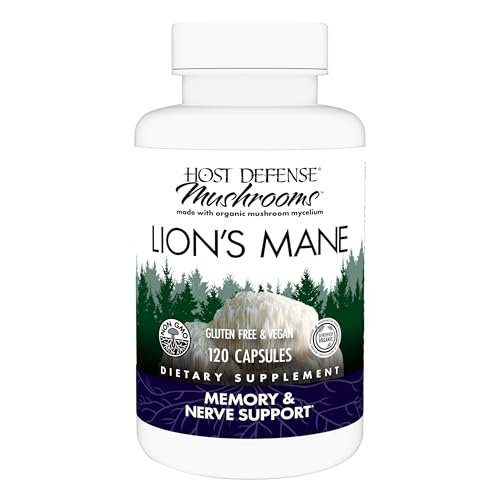
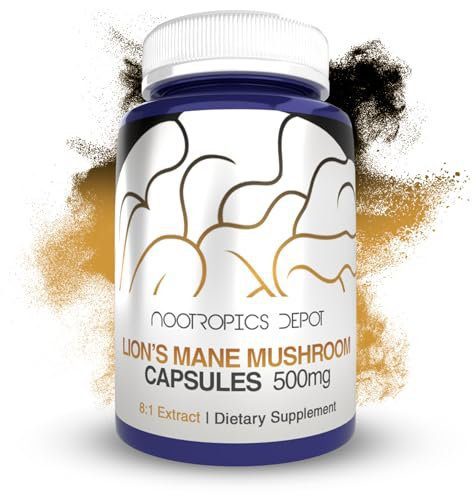
When evaluating lion's mane products, the single most important label criterion is explicit fruiting body content with a beta-glucan or hericenone percentage. A product labeled "10:1 extract" without specifying what the extraction method concentrated is not necessarily better than a lower-ratio product that discloses its active-compound content.
Frequently asked questions
Does lion's mane actually regenerate nerves in humans?
No human trial has measured nerve regeneration (nerve fiber density, nerve conduction velocity) as a primary outcome after lion's mane supplementation as of 2026. The evidence that lion's mane stimulates NGF comes from cell cultures and animal models. The two human RCTs measured cognitive test scores and mood — not structural nerve endpoints. Saying lion's mane "regenerates nerves" in humans is ahead of what the current evidence supports.
What is the best dose of lion's mane for nerve health?
The only human RCT specifically targeting cognitive outcomes (Mori 2009) used 3g of dried fruiting body per day divided into three doses, for 16 weeks. That is the dose with the most direct evidence. Extrapolating this to "nerve health" broadly requires caution: the trial measured cognitive test scores in adults with mild cognitive impairment, not peripheral nerve function.
Is fruiting body better than mycelium for NGF stimulation?
The hericenones that stimulate NGF in vitro are concentrated in the fruiting body. Erinacines, found in the mycelium, also have preclinical NGF-stimulating activity. Both Mori 2009 and Nagano 2010 used fruiting body preparations. Most quality evidence in humans is from fruiting body extracts, which is why fruiting body standardization is the top label criterion.
How long does lion's mane take to work?
In Mori 2009, statistically significant cognitive improvements were measured from week 8 onward. There was no significant cognitive benefit at earlier timepoints. Four weeks is not enough time to evaluate whether the supplement is working for cognitive outcomes.
Can lion's mane help with chemotherapy-induced peripheral neuropathy?
Animal models of chemotherapy-induced neuropathy have shown some protective effects with erinacine-containing extracts, making this an active area of preclinical research. There are no published human RCTs specifically testing lion's mane for chemotherapy-induced peripheral neuropathy as of 2026. This remains biologically plausible but clinically unproven. Anyone in active oncology treatment should not add supplements without their oncologist's guidance.
Is lion's mane safe to take long-term?
The Mori 2009 trial ran 16 weeks without serious adverse events. There are no long-term human safety studies beyond that window. Most integrative medicine references classify it as well-tolerated at typical doses, but extended use above 12-16 weeks lacks a solid safety dataset in humans. The NCCIH does not list lion's mane as having confirmed serious safety concerns, but also notes insufficient long-term data.
As an Amazon Associate, I earn from qualifying purchases. Product recommendations are based on real reviews and independent research.
Related reading
- Lion's Mane Complete Guide: What It Is, What It Does, and What the Evidence Says
- Lion's Mane Fruiting Body vs Mycelium: Which Extract Form Holds Up?
- Lion's Mane Dosage Guide: What Clinical Trials Actually Used
- Lion's Mane for Anxiety: Does the Nagano 2010 Result Hold Up?
- Lion's Mane and ADHD: Preclinical Promise vs Thin Clinical Record
Conclusion: the bottom line on lion's mane for nerve regeneration
Lion's mane has a credible and well-replicated mechanism at the cellular level: its active compounds stimulate NGF synthesis in cell cultures and animal models. That part of the story is real. The part of the story that marketing often skips is that stimulating NGF in a petri dish and regenerating peripheral nerve tissue in a human are separated by a long chain of biological steps, systemic delivery constraints, and clinical validation that does not yet exist.
The two human RCTs are real and meaningful. Mori 2009 showed genuine cognitive score improvement in adults with mild cognitive impairment over 16 weeks at 3g daily. Nagano 2010 showed mood benefit at a lower dose over 4 weeks. Both trials used fruiting-body preparations. Neither trial directly measured peripheral nerve regeneration or included participants with documented neuropathy.
If you have peripheral neuropathy, lion's mane is not a validated treatment. It is a supplement with preclinical promise and a thin clinical record that does not yet extend to your specific condition. If you have early cognitive decline and want a low-risk botanical with biological plausibility and two small supportive RCTs, the case is more coherent — provided you use fruiting-body extract, set a realistic 12-16 week evaluation window, and check the anticoagulant interaction if relevant.
Next steps:
- Read Lion's Mane Complete Guide for the full evidence overview across all studied applications
- If dosing is your next question, Lion's Mane Dosage Guide covers the RCT-derived ranges and extract form considerations
This article is for informational purposes and not medical advice. Lion's mane is a dietary supplement, not a drug, and has not been evaluated by the FDA for any medical condition. It may interact with anticoagulants, antiplatelet medications, diabetes medications, and immunosuppressants. If you have peripheral neuropathy, a neurological condition, or are on any prescription medication, consult a licensed physician before adding lion's mane or any other supplement to your routine. Do not discontinue or reduce any prescribed medication based on information in this article.
As an Amazon Associate, I earn from qualifying purchases. Product recommendations are based on real reviews and independent research.
This article is for informational purposes and not medical advice. Herbal adaptogens, even traditional ones, can interact with thyroid medication, antidepressants, anticoagulants, immunosuppressants, blood-pressure drugs, and more. Consult a licensed physician before starting any adaptogen, particularly if you are pregnant, nursing, taking prescription medications, or managing a chronic condition.
