
You have probably seen the ads: a peptide stack promoted to nurses who work nights, a "circadian reset" protocol sold to warehouse workers on rotating rosters, an IGF-1 booster marketed as the answer to morning-shift brain fog. The real question is not whether disrupted sleep is a genuine medical problem — it unquestionably is, affecting millions of shift workers and carrying real cardiovascular, metabolic, and cognitive costs. The real question is whether any peptide sold today has enough human evidence to earn a place in a night-shift worker's medicine cabinet. Verdict: no peptide is FDA-approved for shift work disorder, the DSIP evidence base is thin and decades old, and the interventions with genuine clinical backing are far less glamorous — but they actually work.
Summary / Quick Answer
The short answer is that no peptide has been approved or demonstrated effective for shift work disorder (SWSD) in rigorous human trials. The compounds most often marketed to shift workers — DSIP, IGF-1 secretagogues, and various nootropic peptides — either lack human evidence entirely or have been studied for unrelated conditions. The FDA-approved options for SWSD are modafinil and armodafinil (prescription wake-promoting agents), alongside carefully timed melatonin, which has solid mechanistic support and is available over the counter.
Best for: Night-shift workers, rotating-schedule employees, and anyone diagnosed with or experiencing symptoms consistent with shift work disorder who wants an honest map of the evidence landscape before spending money on supplements.
Not ideal for: Anyone hoping a peptide will substitute for structural fixes to sleep timing, light exposure management, and scheduling habits. If disrupted sleep is affecting your safety, relationships, or health, see a sleep specialist and ask specifically about SWSD — it is a diagnosable, treatable condition.
Decision shortcut: If you want an evidence-supported first step, appropriately timed low-dose melatonin (0.5-5 mg taken before your intended sleep window) and a quality light therapy lamp have more published data behind them than any peptide available outside a research clinic.
What Is Shift Work Disorder and Who Gets It?
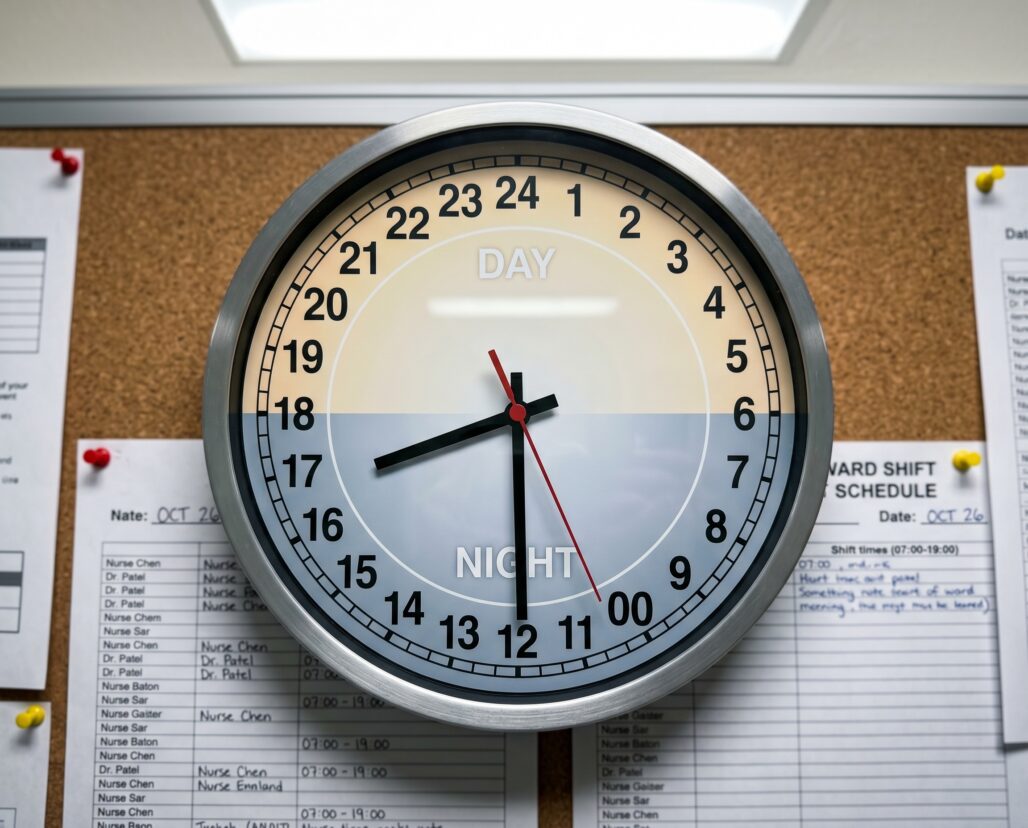
Shift work disorder is a circadian rhythm sleep-wake disorder defined in the International Classification of Sleep Disorders, third edition (ICSD-3) by the American Academy of Sleep Medicine (AASM). To meet diagnostic criteria, a worker must experience insomnia, excessive sleepiness, or both, with symptoms persisting for at least one month, directly attributable to a recurring work schedule that conflicts with the body's natural sleep-wake cycle. This is not simply "being tired because of early mornings." It is a recognized clinical condition with measurable physiological correlates.
Approximately 16% of U.S. wage and salary employees work shift or rotating schedules, according to Bureau of Labor Statistics data cited by the Sleep Foundation. Roughly one in five of those workers — around 10-38% depending on the population studied — will develop SWSD. That translates to several million Americans chronically misaligned with their biology while operating heavy machinery, performing surgical procedures, or driving home on empty highways at 6 a.m.
The downstream health consequences are serious and well-documented. Shift workers with SWSD show elevated risks of cardiovascular disease, metabolic syndrome, gastrointestinal dysfunction, and impaired immune function. NIOSH research documents increased rates of workplace injuries and drowsy-driving accidents in night-shift populations. Cognitive consequences include impaired working memory, reduced processing speed, and difficulties with sustained attention — the same cluster of deficits that accumulate from chronic partial sleep deprivation, as Van Cauter and colleagues demonstrated in neuroendocrine research on sleep restriction and metabolic function.
One underappreciated mechanism: the circadian disruption of shift work suppresses naturally timed melatonin secretion, blunts growth hormone release (which normally peaks during deep slow-wave sleep), and chronically elevates cortisol during hours when the body expects to be in restoration mode. These hormonal disruptions are part of why shift workers often feel unwell even on days off.
Why Peptides Come Up in the Shift Worker Context
Given that SWSD involves disrupted hormones — particularly melatonin, growth hormone (GH), and IGF-1 — it is not difficult to understand why peptide forums and supplement marketers target this population. The logic goes: if GH secretion is blunted by disrupted sleep, and GH secretagogue peptides can stimulate GH release, then taking a peptide could theoretically compensate for the hormonal deficit caused by shift work. The framing sounds scientific. The evidence does not support it.
Several categories of peptides appear repeatedly in shift-worker supplement communities.
DSIP (delta sleep-inducing peptide) is the most commonly cited. Originally isolated from sleeping rabbits in the 1970s, DSIP has been marketed as a direct sleep-promoting compound for decades. As covered in detail in our guide to peptides for sleep, the human evidence base for DSIP is a single small 1980s intravenous trial whose authors concluded the effects were "of little clinical significance." No DSIP gene has been definitively identified. No confirmed receptor has been characterized. There is no modern placebo-controlled human trial examining DSIP in shift workers specifically, and DSIP is not FDA-approved for any indication.
GH secretagogues — including ipamorelin, CJC-1295, GHRP-2, GHRP-6, and the oral compound MK-677 — are sometimes proposed as a way to "restore" the GH pulses that disrupted sleep suppresses. This is theoretically interesting. What it is not is clinically tested in a shift-work context. Available human data on GH secretagogues covers conditions like adult GH deficiency, age-related GH decline, and muscle-wasting diseases — not circadian disruption in otherwise healthy workers. Using an unapproved injectable peptide to compensate for lost GH pulses is not an evidence-based strategy; it is speculation layered on top of a real biological observation.
IGF-1 boosters surface in similar conversations. Circadian disruption does appear to suppress the GH-IGF-1 axis over time, and some animal research has examined IGF-1 in models of circadian misalignment. But this research is mechanistic and preclinical. No human RCT has demonstrated that raising IGF-1 through peptide supplementation improves sleep architecture, daytime alertness, or cognitive performance in shift workers.
Semax and Selank — nootropic peptides covered in our guide to peptides for cognition — occasionally appear as "cognitive support" for shift workers dealing with brain fog. Neither compound is FDA-approved. Neither has been tested in controlled human trials specifically for SWSD-related cognitive impairment. Semax has limited Russian-language clinical data for stroke rehabilitation; Selank has preliminary anxiolytic data. Neither is a substitute for addressing the underlying sleep disruption.
The pattern across all these compounds is consistent: the marketing narrative extrapolates from real biology (circadian disruption does suppress key hormones), but the clinical evidence for peptide-based correction in shift workers simply does not exist.
The Two Interventions With Actual Clinical Backing
Modafinil and Armodafinil (Prescription)
Modafinil (brand name Provigil) and its R-enantiomer armodafinil (Nuvigil) are the only medications with FDA approval specifically for the indication of shift work disorder. Both are wake-promoting agents — they reduce excessive sleepiness associated with SWSD without the cardiovascular side-effect profile of amphetamines.
The FDA approval is based on randomized, double-blind, placebo-controlled trials demonstrating reduced sleepiness scores on the Karolinska Sleepiness Scale and improved performance on psychomotor vigilance testing in shift workers. These are prescription medications. They carry real risks including headache, nausea, potential for dependence, and rare but serious skin reactions. They do not fix the underlying circadian misalignment — they manage the symptom of excessive sleepiness while you are trying to be awake during a shift. Modafinil and armodafinil require a prescription and should be used under physician supervision, with dosing tailored to your specific shift pattern.
For pregnant workers or those planning pregnancy: any shift-work-related medication, including modafinil and armodafinil, requires explicit physician guidance. Neither compound has established safety data in pregnancy.
Melatonin: The OTC Option With Real Evidence
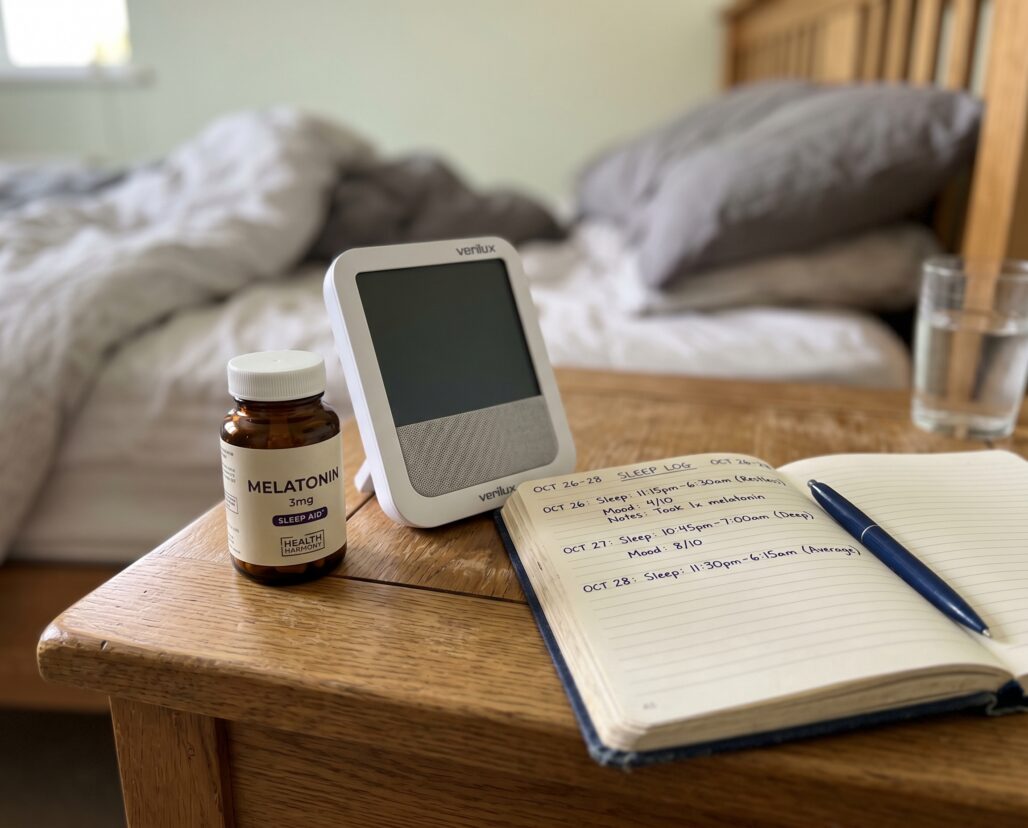
Melatonin is not a prescription drug and is not FDA-approved as a treatment for SWSD — it is sold in the US as an OTC dietary supplement. But it has genuine mechanistic support and is the most evidence-consistent supplement strategy for shift workers.
The mechanism is straightforward. Melatonin signals to the brain that it is time to sleep; its secretion is suppressed by light and timed to the natural dark phase. When a shift worker needs to sleep during the daytime, their circadian system is actively resisting sleep. Taking low-dose melatonin (0.5-3 mg, sometimes up to 5 mg) before the intended sleep window — at the clock time you want to start sleeping, regardless of what time of day that is — can advance or reinforce the body's sleep readiness for that period.
The AASM's clinical practice guidelines for circadian rhythm sleep-wake disorders (Extrinsic CRSWDs, which encompasses SWSD) include melatonin as part of the recommended approach, alongside light management. For night-shift workers who sleep from roughly 8 a.m. to 4 p.m., melatonin taken around 7:30-8 a.m. (before sleep, after arriving home) can help signal the intended rest period. The timing matters more than the dose. Higher doses — the 10 mg tablets common on pharmacy shelves — are not more effective and may cause morning grogginess.
Melatonin is widely considered safe for short-term use in adults at doses below 10 mg. Long-term use data is less robust. It is not appropriate for self-prescribing during pregnancy; consult a physician.
Evidence-Based Lifestyle Protocols That Move the Needle
Pharmaceutical and supplement approaches work best on a foundation of behavioral and environmental strategies. For shift workers, these are not soft suggestions — they are the primary intervention, with the strongest evidence base of anything discussed in this article.
Light exposure timing. Light is the most powerful zeitgeber (time-cue) for the circadian system. During your shift, bright light — especially in the blue wavelength range — promotes alertness and suppresses melatonin. During your commute home after a night shift, blocking blue light (sunglasses, blue-light-blocking glasses) prevents the morning light from signaling "wake up" to your circadian clock just as you need to be preparing to sleep. A dedicated light therapy lamp (typically 10,000 lux, used for 20-30 minutes) timed to your work schedule can help anchor the circadian clock to the intended active phase.
Sleep banking. Research on sleep deprivation demonstrates that some degree of sleep debt can be pre-emptively reduced by banking extra sleep before a run of night shifts. This is not a complete solution — the misalignment persists regardless — but arriving at your first night shift better rested reduces the performance decrement meaningfully.
Temperature and darkness for daytime sleep. Daytime sleeping is physiologically harder because core body temperature and cortisol are naturally elevated during daylight hours. A cool, fully darkened room (blackout curtains, eye mask) and white noise or earplugs reduce the environmental barriers to sleep onset during the day.
Caffeine timing. Strategic caffeine use — typically in the first half of the shift, avoiding caffeine within 4-6 hours of the intended sleep period — can support alertness without compounding sleep onset difficulty. NIOSH guidance for shift workers specifically notes the importance of avoiding caffeine-as-crutch late in the shift.
Scheduling stability. Rotating shifts are harder on the circadian system than stable night shifts, because the body cannot adapt to a moving target. If your employer offers input into scheduling, permanent or semi-permanent night shifts — even though socially inconvenient — are physiologically preferable to rotating schedules. When rotations are unavoidable, forward-rotating schedules (day to evening to night) are better tolerated than backward rotation (night to evening to day), following the natural tendency of the human circadian clock to drift slightly forward each day.

Frequently Asked Questions
Is there any FDA-approved peptide for shift work disorder?
No. As of 2026, no peptide of any kind — injectable, oral, or topical — has FDA approval for shift work disorder, SWSD-related insomnia, or shift-work-related excessive sleepiness. The only FDA-approved medications for SWSD are modafinil and armodafinil, neither of which is a peptide.
Can DSIP help me sleep during the day after a night shift?
The evidence does not support this. DSIP has never been tested in shift workers. The only placebo-controlled human sleep trial of DSIP used intravenous administration in chronic insomniacs and found effects the authors described as clinically insignificant. DSIP is not FDA-approved for any indication, is not a legal dietary supplement, and is sold as a "research chemical" with no independent verification of purity or dosing. DSIP is NOT FDA-approved.
What about MK-677 to restore GH while I sleep?
MK-677 (ibutamoren) is an oral GH secretagogue that does stimulate GH release, but it has not been tested in shift workers for SWSD management. It is not FDA-approved, is classified differently from supplements in the US, and carries risks including edema, insulin resistance, and joint pain. Using it to "compensate" for lost GH pulses from sleep disruption is not a validated clinical strategy.
Should I see a doctor rather than trying supplements?
Yes, if disruption is chronic. SWSD is a diagnosable condition with treatment options that go beyond self-managed supplement stacking. A sleep specialist can confirm the diagnosis, rule out co-occurring disorders (sleep apnea is common in shift workers), and discuss whether modafinil, armodafinil, strategic light therapy, or structured melatonin protocols are appropriate for your schedule. Chronic, untreated SWSD carries real long-term health consequences; this warrants proper medical evaluation.
What about peptides for cognitive recovery on rest days?
No peptide has been shown to restore cognition from SWSD-related sleep deprivation. The most reliable cognitive recovery intervention remains recovery sleep — ideally without an alarm, in a darkened room. CBT-I techniques can help shift workers improve sleep efficiency even in suboptimal timing conditions.
Conclusion
Shift work disorder is a real, medically recognized condition that affects millions of people and carries consequences well beyond simple tiredness. The biology of circadian disruption — suppressed melatonin, blunted GH pulses, elevated cortisol, impaired immune function — provides an opening for supplement marketing that sounds plausible but outpaces the evidence by years, if not decades.
The peptides most commonly promoted to shift workers — DSIP, GH secretagogues, IGF-1 boosters, nootropic peptides — share a common feature: none has been tested in controlled human trials for SWSD management, and none is FDA-approved for any shift-work-related indication. The real first-line options are modafinil and armodafinil (FDA-approved prescriptions for SWSD), strategically timed melatonin, and a set of behavioral protocols around light, temperature, scheduling, and sleep banking that have more supporting evidence than any supplement in this space.
If you are a shift worker experiencing persistent insomnia, excessive daytime sleepiness, or cognitive difficulties that interfere with safety and function, the right first step is a conversation with a sleep specialist — not a research-chemical order. The evidence points clearly in one direction here, even if the marketing points elsewhere.
This article is for informational purposes only and does not constitute medical advice, diagnosis, or treatment. Talk with a qualified healthcare provider before starting, stopping, or changing any medication, supplement, or health protocol. Modafinil and armodafinil are prescription medications; use them only under physician supervision. Melatonin is an OTC supplement; appropriate timing and dose vary by individual shift pattern and should be discussed with a healthcare provider, particularly during pregnancy or if you take other medications.
