
Affiliate disclosure: this article contains affiliate links. As an Amazon Associate, UsefulVitamins.com earns from qualifying purchases at no extra cost to you.
What actually decides whether a probiotic works
Format is the question people ask, but it is not the thing that decides the outcome. The two factors that matter most are the specific strain and whether enough of it reaches your gut alive.
Stomach acid sits around pH 1.5 to 3.5, and that is hostile to most bacteria. Lab work on unprotected cultures shows steep die-off within the first 30 minutes of acid exposure, which is why how the cells are delivered changes how many survive the trip.
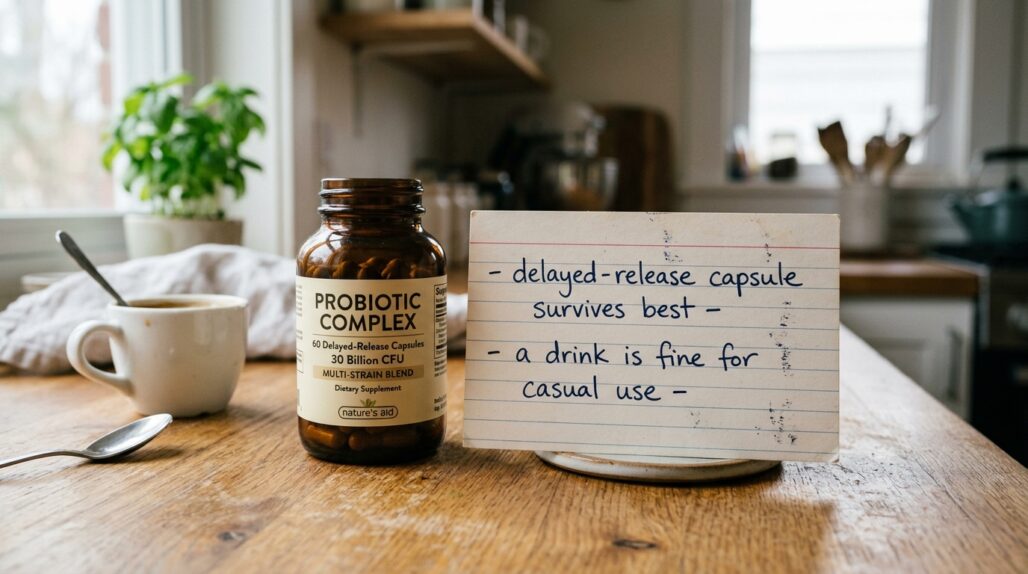
So the real comparison is not "capsule good, drink bad". It is: which format gets a labeled, studied strain past your stomach and into your intestine in the numbers the research used? That answer shifts depending on the strain and your goal.
How stomach acid sets the rules
Your stomach is a kill zone for live cultures, and that is by design. The job of gastric acid is to neutralize incoming microbes, and it does not make an exception for the ones you paid for.
In a simulated gastric-fluid study at pH 1.2 run on commercial products containing Lactobacillus and Bifidobacterium, an enteric-coated (delayed-release) capsule held about 87% viability at 30 minutes and 66% at 60 minutes, while standard non-coated capsules dropped to 23% to 30% at 30 minutes and 8% to 13% at 60 minutes. That is a large gap, reported in this in-vitro comparison of probiotic capsule survival.
Broader survival research summarized through the NCBI/PMC review of probiotic survival in the upper GI tract found delayed-release formats kept over 50% of cells viable where powders, liquids, and standard capsules came in under 1% in the harshest acid conditions. The coating is doing real work.
The catch: strains differ. Lactobacillus rhamnosus GG is one of the more acid-tolerant strains and survives gastric passage better than fragile species, especially when taken with food, so an acid-tough strain in a plain powder can still arrive in usable numbers. That said, even hardy strains lose a meaningful share of cells in stomach acid, and coating matters most for fragile ones.
Capsule, powder, drink – how they really compare
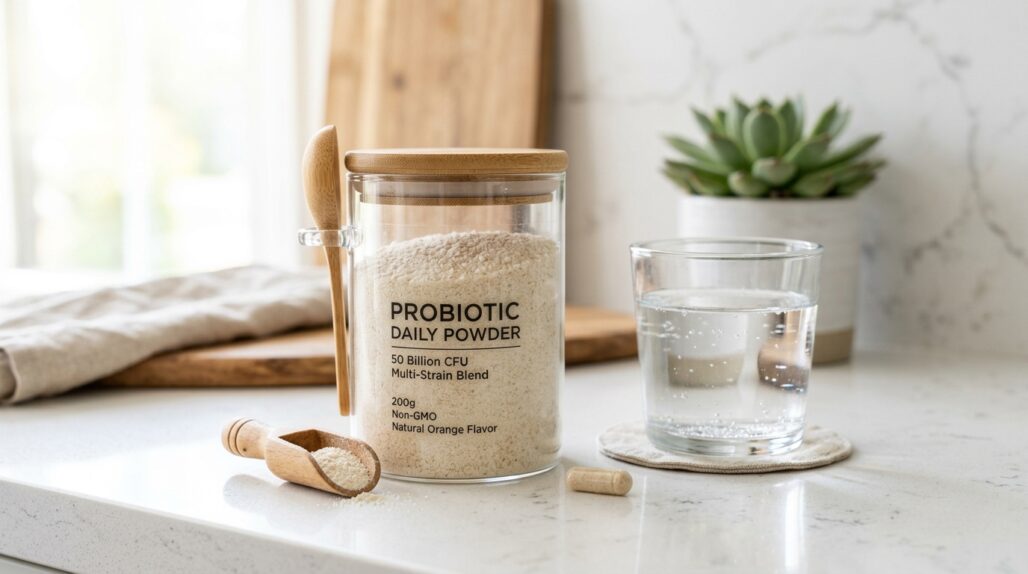
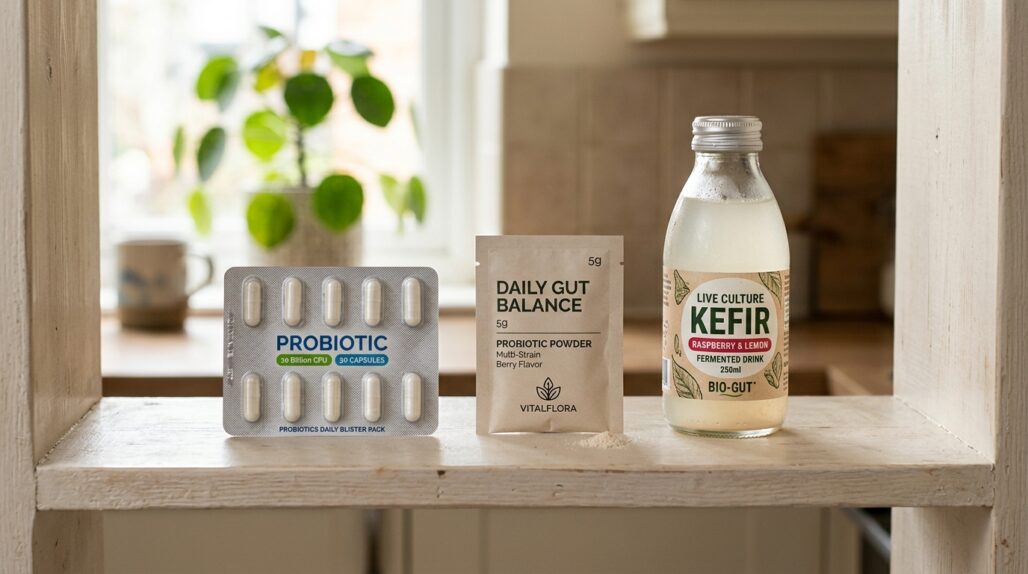
Each format wins at something different. Here is the honest breakdown before you pick.
| Form | Acid protection | Dose control | Best for | Main drawback |
|---|---|---|---|---|
| Delayed-release capsule | Best – coating bypasses the stomach | Precise, fixed CFU per capsule | A specific clinical strain at a set dose | Have to swallow a pill |
| Standard capsule | Moderate – depends on the strain | Precise, fixed CFU per capsule | Acid-tolerant strains, value | Weaker on fragile strains |
| Powder or sachet | Low unless the strain is tough or you take it with food | Flexible – split or scale the dose | Kids, pill-averse, mixing into food | Often no acid shield |
| Drink or fermented beverage | Variable, usually low | Poor – counts shift by batch | Everyday casual gut support | Often sugary, rarely a studied dose |
Capsules: the most reliable delivery
For a named strain at a research-backed CFU, a capsule is the cleanest bet. The dose is fixed, and a delayed-release or acid-resistant shell hands you the strongest protection through the stomach.
Worth knowing: a delayed-release capsule at 10 billion CFU can deliver more live organisms to the colon than a standard capsule at 50 billion CFU. The headline number on the bottle is not the number that reaches you.
Powders and sachets: flexible, check the strain
Powders shine when you cannot or will not swallow a pill – young kids, anyone with reflux around capsules, or recipes where you stir the dose into yogurt or a cool drink. They also let you split a dose or scale it up.
The trade-off is that most powders carry no acid protection. That is fine for a hardy strain like L. rhamnosus GG, and taking a powder with or just before food can buffer the stomach and improve survival. For a fragile Bifidobacterium, a bare powder is a weaker carrier.
Heat kills cultures, so do not stir probiotic powder into hot coffee or hot soup. Cool or room-temperature liquid only.
Drinks: pleasant, not a clinical dose
Kombucha, kefir, and bottled probiotic drinks are a fine habit, but treat them as food, not medicine. Retail kombucha testing found live counts ranging from about 100 million to 10 billion CFU, with no meaningful difference between products that advertised a culture count and those that did not, per this MDPI analysis of retail kombucha microbial content.
Then there is sugar. A flavored bottle can carry 15 to 30 grams of sugar, which works against the point for a lot of people. Use drinks for general enjoyment and gut variety, and lean on a capsule when you want a specific strain at a known dose.
CFU and strain beat format every time
Here is the part the marketing buries. The format helps cultures survive, but it cannot rescue a vague or underpowered product.
Two label facts decide more than capsule-versus-powder:
- A named strain, written as genus, species, and strain code, for example Lactobacillus rhamnosus GG. The NIH Office of Dietary Supplements probiotics fact sheet is clear that effects are strain-specific, so a strain studied for one purpose may do nothing for another.
- CFU guaranteed through the expiration date, not "at time of manufacture". Cultures die slowly on the shelf, so a "50 billion at manufacture" claim can be far lower by the time you open it.
CFU stands for colony-forming units, the count of live, dividing cells – a better measure of what is active than the product's weight. To turn a target CFU into a sensible daily number for your goal, use our probiotic CFU per day guide rather than guessing from the front of the bottle. For decoding strain names and what each is studied for, our guide to probiotic strains walks through the common ones.
One honesty note on expectations. The AGA clinical practice guidelines on probiotics found the evidence does not support probiotics for most digestive conditions, and singled out only a few scenarios such as preventing C. difficile during antibiotics, pouchitis, and certain preterm infants. A better-surviving capsule still cannot outperform thin evidence for a given use.
Shelf-stable or refrigerated, and storage habits
Survival does not stop at your stomach. How a product is stored before you take it changes how many cultures are still alive.
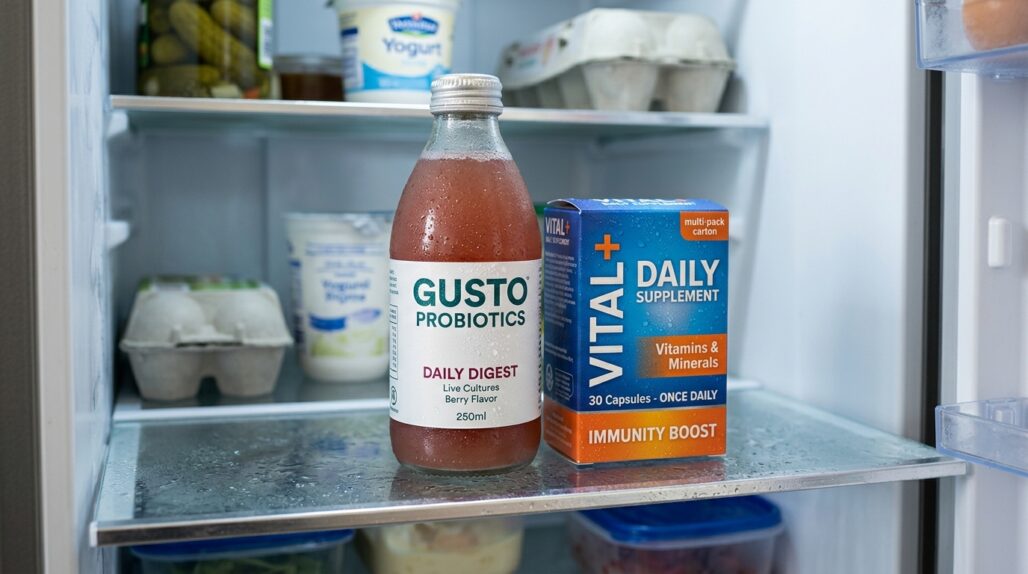
Some strains are shelf-stable and engineered to hold up at room temperature, while others need the fridge to keep their count. Neither is automatically better; it depends on the strain and the packaging. Our comparison of shelf-stable versus refrigerated probiotics covers which is which and how to store each.
Two practical habits help any format. Keep the product out of heat and humidity, which means not on a sunny windowsill or in a steamy bathroom. And finish the bottle before the expiration date, since the guaranteed count assumes you used it in time.
For the bigger picture on how probiotics work, dosing windows, and what realistic benefits look like, our complete guide to probiotics ties the pieces together.
Which form to buy
There is no single winner. Buy the format that matches your goal and the one you will actually take every day.
- Want a specific studied strain at a set dose – a delayed-release or acid-resistant capsule gives the most reliable delivery.
- Need flexibility, or it is for a child or a pill-averse adult – a powder or sachet, ideally with an acid-tolerant strain, taken with food.
- Just want a pleasant daily habit – a low-sugar drink is fine, with the understanding that it is casual support, not a clinical dose.
The picks below are options we would consider for each use case. UsefulVitamins may earn a commission from purchases made through these links, at no extra cost to you. Always check the current strain, CFU, and price on the label before buying.



As an Amazon Associate, UsefulVitamins.com earns from qualifying purchases at no extra cost to you.
FAQ
Do probiotics really get killed by stomach acid? A large share of unprotected cultures die in the first half hour of acid exposure, but acid-tolerant strains and delayed-release coatings survive far better. The format and the strain together decide how many reach your gut.
Is a delayed-release capsule worth the extra cost? For fragile strains it can deliver more live cells than a much higher CFU standard capsule, so it often is. For a naturally acid-tough strain like L. rhamnosus GG, a plain capsule or powder may do nearly as well.
Can I just drink kombucha instead of taking a supplement? You can enjoy it, but live counts in retail drinks vary widely and often do not match a studied dose, plus many bottles carry 15 to 30 grams of sugar. Use it as casual support, not a substitute for a labeled strain.
Should I take probiotic powder on an empty stomach or with food? Taking a powder with or shortly before a meal buffers stomach acid and tends to improve survival, which helps unprotected formats most. Follow the product label, and never mix powder into hot liquid.
Does a higher CFU number mean a better product? Not by itself. A named strain, a count guaranteed through the expiration date, and good delivery matter more than a big front-of-bottle number, so use our CFU guide to set a realistic target.
Is it safe for anyone to take probiotics? Most healthy people tolerate them well, but live bacteria have been linked to rare bloodstream infections in people who are severely ill or immunocompromised. If that describes you, ask a doctor before starting any format.
The bottom line
If you want the most live cultures reaching your gut, a delayed-release or acid-resistant capsule is the safest bet, especially for a fragile strain. Powders are flexible and work well for kids, mixing, and acid-tolerant strains taken with food, while drinks are a fine everyday habit but rarely a studied dose.
The thing that decides results is not the package – it is a named, studied strain at a CFU guaranteed through the expiration date. Pick the format you will keep taking, then use our probiotic CFU per day guide to land on the right number.
This article is general education, not medical advice. Probiotics are not a treatment for any disease, and individual needs vary. Talk with a pharmacist or doctor before starting a probiotic if you are pregnant, immunocompromised, seriously ill, or managing a medical condition.
Reviewed by the UsefulVitamins Editorial Team.
