

Stand in front of the probiotic shelf and the labels read like a foreign language: Lactobacillus rhamnosus GG, Bifidobacterium animalis HN019, Saccharomyces boulardii. The marketing wants you to treat all three as interchangeable "good bacteria," but they're not even all bacteria, and the trial evidence behind one tells you almost nothing about another.
This piece sorts the three big probiotic families so you can read a label, match a named strain to an actual goal, and stop paying for the genus when what you needed was the strain.
Before you decide
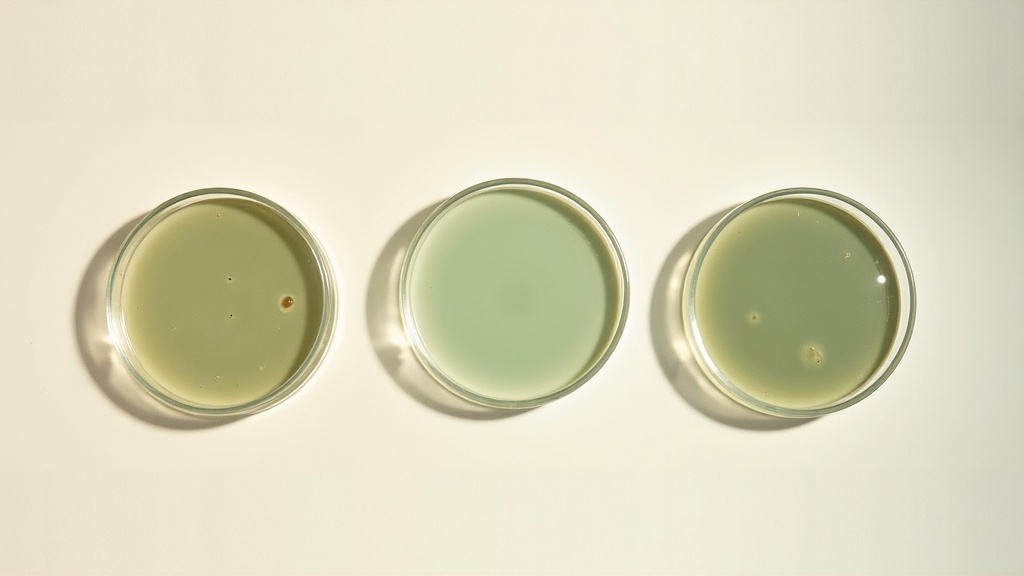
A few people should not start a probiotic of any genus on their own. If you are severely immunocompromised, critically ill, recovering from major surgery, have a central venous catheter, or are caring for a premature infant, talk to your physician first.
Rare bloodstream infections from probiotic organisms, including both bacterial strains and Saccharomyces, have been documented in exactly these groups, and per the NIH Office of Dietary Supplements review of probiotic safety the standard guidance is caution rather than a casual trial. If you have an active gastrointestinal disease such as ulcerative colitis or Crohn's, a probiotic belongs in a plan your gastroenterologist directs, not a self-prescribed add-on.
If none of that applies, the useful first step is naming the goal, because the genus that helps depends entirely on it. "General gut health" is not a target the evidence can hit, and it's the reason so many people buy a strain that was never tested for what they want.
A specific goal looks like: you're starting antibiotics, you have diagnosed IBS, or you have sluggish transit. Each points to a different family, and some point away from a supplement entirely. Before assuming your gut is the problem, it's worth asking your doctor whether persistent symptoms warrant basic workup, because bloating, reflux, and bowel changes have causes no probiotic addresses.
You can see how I weigh evidence and conflicts of interest on the how we review supplements page, and for the wider picture of CFUs and dosing this article is the strain-level companion to the complete guide to probiotics.
Why the strain matters more than the genus

Here is the single most important idea on the shelf: a probiotic is properly identified by three levels, genus, species, and strain, and the trial evidence attaches to the strain, not the genus or even the species. Lactobacillus rhamnosus GG is a different product from another, unnamed L. rhamnosus, even though the species name is identical, because the studies were run on that specific strain.
The international expert definition of a probiotic, "live microorganisms which, when administered in adequate amounts, confer a health benefit on the host," builds this in: the benefit has to be demonstrated for the actual organism in the bottle.
That's why a label that lists only "Lactobacillus blend" or "Bifidobacterium 10 billion CFU" without strain codes tells you almost nothing. You can't look up what it was tested for, because the testing, if any, was done on named strains you can't confirm are in the product.
As a dietitian, I read the strain code the way I'd read a drug name and dose: it's the part that connects the product to a result. Everything in the comparison below is organized by genus for orientation, but the operative unit is always the strain.
Lactobacillus: the workhorse genus
Lactobacillus is the family most people picture when they hear "probiotic," and it's the most commercially common. Recent taxonomy split the old genus into several new names like Lacticaseibacillus and Lactiplantibacillus, so a strain you've known for years may now carry a different first word on the label while being the same organism.
These are largely transient, acid-tolerant bacteria that pass through rather than permanently colonizing.
The strongest Lactobacillus evidence is for preventing antibiotic-associated diarrhea, and it's strain-specific. A systematic review with meta-analysis of Lactobacillus rhamnosus GG found it reduced the risk of antibiotic-associated diarrhea, with the clearest signal in children and a weaker, less consistent effect in adults.
For functional gut symptoms, Lactiplantibacillus plantarum 299v (DSM 9843) has been tested directly in IBS: a four-week multicenter randomized trial reported lower pain frequency and severity versus placebo, though, as with most IBS probiotic data, the effect was modest and not replicated in every later study.
The pattern is consistent across the genus: real but bounded benefit for a couple of named strains, not a blanket "good for digestion" effect for the family.
Bifidobacterium: the colon residents

Bifidobacterium lives mainly in the large intestine and is one of the dominant genera in a healthy adult colon and in breastfed infants. Because these strains are more at home in the colon than the transient lactobacilli, several of the better single-strain results for chronic functional symptoms come from this family.
The standout is Bifidobacterium longum subsp. infantis 35624 (you'll also see it written as B. infantis 35624). A landmark randomized trial in women with IBS found that the 1 x 10^8 CFU dose improved abdominal pain, bloating, and bowel difficulty more than placebo, and notably that a higher 1 x 10^10 dose did not, an early, clean illustration that more CFU is not automatically better.
A later meta-analysis tempered the enthusiasm, concluding the single strain alone did not significantly move abdominal pain or bloating across pooled trials, while formulations combining it with other strains performed better.
For transit rather than pain, Bifidobacterium animalis subsp. lactis HN019 has dose-ranging data in functional constipation: the primary outcome was not significant, but a prespecified subgroup with fewer than three bowel movements per week saw a meaningful increase in weekly frequency. The honest read is "promising and strain-specific," not "proven for everyone."
Saccharomyces boulardii: the yeast that breaks the rules
Saccharomyces boulardii is the odd one out, and that's exactly why it's useful. It is not a bacterium at all but a probiotic yeast, which means antibacterial antibiotics don't touch it. That single property is why it appears so often in the antibiotic-associated and C. difficile diarrhea literature: you can take it alongside an antibiotic without the drug killing your probiotic.
The 2020 American Gastroenterological Association guideline, which is deliberately conservative about probiotics overall, identified prevention of C. difficile infection in adults and children on antibiotics as one of the narrow scenarios where specific formulations, including S. boulardii-containing regimens, may help.
Being a yeast also changes the cautions. S. boulardii should not be used by people with a central venous catheter or who are critically ill, because fungemia has been reported in those settings, and it's typically held in anyone with a yeast allergy.
For a healthy adult heading into a course of antibiotics, though, it occupies a niche neither Lactobacillus nor Bifidobacterium can: a probiotic that survives the very drug you're taking it to offset.
The three families compared
The table groups the genera by what they are and where the best-known strain evidence sits. Read it as orientation, not a ranking, and remember the effect belongs to the named strain in each row, not the family as a whole.
| Genus | What it is | Best-studied named strain(s) | Strongest evidence niche |
|---|---|---|---|
| Lactobacillus (and reclassified relatives) | Transient, acid-tolerant bacteria; most common on shelves | L. rhamnosus GG; L. plantarum 299v | Antibiotic-associated diarrhea; some IBS symptoms |
| Bifidobacterium | Colon-resident bacteria; dominant in healthy adult colon and infants | B. longum infantis 35624; B. lactis HN019 | IBS pain and bloating; transit/constipation |
| Saccharomyces | A yeast, not a bacterium; antibiotics don’t kill it | S. boulardii | Antibiotic-associated and C. difficile diarrhea |
Notice what the table doesn't say: that one genus is "best." The right choice is whichever family contains a named strain studied for your specific goal. A blend that lists a dozen unnamed species across all three genera at a giant combined CFU count is harder to evaluate than a single strain matched to a target, because you can't trace any of it back to a trial.
How to choose by goal
If you're starting antibiotics: the two families with the most relevant evidence are Saccharomyces boulardii, because it survives the antibiotic, and Lactobacillus rhamnosus GG. Start close to when you begin the antibiotic rather than waiting for symptoms, and if you choose a bacterial strain, separate it from the antibiotic dose by about two hours so the drug isn't actively killing it. S. boulardii needs no such spacing.
If you have diagnosed IBS: the better single-strain candidates sit in Bifidobacterium (B. longum infantis 35624) and Lactobacillus (L. plantarum 299v), but the average effect is modest and strain-dependent, so give any choice four weeks before judging it. IBS belongs in a plan your clinician knows about, not a solo experiment, especially if symptoms are new or changing.
If your issue is slow transit or constipation: Bifidobacterium strains such as B. lactis HN019 have the most on-point data, though even there the benefit was clearest in people with genuinely infrequent movements. Dietary fiber and fluid do more of this job than any capsule for most people.
If you're a healthy adult with no symptoms: none of the three families has good evidence for preventing disease in well people, and your money goes further on a plant-rich, fermented-food diet. A varied diet feeds and seeds your existing Bifidobacterium and Lactobacillus populations more consistently than a supplement does. The format you buy also matters once you've picked a strain; I compare storage formats in shelf-stable vs refrigerated probiotics.
FAQ
Is Lactobacillus or Bifidobacterium better? Neither, as a category. They occupy overlapping but different turf, lactobacilli are more transient and common in antibiotic-diarrhea data, bifidobacteria are colon residents with the better single-strain IBS and transit evidence. The named strain decides, not the genus.
Is Saccharomyces boulardii a probiotic if it's a yeast? Yes. The definition is about live microorganisms that confer a benefit, not specifically bacteria. Its value is precisely that it's a yeast, so antibacterial antibiotics leave it intact.
Do I need all three genera in one product? Not for a defined goal. A multi-genus blend is harder to evaluate because you can't tie the result to a specific tested strain. A single named strain matched to your goal is easier to verify and dose.
Can I take Saccharomyces boulardii with antibiotics at the same time? Generally yes, and that's the point, antibacterial antibiotics don't kill yeast, so it doesn't need the two-hour spacing a bacterial strain does. Still confirm with your pharmacist if you take antifungal medication or have a complex regimen.
Adding this to a few other supplements? Our companion app, StackMyMed, scans the label, tracks your real daily intake, and schedules the best time to take it around everything else in your routine.
The bottom line on probiotic strains
Lactobacillus, Bifidobacterium, and Saccharomyces are three different answers to three different questions, and the question "which genus is best" doesn't have one.
What the evidence actually supports is strain-specific: L. rhamnosus GG and S. boulardii for antibiotic-associated diarrhea, B. longum infantis 35624 or L. plantarum 299v for IBS symptoms with realistic expectations, B. lactis HN019 for sluggish transit in people who genuinely need it, and S. boulardii as the yeast that survives the antibiotic the others can't.
None of this is a cure claim, and probiotics support specific situations within standard care rather than replacing it. Read the strain code, match it to your goal, mind the dose the trial actually used, and store it as the label directs.
Reviewed by Sarah Thompson, Registered Dietitian, focused on vitamin and mineral nutrition. See more from Sarah Thompson. This article is educational and is not a substitute for individualized medical advice; talk to your doctor before starting a supplement, especially if you are immunocompromised, pregnant, or managing a diagnosed condition.
