
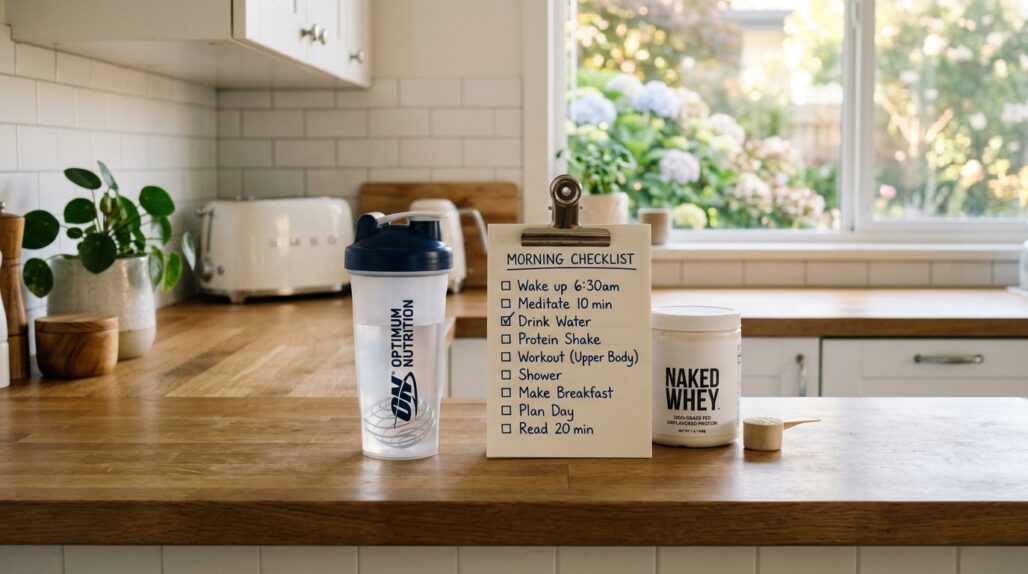
Why muscle is the thing to watch on a GLP-1
GLP-1 medications work largely by turning down appetite, so you eat less and lose weight. The catch is that not all of that weight is fat. A recent meta-analysis found that, on average, about 31 percent of the weight people lost on GLP-1 therapy came from lean mass rather than fat. Some lean-mass loss happens with any kind of weight loss, not just with these drugs, but the speed of GLP-1 weight loss is what makes it worth paying attention to.
Muscle is not just about looks. It supports your strength, your balance, your metabolism, and how well you function as you age. The encouraging part is that the levers that protect it are not exotic. The two that carry the most weight are enough protein and regular resistance exercise. Supplements sit on top of that foundation, not in place of it. If you want the deeper background on the medication-and-muscle link, our guide on muscle loss on Ozempic and the supplements people consider covers it in more detail.
This page walks through a simple daily routine and a paper method you can use right now with no app at all. None of it changes your medication. Your prescriber sets that, and any real medical question belongs with them or your pharmacist.
Start with protein, because it does the most
If you only fix one thing, make it protein. When clinicians describe what protects muscle during GLP-1 weight loss, they point at the same combination every time: a higher-protein diet paired with consistent exercise. A Mass General endocrinology summary notes that combining a high-protein diet with consistent exercise during treatment does more to preserve muscle and bone than diet changes or the medication on their own.
The official Recommended Dietary Allowance for protein is 0.8 grams per kilogram of body weight per day, but that figure is set to prevent deficiency in an average healthy adult, not to protect muscle while you are losing weight in a calorie deficit. Most research on holding onto muscle during weight loss lands higher, often somewhere in the range of 1.2 to 1.6 grams per kilogram, and active people who lift may aim higher still. These are general numbers, not a prescription. Your doctor or a dietitian can set a target that fits your weight, your kidneys, and your overall health.
Here is the practical problem on a GLP-1: your appetite is smaller, so hitting a protein target by accident almost never happens. You have to aim for it. A few habits make that easier:
- Eat the protein first at each meal, while your appetite is at its best, before you fill up on everything else.
- Spread it across the day instead of stacking it all at dinner. Three modest protein servings beat one large one your stomach cannot finish.
- Lean on easy wins on rough days – Greek yogurt, eggs, cottage cheese, a protein shake – when a full plate feels like too much.
A quick way to estimate your target
You do not need an app for this. Take your weight in pounds, divide by 2.2 to get kilograms, then multiply by a number your clinician agrees with (say 1.2 to 1.6). A 75 kg person aiming for 1.4 g/kg lands near 105 grams of protein a day. Write that number on a sticky note where you eat. That single figure is the spine of the whole routine.
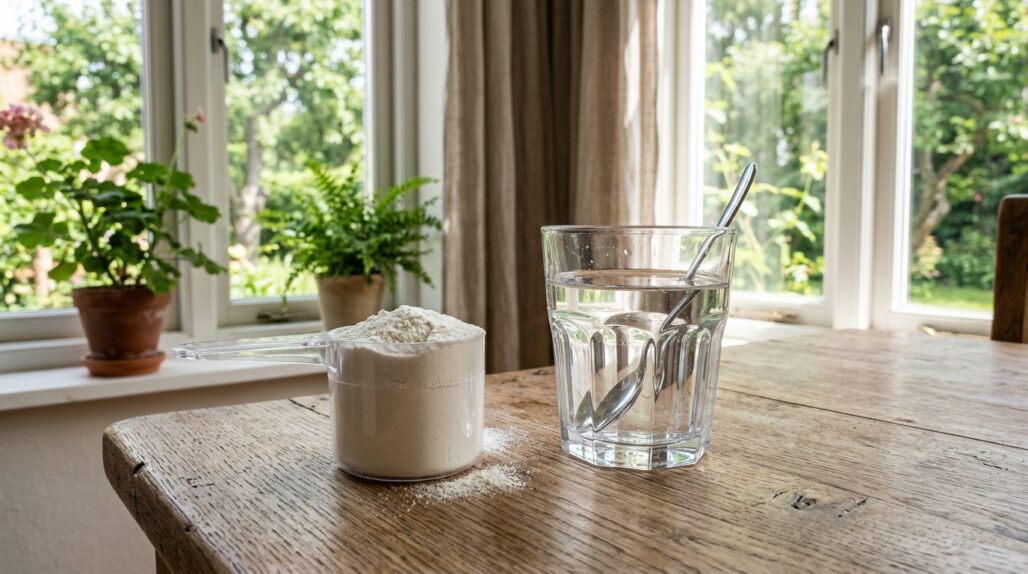
Where creatine and HMB fit (and where they do not)
Once protein and training are in place, two supplements come up most often for muscle support. They are not equal.
Creatine monohydrate is one of the most studied supplements there is. The NIH Office of Dietary Supplements describes it as a supplement that, paired with training, can support strength and power output during repeated bursts of intense effort like lifting. A typical maintenance dose discussed in the research is around 3 to 5 grams a day, taken consistently. It is not a stimulant and does not need to be timed to a workout – daily and steady is what matters. Creatine does pull a little water into muscle, so plain water alongside it helps. If you have kidney concerns or take other medications, clear it with your pharmacist or doctor first rather than assuming it is fine.
HMB (beta-hydroxy-beta-methylbutyrate) gets marketed hard for muscle preservation, but the evidence is thinner and worth a sober read. A systematic review and meta-analysis in the American Journal of Clinical Nutrition found only a small effect on muscle mass, somewhat stronger signal for strength, and flagged real limitations in the quality of the underlying studies. That does not make HMB useless, but it does mean you should keep expectations low and not let it crowd out the things that actually move the needle. If money or stomach space is limited, protein and creatine come first.
The table below sums up how much weight to put on each piece.
| Item | What the evidence supports | Reasonable daily approach |
|---|---|---|
| Protein | Strongest tool for keeping muscle during weight loss | A set target in grams, protein-first at each meal |
| Resistance training | Pairs with protein to preserve muscle and bone | Two or three sessions a week, progressively harder |
| Creatine monohydrate | Well-studied support for strength when training | About 3 to 5 g daily, taken consistently, with water |
| HMB | Small and mixed; better signal for strength than mass | Optional add-on after the basics, low expectations |
The part that wins or loses this: staying consistent
A perfect plan you follow three days a week loses to a decent plan you follow daily. Consistency is the whole game with muscle support, and it is exactly what gets hard when your appetite is low and some days you barely want food at all.
A simple paper tracker handles this without any technology. Take an index card or a notebook page and rule it into a week. Down the side write your three or four anchors. Across the top, the seven days. Check the box when each is done. It looks like this:
| Daily anchor | Mon | Tue | Wed |
|---|---|---|---|
| Hit protein target | [ ] | [ ] | [ ] |
| Creatine 3-5 g | [ ] | [ ] | [ ] |
| Move or lift | [ ] | [ ] | [ ] |
Keep the card on the kitchen counter or taped inside a cabinet door you open every morning. The visible streak of checkmarks is the nudge. When you see two empty protein boxes in a row, that is your signal to lean on the easy wins before a low-appetite stretch turns into a quiet muscle problem.
Some people prefer the tracking on their phone, where it travels with them and can chime when something is due. Since consistency is what protects muscle, if your protein timing or creatine keeps slipping, a free app we make, StackMyMed (our own free app), can remind you daily and keep your muscle-support items logged alongside the rest of your stack, so the reminders sit next to your real picture rather than in a separate place. It is a backup for the habit, not a replacement for the paper card, the pill box, or a note on the fridge – pick whichever you will actually look at. And if you are ever unsure whether creatine or any supplement fits with your GLP-1 or your other medications, that is a question for your pharmacist, not something to settle from a label or an app.
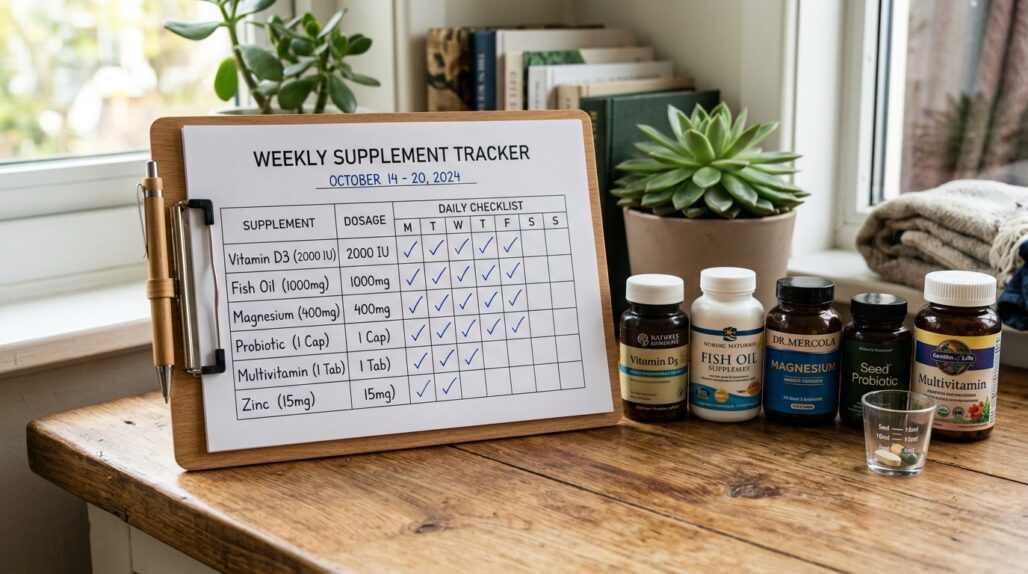
Build the day around meals, not the clock
The smoothest routines hang each habit on something you already do. Anchor protein to your meals, since you have to eat anyway. Anchor creatine to one fixed daily moment – the same glass of water every morning works fine, because timing does not matter much for it. Anchor your training to specific days, written on the same tracker, so "I'll lift this week" turns into "Tuesday and Friday." If you take other supplements around your shot or your meals, our walkthrough on setting up a GLP-1 supplement timing schedule shows how to slot everything without conflicts.
On a hard appetite day, lower the bar instead of skipping. A protein shake counts. A short walk counts. Half a planned workout counts. The goal is to keep the chain unbroken, because a string of zero days is what actually erodes muscle over the weeks you are on the medication.
If your counter is starting to look like a pharmacy shelf, it can help to thin things out and group what is left. Our piece on organizing a GLP-1 stack when there are too many bottles is a good next read, and if you take prescriptions alongside your supplements, run the combination through our drug and supplement interaction checker and bring anything it surfaces to your pharmacist.
FAQ
Do I really lose muscle on a GLP-1, or is that overblown? Some lean-mass loss is real and expected, with research suggesting roughly a third of lost weight can come from lean tissue on average. It happens with most weight loss, not only with these drugs, and protein plus resistance training is what blunts it.
How much protein should I aim for? The general RDA is 0.8 g/kg, but that is a deficiency-prevention floor, not a muscle-protection target during weight loss. Research on holding muscle while losing weight often lands higher, around 1.2 to 1.6 g/kg. Your doctor or a dietitian should set your specific number, especially if you have kidney concerns.
Is creatine safe to take with a GLP-1? Creatine is well studied and widely used, and there is no general flag against it with GLP-1 medications. That said, your situation is yours alone. Run it by your pharmacist or doctor before starting, particularly if you have kidney issues or take other prescriptions.
Is HMB worth buying? The evidence is modest and mixed, with a better signal for strength than for muscle size and notable limits in study quality. It is reasonable as an optional add-on once protein, training, and creatine are handled, but it should not be your first purchase.
When should I take creatine – before or after my workout? For everyday muscle support, timing barely matters. Daily consistency is what counts, so take it at whatever fixed moment you will not forget, with water. Pairing it with a meal you already eat makes it stick.
What if my appetite is so low I cannot hit my protein target? That is common and worth raising with your prescriber or a dietitian. They can suggest higher-protein foods, shakes, or adjustments. Do not change your medication or its dose on your own to manage appetite.
The bottom line
On a GLP-1, the muscle you keep depends mostly on two unglamorous habits: hitting a real protein target every day and doing resistance exercise a couple of times a week. Creatine is a sensible support if you train, HMB is a weaker bet, and a paper tracker on the counter does the job of keeping it all consistent. The single most useful move is to write down your daily protein number and aim for it before your appetite fades each day. For anything about how a supplement fits with your medication or your health, talk to your pharmacist or doctor – this routine supports their guidance, it does not replace it.
This article is for general information and is not medical advice. It is not a substitute for guidance from your own doctor, pharmacist, or other qualified clinician, who knows your history and medications. Do not start, stop, or change any prescription on your own.
StackMyMed is made by UsefulVitamins. It helps you organize your list and flag things to discuss with a pharmacist or doctor; it is not a diagnosis or treatment tool and does not replace professional medical advice.
Reviewed by the UsefulVitamins Editorial Team.
