
Affiliate disclosure: this article contains affiliate links. As an Amazon Associate, UsefulVitamins.com earns from qualifying purchases at no extra cost to you.
Where the oxalate worry comes from
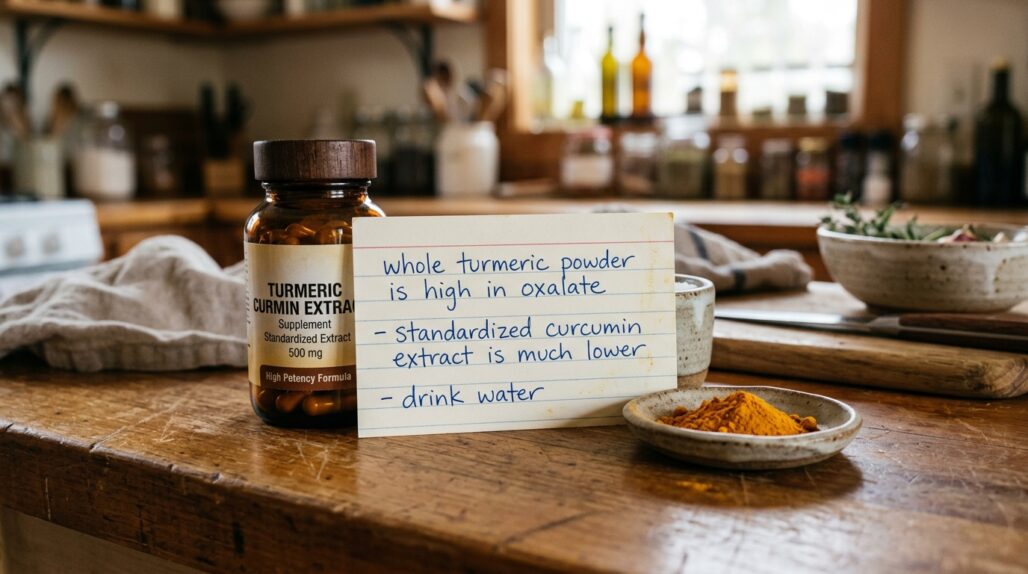
Turmeric earned its kidney-stone reputation from one real finding, not a myth. The spice is genuinely high in oxalate, the compound that combines with calcium to form the most common type of kidney stone.
The catch is dose and form. A pinch of turmeric in a curry is not the same as capsules of pure root powder, and neither is the same as a standardized curcumin extract. The oxalate question lives almost entirely in how much whole root you swallow.
If you have never had a kidney stone, this is mostly background noise at normal intakes. If you are a calcium-oxalate stone former, it is worth getting the details right, because the difference between forms is large.
What the research actually measured
The headline study is small but specific. In a 2008 crossover trial published in the American Journal of Clinical Nutrition, researchers had 11 healthy adults take about 2.8 grams of turmeric powder a day for four weeks, a load that delivered roughly 55 mg of oxalate daily (Tang et al., 2008).
Two numbers from that work matter most. About 91% of turmeric's oxalate was the soluble kind, the form your gut absorbs most readily, and the measured absorption over six hours was 8.2% for turmeric versus 2.6% for cinnamon.
The result was a measurable rise in urinary oxalate excretion after turmeric, more than after cinnamon or the control. Higher urine oxalate is a known driver of stone formation, which is the whole reason the study gets cited.
What the trial did not show is just as important. It did not show stones forming, it used healthy young volunteers, and it tested gram-level doses of whole powder, not a capsule of concentrated curcumin. A urine marker moving is a plausibility signal, not proof of harm in any individual.
Powder versus extract: the gap is enormous
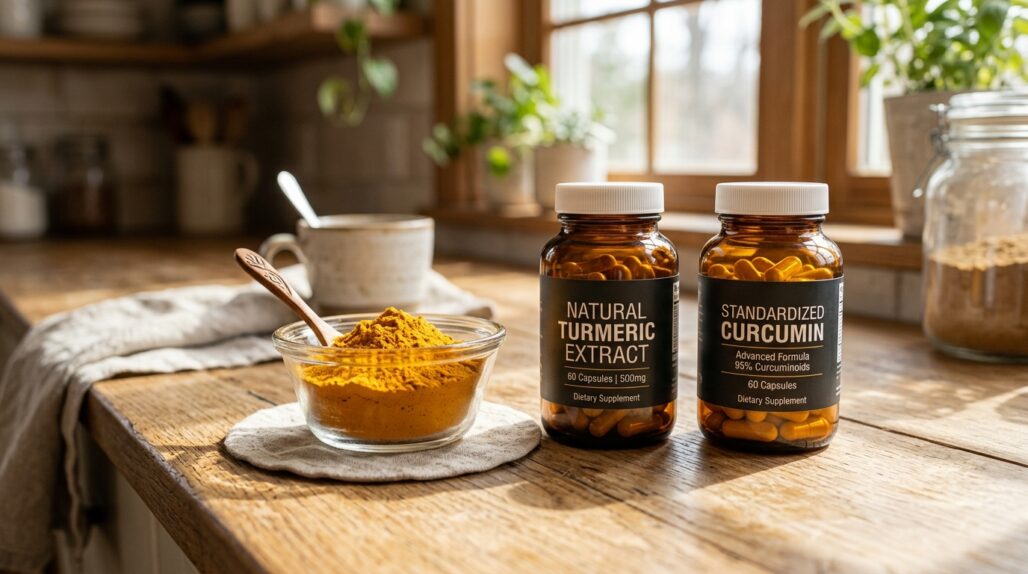
This is the part that changes the decision. Whole turmeric root and a standardized curcumin extract are not interchangeable when it comes to oxalate.
Independent analysis cited by curcumin manufacturer Sabinsa put whole turmeric powder near 0.27% oxalate, while a standardized Curcumin C3 Complex extract measured about 0.025%, roughly 160 times lower (Sabinsa position paper). The extract concentrates the curcuminoids and leaves most of the oxalate-bearing plant matter behind.
In practical terms, a 500 mg dose of that standardized extract contributes a tiny fraction of a milligram of oxalate. Against a daily low-oxalate target of 40-50 mg, that is a rounding error.
So the honest framing is this. If you want curcumin's studied benefits and you worry about stones, the standardized extract solves the oxalate problem without you giving anything up. The risk was never "turmeric the plant," it was "spoonfuls of raw root powder."
| Form | Relative oxalate | Best for |
|---|---|---|
| Culinary turmeric powder (grams) | Highest, about 0.27% by weight | Cooking in normal amounts, not high-dose use if you form stones |
| Whole-root turmeric capsules | High, similar to the spice | People with no stone history, kept to label doses |
| Standardized curcumin extract (95%) | Very low, around 160x less than powder | Stone formers who still want curcumin |
| Phytosome curcumin (Meriva-type) | Very low, extract-based | Anyone prioritizing absorption at a lower dose |
How much is actually too much
There is no official oxalate upper limit the way there is for, say, vitamin D. What clinicians use instead is a low-oxalate diet target of roughly 40-50 mg per day, drawn from American Urological Association management guidance, for people who have high urinary oxalate.
That number reframes the whole question. The Tang study's 55 mg came from gram-scale doses of raw powder, already at or above a full day's low-oxalate budget on its own. A standardized curcumin capsule does not come close.
The American Urological Association also makes a point worth repeating: not every calcium-oxalate stone former actually has high urine oxalate. Diet restriction is aimed at people whose 24-hour urine collection shows the problem, which is exactly why this is a test-guided decision, not a guess.
If you want help turning your own numbers into a sensible curcumin dose, our curcumin bioavailability guide walks through how form changes the effective dose, so you can keep the milligrams low while still absorbing enough.
Two habits that lower the risk
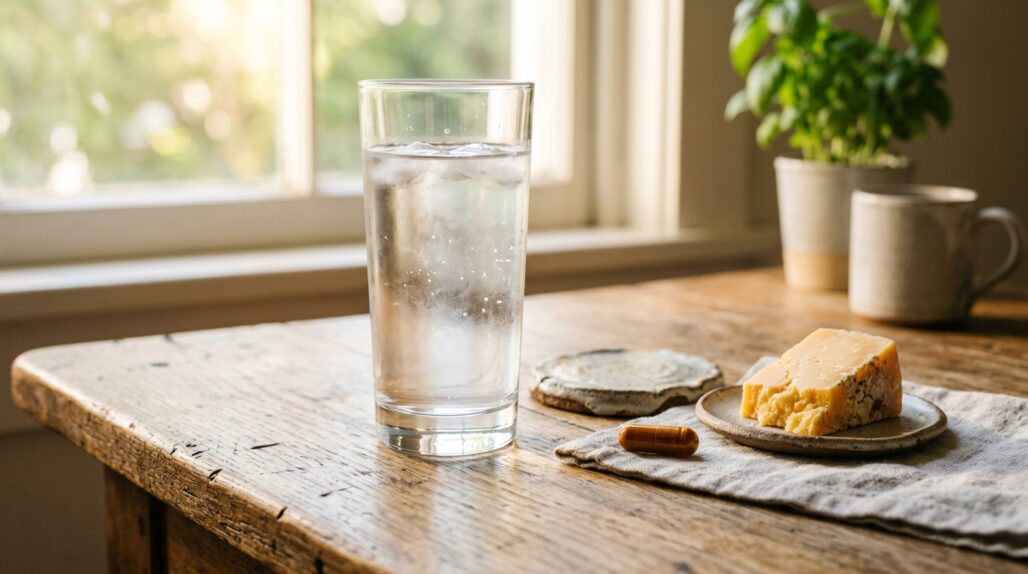
Form is the big lever. Two everyday habits do the rest, and both come straight from kidney-stone prevention guidance rather than supplement marketing.
First, water. The National Kidney Foundation advises drinking enough to make plenty of urine, on the order of 2 to 3 quarts of fluid a day, which dilutes oxalate and calcium so they are less likely to crystallize (National Kidney Foundation). Dilute urine is the cheapest stone insurance there is.
Second, calcium timing. Eating a calcium-containing food in the same meal as an oxalate source lets the two bind in the gut, so less oxalate reaches your kidneys, a point the National Kidney Foundation makes directly and the NIH NIDDK kidney-stone diet page echoes. Counterintuitively, cutting calcium too low tends to make stones more likely, not less.
Neither habit is a license to megadose turmeric powder. They are the floor under a sensible plan, not a substitute for choosing the lower-oxalate form.
Which form to buy if you form stones
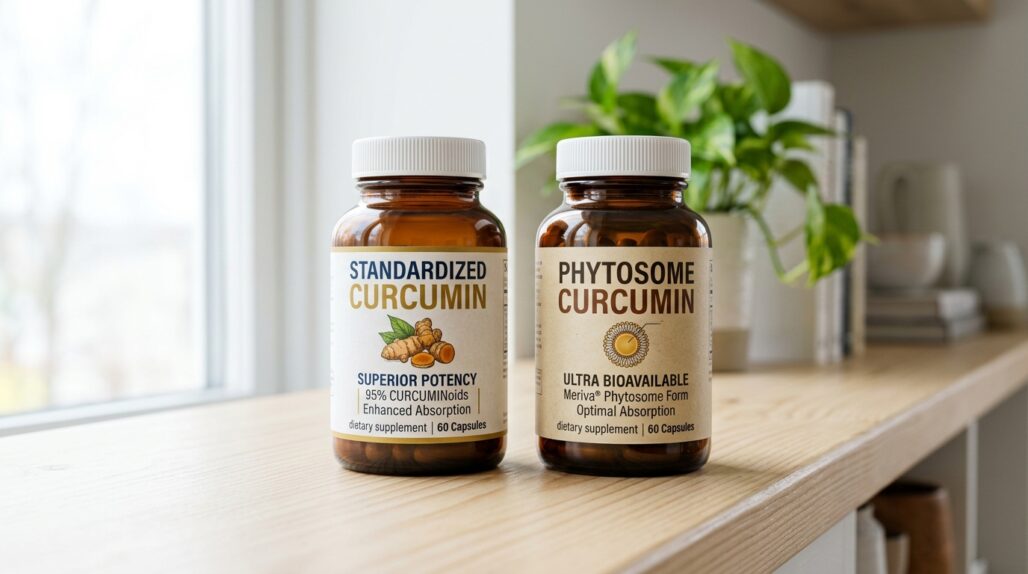
For a stone-prone reader, the choice is straightforward. Skip high-dose whole-root turmeric powder and pick a standardized curcumin extract or a phytosome version, both of which strip out most of the oxalate while keeping the curcuminoids you actually want.
A standardized 95% curcumin extract is the low-oxalate baseline. A phytosome form such as Meriva binds curcumin to phospholipids and absorbs many times better than plain curcumin, which lets you use a smaller dose for the same effect, a real advantage when you are trying to keep everything you swallow modest.
The black-pepper (piperine) versions are fine for absorption and the oxalate load is still low because they are extract-based, not raw root. For a fuller comparison of brands and standardization, see our roundups of the best turmeric and curcumin supplements and our broader turmeric supplement picks.
We may earn a commission from purchases made through the links below, at no extra cost to you. We only recommend forms we would use ourselves.
![NatureWise Curcumin Turmeric 2250mg - Advanced Absorption from 95% Curcuminoids & BioPerine Black Pepper Extract - Daily Joint and Immune Health Support - Vegan, 180 Count[60-Day Supply]](https://m.media-amazon.com/images/I/411R4B52c2L._SL160_.jpg)


As an Amazon Associate, UsefulVitamins.com earns from qualifying purchases at no extra cost to you.
If you also take a blood thinner, the oxalate question is not your only one; read how the two interact in our note on turmeric and Eliquis before adding a daily curcumin dose.
Who should do something different
Most people reading this can cook with turmeric freely and use a sensible curcumin supplement without a second thought. The cautions are narrow and specific.
- Calcium-oxalate stone formers: favor the extract, hydrate well, and bring your supplement list to whoever manages your stones.
- Anyone with kidney disease or reduced kidney function: oxalate handling and many supplements shift in this group, so this is a clinician's call, not a self-directed one.
- People on kidney-affecting medication: ask a pharmacist before adding a daily high-dose curcumin product.
For everyone else at normal intakes, the oxalate in turmeric is not a meaningful worry, and the evidence we have does not say otherwise.
FAQ
Does turmeric cause kidney stones in healthy people? There is no good evidence that normal turmeric use causes stones in people with healthy kidneys and no stone history. The concern is specific to high doses of whole-root powder in those who already form calcium-oxalate stones.
Is curcumin extract safe if I have had kidney stones? A standardized curcumin extract carries far less oxalate than whole turmeric powder, by roughly 160 times in one manufacturer analysis, so it is generally the lower-risk choice. Still, clear it with the clinician who manages your stones.
How much oxalate is in a turmeric supplement? It depends entirely on the form. A 500 mg standardized curcumin extract contributes well under a milligram, while gram-level doses of raw turmeric powder can supply 50 mg or more, near a full day’s low-oxalate budget.
Will drinking water cancel out the oxalate? Water does not remove oxalate, but staying well hydrated, around 2 to 3 quarts of fluid daily, dilutes your urine so oxalate and calcium are less likely to crystallize into stones.
Should I stop turmeric before a kidney stone test? Tell the clinician ordering your 24-hour urine test what you take rather than quietly stopping, so your results are interpreted correctly. Do not change anything about a prescription on your own.
Is turmeric in food a problem for stone formers? Culinary amounts in cooking are small and usually not the issue; the studied oxalate loads came from concentrated powder doses. Pairing turmeric-containing meals with a calcium food further reduces what reaches your kidneys.
The bottom line
Turmeric is high in oxalate, and that matters most if you form calcium-oxalate kidney stones. But the worry attaches to gram-scale doses of whole root powder, not to a standardized curcumin extract, which carries a fraction of the oxalate.
So the practical move for a stone former is not to swear off turmeric, it is to switch to the extract, drink enough water, and eat calcium with oxalate-containing meals. Use our curcumin bioavailability guide to keep your dose low while still absorbing what you need.
This article is general education, not medical advice. Supplements are not a treatment for kidney stones or kidney disease, and individual needs vary. If you have a stone history, kidney disease, or take any medication, talk with a pharmacist or doctor before starting or changing a supplement.
Reviewed by the UsefulVitamins Editorial Team.
