

Affiliate disclosure: this article contains affiliate links. As an Amazon Associate, UsefulVitamins.com earns from qualifying purchases at no extra cost to you.
The upper limit is 4,000 IU, which newer labels print as 100 mcg. Check what your bottle says in the other unit.
What vitamin D toxicity actually is
When people picture an "overdose," they imagine a single bad pill. Vitamin D does not work that way. The problem is slow buildup from chronic high dosing, because vitamin D is fat-soluble and your body stores it.
The danger is not the vitamin itself. It is what too much of it does to your calcium. High vitamin D drives your gut to absorb far more calcium than usual, and that pushes blood calcium up into a harmful range. According to the NIH Office of Dietary Supplements, vitamin D toxicity is almost always the result of taking too much from supplements, not sun exposure.
Your skin has a built-in brake. It stops making vitamin D once you have had enough sun, so you cannot reach toxic levels from sunshine alone. Food does not get you there either. The only realistic route is a bottle and a habit of taking more than you need for a long stretch.
That is the honest framing for this whole topic: rare, dose-driven, and usually preventable with a sensible number and a blood test.
How much is too much: the real upper limit
For most healthy adults, the daily amount needed for bones and calcium balance is small. The NIH lists a Recommended Dietary Allowance of 600 IU (15 mcg) for adults 19 to 70, rising to 800 IU (20 mcg) after age 70.
The ceiling you should know is the Tolerable Upper Intake Level of 4,000 IU (100 mcg) per day for adults and children aged 9 and up. That is the long-term daily amount the NIH considers safe for the general population without medical supervision.
Here is the reassuring part. Toxicity symptoms are unlikely below about 10,000 IU per day, and the cases that land people in the hospital usually involve much more than that, taken for months. A case-report review in the journal Nutrients noted that intoxication is typically seen with doses in the range of 50,000 IU to 1 million IU per day over months to years.
So the upper limit is not the danger line. It is a conservative everyday ceiling. The actual harm line sits far above it. The reason to avoid freelancing high doses is that individual variability is large, and you cannot feel your blood calcium climbing until it is a problem.
| Daily amount | What it represents | What to know |
|---|---|---|
| 600 to 800 IU | RDA for adults | Covers bone and calcium needs in most people |
| 1,000 to 2,000 IU | Common maintenance dose | A typical sensible supplement amount, well under the ceiling |
| 4,000 IU | Upper limit (UL) | Safe long-term ceiling without a doctor checking levels |
| Above 10,000 IU | Megadose territory | Symptoms become more plausible over time, clinician oversight needed |
| 50,000 IU and up | Toxic-range chronic dosing | Where most documented poisonings sit, taken for months |

The symptoms, and why they trace back to calcium
Almost every symptom of vitamin D toxicity is really a symptom of hypercalcemia, the high blood calcium it causes. That is the through-line. If you understand that, the symptom list stops looking random.
The early signs are vague and easy to miss:
- Nausea, vomiting, and loss of appetite
- Excessive thirst and frequent urination (your kidneys working to dump the extra calcium)
- Constipation and abdominal discomfort
- Weakness, fatigue, or feeling mentally foggy
As blood calcium climbs higher, a clinical review in Frontiers in Endocrinology describes more serious effects, including confusion, drowsiness, and even psychiatric changes, along with kidney problems such as nephrocalcinosis (calcium deposits in the kidneys) and, in severe cases, kidney failure.
In documented toxicity, serum 25-hydroxyvitamin D usually exceeds 150 ng/mL (375 nmol/L), and the Merck Manual notes blood calcium of roughly 12 to 16 mg/dL is a constant finding once symptoms appear. Those are lab numbers your doctor reads, not something you can judge at home.
One detail on timing matters here. Because vitamin D is stored in fat, hypercalcemia from an overdose can persist for months after you stop, and some kidney damage may not fully reverse. That is exactly why this is a "test, don't guess" nutrient.
Why a blood test should set your dose, not a guess
Here is the practical move that prevents nearly all of this trouble. Your 25(OH)D blood level should drive your dose, not a number you saw online or a friend's regimen.
Two people taking the same dose can land in very different places. The case literature makes this concrete: one person on 40,000 IU daily reached a blood level near 479 ng/mL with no symptoms, while another on 50,000 IU developed dangerous hypercalcemia. Same ballpark dose, different outcomes. The only way to know where you actually are is to measure it.
If you have a recent 25(OH)D result and a target in mind, use our vitamin D dose calculator to get a sensible daily number based on your level and body weight, rather than picking a round figure off a label. We built that tool to do the math so you do not have to estimate.
For the broader picture of what vitamin D does, who tends to run low, and how to read a result, our complete guide to vitamin D walks through the basics in plain language. The short version: a maintenance dose plus an occasional retest beats chasing a high number.

The interactions that change your risk
Toxicity is not only about the dose on the bottle. A few things stacked together can push blood calcium up faster than vitamin D would on its own. This is where a quick pharmacist check earns its keep.
The big one is thiazide diuretics (hydrochlorothiazide and chlorthalidone are common examples), prescribed for blood pressure. They make your kidneys hold onto calcium. The NIH notes that combining a thiazide with high-dose vitamin D and calcium raises the risk of hypercalcemia. A 2014 study in the American Journal of Medicine found vitamin D up to 4,000 IU nudged calcium up in thiazide users, though frank hypercalcemia stayed uncommon.
Calcium supplements are the other multiplier. Vitamin D increases how much calcium you absorb, so a high vitamin D dose plus a big calcium pill is the combination behind many real-world toxicity cases. If you take both, the totals matter more than either alone.
If any of this describes you, tell your prescriber what you are taking. Do not start, stop, or change a blood-pressure prescription on your own to make room for a supplement. That decision belongs with the clinician who prescribed it.
Which vitamin D to buy, and at what dose
For most people, the right product is boring on purpose: a modest daily D3 dose you can take consistently, not a megadose you take to "catch up" without testing. A 1,000 to 2,000 IU softgel covers the majority of maintenance needs and sits comfortably under the upper limit.
A few honest pointers on form:
- D3 (cholecalciferol) is the form most studies use and it raises blood levels efficiently. If you want the detail on D3 versus D2, our breakdown of D2 versus D3 absorption covers the difference.
- Liquid drops are the most titratable option. They let you take a small, exact amount and step down easily if a retest comes back high, which is useful if you are dose-sensitive.
- D3 with K2 is popular and reasonable, but it is not a license to take more total D. The ceiling is the same. Note that the D3+K2 pick below is 5,000 IU per softgel, above the 1,000 to 2,000 IU maintenance range we recommend, so use it only if a blood test and your doctor support a higher dose, or take it less than daily.
If you want vetted product picks across budgets and forms, our roundup of the best vitamin D supplements is the place to compare. The cheaper sensible-dose option is usually the right call here.
We may earn a commission from purchases made through the links below, at no extra cost to you. We only suggest sensible-dose, third-party-tested products.

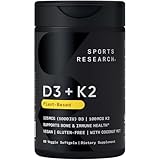

As an Amazon Associate, UsefulVitamins.com earns from qualifying purchases at no extra cost to you.

FAQ
Can you get vitamin D toxicity from the sun? No. Your skin self-limits production once you have had enough sun, so sunlight cannot push you into the toxic range. Documented toxicity comes from high-dose supplements taken over time.
Is 4,000 IU a day safe to take long-term? For most healthy adults, 4,000 IU is the upper limit the NIH considers safe without medical monitoring. Many people do fine on less, around 1,000 to 2,000 IU. If you want to go higher, get a 25(OH)D blood test and involve a doctor.
How much vitamin D causes toxicity? Symptoms are unlikely below about 10,000 IU per day, and most reported poisonings involved 50,000 IU or more daily for months. Response varies a lot between individuals, which is why testing beats guessing.
What are the first signs of too much vitamin D? The earliest signs come from rising blood calcium and include nausea, poor appetite, excess thirst, and frequent urination. Confusion, weakness, and kidney problems can follow if it continues. Stop and see a doctor if these appear.
Does taking vitamin D with calcium increase the risk? Yes, the combination can raise blood calcium more than vitamin D alone, because vitamin D boosts calcium absorption. If you take both, and especially if you also take a thiazide diuretic, ask a pharmacist to review your totals.
How long does vitamin D toxicity take to resolve? Because vitamin D is stored in body fat, high blood calcium can linger for months after you stop the supplement. Severe cases need medical treatment, and some kidney damage may not fully reverse, which is why prevention matters.
The bottom line
Vitamin D toxicity is genuine but uncommon, and it has a clear pattern: high supplement doses taken for months, driving blood calcium too high. Sun and food do not cause it.
Keep your everyday intake at or under the 4,000 IU upper limit, lean toward a 1,000 to 2,000 IU maintenance dose, and let a blood test set anything higher. If you take a thiazide, a calcium supplement, or you have kidney disease, get a pharmacist or doctor involved before going up. The next step is simple: check your 25(OH)D level, plug it into the calculator, and pick a steady, sensible dose.
This article is general education, not medical advice. It does not diagnose or treat any condition, and it is not a substitute for your own clinician. Do not start, stop, or change any prescription based on what you read here. Talk to a pharmacist or doctor about your individual situation.
Reviewed by the UsefulVitamins Editorial Team.
