

Why "with food" or "empty stomach" matters at all
The label on a bottle sometimes says "take with food" and sometimes says nothing, and it is easy to wonder whether it really changes anything. For a handful of supplements, it does. Food can either help a nutrient get absorbed or get in its way, and for a few it mostly decides whether your stomach feels fine afterward.
There are really only two reasons timing matters. The first is absorption: some nutrients dissolve in fat, so a meal with a little fat helps your body take them in. The second is tolerance: a few supplements can irritate an empty stomach and leave you queasy, so food acts as a buffer.
You do not need to memorize a chart for every bottle you own. Most supplements are flexible. The rules below cover the small group where the timing genuinely changes the result, and the reference table near the end pulls it all together. Food timing also overlaps with two other questions worth sorting out once: what order to take your supplements in across the day and which ones to take together versus space apart.
The "with food" group: fat-soluble vitamins and fish oil
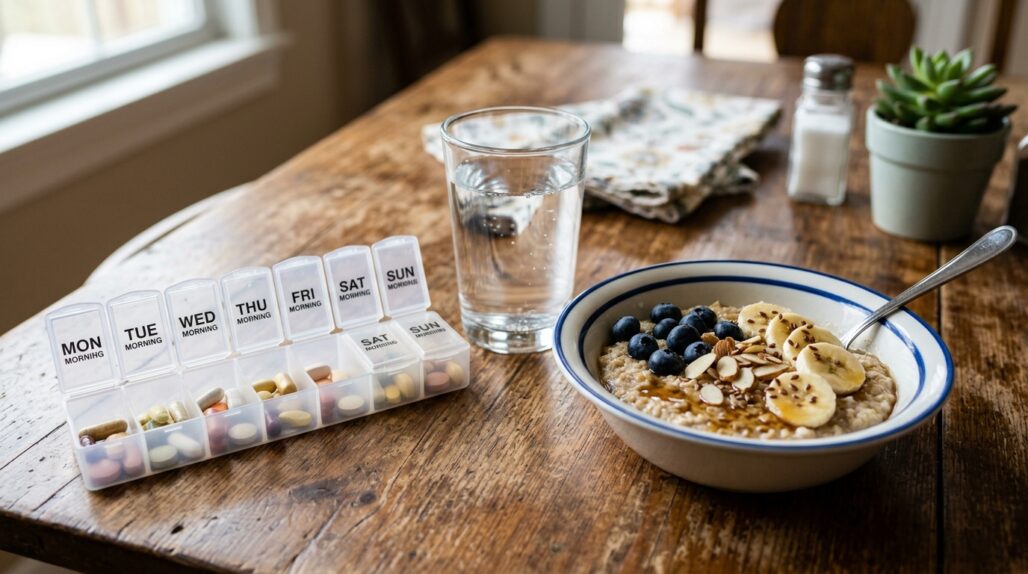
The clearest rule is for the fat-soluble vitamins – A, D, E, and K. These dissolve in fat rather than water, so your body absorbs them along with the fat in a meal. The NIH Office of Dietary Supplements notes in its vitamin D consumer fact sheet that vitamin D is fat soluble and is best absorbed when taken with a meal or snack that includes some fat. The same logic applies to A, E, and K.
A bit of context helps here. Vitamin A is stored in the body, mostly in the liver, which is part of why the NIH vitamin A fact sheet describes it as a fat-soluble vitamin. You do not need a heavy meal to get the benefit. A breakfast with eggs, a handful of nuts, some avocado, or a splash of olive oil is plenty of fat to do the job.
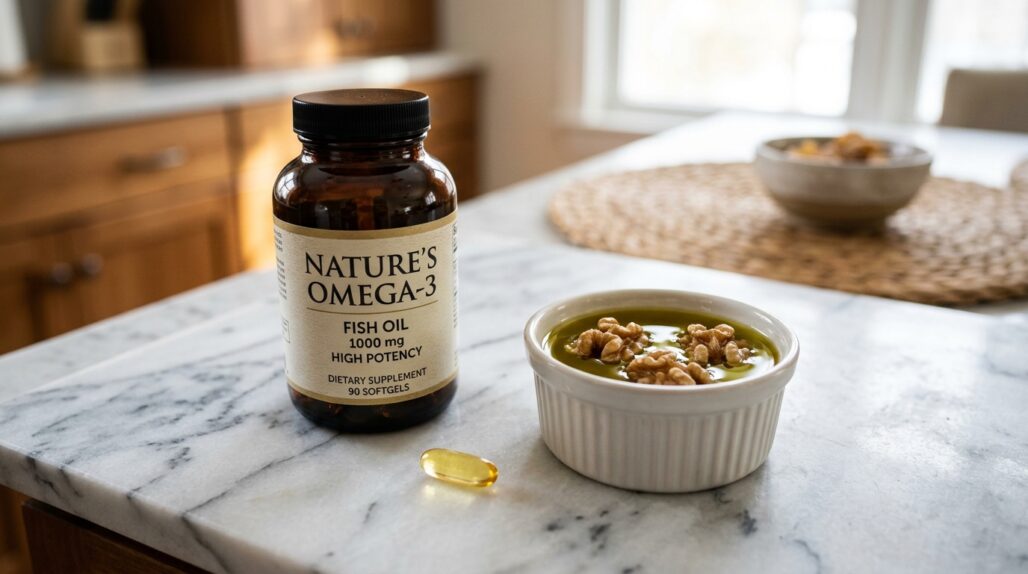
Fish oil and other omega-3 supplements belong in the same group. They are an oil, so they ride in on dietary fat the same way the fat-soluble vitamins do. Taking fish oil with a meal also tends to cut down on the fishy burps and mild nausea some people get when they take it on an empty stomach, because the food slows how fast the oil is released.
A few minerals are technically absorbed fine without food but bother an empty stomach. Zinc is a common example – it can irritate the stomach lining and trigger nausea, especially at higher amounts, so many people take it with a meal and accept a small trade-off in absorption for a calmer gut. Some forms of magnesium can loosen the stool or cause cramping when taken fasted, and they are often easier to tolerate with food.
The "empty stomach" group: where food gets in the way
A smaller set of supplements absorbs better when your stomach is mostly empty, meaning roughly an hour before a meal or two hours after one.
Iron is the headline example. According to MedlinePlus, iron is best absorbed on an empty stomach, but it is also one of the most likely supplements to cause stomach cramps, nausea, or constipation. That same source notes you may need to take iron with a small amount of food to avoid this. The practical compromise many people land on is iron with a few crackers or a piece of fruit rather than a full meal, which softens the upset without blunting absorption as much as a big meal would.
Iron also needs some spacing from a few things. MedlinePlus advises waiting at least 2 hours after milk, calcium, or antacids before taking iron, since those can interfere with how much you absorb. Coffee and tea can blunt iron absorption too, so the same gap is a reasonable habit.
A handful of amino acid supplements are sometimes taken away from protein-heavy meals, the thinking being that competing protein in food can crowd them out. The evidence here is softer than for iron, and for most people the difference is small. If a label gives you a fasted instruction, follow it; if it does not, do not lose sleep over it.
The honest tradeoff: absorption versus a happy stomach
Here is the part the charts skip. The "empty stomach is better" advice assumes you can actually tolerate it. Plenty of people cannot. Iron on an empty stomach is a classic example of a rule that looks clean on paper and feels miserable in practice.
If a fasted supplement makes you nauseous, the better choice is usually to take it with a little food anyway. A slightly smaller dose that you absorb consistently beats a "perfectly timed" dose you keep skipping because it upsets your stomach. Consistency matters more than squeezing out the last few percent of absorption.
If the upset is persistent, a couple of things are worth a pharmacist conversation rather than a guess. Some forms of a mineral are gentler than others, and sometimes a different schedule (for instance, every other day for iron) is worth asking about. None of that is a do-it-yourself dosing change; it is a question to bring to someone who can see your full picture.
A quick with-food vs. fasted reference
Use this as a starting point, then defer to your specific label and your pharmacist. "Either" means timing rarely changes much for most people.
| Supplement | Best with food, fasted, or either | Why |
|---|---|---|
| Vitamins A, D, E, K | With food (some fat) | Fat-soluble; absorbed alongside dietary fat |
| Fish oil / omega-3 | With food (some fat) | An oil; food aids absorption and cuts fishy burps |
| Iron | Fasted if tolerated, small snack if not | Absorbs best on an empty stomach but often causes upset |
| Zinc | With food for most people | Can irritate an empty stomach and cause nausea |
| Magnesium | Either; food if it loosens stool | Some forms cause cramping or diarrhea when fasted |
| B vitamins / vitamin C | Either | Water-soluble; food only helps if they upset you |
| Multivitamin | With food | Contains fat-soluble vitamins and minerals that can upset an empty stomach |
A no-app way to lock this in
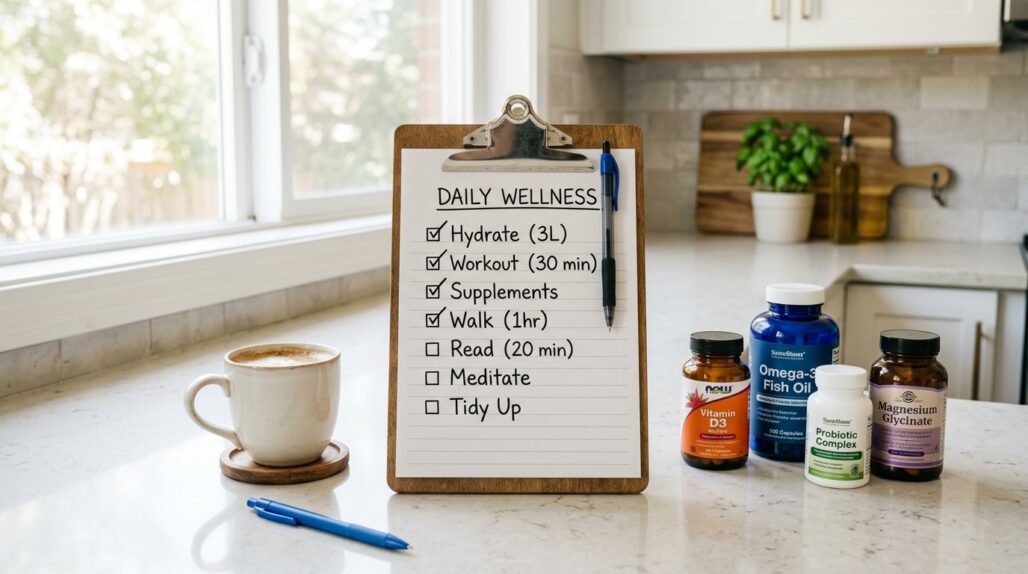
You can run this whole system on paper. Take five minutes and sort your bottles into two short lists.
- Write a "with breakfast/dinner" list and an "on an empty stomach" list using the table above.
- Physically group the bottles to match – the with-food ones near where you eat, the fasted ones by your bedside or wherever you are an hour before a meal.
- Tape a small index card inside a cabinet door: two columns, the supplement names under each, and the rough time you will take them.
- If you use a pill organizer, label one compartment or row for "with food" and pre-decide which meal that is.
That card is the entire method. It works with zero technology and it travels in a kitchen drawer. If your real problem is not remembering whether you already took today's dose, a checkbox next to each name on the card solves most of it.
Once you know which items need food and which need an empty stomach, the next challenge is making the right ones land at the right meal day after day. You can keep doing that with the index card and a pill box, or, if you would rather have it on your phone, a free app we make, StackMyMed (our own free app), lets you organize your stack and tag each supplement to "before breakfast" or "with dinner" so the timing is recorded in one place; for anything where a prescription's food rule is involved, it can flag the item for you to confirm the timing with your pharmacist rather than deciding on its own.
When the rules are stricter: prescriptions
Supplement timing is forgiving. Some prescription medicines are not, and they can also collide with your supplements, which is exactly why a pharmacist should have the final word.
A common example is thyroid medication. MedlinePlus notes that levothyroxine is usually taken on an empty stomach, 30 minutes to 1 hour before breakfast, with a full glass of water, and that calcium and iron supplements should be separated from it by at least 4 hours. That is a much tighter rule than anything for a vitamin, and the gap exists because those minerals can bind the medicine and reduce how much works.
The takeaway is not to manage prescription timing from a web article. It is to bring your full list – prescriptions and supplements together – to your pharmacist, who can tell you the exact gaps. Never change when or whether you take a prescription on your own.
FAQ
Does it really matter if I take vitamin D without food? For many people the difference is real but modest. Because vitamin D is fat-soluble, the NIH Office of Dietary Supplements says it absorbs best with a meal that has some fat. If you take it with a fat-free snack now and then, that is not a crisis – just aim for a meal with fat most of the time.
Can I take all my “with food” supplements at the same meal? Usually yes. Grouping your fat-soluble vitamins, fish oil, and a multivitamin at your fattiest meal is a reasonable, simple plan. The main exception is minerals that compete with each other or with a medication, which is a spacing question for your pharmacist.
What if iron makes me sick even with a snack? Tell your pharmacist or doctor. There are gentler forms and different schedules people use, and the right fix depends on your situation. Do not increase, decrease, or stop a prescribed iron dose on your own to manage the upset.
Is it bad to take fish oil on an empty stomach? It is not dangerous, but you may absorb less of it and you are more likely to get fishy burps or mild nausea. Taking it with a meal that has some fat tends to fix both.
Do water-soluble vitamins like B and C need food? Not for absorption – they dissolve in water and are taken in either way. Some people find vitamin C or a B-complex easier on the stomach with food, so use food if it helps you, not because absorption requires it.
My multivitamin label just says “take daily.” With or without food? Most multivitamins are best with food, since they contain fat-soluble vitamins and minerals that can bother an empty stomach. If the label gives a specific instruction, follow it, and check with your pharmacist if you also take prescriptions.
How do you decide what advice to trust on a page like this? We lean on government and clinical sources rather than supplement marketing, and we say when evidence is thin. You can read how we review supplements for the full approach, and we always point real decisions back to your own pharmacist or doctor.
The bottom line
The simple version is this: fat-soluble vitamins and fish oil go with a meal that has some fat, iron does best fasted but only if your stomach agrees, and most everything else is flexible. Sort your bottles into a with-food list and an empty-stomach list, group them where you will actually take them, and let consistency do the heavy lifting.
The one place to stop guessing is anywhere a prescription is involved. Bring your full list of medicines and supplements to your pharmacist and ask about the gaps that matter, especially for anything with a strict empty-stomach rule. That single conversation is worth more than any timing chart.
This article is general information, not medical advice. It is not a substitute for guidance from your doctor or pharmacist, who know your health history and current medications. Do not start, stop, or change any supplement or prescription based on this page alone.
StackMyMed is made by UsefulVitamins. It helps you organize your list and flag things to discuss with a pharmacist or doctor; it is not a diagnosis or treatment tool and does not replace professional medical advice.
Reviewed by the UsefulVitamins Editorial Team.
