
Affiliate disclosure: this article contains affiliate links. As an Amazon Associate, UsefulVitamins.com earns from qualifying purchases at no extra cost to you.
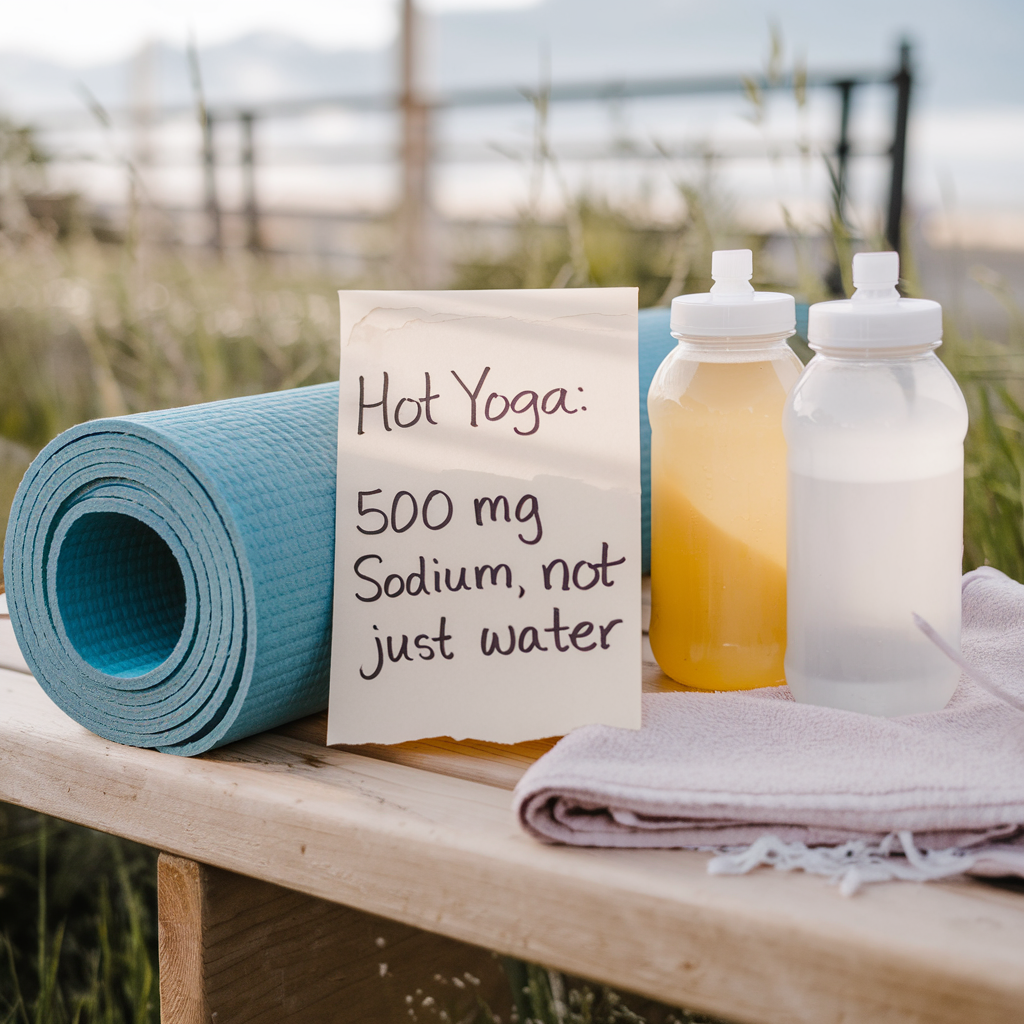
You walk out of a 6 p.m. Bikram class feeling wrung out, drink a full bottle of water in the car, and twenty minutes later the room tilts a little when you stand up. That sequence is so common in hot yoga that most practitioners assume it comes with the territory. It mostly does not. It is usually a sodium problem wearing a dehydration costume, and it is fixable for about a dollar a class.
We wrote this guide the way we handle it in our own family: one of us does two heated classes a week, and the picks below are exactly what sits in her gym bag. If you want the broader science first, our complete guide to electrolytes covers what each mineral actually does.
Before you decide
A few groups should not take sodium or potassium supplements casually. If you take blood pressure medication, a diuretic, or have any kidney condition, talk to your doctor before adding an electrolyte product, because these drugs change how your body handles exactly the minerals these powders deliver. The same caution applies during pregnancy.
This article is not medical advice. It is a buying guide for healthy adults who practice heated yoga (Bikram, hot 26, heated power, hot pilates) at least once or twice a week and want to stop feeling flattened afterward. If your practice is unheated, you can skip both the products and most of this article; we say so plainly in the section on when water is enough.
One more honesty note up front: we have no relationship with any brand here. Some links on this page earn us a small commission at no cost to you, and none of that changed the rankings.
What a heated room actually takes out of you
Bikram's format is fixed: 26 postures over 90 minutes in a room held at 105 degrees Fahrenheit and 40 percent humidity. When the American Council on Exercise put 20 experienced practitioners through a full class with swallowed core-temperature sensors, the results surprised the researchers: peak core temperature averaged 103.2 F for men and 102.0 F for women, and 7 of the 20 participants crossed 103 F. Your body fights that heat load with one main weapon, and that weapon is sweat.
Here is the part most hot yoga guides get backwards. A 2014 study in Alternative Therapies in Health and Medicine measured oxygen uptake through a full 90-minute Bikram session and found an average burn of just 286 calories, which classifies the class as light-to-moderate exercise. You are not sweating because you are working hard; you are sweating because the room is hot. That means your sweat losses can look like a runner's while your snack needs stay modest. Hydration is the whole game here.
How much fluid are we talking about? A comprehensive 2017 review in Sports Medicine found whole-body sweating rates during exercise typically run 0.5 to 2.0 liters per hour, with heat and humidity pushing people toward the high end. Those figures come from athletes in conventional sports rather than yoga, but the Bikram study above measured sweat rates directly: about 0.6 liters per hour in novices and 1.1 liters per hour in experienced practitioners, which puts a realistic 90-minute loss near 1 liter for newer students and 1.5-2 liters for seasoned regulars and heavy sweaters. Because women tend to have lower body mass, the same 1.5-liter loss is a proportionally bigger hit for a 130-pound woman than for a 190-pound man, which is one reason post-class dizziness skews female in a room that skews female.
Sweat is not just water. The same review found whole-body sweat sodium concentrations spanning roughly 10 to 70 mmol/L between individuals. Run the arithmetic at a middling 35 mmol/L (about 800 mg of sodium per liter) and a 1-2 liter class costs you somewhere around 800-1,600 mg of sodium. A salty sweater at the top of the range loses far more. If you replace all of that with plain water, you dilute what sodium you have left, and mild dilution plus the blood-vessel dilation that lingers after 90 minutes in a hot room is the classic recipe for that woozy, tilting feeling on the drive home. In rare, extreme cases of overdrinking, dilution goes further: a 2012 BMJ case report describes a practitioner who drank about 3.5 liters of water after a single 90-minute hot yoga class and developed exercise-associated hyponatremia that progressed all the way to seizure. You are very unlikely to get there unless you overdrink on that scale. The mechanism, though, is the same one that makes you feel lousy at much milder doses.
When water alone is enough
We sell nothing by saying this, so believe us: most yoga does not need an electrolyte product. Unheated vinyasa, hatha, yin, restorative, even a sweaty power flow in a normal-temperature room rarely pushes fluid losses past what plain water and your next meal replace. The average diet already carries more sodium than most people need.
Even for heated classes, a single session per week with a normal diet and free access to water usually resolves itself by dinner. The case for a product gets strong at two or more heated classes a week, at back-to-back classes, in practitioners who visibly cake salt on their skin or headbands, and in anyone who reliably gets the post-class dizzies despite drinking plenty. If you fall outside those groups and just enjoy the flavor, that is a fine reason to buy one too, but pick a cheap one.
If your training extends beyond the studio into running or cycling, sizing changes; our roundup of the best electrolytes for athletes covers higher-volume training loads.
How to choose for hot yoga
Hot yoga has a constraint most sports do not: many Bikram-lineage studios discourage water breaks during the standing series, and some teachers ask you to leave the bottle at the back wall entirely. That kills the sip-as-you-go strategy that works for cyclists and shifts everything to timing: before class and after class. A practical protocol looks like this: 12-16 oz of water with 300-500 mg of sodium finished 60-90 minutes before class, then the rest of your replacement in the hour after savasana.
Sodium per serving is the number that matters most, and it is where products differ by a factor of almost twenty. For heated classes, look for 300-1,000 mg of sodium per serving; the pretty canisters delivering under 100 mg are flavored water with a wellness label. Potassium and magnesium matter less for a single class because sweat carries far less of them than of sodium.
Skip caffeinated versions entirely for this use case. Several sport mixes sell 50 mg caffeine variants, and a stimulant on board while your core temperature climbs past 102 F helps nothing. Sugar is a genuine fork in the road: glucose speeds fluid absorption, which is useful immediately after a heavy class, but a daily 11 g of sugar adds up if you practice five times a week. We lean sugar-free for before class and do not mind a modest-sugar mix afterward.
To move past our rules of thumb and into your own numbers, weigh yourself before and after one class. The ACSM position stand on fluid replacement recommends exactly this method because sweat rates vary too much between individuals for any universal prescription. Every pound lost is roughly 16 oz of sweat. Our electrolyte replacement calculator turns that weigh-in into a per-class sodium target in about a minute.
The numbers side by side
Label numbers below were checked against brand pages and retailer listings in August 2026. Where a brand does not publish a figure, we say so rather than guess.
| Product | Sodium per serving | Potassium | Format | Price per serving |
|---|---|---|---|---|
| LMNT | 1,000 mg | 200 mg | Powder stick, sugar-free | About $1.50 as of August 2026 |
| Liquid I.V. Hydration Multiplier | 500 mg | 370 mg | Powder stick, 11 g sugar | Varies by retailer |
| Skratch Labs Sport Hydration | 400 mg | Not listed on product page | Drink mix, 19 g carbs | About $1.20 as of August 2026 |
| Nuun Sport | 300 mg | 150 mg | Effervescent tablet | Varies by retailer |
| Ultima Replenisher | 55 mg | 250 mg | Powder scoop or packet | Varies by retailer |
Top picks for hot yoga
LMNT is our pick for anyone doing three or more heated classes a week or anyone who finishes class with salt lines on their clothes. One stick carries 1,000 mg of sodium with zero sugar, which is more than a single class demands for most people; half a stick per class, taken after savasana or split around class time, is the move for average sweaters, and it drops the real cost to about 75 cents a class. The salt-forward taste is divisive. We dug into the formula, the pricing, and who genuinely needs a gram of sodium in our full is LMNT worth it review.
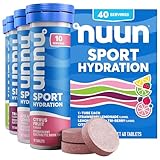
Nuun Sport is the best value and the gentlest on-ramp. A tablet dropped into your bottle on the way to the studio delivers 300 mg of sodium with light carbonation and barely any sweetness, which suits pre-class stomachs. The honest caveat is that one tablet may undershoot a heavy Bikram sweat; we ran the math on this exact gap in our piece on whether electrolyte tablets are underdosed compared to powders. Two tablets after a brutal class solves it.
Liquid I.V. is the one we reach for after class rather than before. Its 500 mg of sodium rides along with 11 g of sugar in an oral-rehydration-style ratio, and glucose helps pull sodium and water across the gut wall faster, which is exactly what you want in the 30 minutes after a 2-liter sweat. Before class, that much sugar on a nervous stomach is a harder sell.
Skratch Labs Sport Hydration suits people who refuse stevia and monk fruit. It flavors with real fruit, lands at 400 mg of sodium, and tastes closer to weak lemonade than to a sports product. The 19 g of carbohydrate makes it more of a post-class or double-session choice than a daily sipper.
Ultima Replenisher is the honest miss for this specific job. It tastes great and its potassium and trace minerals are fine, but 55 mg of sodium per serving replaces only a small fraction of what a heated class removes. If flavor is the whole point, enjoy it on rest days. We compared it head-to-head with Nuun in our Nuun vs Ultima breakdown, and the sodium gap decided that matchup for sweaty use cases.
What to look for when buying
Read the serving definition before the mineral numbers. Some brands quote a "serving" as two scoops or two tablets, which quietly doubles the real cost per class and can halve the sodium you thought you were getting from one dose.
Prefer products that publish a full supplement facts panel, and treat third-party testing (NSF Certified for Sport or Informed Sport) as a meaningful tiebreaker. Electrolytes are a low-risk category compared with herbal blends, but a brand willing to be tested is a brand confident in its own label math.
Buy one box or tube before you subscribe. Taste in a 105-degree context is strange and personal: flavors that seem too salty at your desk often taste exactly right after class, and sweet flavors go the other way. Every brand here sells a small format or variety pack, so there is no reason to commit to 60 servings of something you have never finished a glass of.


As an Amazon Associate, UsefulVitamins.com earns from qualifying purchases at no extra cost to you. We only recommend products supported by published research or third-party testing.
Averages only get you so far. Weigh in before and after one session and run your own numbers through our sweat rate calculator.
FAQ
Should I drink electrolytes before or after hot yoga?
Both work, and the studio's water policy usually decides for you. Finishing 12-16 oz with 300-500 mg of sodium about an hour before class tops up your plasma volume before the sweating starts, then water during class (if allowed) and the rest of your sodium afterward completes the job. If pre-class liquid upsets your stomach in the postures, shift everything to the hour after savasana; same-day replacement is what matters.
Why do I feel dizzy after hot yoga even though I drink lots of water?
Ninety minutes of heat leaves your blood vessels dilated and your plasma volume down, so blood pools away from your head when you stand. Refilling with plain water restores volume but further dilutes the sodium you just sweated out, and that combination prolongs the lightheadedness. Salting your rehydration usually shortens it noticeably. Dizziness that persists for hours, or comes with confusion or vomiting, deserves medical attention rather than another bottle of anything.
Do electrolyte supplements interact with blood pressure or heart medications?
They can, and this is the one question on this page where we insist you check before buying. ACE inhibitors, ARBs, and potassium-sparing diuretics like spironolactone raise potassium retention, so a potassium-heavy mix can push levels too high, while sodium loads work against the point of most blood pressure treatment. Lithium is a special case in the other direction, since big swings in sodium intake change lithium levels. Bring the actual label to your pharmacist, and see the interactions section of our complete guide to electrolytes for the mineral-by-mineral details.
Is coconut water enough for Bikram?
Usually not on its own. Coconut water is rich in potassium but carries relatively little sodium, and sodium is the mineral hot yoga takes most of. A pinch of salt stirred into coconut water fixes the profile at a fraction of a branded product's price, if you like the taste.
How much sodium do I actually need per class?
It depends on your sweat rate, which you can measure at home. Weigh yourself immediately before and after one class without drinking during it; each pound lost equals roughly 16 oz of sweat, and typical sweat carries a few hundred mg of sodium per pound at mid-range concentrations. Our electrolyte replacement calculator converts your weigh-in into a per-class target, and repeating the measurement in a different season keeps it honest.
The bottom line
Heated classes are a special case in the yoga world: modest exercise wrapped in an extreme thermal environment, capable of pulling 1-2 liters of sweat and on the order of 800-1,600 mg of sodium out of you in 90 minutes. Replace the sodium, not just the water, and the post-class dizziness that most practitioners treat as normal usually disappears. LMNT fits heavy sweaters and frequent practitioners, Nuun Sport covers the once-or-twice-a-week crowd cheaply, and plain water remains the right answer for every unheated class you take. If your practice moves outdoors as the weather warms, our guide to the best supplements for summer hydration picks up where this one ends.
