
If you’re wondering whether Thorne is actually worth the premium price, the answer is: often yes – but mainly for people who care about testing, clean formulas, and specific nutrient forms. This Thorne supplements review breaks down what Thorne does differently (and what it doesn’t), how its certifications compare to mainstream brands, and which products tend to deliver the best real-world results. You’ll also see where complaints show up most often – and why many of those issues are about shipping and service rather than supplement performance.
Affiliate disclosure: this article contains affiliate links. As an Amazon Associate, UsefulVitamins.com earns from qualifying purchases at no extra cost to you.
Summary / Quick Answer: Is Thorne worth it?
Thorne is worth it if you want higher-assurance quality controls, athlete-safe certification options, and bioavailable forms – and you’re willing to pay more. In this Thorne supplements review, here’s the quick decision guide:
Best fit if you are:
- An athlete who wants NSF Certified for Sport screening
- Sensitive to fillers and prefer a “no list” approach (no gluten, artificial dyes, many unnecessary additives)
- Choosing targeted nutrients where form matters (methylated B vitamins, chelated minerals)
Maybe skip if you are:
- On a strict budget and just need a basic daily multi
- Expecting premium pricing to automatically mean stronger results for everyone
| Category | Thorne tends to do well | Watch-outs |
|---|---|---|
| Quality | Strong manufacturing standards and testing | Not every product has the same third-party certifications |
| Formulation | Bioavailable forms (methylfolate, chelates) | High-potency products can overshoot your needs |
| Value | Great for athletes and specific needs | Often 2-3x the cost of mainstream brands |
Thorne quality and testing: what you’re really paying for (and what you’re not)
Most supplement brands say they’re “high quality.” The difference is whether they can show a consistent system behind that claim. Thorne has built its reputation on controlled manufacturing, a tight ingredient philosophy, and testing practices that appeal to athletes and practitioners.
According to an independent brand overview from Healthline’s Thorne review, Thorne is known for clean formulas and third-party verification options, especially in its sport-focused line. Thorne also emphasizes a “no list” approach – meaning it avoids common extras like gluten, artificial colors, and other nonessential additives in many products.
A practical way to think about this: you’re paying for fewer unknowns. That doesn’t guarantee a supplement will “work better” for every person. But it can reduce the risk of getting a product that’s inconsistent, contaminated, or simply harder to tolerate.
What certifications matter most (especially for athletes)?
If you compete in tested sports, certification can matter more than brand popularity. Thorne offers products that are NSF Certified for Sport, a program designed to screen for many banned substances. That’s a different bar than basic Good Manufacturing Practices alone.
Here’s a simple checklist to use when judging brand quality (Thorne or any brand). For a deeper framework, see UsefulVitamins’ guide to supplement quality indicators.
Quality signals to look for:
- Third-party certification (especially for sport or contaminants)
- Clear labeling with forms and doses (not just “proprietary blends”)
- Consistent manufacturing standards and lot control
- Transparent allergen and additive policies
A quick “clean label” reality check
“Clean” does not automatically mean “better results.” It often means:
- Fewer ingredients that might irritate sensitive stomachs
- Lower risk of unwanted additives
- Easier troubleshooting if you react to something
Actionable takeaway: If you’ve had issues with cheap multis causing nausea or headaches, switching to a simpler formula with well-tolerated forms may help. If you’ve never had issues, you may not notice a dramatic difference.
Visual: Thorne’s positioning in one glance
- Best for: athletes, sensitive users, people who care about forms
- Not always best for: budget-first shoppers, “one-and-done” casual use
Thorne ingredient forms: why methylated vitamins and chelated minerals can matter
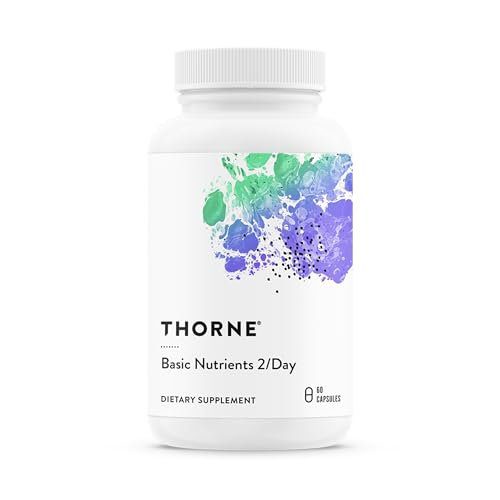
THORNE – Basic Nutrients 2/Day – Comprehensive Daily Multi-Vitamin with Optimal Bioavailability – Vitamin & Mineral Formula – Third-Party Certified – Gluten, Dairy & Soy-Free – 60 Capsules
Thorne Basic Nutrients 2/Day delivers comprehensive daily vitamin and mineral support in just two capsules, using optimal bioavailability forms like glycinate minerals and methylated B vitamins, third-party certified and free of gluten, dairy, and soy. User reviews across iHerb, Target, and Thorne’s site praise its clean formula without fillers, easy absorption, and steady energy benefits for filling diet gaps. It’s a solid pick for reliable foundational nutrition despite the premium cost.
Here’s the part most shoppers miss: two supplements can list the same nutrient, but behave differently in the body based on the form. Thorne consistently leans into forms that are often better tolerated and, in some cases, better absorbed.
This matters most when:
- You have digestive sensitivity (minerals can be rough)
- You’re correcting a deficiency
- You’re using higher doses for a specific goal (under guidance)
- You have genetic variants that affect folate metabolism (common MTHFR variants)
If you want to get better at spotting these differences across brands, UsefulVitamins’ guide on how to read supplement labels makes it much easier to compare products quickly.
Common Thorne “better form” choices (and why they’re used)
Thorne frequently uses:
- Methylfolate instead of folic acid
- Methylcobalamin instead of cyanocobalamin
- Chelated minerals (like bisglycinate forms) instead of oxides
- Zinc picolinate instead of zinc oxide in some formulas
These choices align with the broader idea that chemical form affects tolerability and absorption. The science is nutrient-specific, but the principle is well established: different forms have different bioavailability profiles. For a deeper explanation with examples, see UsefulVitamins’ breakdown of bioavailable nutrient forms.
Visual: examples of Thorne-style forms vs common budget forms
| Nutrient | Thorne commonly uses | Common budget form | Why it may matter |
|---|---|---|---|
| Folate | Methylfolate | Folic acid | Useful for people who prefer active folate forms |
| B12 | Methylcobalamin | Cyanocobalamin | Often chosen for neurological support preferences |
| Iron | Iron bisglycinate | Ferrous sulfate | Bisglycinate may be gentler for some people |
| Magnesium | Chelated forms | Magnesium oxide | Oxide is often less tolerated at higher doses |
| Zinc | Picolinate (in some products) | Zinc oxide | Picolinate is often chosen for absorption |
A note on MTHFR and methylated B vitamins
A significant portion of the population carries MTHFR variants. That doesn’t automatically mean you need methylated vitamins, but it helps explain why many practitioners prefer them for certain people.
Actionable takeaway: If you’ve tried a basic B-complex and felt jittery, nauseated, or “off,” consider a lower dose, take it with food, or talk with a clinician about whether methylated forms are appropriate for you.

Best Thorne products by goal: what tends to be worth buying
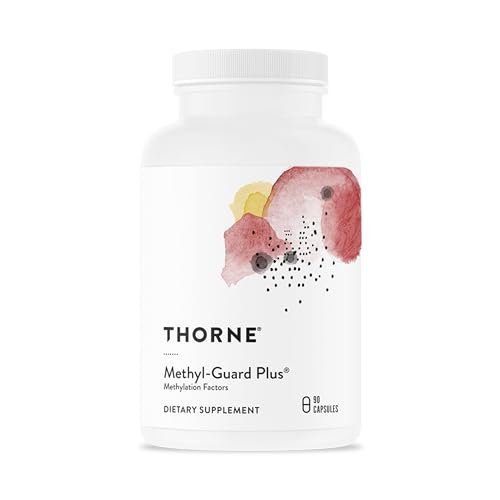
THORNE – Methyl-Guard Plus – Active Folate (5-MTHF) with Vitamins B2, B6 & B12 – Supports Methylation & Healthy Level of Homocysteine* – Gluten, Dairy & Soy-Free – 30 Servings
Thorne Research Methyl-Guard Plus earns a strong 4.6-star rating from over 1,200 Amazon reviews, with users frequently praising its effectiveness for methylation support, homocysteine reduction, and boosted energy from active B vitamins like 5-MTHF and riboflavin-5-phosphate. While the $48 price is a common complaint, its premium quality, third-party certifications, and positive Reddit feedback in supplement communities make it a reliable affiliate recommendation for those needing targeted methylation aid.
Thorne sells a lot of products – and not all of them will be equally valuable for your needs. The best approach is to choose based on goal and risk level. For example, an athlete worried about banned substances has a different priority than someone who just wants a basic multivitamin.
This section focuses on categories where Thorne’s formulation style and testing standards tend to stand out, based on product positioning and common user feedback patterns described in sources like Healthline’s brand review.
1) For athletes: NSF Certified for Sport options (lower risk, clearer trust)
If you compete, “probably safe” is not the same as “tested safe.” Thorne’s NSF Certified for Sport products are designed for that reality.
Common picks include:
- Creatine monohydrate (5 g/serving) for strength and performance support
- Amino acid formulas for training support (product-specific)
Why creatine is a strong category: Creatine monohydrate is one of the most studied sports supplements. For a research summary, Examine provides an evidence-focused overview in its creatine supplement guide.
Actionable takeaway: If you’re buying only one “performance” supplement, creatine is often the most reasonable first choice – but confirm the product is certified if you’re tested.
2) For daily coverage: Basic Nutrients-style multis (but check your totals)
Thorne’s daily multis are popular because they’re straightforward and high potency. That can be helpful if your diet is inconsistent, but it also means you should pay attention to the full daily stack (multi + fortified foods + other supplements).
If you’re comparing Thorne to more budget-friendly options, UsefulVitamins’ roundup of best value multivitamins is a good reality check on what you gain (and don’t) by paying more.
3) For heart and brain: omega-3 formulas like Super EPA
Thorne’s Super EPA is often cited for combining meaningful EPA/DHA amounts with added ingredients (like CoQ10 in some formulations). Omega-3s are among the most researched supplements for cardiovascular markers and inflammation-related pathways.
For an authoritative baseline on omega-3s, see the NIH Office of Dietary Supplements fact sheet on omega-3s.
Actionable takeaway: If you don’t eat fatty fish regularly, omega-3s are a category where quality and freshness can matter. Look for clear EPA/DHA labeling and reputable manufacturing.
4) For gut support: targeted probiotics
Thorne offers probiotic formulas positioned around survivability and strain selection. Probiotics are highly individual, so the best metric is not hype – it’s whether the strain and dose match your goal (regularity, antibiotic recovery, bloating patterns).
Visual: “best fit” map
| Your goal | Thorne category that makes sense | What to verify |
|---|---|---|
| Tested sport safety | NSF Certified for Sport line | Certification on the exact product |
| Basic daily coverage | Multivitamin | Total daily intake from all sources |
| Heart/brain support | Omega-3 | EPA/DHA per serving, freshness, tolerance |
| Gut support | Probiotic | Strains, CFU at expiration, your symptom pattern |
Thorne pricing, reviews, and complaints: separating product quality from customer service
THORNE – Vitamin D-1,000 – Vitamin D3 Supplement – Supports Healthy Bones, Teeth & Muscles, Plus Cardiovascular & Immune Function* – Third-Party Certified – Gluten, Dairy & Soy-Free – 180 Capsules
Thorne Vitamin D-1,000 provides 1,000 IU of vitamin D3 in 180 gluten-, dairy-, and soy-free capsules, third-party certified and formulated to support bones, teeth, muscles, cardiovascular, and immune function. Some users note easy-to-swallow small capsules and improvements in mood or energy after weeks of use. Thorne is a reputable brand, but specifics depend on individual needs and current pricing details.
A confusing part of buying supplements online is that brand ratings often mix product performance with shipping and billing issues. In other words, a low score doesn’t always mean the capsules are poor quality.
In the draft data you provided, Trustpilot ratings skew low (2.4/5), with many one-star complaints tied to logistics and service rather than efficacy. Meanwhile, individual product listings can score very high. For example, Thorne Vitamin D3 shows strong consumer ratings on Walmart’s Thorne Vitamin D3 reviews, averaging 4.7/5 in that snapshot.
So what should you do with that contradiction? Treat it like two separate questions:
- Do people like the supplements when they arrive and they take them?
- Do people like the buying experience from that seller?
Why Thorne often costs 2-3x more than mainstream brands
In many cases, the premium is driven by:
- Ingredient forms (chelated minerals, methylated vitamins)
- Testing and certification programs (especially sport-focused)
- Stricter additive policies and manufacturing controls
That doesn’t mean every product is “worth it.” It means the value is highest when those features solve a real problem for you.
Visual: Thorne vs mainstream brands (practical comparison)
| Factor | Thorne | Typical mainstream brand |
|---|---|---|
| Price | Higher | Lower |
| Forms | Often bioavailable forms | Often standard forms |
| Athlete suitability | Strong options via sport certification | Varies widely |
| Additives | Often fewer | More likely to include colors/fillers |
| Best use case | Targeted needs, sensitive users | Basic coverage on a budget |
How to reduce purchase risk
If you decide to try Thorne, a few simple steps can prevent most frustration:
- Buy from an authorized seller to reduce counterfeit risk
- Start with one product, not a full cart
- Track changes for 2-4 weeks (sleep, energy, digestion, training)
- If you use high-potency multis, consider discussing labs with a clinician
Thorne also notes eligibility for some purchases through HSA/FSA pathways via partners. You can see consumer experiences directly on Thorne’s product review pages, but remember those reviews are hosted on the brand’s own site.
Actionable takeaway: If you’re price-sensitive, reserve Thorne for categories where form and certification matter most (sport, iron, magnesium, targeted B vitamins). Use value brands for basics.

Once you have picked a product, our companion app, StackMyMed, scans its label and tracks it alongside everything else you take, with timing and interaction checks built in.
Conclusion: the bottom line on Thorne
This Thorne supplements review comes down to fit. Thorne tends to be a smart buy when you value testing, cleaner formulas, and specific nutrient forms – especially for athletes or sensitive users. If your goal is simply basic daily coverage at the lowest cost, you can often get similar outcomes from reputable budget brands.
A practical next step is to choose one priority:
- Want to compare Thorne to another premium brand? Read the Thorne vs. Pure Encapsulations comparison.
- Want to shop smarter across any brand? Use the supplement quality indicators checklist before you buy.
When you match the product to your goal (and your tolerance), Thorne is less about hype and more about reducing guesswork.
As an Amazon Associate, I earn from qualifying purchases. Product recommendations are based on real reviews and independent research.
Who actually makes it: our Brand File on Thorne covers ownership, factories, and the public record.
