
Choosing between Nature Made vs Nature's Bounty comes down to what you value most: tighter third-party verification and a more “clinical” feel, or broader variety with more fun formats like gummies and quick-dissolves. Both brands are widely available and familiar, which is why the decision can feel oddly high-stakes when you are staring at a supplement aisle. This article breaks down how the two compare on quality signals, ingredients and labeling, product fit, and price so you can pick the brand that best matches your goals and your tolerance for label detective work.
Affiliate disclosure: this article contains affiliate links. As an Amazon Associate, UsefulVitamins.com earns from qualifying purchases at no extra cost to you.
Summary / Quick Answer: Nature Made vs Nature's Bounty (Which should you buy?)
For most people who want the simplest “safe bet,” Nature Made is often the better default because many products carry independent verification (USP) and the brand is frequently cited as pharmacist-recommended.
Nature’s Bounty can be the better pick if you care more about format and variety (especially gummies and beauty-focused supplements) and you are willing to compare labels more carefully.
Here’s the fast comparison:
| If you prioritize… | Pick this brand | Why |
|---|---|---|
| Third-party quality verification | Nature Made | Many products are USP Verified (potency, purity, manufacturing checks) |
| Broad selection and trendy formats | Nature’s Bounty | Large catalog, gummies, quick-dissolve options |
| “No guesswork” for basics (D, fish oil, multi) | Nature Made | Strong mainstream quality signals and consistency |
| Taste and ease of taking supplements | Nature’s Bounty | More consumer-friendly formats |
If you want a broader context on how brands stack up, UsefulVitamins also has a detailed Best Multivitamins Comparison.
Quality and testing: what matters more than the brand name
Most shoppers assume “big brand” automatically means “tested.” The reality is more specific: what matters is which independent standards a specific product meets, not the logo on the bottle.
Nature Made: USP verification is a meaningful signal
Nature Made is known for having many products that carry the USP Verified mark. USP verification matters because it is not just marketing language. It indicates the supplement was independently checked for:
- Identity (the ingredient is what the label says it is)
- Potency (the amount matches the label within allowed tolerances)
- Purity/contaminants (testing for certain impurities)
- Manufacturing quality (good manufacturing practices)
If you want the “why” behind third-party seals and how to interpret them, see this guide to supplement quality indicators. For the standard itself, USP explains what the program covers in the USP Verified dietary supplements program overview.
Nature Made has also highlighted long-running pharmacist recommendation results in brand communications, including being ranked #1 in multiple supplement categories in a survey reported by U.S. News and Pharmacy Times (press release coverage). A survey is not the same as a clinical trial, but it does reflect professional familiarity and trust.
Nature’s Bounty: quality can be solid, but you need to read the label
Nature’s Bounty is a legacy brand with wide retail distribution and a massive product catalog. Many people do well with it, but the key is that quality signals vary by product and format.
Instead of assuming “all gummies are equal” or “all softgels are equal,” treat each bottle like a mini evaluation:
- Does it list third-party testing or a known certification?
- Are doses aligned with common guidelines?
- Is the ingredient form appropriate (for example, methylcobalamin vs cyanocobalamin for B12, magnesium citrate vs oxide)?
A quick way to reduce confusion is to use a consistent label checklist. UsefulVitamins has a step-by-step guide on how to read supplement labels.
Quick quality checklist (use this in-store)
| Check | What to look for | Why it matters |
|---|---|---|
| Third-party seal | USP, NSF, or equivalent | Independent verification beats brand reputation |
| Ingredient form | D3 vs D2, magnesium glycinate vs oxide | Some forms absorb better or feel gentler |
| Dosing logic | Not wildly above daily needs unless advised | “More” is not always better |
| Additives | Colors, sweeteners, gelatin, allergens | Tolerance and dietary preferences |
Ingredients and label transparency: where the real differences show up
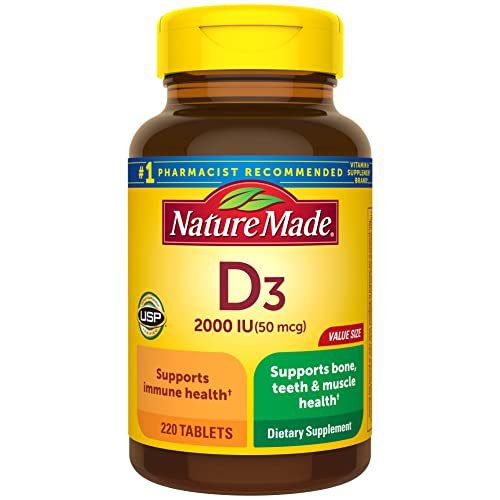
Nature Made Vitamin D3 2000 IU, 220 Tablets
Nature Made Vitamin D3 2000 IU (220 Tablets) is a top-rated, USP-verified supplement with 4.7 stars from over 12,400 Amazon reviews, praised for effectively boosting vitamin D levels at an unbeatable price of ~$14.99. Redditors in fitness and supplements communities endorse it as a reliable, no-frills choice, making it ideal for deficiency correction or maintenance.

Nature’s Bounty Optimal Solutions Advanced Hair, Skin & Nail Pectin Gummies
Nature’s Bounty Hair, Skin & Nails Gummies (ASIN B0DJG286SN) earn a solid 4.6-star rating from over 12,400 Amazon reviews, with frequent praise for enhancing hair and nail growth thanks to 2,500mcg biotin per serving. At around $14.98 for a 75-day supply, it’s a budget-friendly option, though the sugary strawberry gummies may not suit everyone—ideal for those seeking tasty, effective beauty support backed by real user results.

Nature Made Burp Less Fish Oil Omega 3, 1200 mg Softgels, 300 Softgels
Nature Made Fish Oil 1200 mg (200 softgels) is a reliable, USP-verified choice with 4.7 stars from over 24,000 Amazon reviews, praised for no fishy burps and heart health benefits at ~$20. While softgels are large and EPA/DHA (360mg/240mg) is moderate, it’s a budget-friendly, third-party tested option ideal for daily omega-3 supplementation.

Nature’s Bounty Vitamin C 1000mg, 300 Vegetarian Caplets
Nature’s Bounty Vitamin C 1000 mg tablets are a top-rated choice with 4.7 stars from over 24,000 Amazon reviews, praised for immune support and value at around $12 for 100 tablets—ideal for daily use, though take with food to avoid minor GI issues.
Two bottles can both say “Vitamin D3 2000 IU,” yet behave differently for you. The difference is often in the “boring” parts: serving size, added ingredients, and whether the product is built for precision or convenience.
Nature Made: straightforward formulas for common needs
Nature Made tends to focus on the staples: vitamin D, calcium, magnesium, fish oil, CoQ10, multivitamins, and a range of condition-adjacent products. The formulas often feel conservative and “pharmacy-like.”
That can be helpful if your goal is to avoid surprises. For example:
- Fewer “proprietary blends” in many basics
- Easy-to-compare doses between products
- Traditional tablets and softgels that prioritize stability
When you are comparing multis, pay close attention to iron, iodine, and preformed vitamin A (retinol). These are not automatically bad, but they are the nutrients most likely to be “wrong for you” depending on age, sex, pregnancy status, and diet pattern. For reference ranges and safety notes, the NIH Office of Dietary Supplements has evidence-based fact sheets for most nutrients.
Nature’s Bounty: more variety, more formats, more fine print
Nature’s Bounty stands out for breadth. Beyond basics, it has lots of “category” products – hair, skin, nails, beauty gummies, sleep support, and specialty blends.
That variety is useful if you:
- Struggle with swallowing pills
- Prefer gummies or quick-dissolve tablets
- Want a “bundle” formula rather than buying separate nutrients
The tradeoff is that blended products can hide underdosed ingredients or include extras you do not want. Gummies also tend to include sweeteners and flavoring systems, which some people tolerate poorly.
Label comparison mini-table (how to decide in 60 seconds)
| Question | If “yes”… | What to do |
|---|---|---|
| Is it a gummy? | You may get lower potency per serving | Check serving size (often 2-4 gummies) |
| Is it a blend? | You may not get effective doses | Prefer products listing exact amounts |
| Does it exceed 100% DV widely? | Higher risk of unnecessary intake | Compare to your diet and needs |
If you are on the fence about whether to buy a name brand at all, this explainer on generic vs. brand name supplements helps clarify when you are paying for quality controls vs marketing.
Product fit: who each brand tends to work best for (real-life scenarios)
A common mistake is asking, “Which brand is best?” A better question is, “Which brand is best for my goal, budget, and preferences?” Think of supplements like shoes: the “best” pair is the one you actually wear consistently and that fits your use case.
When Nature Made tends to be the better fit
Nature Made often makes sense when you want a single-nutrient supplement where dose accuracy and consistency matter most.
Common examples:
- Vitamin D3 for people with limited sun exposure
- Fish oil/omega-3 for those who do not eat fatty fish often
- Calcium + vitamin D for people trying to close dietary gaps
- Basic multivitamins for “insurance,” not mega-dosing
If you are choosing an omega-3, look for EPA and DHA amounts (not just “fish oil 1200 mg”). For a science-based overview of omega-3s and what labels mean, see the NIH omega-3 fact sheet.
When Nature’s Bounty tends to be the better fit
Nature’s Bounty can be a strong choice when format drives adherence. If you hate swallowing pills, the “perfect” tablet you never take loses to the “good enough” gummy you take daily.
It is also a common pick for:
- Beauty category supplements (hair/skin/nails)
- People who want quick-dissolve or chewable options
- Shoppers who like trying different targeted blends
Just remember: beauty supplements often lean heavily on biotin, zinc, and sometimes collagen. Biotin can interfere with certain lab tests in some situations, so it is worth discussing with a clinician if you take high doses. The FDA safety communication on biotin interference explains the issue and why it matters.
“Use case” decision tree (save this)
Need a basic nutrient with minimal fuss?
Choose Nature Made first, then confirm third-party verification on the label.Need a format you will actually take daily?
Choose Nature’s Bounty, then verify dose, serving size, and added sugars.Need a premium, practitioner-style brand?
Compare both against higher-end options in this Thorne vs. Pure Encapsulations comparison.
Price, value, and “effectiveness”: what you can realistically expect
People often say a supplement “worked” or “did nothing.” With vitamins, effectiveness usually depends on one thing: were you deficient or under-consuming that nutrient in the first place? If not, you may not feel a dramatic change.
Price: both are affordable, but value depends on the product type
In many stores, Nature Made and Nature’s Bounty sit in a similar price band, with frequent discounts. Value is not just sticker price. It is cost per:
- Effective dose (for example, EPA + DHA for fish oil)
- Day of use (serving size matters)
- Quality signal (third-party verification can justify a small premium)
Effectiveness: align expectations with biology
A few practical examples:
- Vitamin D: If you are low, supplementing may improve blood levels and may help with bone-related outcomes when paired with calcium in certain groups. But you may not “feel” it day to day. Clinical guidance often relies on blood testing and individualized dosing, and the NIH vitamin D fact sheet is a reliable reference for ranges and upper limits.
- Magnesium: Some people notice sleep or muscle cramp changes, but the form matters. Magnesium oxide is less absorbable for many people than citrate or glycinate, and it may be more likely to cause GI effects at higher doses.
- Multivitamins: They can help fill gaps, but they are not substitutes for diet. If you want to compare multis by nutrient forms and dose logic, use the Best Multivitamins Comparison.
Value comparison table (what to calculate)
| Product type | What “value” means | What to check |
|---|---|---|
| Multivitamin | Coverage without excessive doses | Iron, vitamin A form, B12 form, iodine |
| Fish oil | EPA + DHA per dollar | EPA/DHA amounts, serving size, freshness cues |
| Vitamin D | Consistent IU per day | D3 vs D2, third-party verification |
| Gummies | Adherence with acceptable sugar | Added sugar grams, serving size, potency |
Safety and smart buying tips (so you do not waste money)
Even reputable brands can be a poor match if the product does not fit your health status or medications. A smart purchase is less about “best brand” and more about avoiding predictable mistakes.
Common mistakes to avoid with either brand
- Stacking duplicates: A multivitamin + “hair skin nails” + immune gummy can accidentally triple zinc or vitamin A.
- Ignoring upper limits: Fat-soluble vitamins (A, D, E, K) can accumulate. More is not automatically better.
- Not matching form to tolerance: Some forms are harder on digestion or less absorbable.
- Assuming “natural” equals safer: Supplements can still interact with medications.
If you want a simple framework for evaluating any bottle, revisit supplement quality indicators and keep the how to read supplement labels checklist handy on your phone.
Who should talk to a clinician before supplementing
This is especially important if you are:
- Pregnant, trying to conceive, or breastfeeding
- Managing kidney disease, thyroid disease, or iron overload conditions
- Taking blood thinners, thyroid meds, anticonvulsants, or diabetes medications
- Using high-dose biotin, vitamin A, or vitamin D
Shopping checklist (printable-style)
- Pick the nutrient based on a goal or confirmed gap (diet or labs).
- Choose the form and dose that fits your needs.
- Prefer products with third-party verification when possible.
- Check serving size and added ingredients.
- Reassess after 8-12 weeks if you are using it to correct a deficiency.
Once you’ve picked your side here, the part that actually moves the needle is using it consistently — and that’s exactly the gap our companion app, StackMyMed, is built to close. Scan the bottle you bought and it auto-reads the brand, dose, form and expiry, then logs each serving so you can see your real running total of every vitamin and mineral across everything you take (handy if a multivitamin and a single-nutrient pill overlap). It’ll also remind you so you don’t miss a dose, flag combinations worth a second look, and export a clean PDF if you want to bring your list to a pharmacist or doctor. The free tier covers your full cabinet and schedule; it doesn’t diagnose or replace clinical advice — it just helps you actually follow through on the choice you just made.
Conclusion: the bottom line on Nature Made vs Nature's Bounty
Nature Made vs Nature's Bounty is not a “one is good, one is bad” comparison. Nature Made is often the simpler choice when you want strong quality signals like USP verification and a straightforward approach to core nutrients. Nature’s Bounty can be a better fit when variety and easy-to-take formats make the difference between consistency and a forgotten bottle in the cabinet.
Next step: decide what you are actually trying to solve – a specific nutrient gap, a convenience issue, or a broad “coverage” plan. Then compare labels with intention.
For deeper comparisons, review the Best Multivitamins Comparison and, if you are considering practitioner-style options, the Thorne vs. Pure Encapsulations comparison.

As an Amazon Associate, I earn from qualifying purchases. Product recommendations are based on real reviews and independent research.
Who actually makes it: our Brand File on Nature Made and our Brand File on Nature’s Bounty covers ownership, factories, and the public record.
Frequently asked questions
Is Nature Made better than Nature’s Bounty?
Neither is universally better. Nature Made is the safer default for quality assurance because many products are USP Verified for potency, purity, and manufacturing quality, and it is frequently pharmacist-recommended. Nature’s Bounty offers a larger catalog and more consumer-friendly formats like gummies. The right choice depends on whether you prioritize third-party verification or variety.
Are Nature Made products USP verified?
Many Nature Made products carry USP verification, an independent check on potency, purity, and manufacturing quality, and the brand is often cited as pharmacist-recommended. Not every product in the range is verified, so look for the USP mark on the specific bottle. Nature’s Bounty products are less consistently third-party verified, so reading the label matters more.
Which is cheaper, Nature Made or Nature’s Bounty?
Both are affordable mainstream brands sold at similar price points, so neither is reliably cheaper across the board. Value depends on the specific product, serving size, and count rather than the brand name. Compare the cost per serving and the active dose on the label instead of the sticker price.
