
If you’re considering life extension supplements, the practical answer is: they can be a solid option for “foundational” nutrients (like multivitamins, magnesium, and CoQ10), but the more ambitious longevity stacks (like NAD+ boosters, DHEA, and PQQ) have less certain human evidence and deserve extra caution. This article breaks down what the brand does well, where the science is still early, and how to choose products that fit your goals, budget, and risk tolerance – without getting pulled in by anti-aging hype.
Affiliate disclosure: this article contains affiliate links. As an Amazon Associate, UsefulVitamins.com earns from qualifying purchases at no extra cost to you.
Summary / Quick Answer: Are life extension supplements worth it?
Life extension supplements can be worth it if you want well-known nutrients from a brand with a long track record, third-party testing practices, and strong user-survey rankings – but they’re not a guaranteed path to longer life.
Here’s the quick decision guide:
- Best fit for: people who want high-potency basics (multivitamin, vitamin D, magnesium, CoQ10) and are comfortable tailoring doses.
- Use more caution with: hormone-related products (like DHEA) and newer longevity ingredients (NAD+ boosters, PQQ) where human outcomes are still being studied.
- Quality positives: cGMP manufacturing and documented quality processes, plus repeated high rankings in ConsumerLab user surveys (especially for multivitamins and CoQ10).
- Quality watch-outs: some independent testing has raised concerns about tablet disintegration for certain products, and the FDA has previously cited the company for disease-claim issues.
If you want the fastest next step: start with one goal (sleep, energy, heart support, nutrient gaps), then choose 1-2 products that match that goal and your labs.
Life Extension as a brand: reputation, testing, and what the awards actually mean
A lot of supplement decisions come down to trust. Not “Do they have a cool label?” but “Do they consistently make products that contain what they claim, and do they avoid sloppy manufacturing?” That’s where brand reputation and quality signals matter.
Life Extension (founded in 1980) positions itself around longevity and “optimal health” formulations, often using higher-than-RDA doses. The brand also publishes extensive ingredient write-ups and cites research on its site, which makes it easier to understand the rationale behind a formula.
What independent ratings suggest (and what they don’t)
Life Extension has repeatedly ranked highly in consumer surveys. For example, the company highlights being voted a top catalog/internet brand in ConsumerLab’s annual survey and earning category wins for staples like multivitamins and CoQ10, as described in its own write-up on being voted #1 by ConsumerLab survey respondents and its page summarizing ConsumerLab awards and category rankings.
These awards can be useful, but keep the context straight:
- They reflect user satisfaction (value, perceived results, consistency).
- They don’t prove longevity effects, or that every product is “best in class.”
- They can still be meaningful for basics like magnesium or a multivitamin, where quality and tolerability are key.
Manufacturing and testing: the signals to look for
Life Extension states it follows current Good Manufacturing Practices (cGMP) and uses third-party testing. It also describes its quality approach in a detailed article about a commitment to quality and testing. These are the types of quality indicators that generally matter most:
- cGMP compliance (baseline manufacturing requirements in the US)
- Raw material and finished product testing
- Avoiding unnecessary dyes and fillers (often a plus for sensitive users)
One practical limitation: certificates of analysis (COAs) are not always posted publicly for every batch. If you care about batch-level documentation, it’s reasonable to request it from customer support before buying.
A quick “trust snapshot” table
| Trust signal | What it suggests | What it can’t prove | Practical takeaway |
|---|---|---|---|
| Consumer survey awards | Many users are satisfied | Not clinical proof | Useful for choosing basics |
| cGMP + third-party testing | Better odds of label accuracy | Not a guarantee | Still check dosing and form |
| Transparent ingredient explanations | Easier to evaluate formulas | Research can be selective | Cross-check major claims |
Want a deeper brand-by-brand comparison? UsefulVitamins has a longer breakdown in Life Extension Brand Review: Top Supplements for Longevity.
What the science says about “longevity supplements” (and where the evidence is still thin)
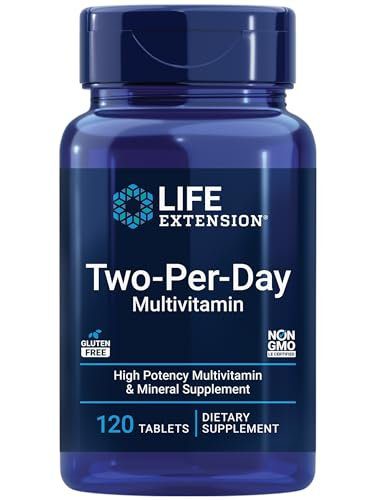
Life Extension Two-Per-Day Multivitamin – Packed with Over 25 Vitamins, Minerals & Extracts -Vitamins B6, C, D – Zinc – Two-Month Supply – Non-GMO, Gluten-Free – 120 Tablets
Life Extension Two-Per-Day Multivitamin (120 tablets) packs over 25 vitamins, minerals, and extracts like vitamins B6, C, D, zinc, plus bioactive forms such as 5-MTHF folate and quercetin to support cellular, immune, heart, and brain health; it’s non-GMO, gluten-free, and rated #1 by ConsumerLab.com. Users report higher energy levels and note its high-potency formula updates with science, though it lacks vitamin K and some mention a strong smell in the capsule version. Provides a two-month supply at two tablets per day.
The term “longevity supplements” can mean two very different things.
One meaning is risk reduction – correcting deficiencies, supporting cardiovascular markers, and improving sleep and exercise recovery. The other is life extension in the literal sense – slowing biological aging itself. Most supplements live closer to the first category than the second.
Life Extension’s catalog includes both. That’s why it’s important to separate:
- Foundational support (multivitamins, magnesium, vitamin D, omega-3s, CoQ10)
- Mechanism-driven longevity stacks (NAD+ boosters, resveratrol, PQQ, spermidine, DHEA)
The “basics” have the strongest real-world logic
Correcting nutrient gaps is not glamorous, but it’s one of the few supplement uses with a clear chain of reasoning: low intake or low blood levels can impair function, and correcting that may improve health markers.
Examples that often make sense depending on diet, labs, and medications:
- Vitamin D (especially in low sun exposure)
- Magnesium (common shortfall in dietary intake)
- CoQ10 (especially for some statin users, with clinician guidance)
These aren’t magic anti-aging vitamins. They are more like maintenance. Think of them as keeping the “baseline systems” running smoothly.
NAD+ boosters: promising mechanism, limited human outcomes
NAD+ precursors like nicotinamide riboside (NR) are popular because NAD+ is involved in cellular energy metabolism and DNA repair pathways. Some early research and animal data look interesting, but translating that into “you will live longer” is not something human evidence can currently confirm.
Life Extension sells NAD+ formulas that pair NR with polyphenols like resveratrol. Medical reviewers note that these products target energy and healthy aging pathways, but also emphasize that human longevity outcomes are not established, as discussed in a Medical News Today overview of Life Extension products and claims.
If you’re considering NAD+ products, use a checklist mindset:
- Are you aiming for energy and metabolic support, not guaranteed life extension?
- Do you tolerate methyl donors and B vitamins well (often stacked in longevity formulas)?
- Are you tracking anything measurable (sleep, training recovery, labs)?
For a focused breakdown, see NAD+ Supplements Guide: Benefits, Dosage & Science and the roundup Best NMN Supplements 2024: Top NAD+ Boosters Reviewed.
PQQ and mitochondrial support: interesting, still emerging
PQQ is often marketed for mitochondrial biogenesis and brain aging support. The mechanism is plausible, but “plausible” isn’t the same as proven clinical impact. Reviews of Life Extension commonly describe PQQ as promising for mitochondrial function, while acknowledging that the research base is still developing, as summarized in an independent Innerbody review of Life Extension quality and product categories.
Quick visual: evidence strength by category (simplified)
| Category | Examples | Evidence strength for human outcomes | Best use case |
|---|---|---|---|
| Foundational nutrients | multi, magnesium, vitamin D, CoQ10 | Moderate to strong (context-dependent) | Deficiencies, common gaps, baseline support |
| Mechanism-forward longevity | NAD+ boosters, resveratrol, PQQ | Early to moderate | Experimentation with realistic expectations |
| Hormone-related | DHEA | Mixed, higher risk | Only with labs and clinician oversight |
The takeaway: Life Extension may be a reasonable brand to buy from, but the “longevity” promise depends more on the ingredient category than the logo on the bottle.
Choosing the right Life Extension products: match your goal, dose, and budget
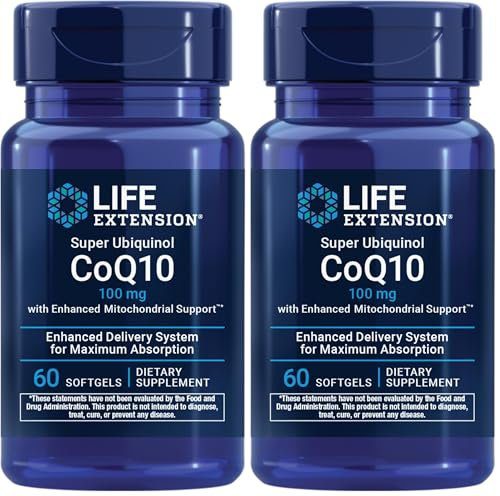
Life Extension Super Ubiquinol CoQ10 with Enhanced Mitochondrial Support, Potent Heart Health & Cellular Energy Production Support, Ultra-absorbable, Gluten-Free, Non-GMO, 100 mg, 60 softgels
Life Extension’s ubiquinol CoQ10 formula uses a highly absorbable form of coenzyme Q10 combined with shilajit for mitochondrial support, targeting heart health and cellular energy production in a 60-softgel bottle at 100 mg per serving.
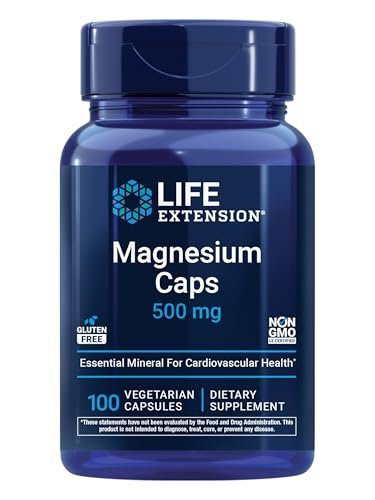
Life Extension Magnesium Caps, 500 mg, Magnesium Oxide, Citrate, and Succinate, Heart Health, Healthy Bones, Metabolism Support, 100 Vegetarian Capsules
Life Extension Magnesium Caps deliver 500 mg of magnesium from oxide, citrate, and succinate in 100 vegetarian capsules. This matches the article’s focus on magnesium as a foundational nutrient for heart health, healthy bones, and metabolism support. Take one capsule one to three times daily, though high doses may act as a laxative.
Most people don’t need a 10-supplement stack. They need a plan.
A good plan starts with a single question: What problem are you actually trying to solve? Energy slump? Poor sleep? Borderline lipids? Training recovery? Or are you simply trying to cover nutritional gaps?
Step 1: pick a goal, then choose a category
Use this structured approach:
- Nutrient coverage goal (baseline): consider a multivitamin and magnesium.
- Cardiometabolic goal: consider omega-3s and CoQ10 (especially if older or on statins, with clinician input).
- Energy and “healthy aging pathway” goal: consider an NAD+ precursor stack, but track outcomes.
- Inflammation and joint comfort goal: consider a curcumin product, watching interactions.
Independent reviews often note that Life Extension formulas can be high potency and sometimes well-dosed compared to bargain brands, but that doesn’t automatically make them the right fit for everyone. The Innerbody brand review describes examples like curcumin dosing that falls within commonly used supplemental ranges.
Step 2: watch for “high potency” tradeoffs
Higher doses can be appropriate in specific contexts, but they can also increase side effects or interactions. Common issues people run into:
- GI upset (magnesium form and dose matter)
- Headaches or stimulation (some NAD+ stacks and polyphenols)
- Sleep disruption (timing and stacking can matter)
- Lab value changes that require interpretation (for example, hormones)
If you want a framework for evaluating labels, forms, and third-party testing, use Supplement Quality Indicators: How to Choose Safe Products.
Step 3: budget realistically
Life Extension products span from relatively affordable basics to more premium longevity formulas. Some NAD+ products land around the mid-range for specialty supplements, while many single nutrients are priced competitively.
A practical rule: spend more on categories where quality variation is high (fish oil, probiotics, complex botanicals). For simpler minerals and vitamins, you’re often paying for form, dose, and quality control rather than “secret sauce.”
Quick “product selection” checklist (printable style)
- What is my one primary goal for the next 8 weeks?
- Do I have labs or symptoms that justify this product?
- Is the dose appropriate for me, or is it “high potency by default”?
- Any interactions with medications or conditions?
- Can I track a measurable outcome (sleep, HRV, BP, labs, training)?
If you’re building a longevity-focused stack, you may also want to compare ingredients like spermidine across brands in Best Spermidine Supplements for Longevity & Wellness.

Safety, side effects, and red flags: what to know before you buy
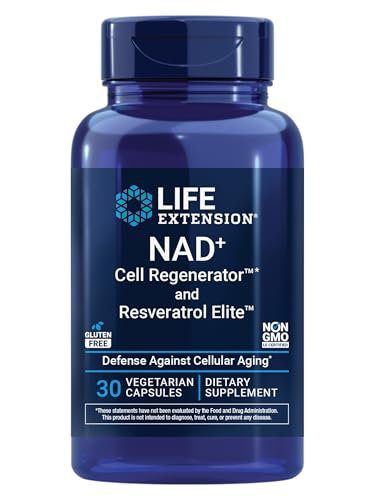
Life Extension NAD+ Cell Regenerator™ and Resveratrol Elite™*, nicotinamide riboside, Trans-resveratrol, quercetin, Fisetin, Heart Health, Healthy Aging, Vegetarian, Non-GMO, Gluten Free, 30 Capsules
Life Extension NAD+ Cell Regenerator™ and Resveratrol Elite™ combines nicotinamide riboside with trans-resveratrol, quercetin, and fisetin in 30 vegetarian capsules. This non-GMO, gluten-free formula targets NAD+ levels for cellular energy and healthy aging. User reports note boosts in energy and mental clarity.
The biggest mistake with life extension supplements isn’t choosing the “wrong” capsule. It’s assuming that because something is sold for longevity, it must be safe long-term for everyone.
Common side effects and who should be cautious
Even basic supplements can cause problems in the wrong context. Examples:
- Magnesium: diarrhea or cramping at higher doses (form matters).
- Niacin-like flushing or headaches: sometimes reported with certain B vitamin patterns or polyphenols.
- Curcumin and botanicals: may interact with anticoagulants or affect GI comfort.
- DHEA: can affect hormones and is not a casual add-on.
DHEA deserves special emphasis. It may have a role for specific people with documented low levels, but long-term safety and the risk-benefit tradeoff are not “set and forget.” If a product influences hormones, it should be treated more like a clinical intervention than a wellness accessory.
Quality concerns: dissolution and transparency
One quality issue raised in independent testing discussions is tablet disintegration or dissolution. If a tablet doesn’t break down properly, the label dose may not reflect what your body can absorb. This doesn’t mean every tablet is ineffective, but it’s a reminder to prioritize:
- capsules when possible (often easier to dissolve)
- brands and products with strong testing documentation
- monitoring how you respond
If you’ve had “I took it for a month and felt nothing” experiences, dissolution and form are underappreciated factors.
Regulatory history: understanding FDA warnings
The FDA does not “approve” supplements the way it approves drugs, but it does enforce rules around manufacturing and disease claims. Life Extension has received FDA scrutiny in the past related to how certain products were positioned and labeled, which is noted in third-party reporting such as the Medical News Today review of Life Extension.
What to do with that information:
- Treat disease-treatment language as a red flag for any brand.
- Prefer products framed around structure/function support rather than cures.
- If you have a medical condition, involve your clinician and prioritize therapies with proven outcomes.
Visual: “stop and check with a clinician” list
| Situation | Why it matters | Safer next step |
|---|---|---|
| Pregnancy or trying to conceive | higher stakes for dosing and ingredients | clinician-reviewed prenatal plan |
| Hormone-sensitive conditions | DHEA and similar ingredients may be risky | labs + medical supervision |
| Blood thinners or clotting disorders | botanicals may interact | pharmacist check |
| Multiple medications | interaction risk rises fast | medication-supplement review |
How to use life extension supplements intelligently: a simple 30-day plan
Most supplement regret comes from doing too much, too fast – then not knowing what helped or hurt. A short, structured trial is usually smarter than a full “longevity stack” on day one.
A practical 30-day approach
Week 1: establish your baseline
- Keep diet and caffeine stable.
- Track 2-3 metrics: sleep quality, energy, GI comfort, resting heart rate, or blood pressure.
Week 2-3: introduce one supplement
- Start with one product at the lowest reasonable dose.
- Keep everything else constant.
- Note changes (good or bad) within 3-7 days.
Week 4: decide based on data
- If benefits are clear and side effects are minimal, continue.
- If nothing changes, don’t “stack more” immediately. Reassess the goal, dose, and product form.
When lab testing makes sense (and when it doesn’t)
Lab testing can be useful when it changes your decision. Some longevity-focused services offer blood testing bundles, and Life Extension has promoted access to lab testing through partner networks in the past, which is discussed in independent reviews like a Nebula Genomics overview of Life Extension’s testing and supplement ecosystem.
Practical guidance:
- Worth considering: vitamin D, B12 (especially for plant-based diets), iron status (if symptomatic), lipids, A1C, and sometimes magnesium (interpretation can be tricky).
- Not always necessary: broad “everything panels” unless you and your clinician have a plan for acting on results.
Visual: “starter stack” examples (not medical advice)
| Goal | Starter option | What to track |
|---|---|---|
| Cover common gaps | multivitamin + magnesium | energy, GI comfort, sleep |
| Heart support | omega-3 + CoQ10 | BP, lipids (with clinician) |
| Healthy aging experiment | NAD+ precursor product | energy, sleep, training recovery |

Settled on one? StackMyMed (our companion app) lets you scan the label and log it into your routine, then watches for overlaps and interactions across your whole cabinet.
Conclusion: the best way to approach Life Extension products
Life extension supplements can make sense when you use them for what supplements do best: filling gaps, supporting specific health markers, and complementing lifestyle basics. The brand has strong visibility, repeated consumer-survey wins for categories like multivitamins, and stated quality controls, but that doesn’t turn every longevity claim into proven human outcomes.
A smart next step is to pick one goal, choose one product category, and run a 30-day trial with simple tracking. If you want to go deeper, start with Life Extension Brand Review: Top Supplements for Longevity and then compare NAD+ options using the NAD+ Supplements Guide: Benefits, Dosage & Science.
As an Amazon Associate, I earn from qualifying purchases. Product recommendations are based on real reviews and independent research.
Who actually makes it: our Brand File on Life Extension covers ownership, factories, and the public record.
