
If you’re wondering whether Nutricost is “cheap and risky” or simply “affordable and solid,” this Nutricost supplements review lands in the middle with a clear lean toward value. Nutricost sells a huge catalog of basics – think creatine, multivitamins, NAC, collagen – at prices that often undercut competitors. The more important question is quality control, not cost. This article breaks down what third-party testing really suggests, where Nutricost looks strong, where you should be cautious, and how to choose the right product for your goals.
Affiliate disclosure: this article contains affiliate links. As an Amazon Associate, UsefulVitamins.com earns from qualifying purchases at no extra cost to you.
Summary / Quick Answer: Nutricost supplements review
Nutricost is generally a good budget supplement brand if you stick to straightforward formulas (like creatine) and verify testing on the exact product you buy.
Quick takeaways
- Quality: ConsumerLab tested 13 Nutricost products and approved 11 for quality, with 3 earning Top Picks, suggesting many items meet label claims.
- Best for: Basics with clear dosing (creatine monohydrate, single-ingredient powders, some vitamins).
- Watch-outs: Multivitamins can contain very high % Daily Values for several nutrients, which can be unnecessary or risky if stacked with other supplements.
- Value: Low prices are a real advantage, not automatically a red flag, but you still need label literacy.
- Try-with-less-risk: Some products come with a 60-day money-back guarantee, which helps if you’re testing tolerance.
At-a-glance table
| What you care about | Nutricost tends to be | What to do next |
|---|---|---|
| Budget | Very strong | Compare cost per serving, not bottle price |
| Purity/testing | Often good | Look for third-party testing per product |
| “Mega-dose” formulas | Sometimes high | Avoid stacking with other multis/pre-workouts |
| Athlete banned substances | Not guaranteed | Choose certified sport options if needed |
What Nutricost is (and why the brand is so popular)
Nutricost’s appeal is simple: it makes “everyday” supplements feel accessible. The brand sells 500+ products across 20+ categories, ranging from sports nutrition staples (creatine, taurine, collagen) to general wellness picks like multivitamins and NAC. That breadth is a blessing and a trap.
The blessing is choice. If you like building a simple routine – for example, creatine + vitamin D + magnesium – Nutricost offers many of those basics at a lower cost than premium brands.
The trap is that a big catalog can make quality feel inconsistent. That’s why it’s smarter to judge Nutricost by product type, not by brand name alone. Single-ingredient products are easier to verify and harder to “hide” behind proprietary blends.
How Nutricost pricing compares (without guessing quality)
Low cost often comes from:
- high-volume manufacturing
- simpler formulas
- fewer “brand story” expenses
- less expensive packaging
That does not automatically mean low quality. If you want a framework for evaluating this, the guide on Generic vs. Brand Name Supplements: Which Is Better? helps you compare what actually matters (testing, dosing, and ingredients).
Visual: Nutricost’s “best fit” by supplement type
- Best fit: creatine monohydrate, single-ingredient amino acids, basic vitamins
- Situational: multivitamins, probiotics, blends with many actives
- Be extra careful: products where contamination risk matters (competitive athletes), or where dosing can push upper limits
Once you have picked a product, our companion app, StackMyMed, scans its label and tracks it alongside everything else you take, with timing and interaction checks built in.
Practical takeaway
Treat Nutricost like a warehouse store. You can get excellent staples for less, but you still need to read the label and confirm testing.
Nutricost supplements review: quality, testing, and what third-party results really mean
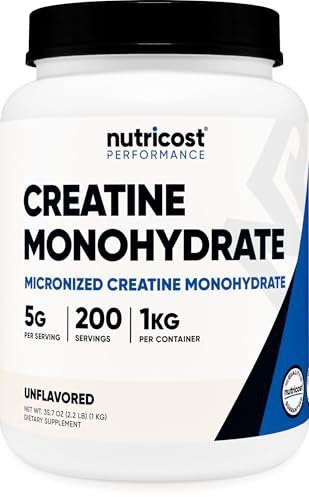
Nutricost Creatine Monohydrate Micronized Powder (1 KG) – Pure Creatine Monohydrate
Nutricost Creatine Monohydrate Micronized Powder (1 KG) delivers 200 servings of 5g pure creatine monohydrate in unflavored form, offering strong value for fitness users wanting micronized powder that mixes into shakes for muscle and strength support. It’s made in a GMP-compliant facility, non-GMO and gluten-free, with no fillers for straightforward daily supplementation. Budget athletes get a large 1 KG tub of reliable, single-ingredient creatine without extras.
Most people don’t want a supplement brand that “seems fine.” They want to know whether it’s been tested and whether it matches the label. That’s where third-party testing and independent reviews become useful.
A key data point: ConsumerLab tested 13 Nutricost products, approving 11 for quality, and 3 earned Top Picks. That’s not a perfect score, but it’s meaningfully better than what you see from many budget brands. You can explore the brand’s track record via the ConsumerLab Nutricost brand testing summary.
What that does and does not tell you:
- It suggests many Nutricost products meet basic identity and label-claim expectations.
- It does not prove every product is perfect, every batch is identical, or that products are free of every possible contaminant.
- It also doesn’t automatically cover banned substances relevant to tested sport certification.
The testing question most shoppers forget to ask
Instead of “Does Nutricost do third-party testing?” ask: “Is this exact product and batch tested, and what was tested for?”
Some brands test for identity and heavy metals. Others also test for microbes, solvents, or potency of actives. The label and product page sometimes clarify this, but not always in a standardized way.
If you want a checklist for what to look for, use Supplement Quality Indicators: How to Choose Safe Products as a quick screening tool.
Visual: A simple “trust ladder” for supplement quality
- Clear Supplement Facts panel, no hidden blends
- GMP manufacturing claims (baseline)
- Third-party testing mentioned
- Certificate of Analysis available (best case)
- Sport certification (only if you need banned-substance screening)
What about safety guidelines?
For nutrient safety and upper limits, the most reliable public resource is the NIH Office of Dietary Supplements. It’s especially helpful for fat-soluble vitamins (A, D, E, K) and minerals like iron.
Practical takeaway
Nutricost has credible signs of quality for many products, but “brand-level trust” should never replace “product-level verification,” especially for complex formulas.
Nutricost multivitamin: strong dosing, but “more” can backfire
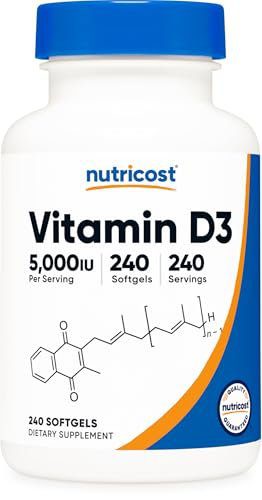
Nutricost Vitamin D3 5,000 IU (125mcg), 240 Softgels – Non-GMO and Gluten Free Vitamin D
Nutricost Vitamin D3 5,000 IU (125mcg), 240 Softgels is a non-GMO, gluten-free supplement delivering a high dose in softgel form with enough supply for months. Customer reviews note improvements in vitamin D levels, energy, and mood. Specific Amazon ratings, reviews, price, and ASIN could not be confirmed from available data.
Multivitamins are where Nutricost gets both praise and pushback. The Nutricost multivitamin is often described as potent and affordable, and it has thousands of ratings on major marketplaces averaging around the mid-4s. The formula includes 22 vitamins and minerals, and it uses some well-absorbed forms, such as ferrous bisglycinate chelate for iron in certain versions.
But potency is a double-edged sword. Many people assume a multivitamin should provide “as much as possible.” In reality, the best multi is the one that fills gaps without pushing you into excess – especially if you also use pre-workouts, greens powders, fortified foods, or additional single nutrients.
A widely cited review of the product’s dosing highlights very high percentages for some nutrients, such as:
- Vitamin B12 at very high % DV (for many people, this is unnecessary but typically low risk)
- High levels of several B vitamins (often fine, sometimes bothersome for sensitive stomachs)
- High % DV for certain fat-soluble vitamins in some multis can be more concerning long-term
This aligns with general guidance from the NIH Office of Dietary Supplements that “more” is not always better, and upper limits matter most for nutrients like vitamin A, vitamin E, iron, and others depending on your health status.
What the multivitamin may do well
- Convenient coverage if your diet is inconsistent
- Often includes a broad spread of micronutrients
- Some users report good tolerance and perceived energy support (which may be related to correcting deficiencies, sleep, diet, or placebo effects)
Where it can fall short (even if it’s “high potency”)
Many multis, including budget-friendly options, are light on minerals that require larger doses:
- Calcium is often low (common because pills would need to be large)
- Magnesium is often low (and many forms can cause GI effects at higher doses)
If your diet lacks these minerals, a multi may not solve the problem. The better approach is food-first plus targeted supplementation. For budget-friendly comparisons, see Best Value Multivitamins: Quality Nutrition on a Budget.
Visual: Who tends to benefit from a multivitamin (and who should pause)
Often a good fit
- People with limited food variety
- Those who rarely eat iron-rich foods (only if iron is appropriate for them)
- People who want a simple “nutrient backstop”
Pause and ask a clinician first
- Pregnancy or trying to conceive (use a prenatal)
- History of iron overload, kidney disease, or taking blood thinners
- Anyone already stacking multiple fortified products
Practical takeaway
Nutricost’s multivitamin can be a strong value, but high % DV formulas are best used intentionally – not automatically and not stacked.
Nutricost creatine and performance staples: where the value is easiest to justify
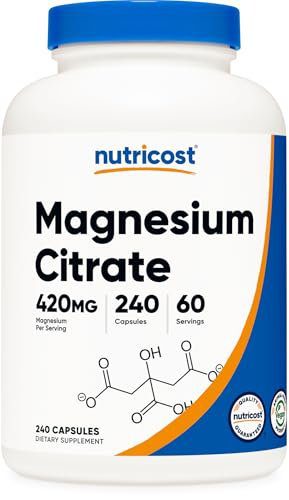
Nutricost Magnesium Citrate 420mg, 240 Veggie Capsules – 60 Servings, Gluten Free, Non-GMO, Vegetarian Friendly
Nutricost Magnesium Citrate 200 Capsules is a top budget pick with a solid 4.6-star rating from over 24,000 Amazon reviews, praised for its high value (500mg per serving, 100 servings per bottle) and effectiveness for sleep, relaxation, and digestion. Reddit communities like r/supplements echo this, calling it reliable and pure despite no third-party testing seals. At ~$18, it’s an excellent affiliate recommendation for cost-conscious users seeking magnesium citrate benefits.
If there’s one category where Nutricost tends to shine, it’s simple sports nutrition basics, especially creatine monohydrate. Creatine is also one of the most studied supplements in sports nutrition, with consistent evidence for improving strength, power, and high-intensity performance in many people when used correctly.
Nutricost’s creatine is frequently described by users as easy to mix and neutral in taste, and it’s priced aggressively compared with many mainstream competitors. Independent commentary has also noted that Nutricost creatine undergoes third-party testing for purity and can perform similarly to higher-priced options.
If you want a reality check on what creatine can and can’t do:
- It may help you do more total training volume over time.
- It does not directly “create muscle” without adequate training and protein.
- Initial weight gain is often water retention in muscle, which is expected.
How to use creatine without overcomplicating it
Most research supports:
- 3 to 5 g daily, consistently
- Timing matters less than consistency
- Mixability improves in warmer liquids, but it’s fine in cold water too
Some people prefer taking it with carbs. That can be convenient, but it’s not mandatory for results.
Common side effects and how to reduce them
- GI upset: split the dose (for example, 2.5 g twice daily)
- Bloating perception: remember early weight changes are often water shifts
- Cramping fears: evidence doesn’t consistently support this, but hydration helps
Visual: Nutricost sports staples quick scorecard
| Product type | Why it’s popular | What to check |
|---|---|---|
| Creatine monohydrate | Strong evidence base, simple ingredient | Third-party testing, serving size |
| Taurine / amino acids | Straightforward dosing | No added stimulants or blends |
| Collagen | Convenient protein add-on | Dose per serving, vitamin C pairing |
Practical takeaway
When Nutricost sticks to one-ingredient or simple formulas, it’s easier to verify quality and easier for you to dose correctly. That’s where the brand’s value proposition is strongest.

How to choose the right Nutricost product (and avoid common mistakes)
Most supplement disappointment comes from two problems: buying the wrong product for your goal, or taking the right product in the wrong context. Nutricost’s low pricing can make it tempting to “add one more thing” to your cart, but stacking is where people accidentally overdo it.
Start with your goal, then match the simplest effective product.
Step 1: Match your goal to the simplest supplement
- Strength and performance: creatine monohydrate
- Basic nutrient coverage: multivitamin (but check your current stack)
- Specific gaps: single nutrients based on diet or labs (vitamin D, B12, iron only when appropriate)
If you’re unsure whether the label even makes sense, use How to Read Supplement Labels: A Complete Guide to spot red flags like under-dosed blends or unclear serving sizes.
Step 2: Check “stacking risk” before you take anything daily
Stacking risk is highest with:
- multivitamins + pre-workouts + energy drinks
- multivitamins + additional A, E, zinc, or iron
- multiple “immune” formulas that repeat the same ingredients
A practical rule: if two products both contain the same vitamin or mineral, add them up and compare with guidance from the NIH Office of Dietary Supplements.
Step 3: Verify third-party testing on the specific item
Nutricost often highlights testing, and independent evaluators have found many products meet standards, but don’t assume uniformity across the entire catalog. Use brand pages and independent testing summaries when available, such as the ConsumerLab Nutricost testing summary.
Visual: A 60-second pre-buy checklist
- Do I know the exact goal this supports?
- Is the dose aligned with research or guidelines?
- Is it a single ingredient or a complex blend?
- Can I find testing or quality verification?
- Will it overlap with what I already take?
Practical takeaway
Nutricost can be a smart buy when you choose products with clear dosing and low stacking risk. The “mistakes” usually come from combining too many overlapping formulas.
Conclusion: Is Nutricost worth it?
This Nutricost supplements review comes down to a simple conclusion: Nutricost is often worth it for budget-friendly basics, especially when the formula is simple and the dosing is clear. Independent testing results and widespread consumer feedback suggest many products deliver solid value, but you still need to verify quality at the product level and avoid stacking high-dose vitamins without a reason.
If you want to compare Nutricost’s approach to more premium lines, read Thorne vs. Pure Encapsulations: Which Brand Wins?. And if you’re trying to shop smarter across any brand, revisit Supplement Quality Indicators: How to Choose Safe Products before your next order.
As an Amazon Associate, I earn from qualifying purchases. Product recommendations are based on real reviews and independent research.
Who actually makes it: our Brand File on Nutricost covers ownership, factories, and the public record.
