
If you’re wondering whether Sports Research supplements are actually worth your money, the short answer is: they can be a solid pick if you value high-potency formulas and recognizable third-party testing on select products. But “good brand” isn’t the same as “right for you.” This review breaks down what Sports Research does well (and where you should be cautious), including omega-3 potency, vitamin D3 + K2 dosing logic, collagen and MCT use cases, and the quality signals that matter most when you’re training hard.
Affiliate disclosure: this article contains affiliate links. As an Amazon Associate, UsefulVitamins.com earns from qualifying purchases at no extra cost to you.
Summary / Quick Answer
Sports Research supplements are generally a good fit for people who want high-dose, simple formulas and clear quality cues (like IFOS testing for fish oil). Here’s the quick breakdown:
- Best overall pick: Omega-3 fish oil – high EPA/DHA per softgel and IFOS quality verification on many lots.
- Best for low-sun lifestyles: Plant-based D3 + K2 – a practical combo for people trying to raise vitamin D while supporting bone health.
- Best for connective tissue support: Collagen peptides – useful if your diet is low in collagen-rich foods and training volume is high.
- Best for keto-style fueling: MCT oil – convenient calories for endurance or low-carb plans, but not “magic fat loss.”
Who should think twice: anyone on blood thinners, people with medical conditions affecting calcium or vitamin D metabolism, and competitive athletes who require sport-specific certifications.
Sports Research supplements review: what stands out (and what to verify)
A supplement brand can look impressive on a label and still miss what matters most: consistent dosing, freshness, and independent testing. Sports Research has a reputation for straightforward formulas and athlete-friendly staples like fish oil, collagen, MCT oil, and D3 + K2. The key is knowing what to check before you commit.
The brand snapshot: what they make and who it’s for
Sports Research is a family-owned supplement company known for products that sit at the intersection of wellness and sports nutrition. Their catalog is not huge, but it’s focused:
- Omega-3 fish oil (high-potency softgels)
- Vitamin D3 + K2 (including plant-based options)
- Collagen peptides (types I and III)
- MCT oil (typically C8/C10 blends)
For readers building a simple, repeatable routine, this “short list” approach can be helpful. You’re less likely to end up with overlapping products that do the same thing.
Quality signals that matter: third-party testing and freshness
Not all third-party seals mean the same thing. For fish oil, oxidation and contaminants are the big concerns. Sports Research highlights IFOS certification for its omega-3 products, which checks for:
- Heavy metals (like mercury)
- PCBs and other contaminants
- Oxidation markers (a proxy for freshness)
You can learn how to interpret these kinds of signals in our guide to Supplement Quality Indicators. It’s one of the fastest ways to avoid paying premium prices for low-grade products.
Quick comparison table: flagship products and best uses
| Product | What it typically provides | Best for | Practical tip |
|---|---|---|---|
| Omega-3 Fish Oil | High EPA/DHA per softgel, often IFOS-verified | Recovery, inflammation support, heart health | Take with a meal to reduce “fish burps” |
| D3 + K2 (plant-based) | D3 + K2 (MK-7) combo | Low sun exposure, bone support | Recheck labs after 8-12 weeks |
| Collagen Peptides | Hydrolyzed collagen types I & III | Tendons, joints, skin support | Pair with vitamin C-containing foods |
| MCT Oil | C8/C10 fats | Keto fueling, endurance calories | Start low to avoid GI upset |
Action step: Before buying, decide your “one main goal” (recovery, bone support, joint comfort, or fueling). That goal should drive the product choice, not the brand name.
Omega-3 fish oil: potency, IFOS testing, and how to use it for training
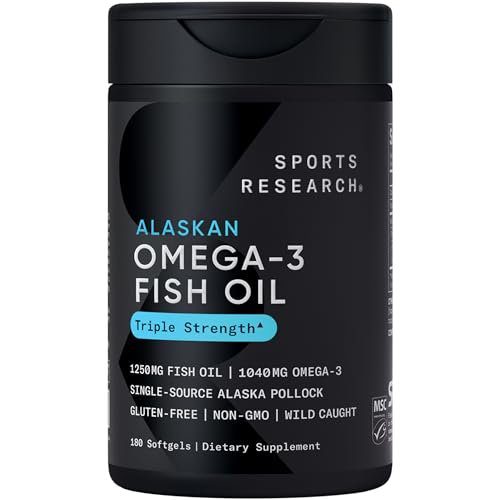
Sports Research® Omega-3 Fish Oil 1250 – Triple Strength Fish Oil Supplement from Wild Alaska Pollock – MSC Certified Sustainable · Non-GMO · Soy Free – 180 Softgel Capsules
Sports Research Omega-3 Fish Oil 1250 delivers triple strength with 1250 mg fish oil and over 1000 mg EPA/DHA per softgel from wild Alaska Pollock. It’s MSC certified sustainable, non-GMO, soy free, and comes in a 180 softgel bottle for one-a-day dosing. IFOS certified and third-party tested for purity, with no fishy aftertaste thanks to natural lemon flavor.
If there’s one category where quality differences are obvious, it’s fish oil. Two bottles can both say “omega-3,” yet one delivers a meaningful dose of EPA/DHA with good freshness, and the other is mostly filler fats with questionable oxidation.
Sports Research’s omega-3 is often highlighted because a single softgel can provide a large dose of omega-3s, including EPA and DHA. Those are the fats most studied for cardiovascular and inflammation-related outcomes.
Why EPA and DHA matter more than “total fish oil”
Many labels emphasize “fish oil 1,000 mg,” but that number can be misleading. What you want to find is EPA + DHA, because that’s the biologically active part.
A helpful rule:
- Better: higher EPA + DHA per softgel
- Not as helpful: high “fish oil” with low EPA/DHA
For a broader comparison of strong options across brands, see our roundup of the Best Omega-3 Fish Oil Supplements.
What research suggests for dosage (general health vs training)
Many expert groups commonly cite 250-500 mg/day of combined EPA/DHA as a baseline for general health. People using omega-3s as part of sports nutrition often aim higher, commonly around 1-2 grams/day of combined EPA/DHA, depending on diet, body size, and training stress.
That doesn’t mean “more is always better.” Intakes above 3 grams/day from supplements can increase bleeding risk for some people, especially if combined with anticoagulant medications.
For a science-forward overview of omega-3s and dosing, the NIH Office of Dietary Supplements omega-3 fact sheet is a reliable reference.
How to take it (and avoid common problems)
Omega-3 is simple, but small details improve adherence:
- Take with food (especially a meal with fat) to improve tolerance.
- Split doses (morning and evening) if you’re taking more than one softgel.
- Store away from heat and light to reduce oxidation over time.
- Stop and reassess if you notice easy bruising, frequent nosebleeds, or you’re scheduled for surgery.
Visual checklist: what to look for on the label
- EPA and DHA listed clearly (not hidden in a “proprietary blend”)
- Third-party testing for contaminants and oxidation (IFOS is one example)
- Source fish species stated (transparency matters)
- Expiration date and storage guidance
Action step: If you eat fatty fish (salmon, sardines) 2-3 times weekly, you may need less supplemental omega-3. If you rarely eat fish, a higher-potency softgel can reduce pill count.
D3 + K2: when the combo makes sense (and when it doesn’t)
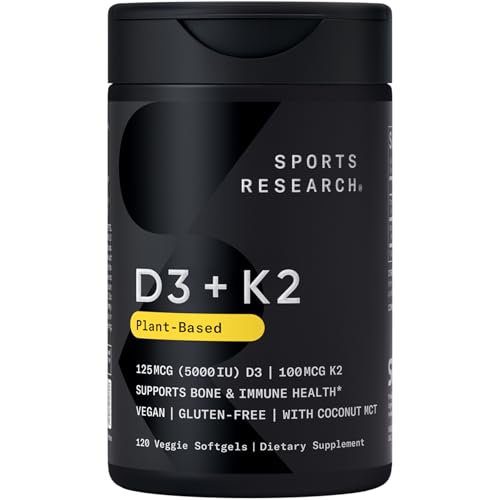
Sports Research Vitamin D3 with K2 Softgels – Plant Based K2 & Vegan D3 5000iu with Coconut MCT Oil – Vegan Certified, Soy & Gluten Free – 120 Count
Sports Research Vitamin D3 + K2 (5,000 IU D3 + 100 mcg K2 as MK-7) in 120 softgels earns a strong 4.6/5 from over 24,000 Amazon reviews, with praise for its absorption via coconut oil and effectiveness in raising vitamin D levels. Reddit communities like r/supplements endorse it as a top premium option, backed by Informed Choice certification, making it a reliable affiliate pick at around $20 for bone health and immunity.
Vitamin D is one of the most common “quiet deficiencies,” especially for people who train indoors, live in northern latitudes, or consistently use sunscreen. Sports Research offers a D3 + K2 combo, including a plant-based option that appeals to people avoiding lanolin-derived D3.
The bigger question is not whether D3 is popular. It’s whether the dose and context match your needs.
Why combine vitamin D3 with K2?
Vitamin D helps increase calcium absorption in the gut. Vitamin K2 (often MK-7) is involved in activating proteins that help manage where calcium goes in the body, including bone tissue.
This doesn’t mean D3 “causes calcification” in everyone. It means that for people supplementing D3 long-term, especially at higher doses, many clinicians consider K2 a reasonable companion nutrient.
For vitamin D dosing ranges and safety considerations, the NIH Office of Dietary Supplements vitamin D fact sheet is a strong starting point.
What dosing looks like in real life
Sports Research’s D3 + K2 products commonly fall into a “higher dose” range. That can be useful if your labs show low 25(OH)D, but it’s not automatically appropriate for everyone.
A practical approach:
- Get a baseline 25(OH)D blood test if possible.
- Supplement consistently for 8-12 weeks.
- Re-test and adjust.
If you’re already taking a multivitamin with D, or a calcium supplement, you’ll want to add up totals. This helps avoid accidental stacking.
Who should be cautious with D3 + K2
Check with a clinician before using if you have:
- Kidney disease or a history of kidney stones
- Hyperparathyroidism or sarcoidosis
- High blood calcium levels
- Use of warfarin or other vitamin K-sensitive anticoagulants
Visual guide: “Do I need D3 + K2?”
| Scenario | D3 + K2 likely helpful? | What to do next |
|---|---|---|
| Low vitamin D lab result | Yes | Re-test after 8-12 weeks |
| Indoor training, winter season | Often | Consider a moderate daily dose |
| High sun exposure year-round | Maybe not | Test first, avoid guessing |
| On warfarin | Not without medical guidance | Ask your prescriber |
Action step: Treat vitamin D like a “test and adjust” nutrient, not a forever-dose. Your needs can change with seasons, training location, and body weight.
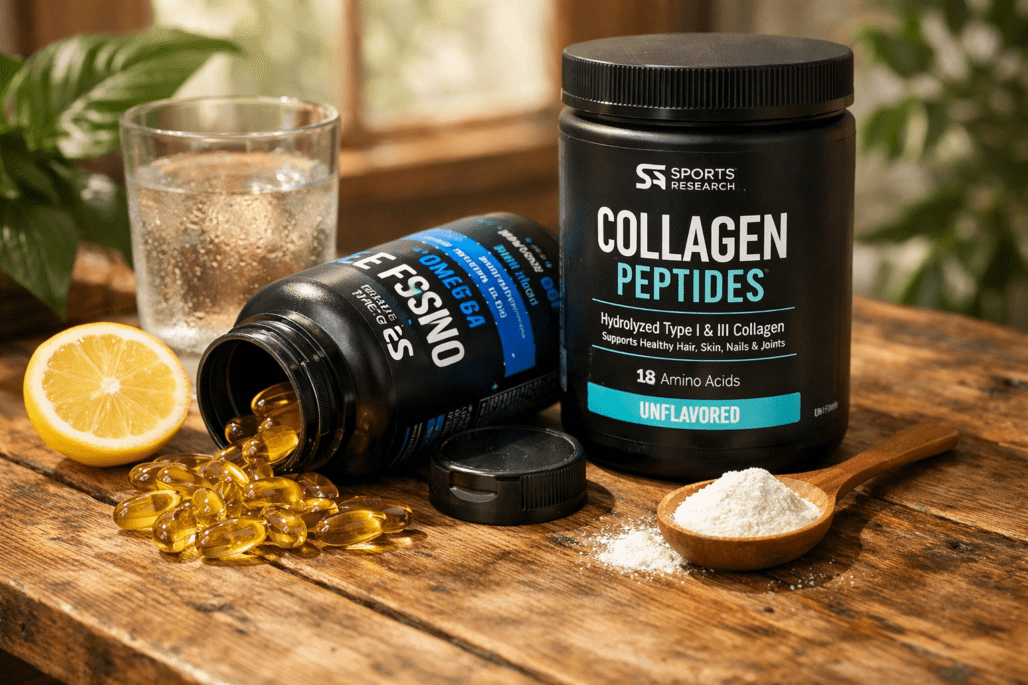
Collagen peptides and MCT oil: what they can do (and what they can’t)
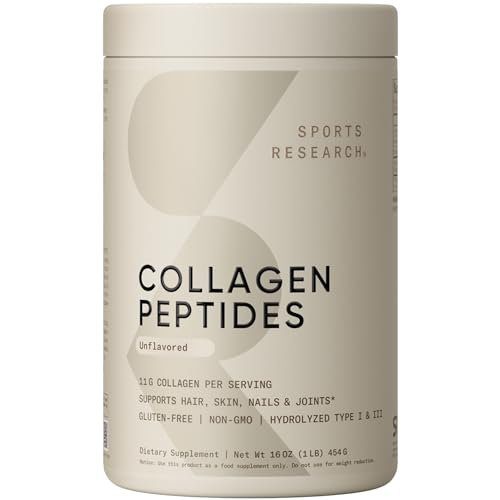
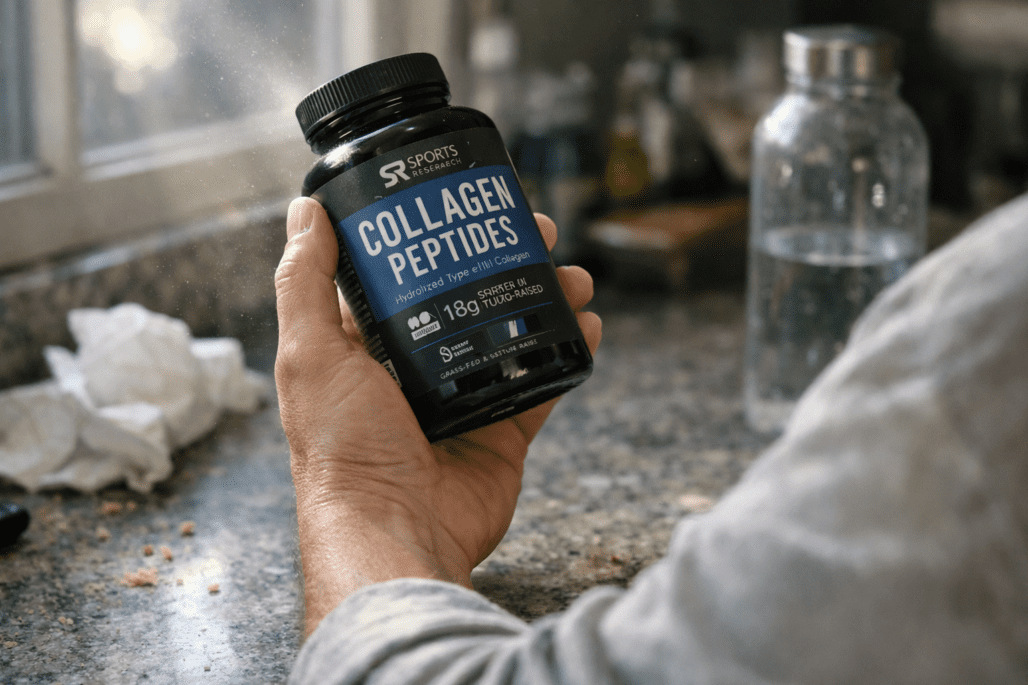
Sports Research Collagen Peptides – Hydrolyzed Type 1 & 3 Collagen Powder Protein Supplement for Healthy Skin, Nails, & Joints – Easy Mixing Vital Nutrients & Proteins, Collagen for Women & Men
Sports Research Collagen Peptides is hydrolyzed Type 1 & 3 collagen powder, delivering 11 grams of collagen peptides per scoop from bovine sources for skin, nails, and joints. It mixes easily in hot or cold drinks without flavor or chunks. User reports note softer skin, better hair, stronger nails, and joint relief after consistent use.
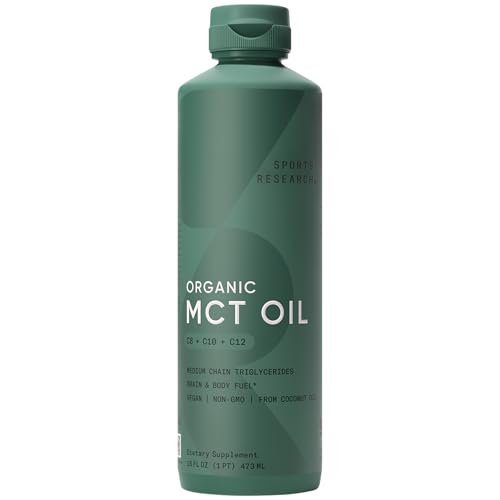
Sports Research® Organic MCT Oil 16oz – Full Spectrum (C8, C10, C12) Sourced from Coconut Oil – Keto Brain & Body Fuel* – Vegan Certified · Non-GMO · Informed Choice Certified – Unflavored
Sports Research MCT Oil (16 fl oz) earns a strong 4.6/5 rating from over 12,400 Amazon reviews, praised for its pure C8 formula that delivers clean energy for keto and fitness enthusiasts without the typical oily residue. Reddit communities like r/supplements and r/fitness echo this, highlighting its reliability and mixability, making it a top affiliate pick at around $19.95 despite minor pouring complaints.
Collagen and MCT oil are popular because they feel practical: add a scoop or a tablespoon, and you’re done. But both work best when you match them to the right goal. Otherwise, they become expensive habits.
Collagen peptides: better for tendons and joints than “muscle gain”
Collagen peptides provide amino acids that support connective tissue. They are not a complete protein in the way whey, eggs, or soy are. That matters if your goal is muscle building.
If you’re training for hypertrophy, collagen can be an add-on, not your primary protein. For the fundamentals of muscle-focused supplementation, see Best Supplements to Build Muscle.
How people use collagen in training:
- Daily scoop in coffee, smoothies, or oatmeal
- Often paired with vitamin C-containing foods (like citrus or berries) to support collagen formation pathways
What to expect:
- Possible improvements in joint comfort over time (think weeks, not days)
- Better fit for runners, lifters with cranky elbows, or high-volume athletes
MCT oil: fast calories for certain diets, not a universal performance booster
MCT oil is a concentrated fat source, commonly used in keto or low-carb approaches. It can be useful when you need calories that digest quickly, especially for some endurance athletes.
But there are tradeoffs:
- Too much too fast can cause GI distress
- It’s easy to overshoot calories if fat loss is the goal
- It won’t replace carbohydrates for high-intensity efforts
If you’re building a more complete plan around training output, caffeine strategy, creatine, beta-alanine, and similar tools, our guide to Athletic Performance Supplements lays out what tends to have the best evidence.
Visual “best for” selector: collagen vs MCT
| If your main goal is… | Collagen peptides | MCT oil |
|---|---|---|
| Joint or tendon support | Yes | No |
| Skin and hair support | Often | No |
| Keto energy support | Maybe | Yes |
| Muscle protein synthesis | No (not ideal alone) | No |
| Easy extra calories | Some | Yes |
Action step: If you’re already hitting protein targets, collagen can be a targeted add-on. If you struggle to eat enough calories on low-carb days, MCT can be a convenience tool.
Common mistakes with Sports Research supplements (and how to avoid them)
Most supplement disappointments come from predictable errors: taking the wrong product for the goal, taking too much too soon, or expecting diet-level outcomes from a capsule. Sports Research products are no exception.
Here are the most common pitfalls seen in supplement review discussions, plus the simple fixes.
Mistake 1: Assuming all fish oils are the same
Fish oil quality varies widely. The two biggest differences are:
- EPA/DHA dose per serving
- Freshness and contaminant testing
Sports Research’s omega-3 stands out most when it’s clearly labeled with strong EPA/DHA numbers and backed by IFOS testing. Still, always verify the label and lot information when available.
Fix: Use a “dose-first” filter. Compare EPA + DHA, not total fish oil.
Mistake 2: Taking “more omega-3” because training is hard
Hard training increases interest in inflammation control and recovery. But pushing omega-3 to very high intakes can backfire for some people, especially if you’re also using aspirin, NSAIDs, or anticoagulants.
Fix: Stay close to label directions unless a clinician recommends otherwise. Track bruising and bleeding signs.
Mistake 3: Treating D3 as a forever supplement without re-testing
Vitamin D is one of the easiest nutrients to mis-dose long-term. Needs change by season, sun exposure, and body composition.
Fix: Re-test 25(OH)D after 8-12 weeks and adjust.
Mistake 4: Using collagen as your main “protein supplement”
Collagen can fit well for connective tissue support, but it’s not the best tool for muscle gain.
Fix: Use collagen in addition to complete proteins. If recovery is your priority, build a more complete plan with our Best Supplements for Post-Workout Recovery.
Visual checklist: “before you buy” questions
- What is my goal: recovery, bone support, joint comfort, or fueling?
- Does the label show meaningful active ingredients (EPA/DHA, D3 mcg/IU)?
- Is there credible third-party testing for the category?
- Am I stacking this with a multivitamin or other similar product?
- Do I need a sport-certified product for drug testing rules?
Action step: Write your goal at the top of your notes app, then buy only what directly supports it. That one step prevents most “supplement clutter.”
Conclusion: are Sports Research supplements worth it?
Sports Research supplements can be a smart choice when you want straightforward formulas and you verify the quality cues that matter, especially for fish oil. The omega-3 product line is most compelling when it delivers high EPA/DHA with IFOS testing. D3 + K2 can make sense for people with low vitamin D status or low sun exposure, but it’s best used with periodic lab checks. Collagen and MCT oil are useful in specific contexts, not as universal add-ons.
Next step: if your main goal is performance and training output, start with Athletic Performance Supplements. If your priority is soreness and bounce-back between sessions, use Best Supplements for Post-Workout Recovery to build a tighter, goal-driven stack.
As an Amazon Associate, I earn from qualifying purchases. Product recommendations are based on real reviews and independent research.
Who actually makes it: our Brand File on Sports Research covers ownership, factories, and the public record.
