
If you found IM8 through Gary Brecka's content and you're wondering whether $190 a month buys something genuinely irreplaceable, the honest answer is: probably not — at least not for most people. IM8 is a real product with credible mitochondrial-energy ingredients: CoQ10, PQQ, NAD+ precursors, and a long supporting cast of vitamins, minerals, and adaptogens. The problem is that none of those ingredients are exclusive to IM8, and most of them are available individually or in focused stacks on Amazon for a fraction of the monthly cost. This guide identifies seven alternatives that cover the same core biological territory — cellular energy, mitochondrial support, oxidative defense — at $40 to $70 per month for a comparable stack. You will also learn where form and dose matter most, what "mitochondrial support" on a label can hide, and which products to avoid entirely.
Affiliate disclosure: this article contains affiliate links. As an Amazon Associate, UsefulVitamins.com earns from qualifying purchases at no extra cost to you.
Summary: quick answer
Best overall: Thorne MitoCore — broadest mitochondrial complex from a third-party tested brand, ~$40/mo.
- Best for: anyone paying $190/mo for IM8 who wants to cut cost without sacrificing ingredient quality
- Not ideal for: people who specifically need the NAD+ precursor NMN (not widely available via Amazon Prime brands; Tru Niagen covers NR, which is the better-researched form anyway)
- What to look at before buying: CoQ10 form (ubiquinol vs ubiquinone), NR vs NMN, PQQ dose (10-20 mg is where published data sits), and whether any pick is third-party verified
- Decision shortcut: Thorne MitoCore + Tru Niagen + a greens powder (Designs for Health Paleogreens) gets you IM8's functional core at roughly $95/mo — half the IM8 price, all verified ingredients
Why people look for IM8 alternatives
IM8 retails at $190 per month on subscription. Over a year that is $2,280 — the cost of a decent laptop, a flight to Europe, or roughly 900 meals. Gary Brecka is a compelling presenter and the 100-plus ingredient list sounds comprehensive. But "100 ingredients in one scoop" is also a red flag worth examining honestly.
The mitochondrial-energy claims that drive IM8's core pitch — CoQ10 for electron transport chain support, PQQ for mitochondrial biogenesis signaling, NAD+ precursors for sirtuin activation — are not proprietary science. These are well-documented bioactives available from multiple manufacturers at published clinical doses. When you pay $190/mo for IM8, you are paying for formulation convenience and the Gary Brecka brand association, not for exclusive access to the molecules themselves.
There is also no subscription-exit button on the IM8 site. Cancellation requires contacting customer support directly — a friction point worth noting before you commit to the monthly charge.
The real question is not whether IM8 works. It is whether the specific doses in IM8 justify a 3-5x premium over buying the same bioactives separately on Amazon.
How we picked
We screened Amazon supplement products against five criteria: (1) the product must contain at least one of the three core IM8 bioactive categories (CoQ10 / ubiquinol, PQQ, or NAD+ precursors like NR or NMN); (2) the dose must meet or approach published effective-dose ranges, not token amounts; (3) the brand must disclose manufacturing standards (GMP, NSF, USP, or Informed Sport certification preferred); (4) the cost-per-effective-dose must be meaningfully below IM8's $190/mo; (5) the product must be consistently available on Amazon with a verifiable ASIN, not a rotating third-party listing. We excluded products where the active ingredient appeared only as part of a proprietary blend with no stated per-ingredient dose.
At-a-glance comparison
| Product | Est. $/mo | $/serving | Key bioactives | Third-party tested? |
|---|---|---|---|---|
| Thorne MitoCore | ~$40 | ~$1.33 | CoQ10, ALA, acetyl-L-carnitine, B-complex | NSF Certified for Sport |
| NOW Foods CoQ10 200mg | ~$14 | ~$0.47 | Ubiquinone CoQ10 | GMP certified, some batches Labdoor tested |
| Life Extension Mitochondrial Energy Optimizer | ~$52 | ~$1.73 | CoQ10, PQQ, carnosine, benfotiamine, ALA | Non-GMO, GMP; partial COA disclosure |
| Tru Niagen (Nicotinamide Riboside) | ~$40 | ~$1.33 | NR (NAD+ precursor, 300 mg) | NSF Certified, ChromaDex-sourced NR |
| Double Wood PQQ | ~$18 | ~$0.60 | PQQ 20 mg | GMP; third-party purity test per batch |
| Designs for Health Paleogreens | ~$55 | ~$1.83 | Greens complex, adaptogen blend, phytonutrients | GMP; practitioner-grade brand |
| Pure Encapsulations Mitochondrial Complex | ~$48 | ~$1.60 | CoQ10, succinic acid, malic acid, alpha-lipoic acid | NSF Certified |
The 7 picks
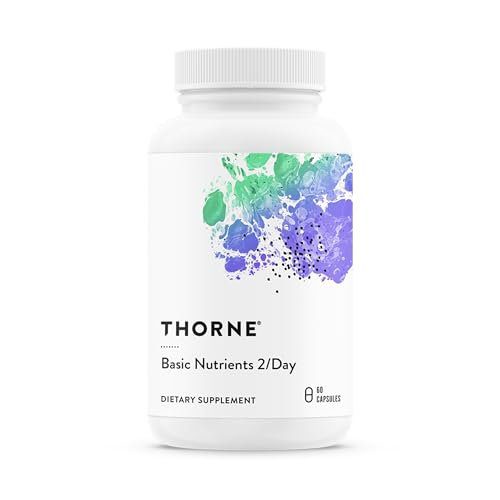
Why we picked it: Thorne MitoCore is the closest thing on Amazon to an IM8 analog in a single bottle. It combines CoQ10 (150 mg), alpha-lipoic acid, acetyl-L-carnitine, N-acetyl cysteine, green tea extract, and a full B-complex in a formula that addresses mitochondrial support from multiple angles rather than stacking one ingredient at a sky-high dose. Thorne is NSF Certified for Sport, meaning every batch is independently verified for label accuracy and contaminant absence — a standard IM8 does not publicly claim. At roughly $40 per month for a 60-serving bottle, MitoCore costs less than a quarter of IM8's monthly subscription.
Form and dose: CoQ10 as ubiquinone (150 mg per serving). Ubiquinone is the oxidized form — effective and well-studied, though ubiquinol is the reduced, pre-converted form that some people over 40 may absorb better. The 150 mg dose is within the 100-300 mg range used in most published trials.
Who should skip: Anyone who specifically wants NR or NMN for NAD+ precursor activity will need to add Tru Niagen separately. MitoCore does not include NAD+ precursors.
Actionable takeaway: MitoCore is the starting point for most IM8 switchers. Add Tru Niagen if NAD+ support is a priority; you still land under $85/mo total.

Why we picked it: NOW Foods CoQ10 200 mg is for the buyer who wants the one ingredient that matters most in IM8's mitochondrial pitch without paying for 99 supporting cast members. CoQ10 is the electron transport chain cofactor that sits at the heart of ATP production, and 200 mg per capsule is a clinically relevant dose. NOW Foods operates under GMP certification and has had products independently verified through Labdoor with competitive purity scores.
Form and dose: Ubiquinone, 200 mg per softgel. Taken with a fat-containing meal — CoQ10 is fat-soluble and absorption drops significantly on an empty stomach.
Who should skip: Anyone who wants a full mitochondrial complex rather than single-ingredient supplementation. CoQ10 alone does not replicate IM8's breadth. This is a building block, not a one-stop replacement.

Why we picked it: Life Extension's Mitochondrial Energy Optimizer is one of the few Amazon products to combine both CoQ10 and PQQ in a single formula alongside carnosine, benfotiamine, and alpha-lipoic acid. If you want to approximate IM8's "comprehensive cellular energy" marketing pitch in one bottle rather than stacking multiple products, this is the closest option. Life Extension has been in the supplement business since 1980 and publishes its own research summaries, though the brand's COA disclosure is partial — not every batch is publicly available.
Form and dose: CoQ10 as ubiquinone 100 mg, PQQ 10 mg. The 10 mg PQQ dose is at the low end of the published range (10-20 mg); effective but not the higher-dose version of PQQ studies.
Who should skip: Anyone primarily interested in NAD+ precursors. This formula does not include NR or NMN. Also, at ~$52/mo it is on the higher end for a single-product Amazon alternative; stacking Thorne MitoCore plus Double Wood PQQ covers more ground for a similar price.
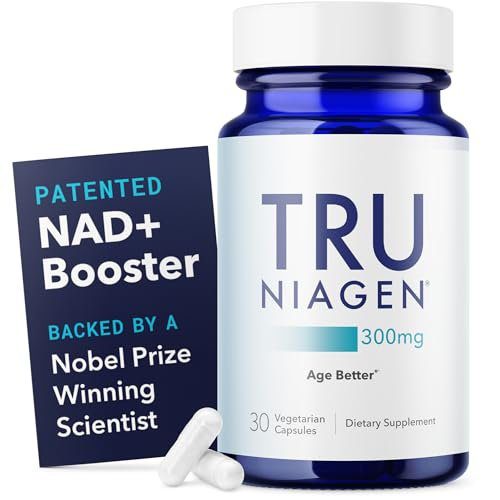
Why we picked it: If the NAD+ precursor story is what drew you to IM8, Tru Niagen is the only Amazon-available NR product worth taking seriously. It uses Niagen, the original ChromaDex-licensed nicotinamide riboside, at 300 mg per serving — the dose used in Trammell et al. (2016), a human RCT (n=12) that showed significant NAD+ elevation in blood. The product is NSF Certified, meaning the 300 mg claim is verified independently.
Form and dose: Nicotinamide riboside (NR), 300 mg per capsule. NR is the better-studied NAD+ precursor vs NMN — NMN has more animal data and fewer published human RCTs. Both convert to NAD+ in tissue, but NR has the longer human safety record.
Who should skip: Anyone on a tight budget. At $40/mo for one function (NAD+ elevation), Tru Niagen is a specialist purchase. If you are not specifically interested in the sirtuin-aging pathway, the dollars are better spent on a broader mitochondrial complex.

Why we picked it: PQQ (pyrroloquinoline quinone) is one of IM8's more distinctive ingredients. It signals mitochondrial biogenesis — the creation of new mitochondria — through PGC-1alpha activation, and the dose matters. Double Wood's PQQ delivers 20 mg per capsule, which is at the top of the 10-20 mg range used in published human studies. At roughly $18 per month, it is the most cost-efficient way to add PQQ to an existing stack. Double Wood discloses per-batch third-party purity testing for this product.
Form and dose: PQQ disodium salt, 20 mg. Take with food — fat-soluble cofactors in the mitochondrial pathway absorb better alongside a meal.
Who should skip: Anyone looking for a complete formula. PQQ standalone is an add-on to a broader stack, not a replacement for CoQ10, NR, or a B-complex.

Why we picked it: IM8 includes a greens and phytonutrient component alongside its mitochondrial bioactives. Designs for Health Paleogreens covers that lane. It is a practitioner-grade greens powder with a clean label, no fillers, and organic sourcing across most ingredients. Designs for Health is a professional supplement brand distributed through practitioner channels; the Amazon listing is the same formulation. If you are building an IM8 alternative stack and want greens coverage without a junk-ingredient list, this is the pick.
Form and dose: Greens and botanical concentrate blend. No single-active-molecule dose to verify here — this is a whole-food matrix, not a targeted bioactive. Use it as the base layer of a stack, not the mitochondrial core.
Who should skip: Anyone who already takes a high-quality greens powder. There is no reason to double up. This pick is for IM8 switchers who want greens coverage included in their stack.

Why we picked it: Pure Encapsulations is one of the few supplement brands that tests for heavy metals on every batch and discloses its raw material suppliers publicly. Their Mitochondrial Complex combines CoQ10, succinic acid, malic acid, and alpha-lipoic acid in a hypoallergenic capsule with no artificial colors, fillers, or unnecessary binders. For anyone with ingredient sensitivities or who prioritizes clean-label verification above all else, this is the default choice. At ~$48/mo it is not cheap, but it is cheaper than IM8.
Form and dose: CoQ10 as ubiquinone, dose per serving stated on the label. Succinic acid and malic acid are Krebs cycle intermediates — they support ATP production upstream of CoQ10 in the mitochondrial chain.
Who should skip: Anyone who wants NR, NMN, or PQQ. This formula focuses on the Krebs cycle support side of mitochondrial energy, not NAD+ pathway or biogenesis signaling. It pairs well with Tru Niagen and Double Wood PQQ for full coverage.
How your body actually handles this stack
Form bioavailability: the CoQ10 conversion question
CoQ10 exists in two forms: ubiquinone (oxidized) and ubiquinol (reduced). Your body converts ubiquinone to ubiquinol in cells — the reduced form is what actually participates in the electron transport chain. For most people under 40, that conversion happens efficiently. For people over 40 or with impaired mitochondrial function, the conversion rate declines. Ubiquinol supplements bypass the conversion step, which is why some practitioners prefer them. None of the picks above use ubiquinol — they all use ubiquinone. If you are over 50, consider sourcing a ubiquinol-specific product (Qunol Mega CoQ10 Ubiquinol is one widely available option) rather than adding more ubiquinone.
NMN vs NR: the NAD+ precursor debate
IM8 includes both NMN and NR precursors. The marketing framing suggests NMN is superior because it is "one step closer" to NAD+. The human data tells a more nuanced story. A 2023 randomized crossover trial (Yi et al., n=36) found that oral NMN raised blood NMN levels but that NAD+ elevation in tissues was comparable to NR. NR has the longer human safety track record and more published RCTs. For practical purposes, Tru Niagen (NR) is the better-evidenced choice available on Amazon.
Timing and saturation: PQQ and fat-soluble logistics
PQQ is water-soluble, but CoQ10, alpha-lipoic acid, and fat-soluble vitamins in most mitochondrial formulas require dietary fat for absorption. Taking Thorne MitoCore or Life Extension's formula on an empty stomach cuts bioavailability measurably. The practical fix: take your mitochondrial stack with breakfast or a meal that includes fat. PQQ at 20 mg is the published effective dose. Going to 40 mg or 60 mg does not appear to linearly increase benefit based on available pharmacokinetic data — you hit saturation. More is not more.
Stack-bomb critique
IM8's 100-plus ingredient formula is designed to be impressive on paper. Think of it like a hardware store that carries every possible tool — technically comprehensive, but you will use five of them. The mitochondrial bioactives that have real published human data are CoQ10, PQQ, NR (or NMN), alpha-lipoic acid, and acetyl-L-carnitine. The rest of the formula is supporting noise. Building a three-product Amazon stack around those five ingredients is more transparent and lets you adjust doses independently if something is not working.
Actionable takeaway: Thorne MitoCore ($40/mo) covers CoQ10, ALA, acetyl-L-carnitine, and B vitamins. Add Tru Niagen ($40/mo) for NR. Add Double Wood PQQ ($18/mo) for 20 mg PQQ. That is a complete mitochondrial stack for roughly $98/mo — nearly half of IM8's $190/mo with fully disclosed doses and NSF verification on two of the three products.
A literal dollar comparison: IM8 at $190/mo vs Thorne MitoCore at $40/mo + Tru Niagen at $40/mo + Double Wood PQQ at $18/mo = ~$98/mo Amazon stack. You save $92 per month, or $1,104 per year, while covering the same biological targets with verified doses.
Skip these: products that look like IM8 dupes but are not
Skip: generic "mitochondrial support" multivitamins
Search "mitochondrial support supplement" on Amazon and you will find dozens of products with the phrase on the label and a formula that is mostly B vitamins, vitamin C, and magnesium at standard multivitamin doses. "Mitochondrial support" is not a regulated claim. It means nothing unless the formula contains CoQ10, PQQ, or NAD+ precursors at doses that appear in published literature. A supplement brand can put "mitochondrial energy" on a bottle and fill it with generic B-complex. Read the label before buying anything in this category.
Skip: "anti-aging greens" with no actual mitochondrial bioactives
Several greens powders have adopted the mitochondrial and longevity marketing language popularized by IM8 and Athletic Greens without adding the relevant bioactives. If you see a greens powder marketed for "cellular energy" or "anti-aging" but the ingredient list contains no CoQ10, no PQQ, no NR, and no NMN — just spirulina, chlorella, and a fruit blend — you are buying a greens powder, not a mitochondrial stack. Those greens may be fine products for other reasons, but they are not IM8 alternatives.
Internal links
For an interactive comparison of greens powders by cost, ingredients, and goal fit, see our DTC greens powder comparator.
For 2026 pricing across DTC supplement subscriptions and their Amazon equivalents, see our DTC supplement pricing reference.
As an Amazon Associate, I earn from qualifying purchases. Product recommendations are based on real reviews and independent research.
IM8Health.com — if you would rather pay for the all-in-one $190/mo subscription and skip the three-product stack, see our full review of whether IM8 is actually worth the cost.
Related reading
For a head-to-head of IM8 against Athletic Greens (two DTC giants at similar price points), see our comparison of AG1 vs IM8: which cellular-energy stack wins on ingredient quality.
If your main interest in IM8 was appetite management and the greens component, the best greens powders for reduced appetite covers that specific use case better than a mitochondrial stack will.
For the full IM8 brand evaluation — ingredient quality, Gary Brecka's claims examined, cancellation policy, and cost math — the IM8 review is the place to start.
Settled on one? StackMyMed (our companion app) lets you scan the label and log it into your routine, then watches for overlaps and interactions across your whole cabinet.
Conclusion: the bottom line on IM8 alternatives
IM8 at $190/mo is priced like a premium product and marketed with compelling celebrity association. The ingredients that drive its mitochondrial-energy story — CoQ10, PQQ, NAD+ precursors — are real bioactives with published human data. They are also available on Amazon from NSF-certified brands at a fraction of the cost. The three-product stack of Thorne MitoCore, Tru Niagen, and Double Wood PQQ delivers the core of what IM8 promises at roughly $98/mo with verifiable batch testing and transparent dosing.
If you'd rather pay for the all-in-one convenience, that is a legitimate choice. But "Gary Brecka sold it to me" is not evidence — it is a marketing relationship. The molecules are the same regardless of whose name is on the subscription.
Next steps:
- Start with Thorne MitoCore if you want one product with broad mitochondrial coverage and NSF verification
- Add Tru Niagen if NAD+ support is a specific priority
- Add Double Wood PQQ at 20 mg if mitochondrial biogenesis signaling matters to you
- Read our full IM8 review before deciding whether the all-in-one subscription is worth the premium for your situation
This article is for informational purposes and not medical advice. Supplements — especially those marketed for cellular energy and anti-aging — can interact with medications and health conditions. Consult a licensed physician before starting any supplement, particularly if you are pregnant, nursing, taking prescription medications, or managing a chronic condition.
As an Amazon Associate, I earn from qualifying purchases. Product recommendations are based on real reviews and independent research.
Editorial independence note: UV earns affiliate commissions from Amazon and (selectively) from DTC brand affiliate programs. Commissions never determine our recommendations — top picks are chosen first; affiliate links are added second. Read our full methodology and editorial independence policy →
Frequently asked questions
Are IM8 alternatives on Amazon as effective as IM8?
For the core mitochondrial ingredients (CoQ10, PQQ, and NAD+ precursors), yes. Those bioactives are not exclusive to IM8 and are available at published clinical doses from third-party-tested brands. A Thorne MitoCore, Tru Niagen, and greens-powder stack covers IM8’s functional core at roughly half the cost.
What is the best overall IM8 alternative?
Thorne MitoCore is the best overall pick at about $40 per month. It offers the broadest mitochondrial complex from a third-party-tested brand, making it the simplest single-product swap for anyone paying $190/month for IM8 who wants to cut cost without sacrificing ingredient quality.
Does any Amazon alternative replace IM8’s NMN?
Not directly, since NMN is not widely available from Amazon Prime brands. Tru Niagen supplies nicotinamide riboside (NR), which is the more thoroughly researched NAD+ precursor anyway, so it is a well-supported substitute for IM8’s NAD+ component.
