
Care/of shut down on June 17, 2024. If you are comparing Ritual vs Care/of in 2026, you are really comparing Ritual vs a brand that no longer ships product. That context matters before anything else. TechCrunch coverage of the shutdown and reporting from NutraIngredients confirmed Bayer, which had acquired Care/of in 2020, wound down the DTC operation entirely. So the question this article answers is not "which should you pick today" — it is "which one was actually worth the premium before Care/of disappeared, and what should former subscribers do now?" We will break down the price math, the ingredient logic, the personalization claims, the cancel friction, and the three Amazon picks that beat both brands on cost-per-quality for most readers.


Affiliate disclosure: this article contains affiliate links. As an Amazon Associate, UsefulVitamins.com earns from qualifying purchases at no extra cost to you.
Quick answer: Ritual vs Care/of
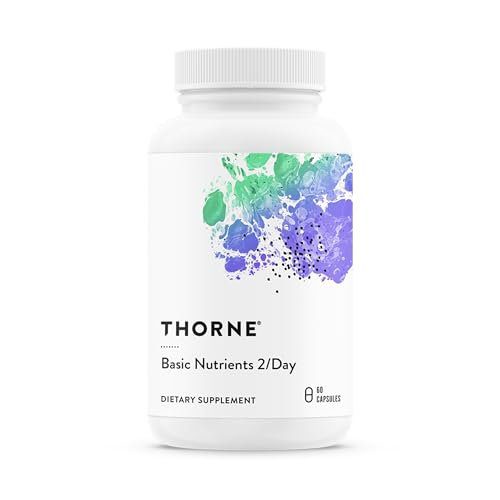
Ritual earned its premium more honestly than Care/of did, but neither beats Amazon-direct on cost-per-quality for most buyers. Now that Care/of is gone, the practical question is whether Ritual's fixed-formula simplicity is worth $30/mo — or whether you should route that budget to Thorne Basic Nutrients 2/Day at roughly $22/mo.
- Best for: readers who want a transparent, minimal-ingredient multivitamin from a DTC brand with a live subscription they can cancel in-app
- Not ideal for: anyone who was drawn to Care/of's personalization, or anyone primarily price-motivated
- What to look at before buying: whether Ritual's fixed formula covers your actual gaps; whether iron-free suits your biology; whether a $30/mo subscription beats a $22/mo Amazon auto-ship for equivalent nutrients
- Decision shortcut: If you had Care/of and liked the concept, read the Amazon section at the bottom before signing up for anything else
Head-to-head comparison
| Feature | Ritual | Care/of (defunct) |
|---|---|---|
| Monthly cost | $30/mo flat | $20-60/mo (variable) |
| Approach | Fixed 9-nutrient formula | Personalized quiz-based stack |
| Methylated B vitamins | Yes (5-MTHF + methylcobalamin) | In select products; not guaranteed across stack |
| Iron | No (iron-free by design) | Optional via quiz |
| Calcium | No (excluded by design) | Optional via quiz |
| Third-party testing | Yes (USP-verified production facility) | Yes (Informed Sport for some SKUs) |
| Cancel policy | In-app cancel, anytime | In-app cancel when active; now handled by Bayer customer support |
| Status | Active | Defunct as of 2024-06-17 |
The Status row is why this comparison has an unusual framing. You cannot choose Care/of today. What you can do is understand why Care/of attracted subscribers, what Ritual does differently, and whether either model justifies a recurring charge when Amazon's third-party brands have closed the quality gap.
Price: $30/mo flat vs $20-60/mo variable
Ritual keeps the math simple. $30/mo, billed monthly, for the Essential women's or men's formula. That is $360/yr.
Care/of was more complicated. The quiz-based model meant your monthly charge depended on which products the quiz recommended. A typical Care/of stack ran $35-45/mo for a midrange recommendation — call it $480-540/yr. Light stacks touched $20/mo; full personalized bundles pushed $60/mo or above.
Annualized, Ritual was cheaper than the Care/of median by about $120-180/yr, assuming similar commitment levels.
Neither brand was close to Amazon pricing. Thorne Basic Nutrients 2/Day — the closest single-product functional equivalent on methylated B vitamins and comprehensive coverage — runs roughly $22/mo on Subscribe and Save. That is $264/yr, or $96 less than Ritual annually and $216-276 less than a typical Care/of stack. That $96-276 gap is real money. You are not paying for superior ingredients at the DTC price; you are paying for branding, packaging, and the app experience.
Actionable takeaway: If price is your primary variable, neither DTC brand wins. Thorne or Pure Encapsulations on Amazon auto-ship is the cost-dominant choice.
Ingredient quality and the personalization illusion
This is where the real difference between the brands lived.
Ritual is honest about what it is: a nine-nutrient, fixed-formula multivitamin designed around the nutrients most people do not get from diet alone. It includes 5-MTHF (methylfolate) and methylcobalamin — the bioavailable B vitamin forms that matter for the roughly 40% of people carrying MTHFR gene variants. It excludes iron and calcium deliberately, because both compete with absorption of other nutrients and most pre-menopausal women are not universally deficient. That is a defensible, evidence-informed decision.
Care/of sold something different: the idea that your vitamin stack could be personalized to your biology through a three-minute quiz. The real question is whether that personalization was meaningful or cosmetic.
The honest evaluation: Care/of's personalization was largely template-based. The quiz sorted you into one of several pre-built stacks with modest variation. If you answered "stress" as a primary goal, you got ashwagandha and a B-complex. If you answered "energy," you got CoQ10 and iron. The ingredient SKUs were largely standardized; the quiz determined which SKUs your monthly pack included, not the doses or forms within them. You were not getting a bespoke formula — you were getting a filtered selection from a fixed catalog.
That is not necessarily bad. Filtering a catalog to your stated goals is genuinely useful if you have no idea where to start. But "personalized" framing implies more individualization than a three-minute quiz can deliver. Ritual's approach — picking nine nutrients and defending each choice publicly — was the more honest model.
The methylated B vitamin situation is worth flagging specifically. Ritual guaranteed methylated forms across its formula. Care/of included methylated forms in some SKUs but not all, and whether your particular stack contained them depended on which products the quiz recommended. If you cared about MTHFR status, Ritual gave you clarity; Care/of required you to inspect each individual product page.
Actionable takeaway: If MTHFR status or methylated B vitamins were the reason you were comparing these two brands, Ritual's explicit guarantee is more reliable than Care/of's per-SKU variability was.
Cancel policy: in-app ease vs post-shutdown reality
When both brands were active, cancellation was comparable. Ritual has always offered in-app cancellation with no days-notice requirement and no hidden fees — one of the more reader-friendly subscription policies in DTC supplements. Care/of also offered in-app cancellation when the service was running.
The difference now: Care/of is gone. If you were a Care/of subscriber with unused credit, remaining balance, or an auto-ship that charged after June 17, 2024, your recourse is Bayer's customer support line. Bayer acquired Care/of in 2020; when the DTC brand shut down, Bayer took on the residual subscriber obligations. Credit redemption and refund requests from former Care/of subscribers should go directly to Bayer consumer care — the Care/of app and website are no longer functional.
Subscriptions are commitments with friction to escape. Care/of's closure turned its subscriber base into a customer-support problem for a pharmaceutical company that did not build the product. That is an instructive outcome for anyone evaluating any DTC supplement subscription in 2026: the convenience of a subscription sits alongside the risk that the company stops operating.
Ritual is still active. Its in-app cancel is the easiest exit in the DTC multivitamin category.

Verdict: the post-mortem
Ritual won the head-to-head for buyers who valued simplicity and ingredient transparency. Its fixed formula, methylated B guarantee, deliberate exclusion of calcium and iron, and low-friction cancellation made it the more honest product. Care/of had real strengths — goal-targeted recommendations gave first-time supplement buyers a scaffold — but the personalization premium did not always deliver meaningfully differentiated outcomes.
Now that Care/of is gone, the comparison is moot for new buyers. What remains relevant: former Care/of subscribers should evaluate whether a Ritual subscription is the right replacement, or whether the Amazon path — Thorne Basic Nutrients 2/Day at $22/mo, Pure Encapsulations O.N.E. at a similar price point — covers the same bases at lower cost and without the DTC subscription overhead.
The real question is not Ritual vs Care/of. The real question is whether any DTC multivitamin subscription is worth its premium over a directly sourced, third-party-verified Amazon equivalent. For most readers, the honest answer is: probably not.
Amazon alternatives that beat both on cost-per-quality
For readers who had Care/of and are now evaluating what to do next, these four picks deliver the core of what both DTC brands were selling — methylated B vitamins, thoughtful dosing, third-party verification — at lower monthly cost with no subscription lock-in beyond Amazon's easy auto-ship cancel.


DTC mentions
Ritual.com — $30/mo direct. Still active as of 2026. Affiliate link pending approval. Cancel in-app at any time before your next billing cycle.
Care/of (takecareof.com) — Defunct as of June 17, 2024. The website and app are no longer operational. For subscription-credit questions or refund requests from the pre-shutdown period, contact Bayer consumer support directly.
Internal links
For a standalone review of Ritual's formula and whether the $30/mo price holds up on its own terms, see Is Ritual Worth It? An Honest Review for 2026.
If you are looking for a Care/of retrospective specifically, including what the brand got right, see Is Care/of Worth It? (Updated: Shutdown Context).
For a broader look at what to buy on Amazon now that Care/of is gone, see our guide to Care/of alternatives on Amazon — five picks tested against the same criteria Care/of claimed to address.
For 2026 pricing across DTC supplement subscriptions and their Amazon equivalents, see our DTC supplement pricing reference.
As an Amazon Associate, I earn from qualifying purchases. Product recommendations are based on real reviews and independent research.
Once you have picked a product, our companion app, StackMyMed, scans its label and tracks it alongside everything else you take, with timing and interaction checks built in.
Conclusion: the bottom line on Ritual vs Care/of
Ritual was the more honest product when both brands were active. Care/of's personalization was a useful scaffold for beginners but did not deliver meaningfully custom formulas. The methylated B vitamin guarantee, the deliberate formula exclusions, and the in-app cancel made Ritual the cleaner subscription. Care/of had a more flexible price range but a more opaque ingredient model.
Now that Care/of is gone, former subscribers face a simple decision: pay $30/mo for Ritual's DTC experience, or pay $22/mo for Thorne Basic Nutrients 2/Day on Amazon auto-ship and get equivalent or better coverage without a branded subscription attached to it.
Next steps:
- Former Care/of subscribers: check whether Bayer has resolved any outstanding credit before signing up for a new subscription
- Anyone evaluating Ritual: read Is Ritual Worth It? for a full breakdown of the formula against your specific nutrient gaps
- Anyone price-motivated: buy Thorne Basic Nutrients 2/Day on Subscribe and Save and cancel Amazon auto-ship any time with two clicks — no phone call, no email, no notice period required
This article is for informational purposes and not medical advice. Supplements can interact with medications and health conditions. Consult a licensed physician before starting any supplement, particularly if you are pregnant, nursing, taking prescription medications, or managing a chronic condition.
As an Amazon Associate, I earn from qualifying purchases. Product recommendations are based on real reviews and independent research.
Editorial independence note: UV earns affiliate commissions from Amazon and (selectively) from DTC brand affiliate programs. Commissions never determine our recommendations — top picks are chosen first; affiliate links are added second. Read our full methodology and editorial independence policy →
Frequently asked questions
Is Care/of still available in 2026?
No. Care/of shut down its direct-to-consumer operation on June 17, 2024. Bayer, which acquired Care/of in 2020, wound the brand down entirely, so you can no longer buy a Care/of personalized stack. Any Ritual vs Care/of comparison in 2026 is really Ritual versus a brand that no longer ships product.
Which is better, Ritual or Care/of?
Ritual earned its premium more honestly than Care/of did, with a transparent fixed 9-nutrient formula using methylated B vitamins and USP-verified production. But neither beat Amazon-direct on cost-per-quality, and Care/of is now defunct. For most buyers a third-party-tested Amazon multivitamin delivers equivalent nutrients for less.
What should former Care/of subscribers switch to?
Before signing up for another subscription, compare Amazon picks. Thorne Basic Nutrients 2/Day (about $22/month) offers methylated B vitamins and NSF certification for less than Ritual’s $30/month. Choose Ritual only if you specifically want a live, cancel-anytime DTC subscription and its fixed formula covers your gaps.
