
If you're looking into ashwagandha because you're exhausted, stressed, or wondering whether it can help with hormones, sleep, or your cycle, you're asking the right questions, and this article gives you the honest answers. Ashwagandha can meaningfully reduce chronic stress and cortisol in women, often within 60 days, but the evidence for hormone balance and cycle effects is more limited than most marketing suggests. This guide breaks down what the RCTs actually show for women specifically, which populations are most likely to benefit, and where the evidence thins out. You'll also get the full drug-interaction picture, including the thyroid medication warning that most ashwagandha articles skip entirely.
Affiliate disclosure: this article contains affiliate links. As an Amazon Associate, UsefulVitamins.com earns from qualifying purchases at no extra cost to you.
Summary: quick answer on ashwagandha for women
Ashwagandha is among the best-studied adaptogens for chronic stress, and several RCTs have enrolled women as the primary population. The stress-and-cortisol evidence is real. The hormone-balancing and cycle-regulating claims are largely marketing.
Best for: Women with chronic stress (lasting three or more months), elevated cortisol, poor sleep quality tied to stress, and those experiencing low libido in the context of general fatigue.
Not ideal for: Women on thyroid medication (levothyroxine, methimazole), immunosuppressants, sedatives, or anticonvulsants. Women who are pregnant or breastfeeding should not use it.
What to look at before buying: Standardization label. "Ashwagandha root powder" alone tells you nothing. Look for KSM-66 or Sensoril, both standardized to confirmed withanolide percentages, with third-party testing disclosed.
Decision shortcut: If your stress has been chronic, your sleep is disrupted, and you have no thyroid condition or relevant drug interactions, ashwagandha is a reasonable 8-week trial. If your goal is hormone balance or cycle regulation specifically, the evidence floor is much lower and expectations need calibrating.
What you'll find in this guide
- What ashwagandha actually is
- What the research shows for women specifically
- Hormones, cycle effects, and menopause: what the evidence actually says
- Who should take it and who should skip it
- Dosing: what clinical trials used
- Side effects and drug interactions
- Product picks
- Frequently asked questions
- Related reading
What ashwagandha actually is {#what-ashwagandha-is}
Ashwagandha (Withania somnifera) is a small shrub native to India and North Africa, classified botanically in the nightshade family. It has been used in Ayurvedic practice for centuries as a rasayana, a rejuvenative tonic. Traditional use is context, not evidence, but it explains why ashwagandha has been a subject of modern clinical investigation at a higher rate than most other herbal adaptogens.
The active marker compounds are withanolides, steroidal lactones concentrated primarily in the root. In animal and in vitro models, withanolides have shown activity on the hypothalamic-pituitary-adrenal (HPA) axis, suppressing cortisol signaling pathways and modulating stress hormone output. Think of the HPA axis like a home thermostat that controls your stress-response temperature. When the thermostat is stuck on high after months of chronic stress, cortisol stays elevated, sleep degrades, and fatigue accumulates. The withanolide mechanism appears to help reset the setpoint rather than simply muting the system, which is why ashwagandha shows effect on chronic stress rather than acute situational stress.
Two extract families dominate the published clinical literature: KSM-66 (full-spectrum root extract, 5% withanolides) and Sensoril (root-and-leaf combined, 10% withanolides, lower per-dose withanolide load due to smaller effective dose). These are the two extracts with the cleanest evidence and disclosed standardization. Products labeled simply "ashwagandha root powder" or "Withania somnifera extract" without a withanolide percentage are not meaningfully comparable to the RCT interventions.

What the research shows for women specifically {#what-research-shows-for-women}
Most ashwagandha RCTs have enrolled mixed-sex populations or predominantly stressed adults without sex-specific subgroup analysis. But three trials stand out for their female-specific focus.
The cortisol and stress evidence
The foundational stress-reduction data comes from a 2012 placebo-controlled RCT (Chandrasekhar et al., n=64) in which participants given 300mg KSM-66 twice daily for 60 days showed significant reductions in perceived stress scores and serum cortisol versus placebo (p<0.0001 for stress, p=0.0006 for cortisol). The sample included both men and women with chronic stress histories. A 2019 double-blind RCT (Salve et al., n=60) using 250mg and 600mg/day doses for eight weeks replicated the cortisol reduction and added significant improvements in sleep quality at both doses. A 2023 RCT (Majeed et al., n=54) with 500mg/day standardized to 2.5% withanolides for 60 days showed reduced morning salivary cortisol, increased urinary serotonin, and improved quality-of-life scores compared to placebo.
Actionable takeaway: Across three independent RCTs with different extract forms and dose schedules, the cortisol-reduction signal is consistent. The two-month timeframe appears to be where the effect materializes.
The women-specific sexual health data
Two RCTs enrolled healthy women as the primary study population and measured sexual function outcomes.
A 2015 pilot RCT (Dongre et al., n=50) in healthy adult women randomized participants to 300mg ashwagandha root extract twice daily or placebo for eight weeks. The treatment group showed statistically significant improvements across all Female Sexual Function Index (FSFI) subscales, including desire, arousal, lubrication, orgasm, and satisfaction (p<0.001 for most), plus a significant reduction in Female Sexual Distress Scale scores (p<0.001). The authors attributed the improvement partly to cortisol reduction and fatigue relief rather than direct hormonal effects.
A 2022 placebo-controlled RCT (Ajgaonkar et al., n=80 women) using 300mg twice daily for eight weeks in women with low FSFI scores replicated the sexual function improvement finding (p<0.0001), with the treatment group FSFI score rising from 14.20 to 22.62 versus 14.17 to 19.25 in placebo. Both trials used the same dose (300mg BID, 8 weeks), which provides at least some dose-consistency signal, though neither trial was large enough to draw firm conclusions about mechanism.
The real question here is whether the sexual health improvement is a direct hormonal effect or a downstream benefit of reducing chronic stress and fatigue. The trials do not resolve this, and that distinction matters for how you frame your expectations.
Cognition and mood
A 2017 double-blind RCT (Choudhary et al., n=50) using 300mg twice daily for eight weeks found statistically significant improvements in memory, executive function, and attention compared to placebo. The population was healthy adults; no sex-specific breakdown was published. This is a useful signal for women experiencing the cognitive fog that often accompanies chronic stress, though it should be treated as preliminary.
Hormones, cycle effects, and menopause: what the evidence actually says {#hormones-and-cycle}
This is where marketing runs well ahead of the data.
Ashwagandha does not have strong human RCT evidence for regulating menstrual cycles, normalizing estrogen, or fixing progesterone deficiency. The animal model data on reproductive hormone effects is interesting but has not been translated into well-powered human trials. When brands claim ashwagandha "balances hormones" or "regulates your cycle," they are inferring from indirect stress-cortisol pathways, not from clinical evidence.
That said, the Memorial Sloan Kettering integrative herbs database notes limited clinical data suggesting ashwagandha may relieve climacteric symptoms in perimenopausal women, and a 2025 study on postmenopausal women showed dose-dependent reductions in menopausal symptoms and markers of bone resorption when combining ashwagandha with shatavari extract. That compound-formula study cannot be attributed to ashwagandha alone.
What the cortisol evidence does support, more plausibly, is this: chronic high cortisol suppresses reproductive hormone signaling. Reducing cortisol load over 8-12 weeks may secondarily improve symptoms tied to HPA-axis dysregulation, including disrupted sleep, low libido, and mood instability that are commonly worse in the late luteal phase. But that is a stress-management benefit, not a hormone-regulating one.
Actionable takeaway: If your goal is cortisol and stress management, ashwagandha has real RCT backing. If your goal is specifically "hormone balancing," the honest answer is that the evidence doesn't support that framing, and you should be skeptical of any product that leads with it.
Who should take it and who should skip it {#who-should-take-it}
Strong fit
Women with chronic stress lasting at least three months, elevated perceived stress or cortisol, poor sleep quality tied to stress, and normal thyroid function. The Chandrasekhar 2012 cohort and the Salve 2019 cohort match this profile.
Women with low libido in the context of general fatigue and high stress may also see benefit, based on the Dongre 2015 and Ajgaonkar 2022 data.
Skip if
- You take levothyroxine, methimazole, or any thyroid hormone replacement. The NCCIH ashwagandha fact sheet lists thyroid hormone medications as a documented interaction, and case reports have documented thyrotoxicosis following ashwagandha use. Withanolides appear to have TSH-modulating activity.
- You are on immunosuppressants (tacrolimus, cyclosporine, mycophenolate, biologics). Withanolides have immunomodulatory properties in preclinical models; the interaction risk is real enough that the NCCIH explicitly flags this class.
- You take sedatives, benzodiazepines, or anticonvulsants. Additive sedative effects are documented; the MSK integrative herbs database lists this interaction with uncertain clinical significance.
- You are pregnant. Both NCCIH and the MSK database explicitly state ashwagandha should be avoided during pregnancy; at higher doses it may stimulate uterine contractions.
- You are breastfeeding. Safety data in nursing mothers is absent.
- You have an autoimmune condition being managed with medication. Immune modulation from withanolides is bidirectional in animal models.
Dosing: what clinical trials used {#dosing}
The protocol has been remarkably consistent across the major trials. In Chandrasekhar 2012, participants took 300mg KSM-66 twice daily for 60 days. The Dongre 2015 and Ajgaonkar 2022 women-specific trials used the same schedule: 300mg standardized root extract twice daily for eight weeks. The Salve 2019 trial tested 125mg and 300mg twice daily, finding both doses effective, with the higher dose showing greater cortisol reduction.
Look for products standardized to 5% or higher withanolides (KSM-66) or equivalent. "Ashwagandha root powder" alone tells you nothing about the marker-compound content, and the dose-equivalence to trial interventions cannot be assumed.
Most stress trials showed effect at 8-12 weeks of consistent daily use. Trials running shorter than four weeks have generally not found significant cortisol changes, which suggests shorter supplementation periods are unlikely to be useful.
Some integrative practitioners suggest cycling (five days on, two days off) to limit potential receptor downregulation, but no human RCT has tested this hypothesis directly. The safety studies document use up to 12 weeks with acceptable adverse-event profiles; long-term safety beyond three months has not been established in well-designed trials.
| Question | Your answer |
|---|---|
| Is your stress chronic (3+ months) or situational? | Ashwagandha's RCT evidence applies to chronic stress, not acute events |
| Are you on thyroid, immunosuppressant, or sedative medication? | If yes, consult your prescriber before starting |
| Have you addressed sleep hygiene and caffeine load first? | Non-supplemental interventions remain first-line |
| What is your timeline expectation? | Realistic window: 8-12 weeks of consistent use |
Side effects and drug interactions {#side-effects-and-drug-interactions}
Reported adverse effects
In the major clinical trials, adverse effects were described as mild and generally comparable to placebo. Common complaints in the treatment groups included drowsiness, stomach upset, loose stools, and nausea. These tend to be more common when ashwagandha is taken on an empty stomach. Taking it with food reduces gastrointestinal discomfort for most people.
Rare but serious: the NCCIH ashwagandha fact sheet documents rare cases of liver injury linked to ashwagandha supplements. Discontinue use and consult a physician if you experience abdominal pain, jaundice, or dark urine.
Drug interactions (specific and named)
This section is non-negotiable reading before starting ashwagandha. The interactions are not theoretical.
Thyroid medications (levothyroxine, methimazole, PTU): Ashwagandha has been associated with thyrotoxicosis in case reports, with symptoms resolving after discontinuation. Per Memorial Sloan Kettering's integrative herbs database, withanolides may interact with thyroid hormone replacement. If you take any thyroid medication, do not start ashwagandha without explicit guidance from your prescribing physician.
Immunosuppressants (tacrolimus, cyclosporine, biologics, mycophenolate): Ashwagandha has immunomodulatory properties. The NCCIH explicitly flags immunosuppressant medications as a documented interaction class. Combining them risks unpredictable immune-suppression alteration.
Sedatives, benzodiazepines, and anticonvulsants: Additive sedative effects are documented. The MSK database lists benzodiazepines and barbiturates as potentially interacting with uncertain clinical significance. Using them alongside ashwagandha may amplify sedation.
Diabetes medications: Ashwagandha has shown blood-glucose-lowering activity in some studies. Combining it with metformin, sulfonylureas, or insulin may risk additive hypoglycemia. The NCCIH flags this class.
Blood pressure medications: Some evidence exists for mild antihypertensive effects; additive blood pressure lowering is plausible. If you manage hypertension with medication, monitor blood pressure when starting ashwagandha.
CYP3A4 substrates: The MSK database notes ashwagandha is a moderate CYP3A4 inducer in vitro. Clinical significance for drugs metabolized via this pathway is unclear but warrants caution.
Actionable takeaway: If you take any of the medication classes above, the conversation with your prescriber is not optional. This is not herbalism overcaution, it is documented interaction physiology.
Product picks {#product-picks}
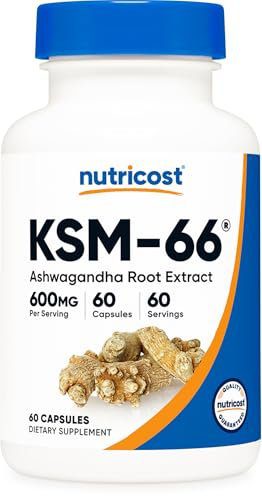
As an Amazon Associate, I earn from qualifying purchases. Product recommendations are based on real reviews and independent research.
Frequently asked questions {#faq}
Can ashwagandha help with hormonal imbalance in women?
The honest answer: ashwagandha has solid evidence for reducing cortisol under chronic stress, and there is preliminary data on sexual function improvement in women. It does not have strong clinical evidence for directly regulating estrogen, progesterone, or menstrual cycle timing. The "hormone balance" claim is a marketing inference from stress reduction, not a directly tested clinical outcome.
How long does ashwagandha take to work for women?
Based on the clinical trials, the timeframe is 8-12 weeks. The Chandrasekhar 2012 trial measured effect at 60 days; the Dongre 2015 and Ajgaonkar 2022 women's trials ran eight weeks. If you see no effect at 8-10 weeks of standardized KSM-66 at 300mg twice daily, it is unlikely to work for your specific situation.
Is ashwagandha safe during pregnancy?
No. Both the NCCIH and the Memorial Sloan Kettering integrative herbs database explicitly state ashwagandha should be avoided during pregnancy. Higher doses may stimulate uterine contractions. Do not use it while trying to conceive, during pregnancy, or while breastfeeding, unless your obstetrician has reviewed the evidence and provides explicit guidance.
Can ashwagandha affect thyroid levels?
Yes, and this is a serious interaction to understand. Case reports have documented thyrotoxicosis following ashwagandha use, with symptoms resolving after discontinuation. The MSK database flags thyroid hormone replacement as an interaction. If you have hypothyroidism or hyperthyroidism, or take any thyroid medication, consult your prescriber before using ashwagandha. This applies whether your thyroid condition is treated or untreated.
Does ashwagandha help with sleep in women?
Sleep quality improvement has appeared as a secondary outcome in several RCTs, including Salve 2019, which found significant improvement at both 250mg/day and 600mg/day. The mechanism likely flows through cortisol reduction and HPA-axis calming rather than direct sedation. The drowsiness side effect noted in some participants may also contribute. Taking it in the evening with food is a common approach when the goal is sleep support.
What is the difference between KSM-66 and Sensoril?
Both are proprietary, standardized ashwagandha extracts with published clinical trials. KSM-66 is a root-only extract standardized to 5% withanolides; it appears in most of the human stress and cortisol RCTs. Sensoril is a root-and-leaf extract standardized to 10% withanolides but used at lower doses, making per-dose withanolide content roughly comparable. KSM-66 has a larger body of peer-reviewed clinical evidence. Either is preferable to unlabeled "ashwagandha root powder."
Can I take ashwagandha every day?
Most clinical trials used daily dosing for 8-12 weeks. Daily use beyond three months has not been studied in rigorous long-term safety trials. The NCCIH considers it safe for short-term use (up to three months). Some practitioners suggest cycling at longer durations; no RCT evidence supports or refutes this. If you take thyroid medication or immunosuppressants, daily use without prescriber oversight is not appropriate.
Conclusion: the bottom line on ashwagandha for women {#conclusion}
Ashwagandha has a stronger clinical evidence base than most adaptogens, and women appear in several of the most relevant RCTs. The cortisol-reduction and stress-adaptation evidence is consistent across multiple independent trials. The sexual health improvements in the Dongre 2015 and Ajgaonkar 2022 trials are encouraging, though the sample sizes are modest. The "hormone balancing" and "cycle regulation" claims that saturate the supplement marketing space are not supported by clinical trials and should be treated skeptically.
The two conditions that make ashwagandha genuinely worth trying: chronic stress lasting at least three months, and sleep disruption tied to that stress. The two conditions that make it genuinely risky: thyroid medication use and pregnancy.
Next steps:
- If you want broader context on how ashwagandha compares to other stress adaptogens, see our Complete Guide to Ashwagandha.
- If you use ashwagandha cyclically and want to know how to structure on/off periods, see Ashwagandha Cycling: On/Off Protocols and the Evidence.
- If you have a thyroid condition, read Ashwagandha and Thyroid: What the Research Shows before making any decision.
- If you are pregnant or thinking about pregnancy, see Adaptogens During Pregnancy: Safety, Risks, and What to Avoid.
Related reading {#related-reading}
- Ashwagandha: The Complete Evidence-Based Guide (2026)
- Ashwagandha and the Thyroid: What the Research Actually Shows
- Adaptogens During Pregnancy: What Is and Isn't Safe
- Ashwagandha Cycling: When to Take a Break and Why
- Ashwagandha Side Effects: The Complete Risk Profile
This article is for informational purposes and not medical advice. Herbal adaptogens, even traditional ones, can interact with thyroid medication, antidepressants, anticoagulants, immunosuppressants, blood-pressure drugs, and more. Consult a licensed physician before starting any adaptogen, particularly if you are pregnant, nursing, taking prescription medications, or managing a chronic condition. Ashwagandha is specifically contraindicated during pregnancy and requires prescriber review before use alongside thyroid medications or immunosuppressants.
As an Amazon Associate, I earn from qualifying purchases. Product recommendations are based on real reviews and independent research.
This article is for informational purposes and not medical advice. Herbal adaptogens, even traditional ones, can interact with thyroid medication, antidepressants, anticoagulants, immunosuppressants, blood-pressure drugs, and more. Consult a licensed physician before starting any adaptogen, particularly if you are pregnant, nursing, taking prescription medications, or managing a chronic condition.
