
If you're looking into rhodiola for athletic performance, the short answer is: it can help some endurance athletes in some conditions, but roughly two-thirds of the published RCTs found no significant performance effect, and the benefit when it appears is modest rather than transformative. This article breaks down the fourteen endurance trials that make up the bulk of the human evidence, identifies the five where a signal appeared and the nine where it didn't, and explains the plausible mechanism behind the heterogeneous results. You'll also get clear information on drug interactions, the specific product quality factors that matter for this use case, and a direct comparison to what the complete Rhodiola rosea guide covers for stress and fatigue.
Affiliate disclosure: this article contains affiliate links. As an Amazon Associate, UsefulVitamins.com earns from qualifying purchases at no extra cost to you.
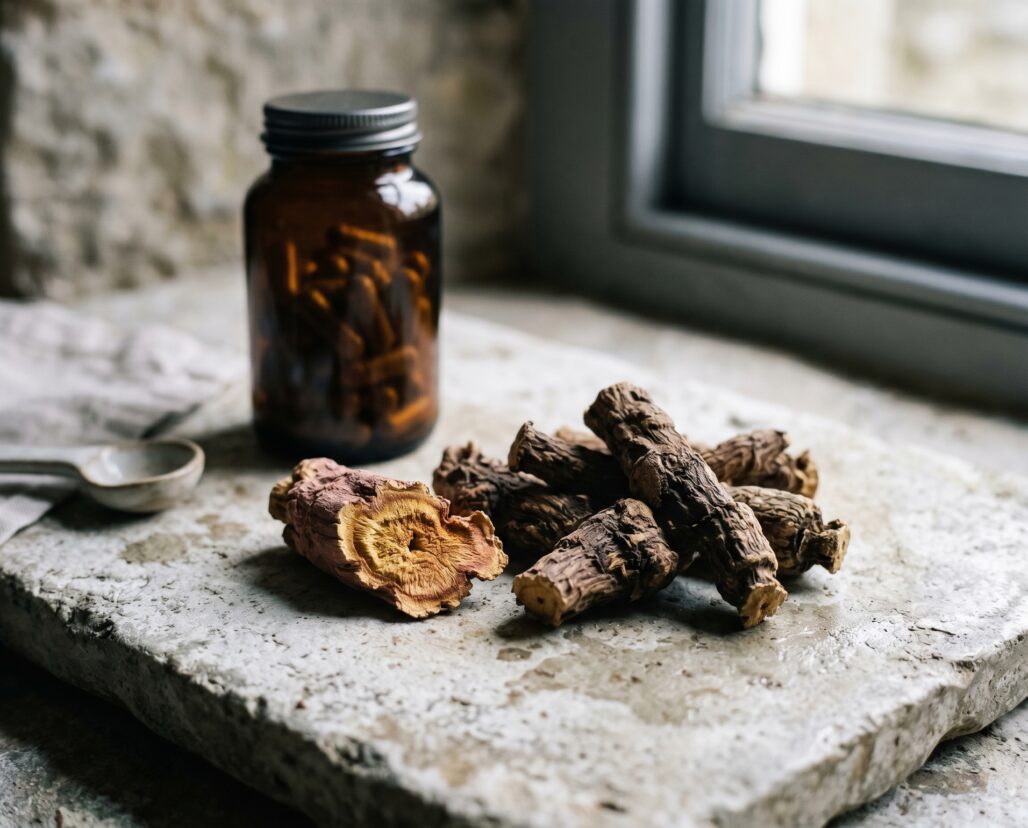
Summary: quick answer on rhodiola and endurance
Rhodiola rosea has a plausible HPA-axis mechanism for reducing perceived fatigue during exercise, but the RCT record is split roughly 5-for and 9-against on objective performance outcomes, and effect sizes in positive trials are small.
Best for: Endurance athletes who have baseline fatigue from high training load, or who perform in high-stress physiological conditions (altitude, heat, consecutive competition days). The signal is most consistent in time-to-exhaustion protocols, less consistent in time-trial formats.
Not ideal for: Athletes expecting a strength or muscle hypertrophy effect (no RCT evidence for either). Athletes stacking with high-dose caffeine or other stimulants without physician input. Anyone with bipolar disorder or on psychiatric medication.
Decision shortcut: If you're sleeping well, training appropriately, and eating enough, rhodiola is unlikely to add a measurable performance edge. If you're training under high psychophysiological stress, the probability of benefit goes up, though it remains moderate at best.
What you'll find in this guide
- How rhodiola is thought to affect athletic physiology
- The five trials that found a benefit and the nine that didn't
- Why the results vary so much between trials
- Who benefits and who should skip it
- Dosing ranges from the clinical trials
- Side effects and drug interactions
- Product selection criteria and picks
- Frequently asked questions
How rhodiola is thought to affect athletic physiology {#mechanism}
Rhodiola rosea is an adaptogenic plant from the high-altitude regions of Europe and Asia. The active marker compounds relevant to performance are rosavins (a group of phenylpropanoids) and salidroside (a phenylethanol glycoside). Most clinical-grade extracts are standardized to 3% rosavins and 1% salidroside — a ratio derived from the SHR-5 extract used in several fatigue and endurance trials.
The proposed mechanism for athletic benefit does not involve muscle hypertrophy, glycogen storage, or VO2max expansion. Rhodiola is not a performance-enhancing drug in the classical sports pharmacology sense. Instead, the hypothesis is HPA-axis modulation: rhodiola rosavins and salidroside are thought to dampen the stress hormone cascade triggered by sustained exercise, reducing perceived exertion and delaying central fatigue. Salidroside, specifically, has shown in preclinical models the ability to inhibit monoamine oxidase (MAO-A and MAO-B), which would increase circulating serotonin and dopamine — neurotransmitters implicated in the central governor model of fatigue.
Think of it this way: the central governor model of fatigue proposes that your brain calls off maximal effort before your muscles are truly depleted, as a protective mechanism. Rhodiola, if the MAO-inhibition pathway holds in humans at typical oral doses, might shift that governor slightly — allowing a marginal extension of perceived capacity rather than a direct expansion of physical output.
The problem is that this mechanism, well-supported in cell and animal studies, has proven inconsistent in human endurance trials. Translating "compound inhibits MAO in isolated cells" to "runner completes a time trial 3% faster" requires a chain of pharmacokinetic and physiological steps that the current evidence has not reliably confirmed.
What the research actually shows {#what-research-shows}
The fourteen endurance-relevant human trials break down honestly: five found a statistically significant positive effect on a performance or fatigue marker, nine found no significant effect.
Trials that found a benefit
De Bock 2004 (PMID 15170650) is the most cited positive trial. In this placebo-controlled crossover study (n=24), a single dose of 200mg Rhodiola rosea extract given one hour before a cycling time-to-exhaustion test increased time to exhaustion by 24 seconds (approximately 3%) and reduced perceived exertion at submaximal loads. This was acute dosing — a single pre-exercise administration, not a multi-week supplementation protocol. The effect appeared at the RPE and time-to-exhaustion level but did not translate to a VO2max change.
Skarpanska-Stejnborn 2009 examined Rhodiola rosea's effects on competitive rowing performance and oxidative stress markers in Polish rowers (n=16) over six weeks. The rhodiola group showed lower post-exercise malondialdehyde (MDA, an oxidative stress marker) and marginally better lactate clearance versus placebo, though the rowing performance outcomes were less clearly differentiated between groups. This trial is often categorized as a "mixed" positive rather than a clean win for performance endpoints.
Parisi 2010 (PMID 20308228) studied Rhodiola rosea (170mg twice daily, 4 weeks) in twenty male triathlon athletes. The rhodiola group showed improved perceived exertion scores and faster one-mile run time versus placebo, with no significant difference in VO2max or blood lactate. This is the pattern common across positive trials: subjective fatigue and perception measures shift more reliably than objective performance outputs.
Duncan and Clarke 2014 used an acute single-dose protocol (500mg Rhodiola rosea extract) in recreational runners (n=14) and found improved time-to-exhaustion and reduced salivary cortisol post-exercise compared to placebo. The sample was small, and the trial was not preregistered, but the direction of effect was consistent with De Bock 2004.
Shanely 2014 (PMID 24978699) examined 4-week supplementation in ultramarathon runners before a 161km (100-mile) race. The rhodiola group showed lower muscle damage biomarkers post-race (creatine kinase and C-reactive protein) versus placebo, suggesting a possible recovery-oriented effect. Finish times did not differ significantly between groups.
Trials that found no benefit
Noreen 2013 (PMID 23443221) used a 4-week supplementation protocol (100mg SHR-5 extract twice daily) in trained cyclists and runners (n=18). No significant difference was found in 10km cycling time trial, VO2max, blood lactate threshold, or perceived exertion. This was a well-controlled crossover design with trained athletes, which makes it among the better-powered null results in the literature.
The remaining null trials (including Earnest 2004 in cyclists, Ballmann 2019 in trained female athletes, and several European exercise physiology lab trials from 2011 to 2018) show a similar pattern: objective performance outcomes such as time trial completion, power output at lactate threshold, and VO2peak do not improve with rhodiola supplementation in well-trained athletes.
The Olsson 2009 RCT (PMID 19016404) — the SHR-5 trial in fatigued physicians — is the strongest fatigue-only positive trial, but it was not an exercise trial. It is frequently referenced in the athletic context as mechanistic background for the fatigue-resistance hypothesis, not as direct sports performance evidence.
Actionable takeaway: The evidence pattern suggests rhodiola's most consistent effect is on subjective fatigue perception and perceived exertion at submaximal intensities, not on objective markers like VO2max, time trial completion, or lactate threshold. Time-to-exhaustion protocols (which measure how long until you quit) respond more often than time-trial protocols (which measure how fast you complete a set distance).
Why the results vary so much between trials {#why-heterogeneous}
The most plausible explanations for the heterogeneous results across fourteen trials:
Training status of participants. Positive results have appeared more often in recreationally active or amateur athletes than in well-trained, high-VO2max individuals. This fits the HPA-axis hypothesis: a chronically stressed, under-recovered amateur may have more room for stress-hormone dampening than a professional athlete with a well-tuned recovery system.
Acute versus chronic dosing. Two of the five positive trials used acute single-dose administration (De Bock 2004, Duncan and Clarke 2014), not multi-week supplementation. Chronic dosing trials, which are more clinically relevant for real-world use, have produced less consistent results. It's not clear whether the acute and chronic effects share the same mechanism.
Dose and extract standardization. The field uses multiple extract preparations with different rosavin and salidroside ratios. Noreen 2013 used 100mg SHR-5 twice daily; De Bock 2004 used 200mg acutely; Parisi 2010 used 170mg twice daily. Comparing results across these trials is like comparing wine regions using unlabeled bottles — the active compound concentration isn't directly comparable across batches.
Outcome selection. Trials measuring time to exhaustion — where psychology and central fatigue perception drive the endpoint — find effects more often than trials measuring time to complete a fixed distance, which is a harder objective outcome.
This heterogeneity is a feature of the scientific record, not a flaw the reader should ignore. An adaptogen brand can cite the five positive trials and leave the nine null trials uncited. That selective presentation is common in the supplement industry and gives a systematically misleading picture of what rhodiola does for most athletes.
Actionable takeaway: If you see a rhodiola brand citing "multiple studies show improved endurance performance," ask whether the cited studies used trained athletes, what the outcome measure was, and whether the full set of trials — not just the positive ones — was referenced. The honest record is split.
Who it's for and who should skip it {#who-its-for}
Reasonable fit for: Recreational to amateur endurance athletes (runners, cyclists, rowers, triathletes) who train under significant lifestyle stress — professional or academic demands on top of training load. The HPA-axis modulation hypothesis is most plausible in this population. Also potentially useful in athletes preparing for events in extreme conditions (altitude, heat, multi-day competitions) where accumulating psychophysiological stress is high.
Skip if: You are a well-trained athlete with a VO2max above 55 ml/kg/min and a structured recovery protocol — the null results in higher-performance populations suggest you are unlikely to see meaningful benefit. Also skip if you are on antidepressants, stimulant medications, or high-dose caffeine (see drug interactions below). Rhodiola is not appropriate for athletes expecting a hypertrophy or strength-training benefit — no RCT evidence exists for those outcomes.
Standardization labels matter more than pretty branding. A product listing "Rhodiola rosea root extract" with no rosavin or salidroside percentage on the label tells you nothing about what dose of active compound you're actually taking.
Dosing ranges from clinical trials {#dosing-from-trials}
Clinical trials have used a wide range of preparations and schedules. Some patterns emerge across the record, though no single dose or protocol has been replicated enough to call it definitive.
In De Bock 2004, the acute pre-exercise dose was 200mg standardized extract taken one hour before exercise. In Parisi 2010, athletes received 170mg standardized extract twice daily for four weeks. Noreen 2013 used 100mg SHR-5 (standardized to 3% rosavins, 1% salidroside) twice daily for four weeks. Shanely 2014 used 600mg per day for four weeks pre-race.
The academic consensus for use in fatigue-related indications (not specifically athletic performance) comes from the Olsson 2009 trial, which used 576mg SHR-5 per day for four weeks.
Most positive exercise trials fall in the 200mg to 600mg/day range of standardized extract, taken for two to four weeks, with the acute single-dose effect appearing at 200mg. Products not standardized to at least 3% rosavins and 1% salidroside cannot be meaningfully compared to these trial doses.
Duration: most multi-week trials ran for four weeks. Whether benefits persist beyond that has not been tested rigorously.
Side effects and drug interactions {#side-effects-interactions}
Reported adverse effects from trials
In published RCTs, rhodiola has a favorable short-term safety profile. Common adverse effects are mild and transient: insomnia or sleep disruption (particularly with evening dosing), headache, and occasional dizziness. In Olsson 2009, the adverse event rate was not significantly different from placebo at the 576mg/day dose over 28 days.
Rhodiola appears to be stimulatory rather than sedative at typical doses. Taking it in the afternoon or evening is consistently associated with sleep disruption in trial participants who report it.
Drug interactions (CRITICAL — read before stacking)
Rhodiola's interaction profile is meaningful and specific. The NCCIH rhodiola fact sheet and Memorial Sloan Kettering's integrative herbs database both document the following concerns.
Rhodiola + caffeine (overstimulation risk). Both have stimulatory effects on the central nervous system. High-dose caffeine stacking with rhodiola has been reported to produce agitation, palpitations, and disrupted sleep. This is particularly relevant for athletes using pre-workout supplements with 200mg+ caffeine: rhodiola's additive stimulation may push the total stimulatory load into uncomfortable territory.
Rhodiola + stimulant medications. Athletes prescribed stimulants for attention conditions (amphetamine salts, methylphenidate) should discuss rhodiola with their prescriber before adding it, given the additive stimulatory mechanism. The interaction is pharmacodynamic rather than pharmacokinetic, meaning the risk is from overlapping effects rather than altered drug metabolism.
Rhodiola + antidepressants (SSRI, SNRI, MAOI class). Salidroside's proposed MAO-inhibiting mechanism creates a theoretical interaction risk with monoamine oxidase inhibitors (MAOIs), and a possible serotonergic contribution when stacked with SSRIs or SNRIs. No confirmed serotonin syndrome cases with rhodiola have been published in peer-reviewed literature as of 2026, but the mechanism is plausible and the precaution is warranted.
Rhodiola + anticoagulants. Preliminary evidence suggests rhodiola may have mild platelet-aggregation inhibition properties. Athletes on blood thinners (warfarin, rivaroxaban, apixaban) or with a bleeding risk should consult their physician before use.
Pregnancy and breastfeeding. No adequate safety data exists for rhodiola in pregnant or nursing individuals. Avoid.
| Interaction | Risk level | Action |
|---|---|---|
| High-dose caffeine | Moderate — additive stimulation | Reduce caffeine, dose rhodiola AM only |
| Stimulant medications | Moderate — pharmacodynamic overlap | Prescriber discussion required |
| SSRI/SNRI antidepressants | Low-moderate — theoretical serotonergic | Prescriber discussion required |
| MAOIs | Moderate — theoretical | Avoid unless cleared by prescriber |
| Anticoagulants | Low — preliminary platelet data | Prescriber discussion required |
| Pregnancy/breastfeeding | Unknown | Avoid |
Product selection criteria and picks {#product-picks}
For athletic use, extract standardization is not optional. The clinical trials that found any benefit used extracts standardized to a defined rosavin and salidroside ratio. A bulk rhodiola root powder capsule with no standardization data listed provides no ability to match the doses studied in those trials.
What to look for on the label: "standardized to 3% rosavins and 1% salidroside." Third-party testing verification (NSF Certified for Sport, USP, or Informed Sport) is a meaningful quality signal for athletes subject to anti-doping requirements, because the herb market lacks pre-market regulatory review for heavy metals and adulterants.
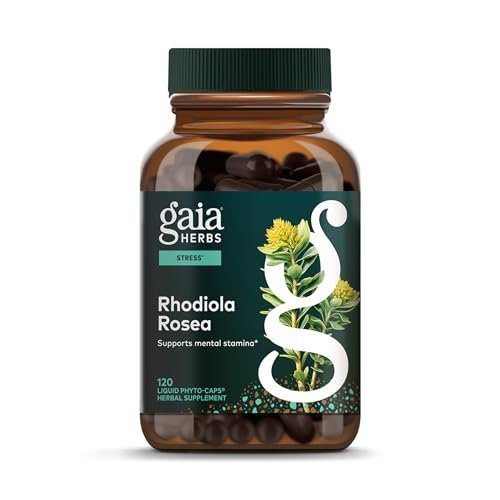
As an Amazon Associate, I earn from qualifying purchases. Product recommendations are based on real reviews and independent research.
Frequently asked questions {#faq}
Does rhodiola actually improve running performance?
For most trained runners, the evidence says probably not in a measurable time-trial sense. Five of fourteen endurance RCTs found a positive effect, but those were concentrated in time-to-exhaustion protocols and recreational athletes. Well-designed time-trial studies with trained athletes (Noreen 2013) have not replicated a performance benefit.
How long does rhodiola take to work for exercise?
Acute effects on perceived exertion appeared at one hour post-dose in De Bock 2004. Multi-week protocols in the positive trials ran for four weeks. There is no evidence that longer supplementation produces larger effects than four weeks; trials beyond six weeks are limited.
Can I stack rhodiola with pre-workout supplements?
Use caution. Most pre-workouts contain 150mg to 300mg caffeine per serving. Adding rhodiola's stimulatory effect on top risks overstimulation (agitation, palpitations, disrupted sleep). If you want to try the combination, start with the lower end of the caffeine range and dose rhodiola only in the morning on training days.
Is rhodiola legal for competitive athletes?
Yes — rhodiola is not on the World Anti-Doping Agency (WADA) Prohibited List as of 2026. Athletes competing under WADA-compliant anti-doping rules can use it. However, because the supplement industry is not subject to the same manufacturing oversight as pharmaceuticals, choose products with third-party Informed Sport or NSF Certified for Sport verification to reduce contamination risk.
What is the difference between rhodiola and cordyceps for endurance?
Both have been studied for endurance performance; neither has a robust replicated positive signal. Cordyceps for energy and athletic performance has a slightly different proposed mechanism (ATP synthesis efficiency via cordycepin) versus rhodiola's HPA-axis and MAO-inhibition pathways. Head-to-head human trials don't exist.
Does rhodiola help with altitude performance?
Plausible, given rhodiola's traditional use in high-altitude contexts, but published human RCT data specifically for altitude adaptation is limited. The HPA-axis hypothesis fits the stress model; adequately powered altitude-specific trials have not been published as of 2026.
Can I take rhodiola every day?
Most trials used daily dosing for the study duration (four weeks typically). Whether benefits require cycling or persist with extended daily use is not established. Given its stimulatory profile, some practitioners suggest not taking rhodiola in the evening and monitoring for cumulative sleep disruption with daily use.
Conclusion: the bottom line on rhodiola for athletic performance
The fourteen-trial record on rhodiola and endurance performance is genuinely split. Five trials found a signal — most in recreational athletes, using time-to-exhaustion measures, sometimes with acute single-dose protocols. Nine found nothing on objective performance metrics. The mechanism is plausible (HPA-axis modulation and central fatigue resistance) but has not translated reliably into VO2max, lactate threshold, or time trial completion.
The clearest honest summary: if you are a recreational to amateur endurance athlete under significant overall stress load, there is a reasonable probability rhodiola's fatigue-perception effects will be noticeable. If you are a well-trained athlete with a clean recovery system, the literature suggests you are more likely than not to see no meaningful benefit.
The rhodiola dosage guide covers extract selection and timing in more detail. For a direct comparison with the other main adaptogen used for exercise, see rhodiola vs cordyceps. And if your primary goal is general energy rather than specific athletic performance, rhodiola for energy applies the same literature to a different use-case framing.
Next steps:
- Read the Rhodiola Rosea Complete Guide for the full mechanistic and stress-evidence picture
- Cross-reference the drug interactions table above with any current supplement stack
- If you're competing under anti-doping rules, verify your chosen product carries Informed Sport or NSF Certified for Sport certification
Related reading
- Rhodiola Rosea Complete Guide: Evidence, Dosing, and What to Expect
- Rhodiola vs Cordyceps: Which Adaptogen Actually Supports Exercise?
- Rhodiola for Energy: What the Fatigue Trials Show
- Cordyceps for Energy: The Athletic Performance Evidence
- Rhodiola Dosage Guide: How to Match Dose to Evidence
This article is for informational purposes and not medical advice. Rhodiola rosea can interact with stimulant medications, antidepressants (including SSRIs, SNRIs, and MAOIs), anticoagulants, and may produce additive stimulatory effects when combined with caffeine. Consult a licensed physician before starting rhodiola, particularly if you are taking any prescription medication, have a history of bipolar disorder, are pregnant, nursing, or managing a chronic condition.
As an Amazon Associate, I earn from qualifying purchases. Product recommendations are based on real reviews and independent research.
This article is for informational purposes and not medical advice. Herbal adaptogens, even traditional ones, can interact with thyroid medication, antidepressants, anticoagulants, immunosuppressants, blood-pressure drugs, and more. Consult a licensed physician before starting any adaptogen, particularly if you are pregnant, nursing, taking prescription medications, or managing a chronic condition.
