
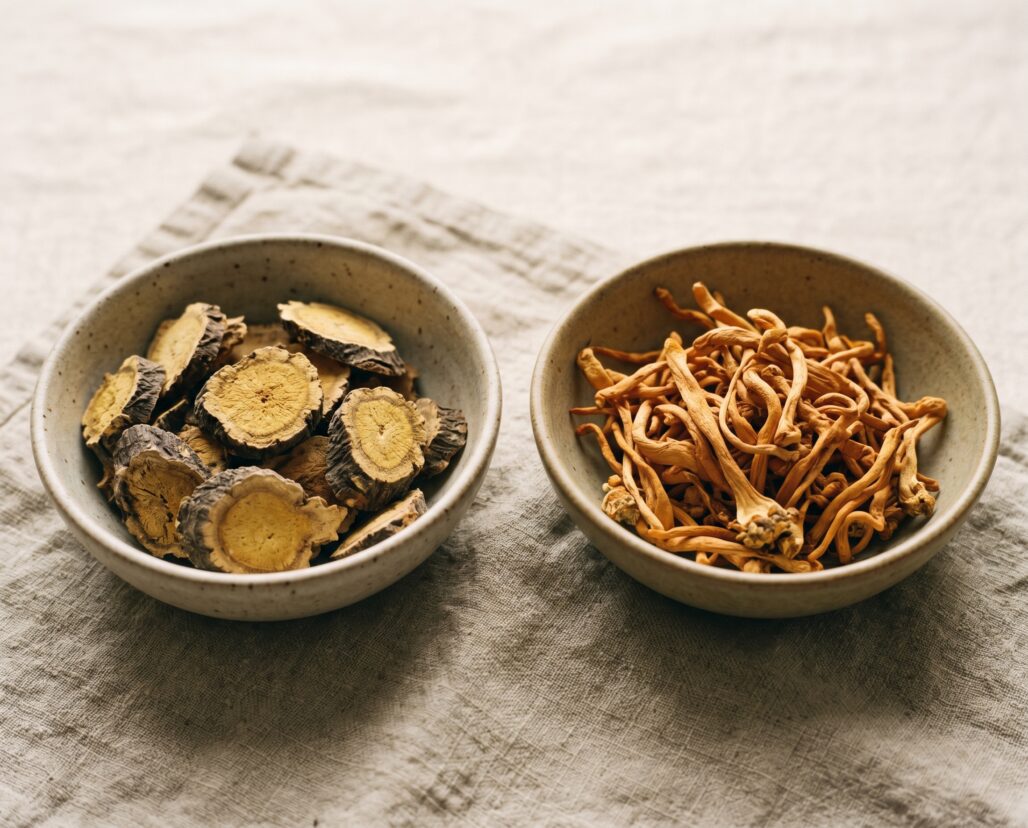
If you're searching "rhodiola vs cordyceps," you've already asked the right question, and the honest short answer is: they address energy through different biological pathways, and the better fit depends on whether your primary complaint is mental fatigue, physical endurance, or both. This article breaks down how each works mechanistically, what human RCT data actually show (and where the evidence runs thin), how dosing and timing differ, and which drug-interaction risks each carries. You'll also get a plain-language decision framework so you can choose the one that matches your situation rather than stacking both on faith.
Affiliate disclosure: this article contains affiliate links. As an Amazon Associate, UsefulVitamins.com earns from qualifying purchases at no extra cost to you.
Summary: quick answer on rhodiola vs cordyceps
Rhodiola rosea has the stronger clinical evidence base for reducing mental fatigue and supporting HPA-axis stress response. Cordyceps militaris has preliminary human data for oxygen utilization and exercise tolerance, but the evidence is thinner and the species distinction matters more than most marketing suggests.
Best for rhodiola:
- Adults experiencing burnout, mental fatigue, or cognitive fog from chronic stress
- People who work long demanding hours and need sustained cognitive output
- Athletes in endurance events where mental resilience is as important as physical output
Best for cordyceps:
- Endurance athletes or recreational runners wanting a preliminary trial of an ATP/oxygen-utilization supplement
- People already managing stress well who want to target physical performance specifically
- Anyone comfortable with moderate-quality evidence in exchange for a low-risk safety profile
Not ideal for rhodiola:
- People taking SSRIs, SNRIs, or stimulant medications (additive CNS effects, possible serotonin syndrome risk)
- Anyone with bipolar disorder or anxiety conditions where stimulating adaptogens can worsen symptoms
- Those wanting a short-term, single-session energy boost (rhodiola is a 4-plus week effect)
Not ideal for cordyceps:
- People on anticoagulants (warfarin, heparin) or immunosuppressants (tacrolimus, cyclosporine)
- Anyone who needs certainty from large replicated RCTs before committing
- Those looking primarily for stress resilience rather than physical performance
Decision shortcut: If your energy problem shows up in your head (mental fog, burnout, feeling wired-but-tired), start with rhodiola. If your energy problem shows up in your legs (early fatigue on runs, reduced aerobic capacity), cordyceps has a mechanistic rationale worth a 6-week trial.
What you'll find in this guide
- How each one works: mechanism side by side
- What the RCT evidence actually shows
- The cordyceps species problem
- Dosing: what clinical trials used
- Time to effect: setting realistic expectations
- Side effects and drug interactions
- Which product form to buy
- Frequently asked questions
- Conclusion: the bottom line on rhodiola vs cordyceps
How each one works: mechanism side by side
Rhodiola: an HPA axis modulator with CNS reach
Rhodiola rosea (family Crassulaceae, native to Arctic and sub-Arctic regions) is classified as a CNS adaptogen. Its active marker compounds are rosavins and salidroside (the latter also called p-tyrosol glycoside). In human pharmacokinetic work, salidroside has been shown to influence the hypothalamic-pituitary-adrenal (HPA) axis, blunting the cortisol spike triggered by acute physical and psychological stressors.
Think of the HPA axis like a car's rev limiter. Under chronic stress, most people's rev limiter gets reset too high, causing constant overrevving. Rhodiola appears to help recalibrate the limiter rather than cutting off the engine entirely. The result is reduced stress reactivity without sedation.
Rosavins also have monoamine-reuptake inhibitory activity in vitro, which may partly explain rhodiola's cognitive-fatigue effects and creates the interaction risk with serotonergic medications. A 2010 pharmacology review (Panossian and Wikman, Phytomedicine) described this dual action and flagged a biphasic dose response: stimulant-like at lower doses, sedative-like at higher doses.
Actionable takeaway: Rhodiola's mechanism is CNS-first. It doesn't directly increase ATP production or oxygen delivery; it helps the brain manage the metabolic cost of stress so less energy is wasted on cortisol reactivity.
Cordyceps: ATP synthesis and oxygen utilization claims
Cordyceps has a very different proposed mechanism. The theoretical primary target is cellular energy: cordycepin (3'-deoxyadenosine), the purported active compound, is structurally similar to adenosine and is proposed to influence ATP synthesis pathways. In addition, some studies have investigated cordyceps extracts' effect on oxygen utilization (VO2max and lactate threshold) in aerobic exercise.
Unlike rhodiola's HPA-axis pathway, cordyceps is working further downstream, at the mitochondrial and aerobic metabolism level. This is why proponents position it for physical rather than mental energy. But the caveat is significant: much of the mechanistic work is in vitro or animal-based, and the relevant human trials involve small samples and variable extracts.
The NCCIH cordyceps overview acknowledges the traditional use of cordyceps in Tibetan and Chinese medicine as a lung and kidney tonic while noting that high-quality clinical evidence in humans remains limited as of their most recent review.
What the RCT evidence actually shows
Rhodiola: roughly 14 trials, heterogeneous quality
Rhodiola has more human RCT data than most adaptogens, but the picture is complicated. The studies use different extracts (primarily SHR-5 and WS 1375), different doses, different outcome measures, and different populations. That heterogeneity is the honest limitation.
The most cited trial is a 2009 Phase III RCT (Olsson et al., n=60), a placebo-controlled, double-blind study using SHR-5 extract at 576mg daily for 28 days in burnout patients with stress-related fatigue. The intervention group showed statistically significant improvement on the Multidimensional Fatigue Inventory and Pines burnout scale versus placebo. Effect sizes were moderate.
An earlier 2000 RCT in physicians working night shifts (Darbinyan et al., n=56) found that rhodiola at 170mg/day for two weeks improved performance on cognitive tests by approximately 20% versus placebo. The study was small but double-blind and included objective cognitive measurements.
For athletic endurance specifically, the evidence in trained adults is mixed. A 2004 RCT in competitive cyclists (De Bock et al., n=24) found no significant improvement in VO2max or time-trial performance after 4 weeks of rhodiola supplementation, though participants reported reduced perceived exertion. This matters for the rhodiola-vs-cordyceps comparison: rhodiola's athletic benefit may be more about fatigue perception than measurable aerobic capacity.
Actionable takeaway: The real question isn't whether rhodiola works in lab rats, it's whether the human dose proves out. For mental fatigue in chronically stressed adults, the evidence is reasonably consistent. For objective aerobic performance in already-fit people, results are mixed.
Cordyceps: two key human RCTs, both worth understanding in full
The human evidence base for cordyceps is thinner. The two most-cited athletic-performance trials deserve honest scrutiny.
A 2010 RCT (Chen et al., n=20, PMID 20566740) examined the effect of a Cordyceps sinensis-derived supplement on metabolic markers and exercise capacity in elderly subjects. The study found improvements in several aerobic-performance measures including VO2max at 12 weeks versus placebo. The limitations are notable: n=20, elderly population, and the extract used was a patented Cordyceps sinensis preparation (Cs-4/CordyMax), not the Cordyceps militaris that most commercial products now use. Extrapolating this to young trained athletes or to militaris-based products requires caution.
A 2017 double-blind, placebo-controlled RCT (Hirsch et al., n=28, PMID 27408987) is the most methodologically relevant modern trial. It used Cordyceps militaris at 4g/day versus placebo in recreationally active adults over three weeks. The treatment group showed a statistically significant increase in VO2max (approximately +11% versus +1.8% placebo) by week 3. This is a meaningful finding, but the trial was small and short, and the effect size should be confirmed in larger replications before drawing firm conclusions.
Preliminary human data suggest cordyceps may support aerobic capacity, though larger trials are needed before this becomes a reliable clinical recommendation.
The cordyceps species problem
This is not a footnote, it is a central purchasing issue. The original Cordyceps sinensis (Ophiocordyceps sinensis) is a parasitic fungus found on ghost moth larvae at high altitudes in the Tibetan Plateau. It is extraordinarily expensive (up to $20,000 per kilogram of wild-harvested) and essentially unavailable in commercial supplements at meaningful doses.
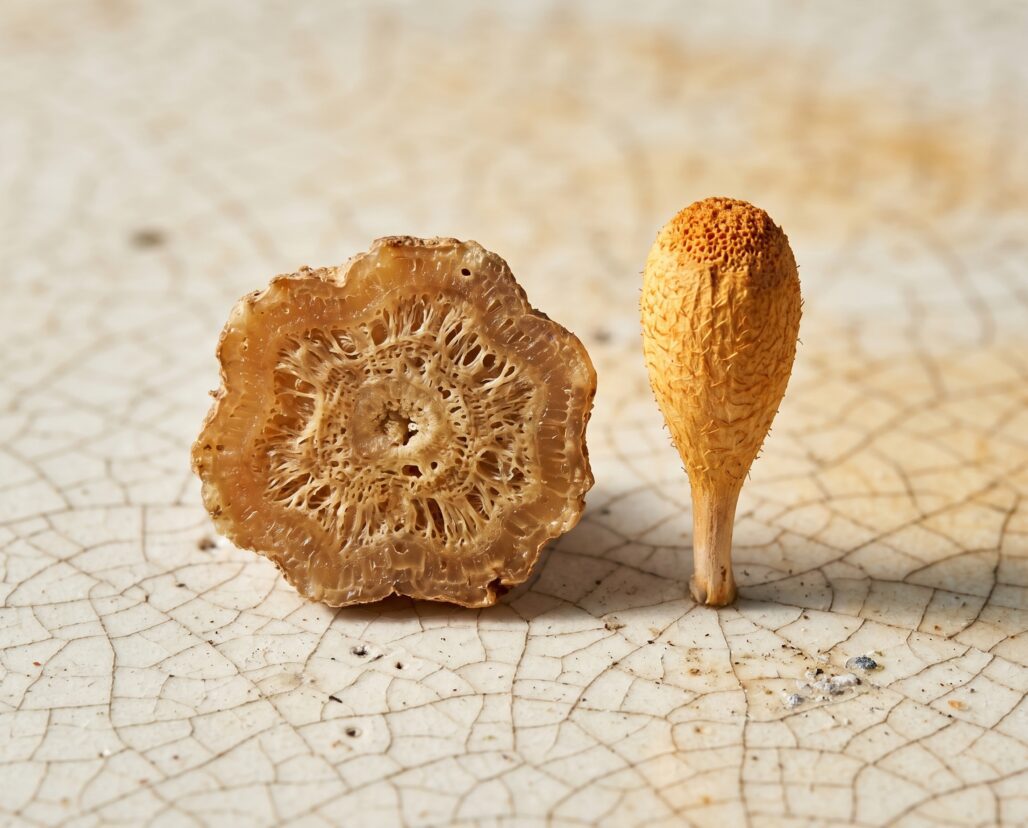
Almost every product labeled "cordyceps" in mainstream retail uses Cordyceps militaris, a different though related species that can be commercially cultivated. Cs-4 (CordyMax), used in the Chen 2010 trial, is a mycelium-based extract of Cordyceps sinensis grown in liquid fermentation. The Hirsch 2017 trial used a whole Cordyceps militaris powder.
An adaptogen brand can have impressive marketing and still miss third-party testing for the active marker compound. For cordyceps, the issue is compounded: many products contain mycelium grown on grain substrate, which dilutes active compounds with starchy filler. Fruiting-body militaris extracts standardized to cordycepin content are more likely to match what Hirsch 2017 used.
Actionable takeaway: When evaluating a cordyceps product, check whether it specifies Cordyceps militaris fruiting body (not mycelium on grain), and whether cordycepin content is disclosed or third-party tested.
Dosing: what clinical trials used
Rhodiola dosing from trials
In the Olsson 2009 fatigue RCT, the SHR-5 extract dose was 576mg daily (two 288mg capsules) taken on an empty stomach in the morning. In the Darbinyan 2000 night-shift trial, the dose was 170mg/day for two weeks. Most rhodiola products are standardized to 3% rosavins and 1% salidroside; without this standardization, "rhodiola root powder" alone tells you nothing about active-compound content.
The biphasic quality noted in Panossian's pharmacology review is relevant for practical use: some practitioners describe lower doses (200-300mg) as more stimulating and higher doses (600mg+) as calming. No head-to-head RCT has tested these dose-response effects specifically in humans.
Cordyceps dosing from trials
In the Hirsch 2017 militaris trial, the dose was 4g per day of whole Cordyceps militaris powder taken in divided doses over three weeks. In the Chen 2010 sinensis trial with elderly subjects, Cs-4 was used at a dose of 333mg three times daily (999mg total). These doses are substantially different, which underscores why comparing across species and extract types requires care.
Most commercial cordyceps products deliver 500mg to 1g per serving, often below the 4g used in the most relevant human trial. Checking the daily dose (not per-capsule dose) matters more than the serving-size label.
Time to effect: setting realistic expectations
Rhodiola differs from most adaptogens in having a relatively faster subjective onset. The Darbinyan 2000 trial showed measurable cognitive improvement in two weeks. However, Olsson 2009's burnout-fatigue effects were measured at 4 weeks. The practical expectation for mental fatigue reduction is 2-4 weeks of consistent use at standardized doses.
Cordyceps takes longer for measurable aerobic effects. Hirsch 2017 saw significant VO2max improvement at 3 weeks, but with a daily dose of 4g. The Chen 2010 sinensis study measured effects at 12 weeks. A 6-week trial with a quality militaris product is a reasonable minimum before assessing whether it's working.
Neither supplement works as an acute pre-workout energizer in the way caffeine does. Both require consistent daily use and several weeks of adherence to show their effects.
Side effects and drug interactions
Rhodiola: CNS interactions are the main concern
In clinical trials, rhodiola at studied doses has a generally favorable adverse-event profile. The Olsson 2009 trial reported no serious adverse events. Mild reported effects in various trials include dizziness at higher doses and mild agitation or sleep disturbance if taken too late in the day (the stimulating character at standard doses makes morning dosing standard).
Drug interactions (rhodiola): The NCCIH rhodiola fact sheet and Memorial Sloan Kettering's integrative herbs database on rhodiola both flag the following:
- SSRIs and SNRIs: Rhodiola's monoamine-reuptake inhibitory activity in vitro raises theoretical serotonin syndrome risk when combined with antidepressants. The clinical significance in humans is not well-characterized, but the mechanism is plausible enough that the combination warrants prescriber consultation.
- Stimulants (caffeine, amphetamine salts, modafinil): Additive CNS-stimulant effect is possible. The biphasic dose-response means higher doses may partially counteract this, but the interaction is not predictable.
- Anticoagulants: Some case-report-level concern exists for mild platelet effects; not as well-characterized as with ginseng, but worth noting if surgery is planned.
- Immunosuppressants: Modest immunomodulatory signals in vitro; clinical significance in transplant patients is unknown but warrants caution.
Pregnancy and breastfeeding: No adequate safety studies exist. Standard adaptogen caution applies: do not use during pregnancy or while breastfeeding without explicit guidance from an obstetric provider.
Cordyceps: anticoagulant and immune interactions
In the Hirsch 2017 trial, Cordyceps militaris was well-tolerated with no serious adverse events reported in the 28-participant cohort. Gastrointestinal discomfort (nausea, loose stools) is the most commonly reported adverse effect in users, typically at higher doses.
Drug interactions (cordyceps): Per Memorial Sloan Kettering's integrative herbs database on cordyceps:
- Anticoagulants (warfarin, heparin, clopidogrel): Cordyceps has demonstrated platelet-aggregation inhibition in laboratory studies. Combined use with anticoagulants may increase bleeding risk. People taking blood thinners should not use cordyceps without explicit medical clearance.
- Immunosuppressants (tacrolimus, cyclosporine, biologics): Cordyceps has immunomodulatory properties, including potential immune-stimulating effects. This is a contraindication for organ-transplant recipients or anyone on immunosuppressive therapy, where unintended immune activation can trigger rejection.
- Blood-glucose-lowering medications (insulin, metformin): Some animal evidence suggests hypoglycemic activity; clinical significance in humans is not established but warrants monitoring in people managing diabetes pharmacologically.
Pregnancy and breastfeeding: Safety data are absent. Do not use without explicit guidance from a physician.
Which product form to buy
For rhodiola, look for an extract standardized to at least 3% rosavins and 1% salidroside. Products that specify SHR-5 or WS 1375 standardization have the most direct link to the trial evidence, since these are the extract designations used in Olsson 2009 and several subsequent studies.
For cordyceps, the most trial-relevant commercial form is a whole Cordyceps militaris fruiting-body powder or extract with a disclosed cordycepin percentage or third-party testing confirmation. Products built on mycelium grown on grain substrate are unlikely to match the active-compound profile of the Hirsch 2017 intervention.
For a broader look at medicinal mushroom supplements, see our complete guide to medicinal mushrooms, which covers species distinctions, fruiting body vs. mycelium sourcing, and what third-party testing can and cannot confirm.
Frequently asked questions
Can I take rhodiola and cordyceps together?
There is no known pharmacological interaction between rhodiola and cordyceps, and some athletes stack them with the reasoning that they target different systems (CNS adaptation vs. aerobic metabolism). But traditional use is not the same as RCT evidence, and no clinical trial has tested the combination. Starting with one at a time makes it easier to attribute effects and detect any adverse reactions before adding the second.
How is cordyceps militaris different from cordyceps sinensis?
Cordyceps sinensis is the wild-harvested Himalayan fungus used in traditional Chinese medicine. Cordyceps militaris is a cultivated relative used in nearly all commercial supplements. Both contain cordycepin, but the relative amounts and additional bioactive compound profiles differ. The Chen 2010 trial used a Cs-4 fermentation extract of sinensis; the Hirsch 2017 trial used militaris. Most products on Amazon are militaris. Check the label.
Does rhodiola work for anxiety?
Some research suggests rhodiola may reduce anxiety symptoms in the context of chronic stress, but the mechanism is stimulating at standard doses rather than calming. People with anxiety disorders driven by high baseline arousal may find rhodiola worsens their symptoms rather than helping. The evidence base for rhodiola in clinically diagnosed anxiety is weaker than for stress-related fatigue. Those already on anxiolytic medications should consult their prescriber before adding rhodiola.
How long should I trial each supplement?
Based on trial data: rhodiola at a standardized dose for at least 4 weeks to assess fatigue effects, up to 8 weeks for a full assessment. Cordyceps at 3-4g daily for at least 3-6 weeks to assess aerobic effects. No change at 8 weeks at studied doses is a reasonable stopping signal.
Is rhodiola safe for long-term use?
Most rhodiola trials have run 4-12 weeks without significant safety signals. Long-term data beyond 12 weeks are limited. Some practitioners suggest periodic breaks (e.g., 4-6 weeks on, 2 weeks off) to avoid any potential tachyphylaxis, though no human RCT has specifically studied this cycling approach. People on any long-term psychiatric medication should not use rhodiola without prescriber input.
Which one is better for athletic performance?
Neither is a substitute for training, recovery, and sleep. Within the supplement space, the Hirsch 2017 cordyceps trial showed a more direct aerobic-capacity effect (VO2max improvement) than any individual rhodiola trial. However, rhodiola may reduce perceived exertion and mental fatigue during endurance events, which has its own performance value. For the aerobically-focused athlete, cordyceps has the more direct mechanistic claim. For the athlete who also experiences high cognitive load and stress, rhodiola has a stronger evidence base for the mental side of the equation. For deeper evidence on rhodiola in athletic contexts specifically, see our article on rhodiola for athletic performance.
Conclusion: the bottom line on rhodiola vs cordyceps
Rhodiola rosea and Cordyceps militaris are often grouped as "energy adaptogens," but they address energy through different mechanisms and have substantially different evidence profiles. Rhodiola has a larger human RCT base and a clear rationale for mental fatigue and HPA-axis stress response. Cordyceps has preliminary aerobic-performance data from two small trials using different species, and the commercial sourcing problem requires careful label scrutiny.
Interaction profiles also diverge: rhodiola's CNS activity creates risk with SSRIs and stimulants, while cordyceps' immunomodulatory and antiplatelet properties are relevant for people on immunosuppressants or anticoagulants.
For a deeper look at rhodiola's full evidence profile across stress, fatigue, and mood outcomes, see our complete guide to rhodiola.
For detailed coverage of all the major adaptogenic mushrooms including reishi, lion's mane, and turkey tail alongside cordyceps, see our complete guide to medicinal mushrooms.
Next steps:
- If mental fatigue or burnout is your primary concern, read our article on rhodiola for energy for a deeper look at dosing and timing.
- If you want to understand cordyceps within a broader energy-performance context, our article on cordyceps for energy covers the full evidence picture.
As an Amazon Associate, I earn from qualifying purchases. Product recommendations are based on real reviews and independent research.
This article is for informational purposes and not medical advice. Herbal adaptogens, including rhodiola rosea, and functional mushrooms, including cordyceps, can interact with antidepressants, stimulants, anticoagulants, immunosuppressants, and blood-glucose medications. Consult a licensed physician before starting either supplement, particularly if you are pregnant, nursing, taking prescription medications, or managing a chronic condition.
As an Amazon Associate, I earn from qualifying purchases. Product recommendations are based on real reviews and independent research.
This article is for informational purposes and not medical advice. Herbal adaptogens, even traditional ones, can interact with thyroid medication, antidepressants, anticoagulants, immunosuppressants, blood-pressure drugs, and more. Consult a licensed physician before starting any adaptogen, particularly if you are pregnant, nursing, taking prescription medications, or managing a chronic condition.
