
If you are searching for the best supplements Bryan Johnson takes as part of his Blueprint protocol, you have probably already seen the roughly 70-pill daily lineup, the public Blueprint disclosure page, and the YouTube tours of his $2-million-per-year regimen, and you want to know which compounds have human-trial backing versus which are mechanistic bets extrapolated from mice.
Quick Answer: which Blueprint supplements have the strongest evidence?
The 2 to 3 we would actually start with (if you are not Bryan Johnson):
- EPA-dominant omega-3 fish oil, roughly 2 g combined EPA+DHA per day. Still the most replicated cardiovascular and lipid-modulation signal in the Blueprint stack and most adult diets are short.
- Creatine monohydrate, 3 to 5 g per day. The cleanest evidence base for preserved lean mass in middle age and emerging cognitive signal in adults over 50.
- Vitamin D3, 2,000 to 5,000 IU per day, titrated to a 25-hydroxyvitamin D serum level of 40 to 60 ng/mL. Reliable correction of deficiency, with the benefit accruing mostly to deficient people.
Who should NOT start with these: anyone on warfarin or another anticoagulant should clear fish oil with the prescribing clinician; anyone with stage 3 or worse chronic kidney disease should not start creatine without nephrologist input; and nobody should self-prescribe rapamycin, metformin, or 17-α-estradiol because Bryan does. Those are prescription drugs, and 17-α-estradiol gel is hormonal therapy.
What to do FIRST: match Bryan's framing where it is actually useful, which is the biomarker tracking, not the pill count. Pull a full lipid panel including ApoB, a 25-hydroxyvitamin D, a fasting insulin, an HbA1c, a homocysteine, a CBC, and an hsCRP. Build a short stack against the values, not against a screenshot of someone else's regimen.
What "the Blueprint protocol" actually is, in one paragraph
Blueprint is Bryan Johnson's personal longevity experiment, publicly disclosed at blueprint.bryanjohnson.com and updated as he iterates. The supplement portion is roughly 70 daily compounds, plus a strict roughly 2,250-kilocalorie plant-leaning diet, structured exercise, and a recurring battery of biomarker tests (DEXA, MRI, polysomnography, epigenetic clocks, lipid panels, hormone panels). The framing is explicitly N-of-1: Bryan optimizes against his own biomarker dashboard and changes the stack when a marker does not move. The published evidence base for any individual line item ranges from solid RCT (omega-3, vitamin D, creatine, magnesium) to extrapolated mouse and cell models (most of the longevity-branded compounds). The protocol does not "reverse aging." It is a biomarker-optimization N-of-1 experiment whose epigenetic-clock readouts are interesting but whose translation to human lifespan extension is not, and cannot yet be, demonstrated.
Strongest evidence: the boring core of the Blueprint stack

EPA/DHA omega-3 fish oil
Why it helps. EPA and DHA are long-chain omega-3 fatty acids that incorporate into platelet, endothelial, and neuronal membranes. They lower fasting triglycerides through reduced hepatic VLDL secretion, shift eicosanoid signaling toward less inflammatory mediators, and at high doses reduce major adverse cardiovascular events in secondary prevention populations.
What the trials show. The REDUCE-IT trial (Bhatt et al. 2019, n=8,179, median follow-up 4.9 years) used 4 g/day of icosapent ethyl, a prescription EPA ester, in statin-treated patients with elevated triglycerides and hit a 25% relative risk reduction in the composite cardiovascular endpoint. Meta-analyses of marine omega-3 supplementation in mixed populations associate intake with roughly a 13% reduction in myocardial infarction risk.
Dose used in trials. 2 g/day combined EPA+DHA at the lower-bound trial level for primary-prevention use. Bryan's protocol reports roughly 2 g/day combined.
Form to look for. EPA-dominant fish oil in triglyceride or re-esterified triglyceride form, third-party tested for oxidation (TOTOX) and heavy metals. The ConsumerLab fish oil review has flagged products exceeding oxidation limits in recent rounds, so a number on the label is not the same as quality in the bottle.
Skip if you are on warfarin or another anticoagulant without prescriber clearance, or if you have a known fish allergy (algal EPA is an option).
Actionable takeaway: Count combined EPA+DHA milligrams, not "fish oil" milligrams. A generic 1,000 mg softgel often contains only 180 mg EPA + 120 mg DHA, which means seven softgels to hit the 2 g target.
Creatine monohydrate
Why it helps. Creatine raises intramuscular phosphocreatine stores, the rate-limiting substrate for ATP regeneration during short, high-intensity work. It also raises brain phosphocreatine on 31P-MRS imaging and appears to buffer cognitive performance under sleep deprivation. In aging muscle the picture is cleaner: creatine reliably preserves lean mass and strength in older adults paired with resistance training. Brain trials are still smaller and shorter than muscle trials.
What the trials show. The 2022 ISSN position stand on creatine (Forbes et al.) summarized over 500 studies and concluded that creatine is the most effective ergogenic supplement available, with consistent effects on muscle mass, strength, and recovery, and emerging effects on cognition in older adults and vegetarians.
Dose used in trials. 3 to 5 g/day of creatine monohydrate. Loading at 20 g/day for 5 days is not necessary outside athletic timing.
Form to look for. Plain creatine monohydrate, third-party tested. Branded forms (HCl, ethyl ester, buffered) do not outperform monohydrate in head-to-head trials.
Skip if you have stage 3 or worse CKD without nephrologist clearance.
Vitamin D3
Why it helps. Vitamin D modulates calcium absorption, bone remodeling, and immune signaling, and the receptor is expressed widely enough that low 25-hydroxyvitamin D shows up in epidemiology for almost everything. The intervention story is narrower: deficiency correction reliably moves bone and falls endpoints in older adults; cardiometabolic and cancer outcomes from supplementation in already-replete adults are mixed.
What the trials show. The D2d trial (Pittas et al. 2019, n=2,423) tested 4,000 IU/day vitamin D3 in adults at high risk for type 2 diabetes and missed the primary endpoint overall, with a pre-specified subgroup of lower-baseline-25-OH-D participants showing benefit. The honest read from D2d and VITAL together: vitamin D3 corrects deficiency reliably; the meaningful clinical benefits accrue mostly to deficient people.
Dose used in trials. 2,000 to 5,000 IU/day, targeted to a serum 25-OH-D of 40 to 60 ng/mL per the NIH ODS vitamin D fact sheet.
Form to look for. Vitamin D3 (cholecalciferol), often co-formulated with vitamin K2 (MK-7) when calcium intake is high. Retest at 3 to 6 months.
Skip if baseline 25-OH-D is already in the upper-normal range.
Magnesium
Why it helps. Magnesium is a cofactor in over 300 enzymatic reactions, including ATP binding, neuromuscular transmission, and glucose handling. Low intake associates with insulin resistance, higher blood pressure, and worse sleep architecture in epidemiology, and most US adults under-consume relative to RDA per the NIH ODS magnesium fact sheet.
What the trials show. A 2016 meta-analysis (Veronese et al.) of 40 prospective studies linked higher dietary magnesium with a 10% lower risk of coronary heart disease, 12% lower risk of stroke, and 26% lower risk of type 2 diabetes per 100 mg/day increment. Smaller RCTs show modest reductions in systolic blood pressure (about 2 mmHg) in supplemented adults.
Dose used in trials. 300 to 500 mg/day of elemental magnesium. Blueprint splits forms (glycinate, malate, threonate) which is mechanistically reasonable; oxide is poorly absorbed and mostly a laxative.
Skip if you have stage 3 or worse CKD or are on potassium-sparing diuretics without clearance.
Moderate evidence: where Blueprint gets more speculative
Urolithin A (Mitopure)
Urolithin A is a gut-microbiome metabolite of ellagitannins from pomegranate and walnuts. Mechanistically it induces mitophagy, the cellular cleanup pathway that removes damaged mitochondria. The first-in-human trial (Andreux et al. 2019) showed dose-dependent shifts in mitochondrial gene expression in muscle biopsies of older adults. A 2022 RCT (Liu et al.) of Mitopure 500 mg/day for 4 months in middle-aged adults found small improvements in leg muscle endurance versus placebo. Effect sizes are modest, trial populations are small, and long-term outcome data is absent. Treat as moderate and worth retesting if you try it.
CoQ10 (ubiquinol)
CoQ10 is an electron-transport-chain carrier and lipid-phase antioxidant. The strongest evidence is in patients on statins with myalgic side effects (mixed RCT results but a real signal) and in heart failure. In healthy adults supplementing for general "mitochondrial support," the evidence is mechanistic rather than outcome-driven. Ubiquinol has somewhat better bioavailability than ubiquinone, particularly in adults over 50. Reasonable adjunct on a statin; weaker indication otherwise.
Ashwagandha (KSM-66)
Ashwagandha is an adaptogen with the cleanest stress and anxiety RCT signal of any herbal in the Blueprint stack. The mechanism touches HPA axis modulation and possibly GABA-A signaling, though the receptor-level work is incomplete. A 2012 RCT (Chandrasekhar et al., n=64) used 600 mg/day of root extract for 60 days and showed reductions in perceived stress and morning cortisol versus placebo. Replications since have been broadly consistent at 300 to 600 mg/day for at least 8 weeks. Skip if you have hyperthyroidism or autoimmune thyroid disease without endocrinologist input.
NMN and NR (NAD+ precursors)
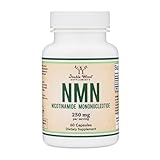
NMN (nicotinamide mononucleotide) and NR (nicotinamide riboside) are NAD+ precursors. NAD+ is a substrate for sirtuins and PARPs, declines with age, and is restored by either precursor in human trials. Translation to functional outcomes in healthy adults is where the evidence thins. Published trials are small (under 50 participants), short (8 to 12 weeks), and use surrogate endpoints (insulin sensitivity, NAD+ blood levels) rather than morbidity or mortality. Trial doses are 250 to 500 mg/day NR or 500 to 1,000 mg/day NMN; most direct-to-consumer products dose well below the trial range. Mechanistically plausible, expensive, and not yet outcome-validated.
Lithium orotate (low-dose)
Bryan's protocol uses microdose lithium orotate (around 1 mg elemental lithium daily, far below the 600 to 1,200 mg/day used psychiatrically for bipolar disorder). Mechanistically, low-dose lithium has been associated with reduced suicide rates in epidemiologic studies of drinking water lithium content and with neuroprotective signaling at GSK-3β. The human-trial evidence at 1 mg is essentially zero. Treat as the most experimental moderate-tier item.
Popular but evidence-thin: fisetin, sulforaphane, taurine, lycopene
Fisetin is a flavonoid studied as a senolytic, a compound that selectively kills senescent ("zombie") cells. Most public excitement traces to a preclinical paper (Yousefzadeh et al. 2018) showing fisetin extended healthspan in aged mice. Human trials are early; the Mayo Clinic Alleviating Frailty trial is underway. Until those read out, "fisetin extends lifespan" is a mouse claim, not a human claim.
Sulforaphane (broccoli sprout extract) activates the Nrf2 antioxidant response pathway and has small-trial signal for oxidized LDL and inflammatory markers. Mechanism is clean, trials are small.
Taurine caught attention from a 2023 mouse paper showing extended median lifespan in rodents. Human RCT data on healthspan endpoints is essentially absent.
Lycopene has small-trial signal for prostate health and oxidative-stress markers. Hard human outcome data is weak. Reasonable to get from tomato paste; the supplement form is a low-priority addition.
Where it gets serious: prescription drugs in Blueprint, not supplements
Rapamycin is an FDA-approved mTOR inhibitor used clinically as an immunosuppressant. In the Interventions Testing Program at the National Institute on Aging, rapamycin is the single most consistent geroprotector in genetically heterogeneous mice (Miller et al. 2014). The PEARL trial of weekly low-dose rapamycin in healthy older adults reported tolerability and some immune signals; broader healthspan outcome data is not yet available. To be explicit: rapamycin used for longevity is off-label, requires a prescribing clinician, and is not a supplement. It carries immunosuppression, glucose, and lipid risk. "Bryan takes it" is not a prescribing indication.
Metformin is the first-line generic drug for type 2 diabetes and has been used off-label for longevity. The proposed TAME trial concept (Barzilai et al.) would test metformin against age-related disease incidence in older adults. As of 2026, that outcome data is not in. Some MILES-trial data suggests metformin may blunt exercise-induced mitochondrial adaptations. Like rapamycin, this is a prescription drug used off-label, not a supplement.
17-α-estradiol is a non-feminizing estrogen isomer that extended lifespan in male mice in ITP studies. Bryan applies it as a topical gel. This is hormonal therapy, the human evidence is essentially absent outside Bryan's N-of-1, and self-use is inappropriate. Hormonal interventions belong with an endocrinologist, not on a supplement list.
Finasteride and minoxidil are FDA-approved hair-loss drugs in Bryan's protocol. Both are real medications with real side-effect profiles and belong in a dermatology conversation.
What to look for when buying (and the cost reality check)
- Form matters more than brand. EPA percentage, not "fish oil" milligrams. Magnesium glycinate or malate, not oxide. Creatine monohydrate, not exotic salts. Mitopure (licensed urolithin A) has clinical-trial data behind it; generic urolithin A products do not.
- Third-party verification. USP Verified, NSF Certified for Sport, ConsumerLab Approved, or a brand-published Certificate of Analysis batch report.
- Match the trial dose. Most "did nothing" complaints trace to underdosing.
- Track the lab. Retest the biomarker at 8 to 12 weeks. If it has not moved, the intervention has not worked for you.
- The cost reality. Bryan reportedly spends roughly $2 million per year on the full Blueprint protocol, the bulk of which is testing, procedures, and clinical staff. The supplement portion alone runs into the low thousands per year. The cost-effective reader subset is the boring core (omega-3, creatine, vitamin D, magnesium) at roughly $30 to $60 per month.
When supplements are not enough
Bryan's protocol has not been demonstrated to extend lifespan. It has been demonstrated to move a set of biomarkers in him. Epigenetic clocks (Horvath, GrimAge, PhenoAge, DunedinPACE) are interesting research tools and poor individual decision-making tools, with substantial intra-person variability and unclear clinical actionability. A supplement that lowers a biomarker not causally linked to a hard outcome is biomarker theatre, not necessarily a healthspan win.
If you have elevated ApoB, high fasting insulin or HbA1c, suspected sleep apnea, depression, suicidal ideation, or any cardiovascular symptom, those belong with a cardiologist, endocrinologist, sleep clinician, or psychiatrist, not with a YouTube protocol. For depression or thoughts of self-harm specifically, contact the 988 Suicide and Crisis Lifeline in the US, or your local crisis line, or your healthcare provider immediately.
FAQ
Does Bryan Johnson really take 70 supplements a day? The publicly disclosed Blueprint protocol lists roughly that many distinct compounds, though the count moves as he adds and removes items. The list is on blueprint.bryanjohnson.com and is updated periodically.
Is rapamycin a supplement I can buy? No. Rapamycin is a prescription mTOR inhibitor. Any longevity-focused use is off-label and requires a clinician. It is not on the shelf at any health-food store.
Does Blueprint reverse aging? No. The protocol is an N-of-1 biomarker-optimization experiment. It moves biomarkers in Bryan. Whether that translates to extended human lifespan in him, much less in others, is not demonstrated and cannot yet be demonstrated.
Is urolithin A worth the cost? It has the cleanest mechanistic story (mitophagy induction) and two published human trials with small but real biomarker effects. At roughly $50 to $90 per month for Mitopure, it is the most defensible moderate-tier addition after the boring core.
Should I take NMN or NR? Mechanism is real, human RCT evidence on hard endpoints is thin, and trial doses are higher than most consumer products. If you experiment, dose to the trial range and accept that you are running your own N-of-1.
Conclusion: the bottom line on best supplements Bryan Johnson Blueprint takes
The honest summary is much shorter than 70 compounds. Omega-3 at trial dose, creatine monohydrate at 3 to 5 g/day, vitamin D3 titrated to a 25-OH-D of 40 to 60 ng/mL, and magnesium in a chelated form are the four Blueprint items with the strongest human-trial backing in healthy adults. Ashwagandha has clean stress signal. Urolithin A and CoQ10 sit at moderate evidence with real mechanism and modest trial data. NMN, NR, fisetin, sulforaphane, taurine, lycopene, and lithium orotate are mechanistically interesting bets extrapolated mostly from animal and cell models, not from outcome trials in humans. Rapamycin, metformin, and 17-α-estradiol are prescription drugs used off-label; they require a clinician, not a supplement aisle. The unifying frame: Bryan is running an N-of-1 biomarker experiment with the budget to instrument it; you are not, and the cost-effective slice of the stack is the boring core.
Next steps:
- Start with the four-item boring core (omega-3, creatine, vitamin D, magnesium) and dose to the trial range, not to the bottle label.
- Compare with the more restrained protocol in best supplements Peter Attia recommends and the broader picture in best supplements for longevity in 2026.
- See our supplement review methodology and the Maria Rodriguez author page for the standards we apply.
This article is for informational purposes and not medical advice. Supplements can interact with medications and health conditions. Rapamycin, metformin, finasteride, minoxidil, and 17-α-estradiol are prescription medications and are mentioned in this article only to contextualize Bryan Johnson's protocol; they are not supplements and any off-label use requires a licensed prescriber. Consult a licensed physician before starting any supplement, particularly if you are pregnant, nursing, taking prescription medications, or managing a chronic condition.
Reviewed by Maria Rodriguez, MS Nutrition Science, focused on cognitive and mood biochemistry.
Recommended Products


As an Amazon Associate, UsefulVitamins.com earns from qualifying purchases at no extra cost to you. We only recommend products supported by published research or third-party testing.
