
If you're searching for the best supplements after gastric bypass, you almost certainly already heard the list from your bariatric program, and you're trying to figure out whether they really matter, what dose to take, and what happens if you skip them.
Quick Answer: what you actually need to take, every day, for life

For most adults after Roux-en-Y gastric bypass (RYGB) or sleeve gastrectomy, the non-negotiable daily stack is a bariatric-specific multivitamin twice daily, calcium citrate 1,200 to 1,500 mg in split doses, vitamin D3 at minimum 3,000 IU, elemental iron 45 to 65 mg, and vitamin B12 either sublingual 500 mcg daily or 1,000 mcg intramuscular monthly. Patients with BPD-DS add fat-soluble vitamin A, E, and K. Everyone monitors labs at 3, 6, and 12 months, then annually for life.
- Best for: every postoperative bariatric patient. This is not a "consider it" list. This is the ASMBS-defined required regimen.
- Not ideal for: replacing your follow-up labs with a guessed regimen. The supplement schedule and the lab schedule are inseparable.
- What to do FIRST: confirm which surgery you had (RYGB vs sleeve vs BPD-DS changes the deficiency risk profile), confirm with your bariatric program which bariatric-specific multi they recommend, and get baseline labs scheduled.
What bariatric surgery actually does to nutrient absorption
Bariatric procedures change the anatomy of nutrient absorption, and the resulting deficiency risk depends on which procedure you had.
Sleeve gastrectomy removes roughly 80 percent of the stomach. The duodenum and jejunum stay intact, so calorie restriction and reduced acid secretion drive the deficiency picture: B12 absorption drops because intrinsic factor and acid are reduced, iron absorption drops modestly, and overall caloric reduction widens any micronutrient gap.
Roux-en-Y gastric bypass (RYGB) creates a small gastric pouch and routes food past the duodenum and proximal jejunum, which is exactly where iron, calcium, and most B vitamins are absorbed. This is the procedure with the highest sustained deficiency risk. Published incidence of B12 deficiency after RYGB is roughly 12 to 30 percent at one year and rises with time. Iron-deficiency anemia is reported in roughly 30 to 50 percent of RYGB patients over 5 years, with menstruating women carrying the highest risk.
Biliopancreatic diversion with duodenal switch (BPD-DS) combines a sleeve with a long intestinal bypass and adds fat malabsorption. Fat-soluble vitamin deficiencies (A, D, E, K) become routine, protein malnutrition is meaningfully more common, and the supplementation regimen is the most aggressive of the three procedures.
The relevant standard-of-care frameworks are the ASMBS Integrated Health Nutritional Guidelines (Parrott et al., 2016 update) and the AACE/TOS/ASMBS/OMA/ASA 2019 Clinical Practice Guidelines (Mechanick et al.). Both are explicit: lifelong supplementation and lab monitoring are the standard of care after any malabsorptive bariatric procedure. This is the rare topic where supplements are not a layer on top of the standard of care. Supplements ARE the standard.
The supplements that are actually required

Bariatric-specific multivitamin
Why it helps. Bariatric multis are dose-calibrated for the post-surgical patient: higher B vitamins, more elemental iron, more zinc, and a more bioavailable form of B12. A standard drugstore multi will not get an RYGB patient to target.
What the guidelines show. The ASMBS 2017 position statement on vitamin and mineral supplementation recommends 1 to 2 servings per day of a bariatric-specific multi for life. Cohort data on adherent RYGB patients show meaningfully lower rates of micronutrient deficiency at 1 and 2 years versus a standard adult multi.
Dose used in consensus. Two servings daily (two chewables, capsules, or patches). After BPD-DS the dose moves to 2 to 3 daily and includes dry-form fat-soluble vitamins.
Form to look for. Bariatric Advantage, Celebrate, ProCare Health, BariMelts, or Building Block Vitamins. Verify the daily dosing delivers at least 45 mg elemental iron, 350 mcg B12, 800 mcg folate, and 2,000 IU vitamin D. After BPD-DS, use the "ADEK" version with dry-form fat-soluble vitamins.
Skip if. You are pregnant, breastfeeding, or planning pregnancy and your bariatric multi does not have a prenatal version. Do not double-stack a separate adult multi without checking elemental iron and vitamin A totals.
Calcium citrate (not carbonate)
Why it helps. RYGB and BPD-DS reduce gastric acid and bypass the duodenum, where calcium absorption is most efficient. Calcium carbonate requires gastric acid to dissolve, so post-bypass patients absorb it poorly. Calcium citrate is acid-independent and is the only form ASMBS recommends after malabsorptive procedures.
What the guidelines show. Both ASMBS and the AACE bariatric guidelines recommend calcium citrate. Observational data show that RYGB patients on inadequate calcium and vitamin D have measurable rises in PTH and bone resorption markers within a year, and long-term cohorts show real bone mineral density loss at hip and spine. Supplementation is the only intervention shown to slow it.
Dose used in consensus. 1,200 to 1,500 mg elemental calcium per day after RYGB and sleeve, up to 1,800 mg after BPD-DS. Calcium absorption saturates above 500 to 600 mg per dose, so split the daily total into 2 or 3 doses.
Form to look for. Calcium citrate, plain or chewable. Avoid calcium carbonate (Tums-style) products for daily supplementation after bypass surgery.
Skip if. You have hypercalcemia, active hyperparathyroidism on workup, or are on a calcium-retaining medication. Always separate calcium from iron and from levothyroxine by at least 2 hours; calcium blocks absorption of both.
Vitamin D3
Why it helps. Vitamin D supports calcium absorption and bone mineralization. Bariatric patients carry higher baseline deficiency rates than the general population, and reduced fat absorption after BPD-DS makes restoration harder.
What the guidelines show. The AACE bariatric guidelines recommend titrating vitamin D to serum 25-hydroxyvitamin D above 30 ng/mL. In bariatric cohorts, doses below 3,000 IU often fail to reach that target; 5,000 to 6,000 IU is commonly needed in BPD-DS patients with documented deficiency.
Dose used in consensus. At minimum 3,000 IU vitamin D3 daily, titrated up based on serum 25(OH)D. After BPD-DS, 5,000 to 6,000 IU daily is common.
Form to look for. Vitamin D3 (cholecalciferol), not D2. For BPD-DS, dry-form ADEK products absorb better than oil-based softgels.
Skip if. You have a granulomatous disease (sarcoidosis, some lymphomas) that drives endogenous vitamin D activation. Do not chase a 25(OH)D level above 60 ng/mL; there is no added benefit above that.
Iron (elemental)
Why it helps. RYGB bypasses the duodenum, the primary site of iron absorption. Iron-deficiency anemia is the most common chronic nutritional complication of RYGB and is particularly prevalent in menstruating women, in whom incidence over 5 years approaches 50 percent in some cohorts.
What the guidelines show. ASMBS recommends 45 to 65 mg elemental iron daily after RYGB and sleeve, and 60 mg after BPD-DS, with higher doses for menstruating women. Despite oral supplementation, a meaningful subset of RYGB patients still develop iron-deficiency anemia and need periodic intravenous iron infusions. That is the cost of bypassing the duodenum.
Dose used in consensus. 45 to 65 mg elemental iron daily, with vitamin C 250 to 500 mg for absorption, on an empty stomach when tolerated.
Form to look for. Iron bisglycinate (Ferrochel) or ferrous fumarate; both are better tolerated than ferrous sulfate. Liposomal iron is reasonable if conventional iron causes GI distress. Read the label for elemental iron, not total compound mg.
Skip if. You have hemochromatosis, iron overload, or active GI bleeding. Always separate iron from calcium by 2 hours and from levothyroxine by 4 hours; both block iron absorption substantially.
Vitamin B12
Why it helps. Intrinsic factor, secreted by gastric parietal cells, is required to absorb dietary B12 in the terminal ileum. RYGB and sleeve both reduce parietal cell mass and gastric acid, which drives a sustained B12 deficiency risk over time. Untreated B12 deficiency produces megaloblastic anemia and a peripheral neuropathy that becomes permanent if it persists long enough.
What the guidelines show. Cohort studies show B12 deficiency in roughly 12 to 30 percent of RYGB patients at 1 year and rising with time. The Brolin et al. cohort (1998) was an early signal, and subsequent reviews confirm the magnitude. ASMBS and AACE recommend sublingual or intramuscular dosing because oral absorption is unreliable.
Dose used in consensus. Sublingual B12 500 mcg daily, OR intramuscular cyanocobalamin 1,000 mcg monthly, OR nasal spray 500 mcg weekly. Choose one route, not all three.
Form to look for. Methylcobalamin sublingual or cyanocobalamin injection. Both work. The injection has the most consistent absorption and is preferred in patients with documented deficiency on follow-up labs.
Skip if. You have a B12 allergy (very rare) or supraphysiologic B12 without supplementation (workup needed, this is unusual).
Thiamine (vitamin B1), the early postoperative emergency
Thiamine deficiency in the first weeks to months after bariatric surgery is a recognized neurologic emergency. The classic triad is confusion, nystagmus (abnormal eye movements), and ataxia (unsteady gait), known as Wernicke's encephalopathy. The Aasheim 2008 systematic review documented dozens of postoperative Wernicke's cases, often triggered by persistent vomiting or rapid weight loss in the first 90 days.
If you develop confusion, abnormal eye movements, or difficulty walking in the early postoperative period, go to the emergency department immediately. Wernicke's is treated with intravenous thiamine and the window for full recovery is short.
For prevention, the bariatric multi covers daily thiamine needs (usually 12 mg or more). Patients with persistent vomiting in the early postoperative period need additional oral thiamine 50 to 100 mg daily and a clinician check.
Other required nutrients (still mandatory, less spotlight)
Folate (B9)
Folate deficiency is less common than B12 after bariatric surgery but matters for women of reproductive age. Bariatric multis typically include 400 to 800 mcg folate, the consensus daily target. Higher doses are reasonable preconception. Folate supplementation can mask the hematologic signs of B12 deficiency, which is one reason AACE insists on tracking both labs together.
Zinc with copper
Bariatric procedures raise zinc deficiency risk, but isolated high-dose zinc drives copper deficiency, which produces its own neurologic and hematologic picture. ASMBS recommends pairing zinc and copper at roughly an 8 to 15 mg zinc to 1 mg copper ratio. The bariatric multi typically delivers this. Do not stack a separate 50 mg zinc lozenge on top without checking copper.
Vitamin A, E, and K (especially after BPD-DS)
After sleeve and RYGB, fat-soluble vitamin deficiency is uncommon if the bariatric multi is taken consistently. After BPD-DS, deficiency rates for A, E, and K rise meaningfully because of fat malabsorption. The standard regimen uses a dry-form ADEK supplement at the dose specified by the bariatric program, with annual labs on each fat-soluble vitamin.
Protein
Not a vitamin, but part of the standard of care. ASMBS recommends 60 to 80 g protein daily after sleeve and RYGB, and 80 to 100 g daily after BPD-DS. Most patients need a whey isolate shake (20 to 25 g per scoop) once or twice daily, particularly in the first 6 to 12 months.
What to look for when buying
Form matters more here than in almost any other supplement category. Calcium must be citrate, not carbonate. Vitamin D must be D3, not D2. B12 must be sublingual or injectable, not standard oral. Iron must be a tolerated form (bisglycinate, fumarate) with vitamin C, and the label must show elemental iron, not total compound mg.
The bariatric-specific category exists for a reason. Bariatric Advantage, Celebrate, ProCare Health, BariMelts, and Building Block Vitamins all publish dosing aligned to ASMBS. Verify any product against the ASMBS daily totals and look for third-party testing seals (USP Verified, NSF, or ConsumerLab Approved) where available.
A simple way to judge a bariatric multi (without a PhD): if it does not contain at least 45 mg elemental iron, 350 mcg B12, 800 mcg folate, and 2,000 IU vitamin D in its daily dose, it is not a bariatric multi. A supplement brand can put "bariatric" on the label and still miss the basics.
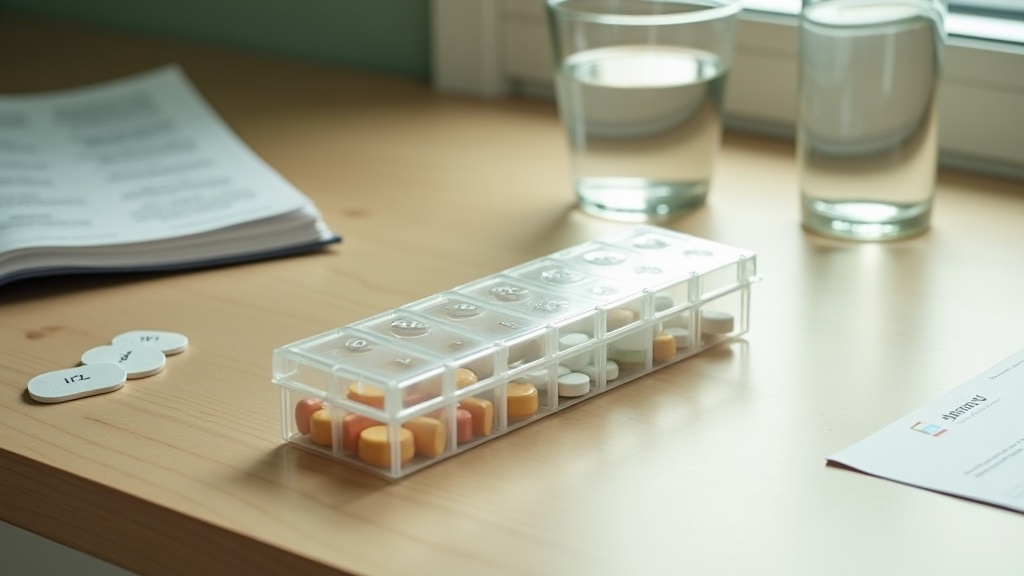
Actionable takeaway: build a daily pill organizer with the bariatric multi split AM and PM, calcium citrate in 2 to 3 doses, iron at a different time than calcium and thyroid medication, and sublingual B12 in the morning. Adherence is the largest variable in postoperative deficiency rates.
Lab monitoring is part of the regimen
ASMBS and AACE both specify a follow-up lab schedule inseparable from the supplement schedule: 3, 6, and 12 months postoperatively, then annually for life.
The minimum annual panel: CBC, comprehensive metabolic panel, iron studies (ferritin, TSAT), serum B12, 25-hydroxyvitamin D, PTH, magnesium, and after BPD-DS vitamins A and E, INR for vitamin K, zinc, copper. Many programs add HbA1c and a lipid panel if metabolic disease preoperatively. Bone density scans every 2 years are recommended past 2 years postop, particularly for women.
If your bariatric program has dropped you from follow-up, find another bariatric center or a primary care clinician comfortable with the postoperative panel. Annual labs are how the supplement doses get titrated.
When supplements are not enough, go to the ER
Some postoperative complications need emergency care, not a supplement adjustment.
- Confusion, abnormal eye movements, or unsteady gait. Possible Wernicke's encephalopathy, go to the ER immediately. This is the highest-priority red flag in the first year.
- Persistent vomiting beyond a few days. Risk of thiamine depletion, dehydration, and electrolyte derangement.
- Severe upper abdominal pain. Possible gallstones, ulcer at the gastrojejunal anastomosis, or internal hernia.
- Numbness, tingling, or weakness in hands or feet. Possible advanced B12 or copper deficiency neuropathy.
- Fatigue with pale skin or shortness of breath. Possible severe iron-deficiency or B12 anemia.
- Suicidal thoughts. Call 988 (Suicide and Crisis Lifeline in the US) or your local crisis line. Bariatric postoperative depression rates are elevated, and the standard of care includes mental health follow-up.
FAQ
Can I stop the supplements once my weight stabilizes? No. The anatomy is permanent and so is the malabsorption. ASMBS and AACE are explicit on lifelong supplementation after RYGB, sleeve, and BPD-DS.
Is a regular adult multivitamin enough? Not after RYGB or BPD-DS. The iron, B12, and vitamin D dosing in a standard multi is not calibrated for the post-bypass patient.
Why calcium citrate instead of carbonate? Carbonate needs gastric acid to dissolve. RYGB and BPD-DS reduce gastric acid and bypass the proximal small intestine, where calcium absorption is most efficient. Citrate is acid-independent.
What if I get pregnant after bariatric surgery? Talk to your bariatric program and your OBGYN immediately. The regimen changes, particularly for iron, folate, and vitamin A; some bariatric multis are not appropriate in pregnancy because of vitamin A content. Always consult your OBGYN before adjusting supplements during pregnancy.
Are oral B12 tablets enough? Standard oral B12 is poorly absorbed after bariatric surgery because intrinsic factor and gastric acid are reduced. Use sublingual 500 mcg daily, intramuscular 1,000 mcg monthly, or nasal spray.
Conclusion: the bottom line on best supplements after gastric bypass
If you had Roux-en-Y gastric bypass, sleeve gastrectomy, or biliopancreatic diversion, the bariatric multi, calcium citrate, vitamin D3, iron, and B12 are not optional and not adjunctive. They are the standard of care, written into the ASMBS and AACE guidelines, and the goal is to prevent anemia, neurologic damage, and bone disease that are otherwise predictable consequences of the surgery. The regimen lasts a lifetime, and so does the annual lab schedule that titrates it.
Next steps:
- Confirm with your bariatric program which bariatric-specific multi they recommend and lock in labs at 3, 6, 12 months and then annually. If you've fallen out of follow-up, get back in.
- Track dose timing in a daily organizer to keep calcium separate from iron and from levothyroxine. For mothers in the early postpartum window, the overlapping nutrient demands of breastfeeding and bariatric malabsorption need explicit planning, and our companion piece on the best supplements for postpartum recovery is the right place to start.
- For our editorial method and conflict-of-interest policy, see how we review supplements. For more from this author, see Michael Ward's published work on UV.
This article is for informational purposes and not medical advice. Supplementation after bariatric surgery is medically required and should be coordinated with your bariatric program and prescribing clinician. Consult your bariatric team before starting, stopping, or changing any postoperative supplement, particularly if you are pregnant, nursing, taking levothyroxine, taking anticoagulants, or managing chronic kidney, liver, or cardiovascular disease.
Reviewed by Michael Ward, MD MPH, Preventive Medicine, focused on guideline-based chronic disease management.
