
Affiliate disclosure: this article contains affiliate links. As an Amazon Associate, UsefulVitamins.com earns from qualifying purchases at no extra cost to you.
Before you buy
Most probiotic reviews ask "is this a good daily probiotic?" That is the wrong question for Florastor. The honest question is "do I need a yeast probiotic right now, or a bacterial one?" Those are different tools.
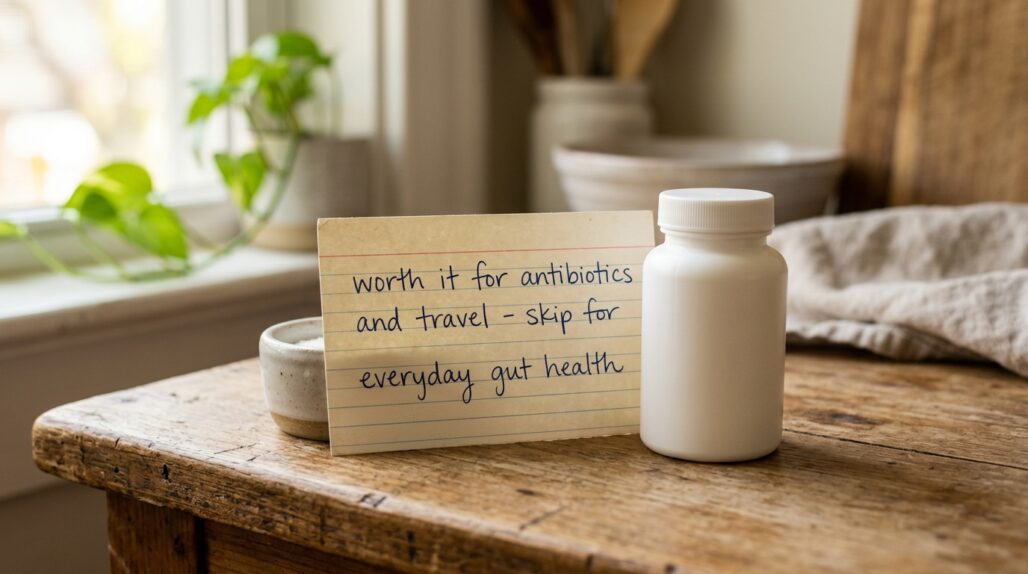
Florastor's active ingredient is Saccharomyces boulardii CNCM I-745, a probiotic yeast rather than a bacterium. That single fact decides almost everything about who should buy it. Because it is a yeast, antibiotics do not kill it – they target bacteria. So the one scenario where Florastor clearly beats a standard probiotic is the one where standard probiotics struggle: while you are actually taking antibiotics.
If you are not on antibiotics and not about to travel somewhere with a real risk of stomach trouble, the case gets weaker fast. You can get respectable daily gut support for less money from a well-studied bacterial strain. We will lay out exactly when Florastor is worth it and when it is not.
One note up front: this is general information, not medical advice. Talk to your doctor or pharmacist if you have a weakened immune system or a serious illness – that group should not take this product at all, and we explain why below.
What Florastor actually is
Florastor is built around a single organism: Saccharomyces boulardii CNCM I-745. The "CNCM I-745" part is a specific deposited strain, and it matters, because most of the published research on this yeast used exactly this strain (originally marketed in Europe for decades).
Per the brand's own labeling, the standard Florastor Daily capsule contains 250 mg of S. boulardii, with directions to take 2 capsules once or twice a day. The other ingredients are short and unremarkable – lactose, magnesium stearate, and a hydroxypropyl methylcellulose capsule shell, according to the Florastor Daily product listing. It is labeled gluten-free, non-GMO, and vegetarian.
A few things to be clear-eyed about. Florastor markets a growing lineup – Daily, Dual Action, Advanced Pro + Pre, Kids, Baby, and several "Balanced Benefits" spin-offs aimed at things like skin and stress. The evidence we trust applies to the core S. boulardii strain, not to the marketing claims layered onto the newer combo products. For the rest of this review, "Florastor" means the core S. boulardii product.
This is not a multi-strain blend. You are buying one organism, and you are buying it for what that one organism does well. That focus is a feature here, not a limitation.
Why a yeast probiotic survives antibiotics
This is the whole pitch, so it is worth getting right.
Antibiotics are designed to kill or stop bacteria. S. boulardii is a yeast, so antibiotics leave it largely untouched. A typical bacterial probiotic taken alongside antibiotics is partly working against the same drug that is meant to clear your infection. The yeast sidesteps that problem.
That is the mechanistic reason it pairs well with a prescription. You can take it on the same days as your antibiotic without the drug knocking out the probiotic, which is awkward to time with bacterial products.
It is also why this is not a magic everyday upgrade. When you are not on antibiotics, the "survives antibiotics" advantage does nothing for you. A bacterial probiotic is perfectly capable of colonizing a gut that is not being actively bombarded by a drug. So the survival trick is a situational strength, not a universal one.
What the evidence supports
Here is where Florastor's strain earns real respect. S. boulardii has one of the larger evidence bases of any single probiotic organism, and the strongest signals line up with the brand's main use case.
- Antibiotic-associated diarrhea (AAD): A 2015 meta-analysis in Alimentary Pharmacology and Therapeutics found S. boulardii roughly halved the risk of AAD, cutting it from about 18.7 percent to about 8.5 percent across pooled trials. The US NIH NCCIH probiotics guide similarly notes that probiotics taken with antibiotics reduced AAD by about half in non-hospitalized patients.
- Travelers' diarrhea: Multiple reviews report a modest preventive effect, which is why the travel use case is reasonable – though effect sizes vary by destination and study.
- Clostridioides difficile-associated diarrhea: The benefit looks clearer in children than in adults, so do not assume it is a strong C. diff shield for grown-ups.
Now the honest counterweight. Not every trial is positive. A well-run randomized, placebo-controlled trial reported in Open Forum Infectious Diseases and a separate hospital study found no significant benefit in lower-risk inpatients. The takeaway: S. boulardii helps most where the baseline risk of diarrhea is higher – longer antibiotic courses, broad-spectrum drugs, prior episodes. If you are a healthy adult on a short, narrow course, the expected benefit is smaller.
Bottom line on evidence: this is a probiotic with real, repeated data behind a specific job – better than the vague "supports gut health" claims that cover most of the category.
Safety – the part that actually matters
Most probiotic safety sections are filler. This one is not.
Because Florastor is a live yeast, it has been linked to fungemia (a bloodstream yeast infection) in a small number of vulnerable people. The CDC's Emerging Infectious Diseases journal documented cases tied to S. boulardii supplements, and European regulators reached the same conclusion: the risk outweighs the benefit in critically ill or immunocompromised patients.
So treat these as hard stops. Do not take Florastor if you are immunocompromised, critically ill, or have a central venous catheter (a central line) without explicit clearance from your physician. The reported cases cluster in exactly those groups, often in hospital settings.
For a healthy adult taking it at home, the safety record across decades of use is reassuring, and side effects are usually mild (gas, bloating). The warning is about who, not whether. If you are in a higher-risk group, this is one supplement to clear with a clinician first, and the NIH NCCIH guide makes the same point about probiotics and weakened immune systems.
Cost per day, honestly
Florastor is priced like a specialty product, because it is one.
A 100-capsule bottle runs around $40 to $50 as of writing (check current price). The catch is the dose. At the label's higher recommendation of 4 capsules a day, that 100-count bottle is a 25-day supply, which works out to roughly $0.80 to $1.00 a day. At the lower 2-capsule maintenance dose it stretches to about $0.40 to $0.50 a day.
Compare that to bacterial options. Culturelle's once-daily LGG capsule lands near $0.50 a day, and Align typically falls in the $0.66 to $1.00 a day range. So for everyday use, Florastor is not cheaper – and it is not doing a job the bacterial options cannot.
Where the math flips in Florastor's favor is the short, targeted course. A 10-day run during antibiotics is a few dollars of insurance against a miserable week, and that is a genuinely sensible spend.
Florastor vs a standard bacterial probiotic
| Factor | Florastor (S. boulardii) | Culturelle (LGG) | Align (B. infantis 35624) |
|---|---|---|---|
| Organism type | Yeast | Bacteria | Bacteria |
| Survives antibiotics | Yes – unaffected | No – take apart from doses | No – take apart from doses |
| Best-evidence use | Antibiotic-associated and travelers’ diarrhea | AAD and general daily support | IBS-type symptoms, daily support |
| Refrigeration | Shelf-stable | Shelf-stable | Shelf-stable |
| Rough cost per day | $0.40 to $1.00 | ~$0.50 | $0.66 to $1.00 |
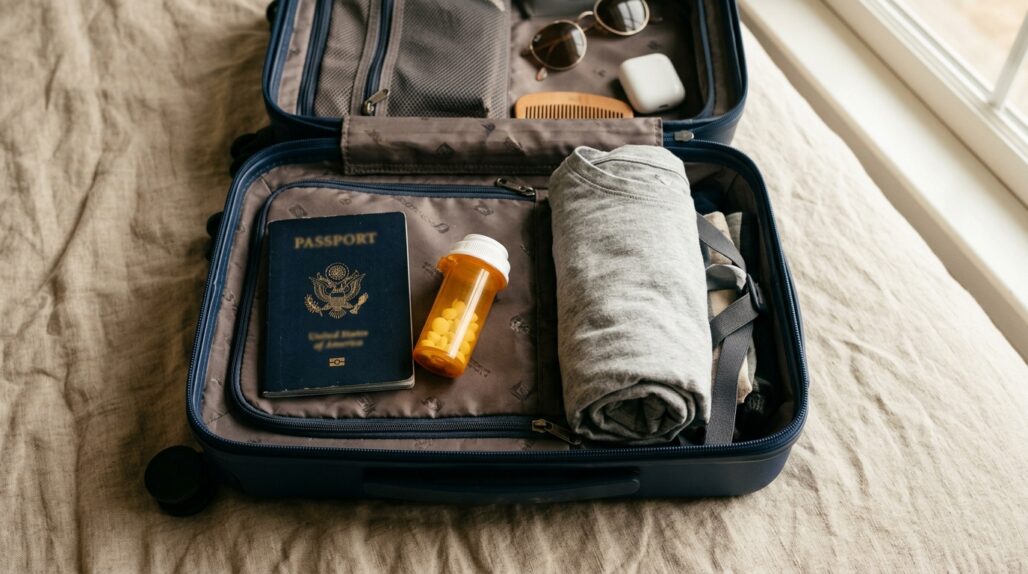
The pattern is clear. If antibiotics or travel are in the picture, Florastor wins on mechanism. If you just want a sensible daily probiotic, a bacterial strain is the better-value default. If you are still deciding between single-strain and blends, our breakdown of whether one well-studied strain is enough covers that trade-off in depth.
Quality and third-party testing
A fair word on verification. Florastor leans on its decades of clinical use and the specific CNCM I-745 strain designation rather than on a consumer-facing third-party seal. We could not confirm a current USP or NSF certification mark on the retail bottles, so do not assume an independent purity seal is present – judge it on the strain evidence and the manufacturer's track record, not on a badge.
Remember that, like all supplements, this is not FDA-approved as a drug; the FDA regulates supplements for safety and labeling, not for proven effectiveness. The strength of the case here comes from the published trials on the strain, not from a regulator's blessing.
Where it fits and our value pick
For most readers the smart move is situational. Buy Florastor for the antibiotic course or the trip, and use a cheaper bacterial probiotic – or nothing – the rest of the time. Pairing it with a daily bacterial strain in the weeks after antibiotics is a reasonable rebuild routine, since the two organisms do different things.
If you want to see how the single-strain yeast approach stacks up against capsule blends and synbiotics, our guide to prebiotics, probiotics, and synbiotics explains which design fits which goal, and our Physician's Choice multi-strain review covers a higher-CFU everyday option.


As an Amazon Associate, UsefulVitamins.com earns from qualifying purchases at no extra cost to you.
We may earn a commission from purchases made through the links above, at no extra cost to you. This never changes our verdict.
FAQ
Can I take Florastor at the same time as my antibiotic? Yes – that is the main reason to choose it. Because S. boulardii is a yeast, your antibiotic does not kill it, so you do not need to stagger the doses the way you do with bacterial probiotics.
Is Florastor a daily probiotic or just for diarrhea? You can take it daily, but it is not the best value for routine maintenance. Its real advantage shows up during antibiotics, travel, or bouts of diarrhea, so many people use it as a targeted product rather than an everyday one.
Does Florastor need to be refrigerated? No. It is shelf-stable, which makes it easy to pack for travel – one of its better practical points.
Who should not take Florastor? Anyone who is immunocompromised, critically ill, or has a central venous catheter should avoid it because of a rare risk of bloodstream yeast infection, unless a doctor says otherwise. Clear it with your physician if you have any serious illness.
Is Florastor better than Culturelle or Align? Not better, different. Florastor is the pick when antibiotics or travel are involved; a bacterial probiotic like Culturelle is the more economical choice for plain daily gut support.
How long should I take it during antibiotics? Many studies dosed it across the antibiotic course and for a short period after. Follow your doctor’s or pharmacist’s guidance, since the right window depends on the antibiotic and your situation.
The verdict
Florastor does one thing better than almost anything else on the shelf: it keeps working while you are on antibiotics, and the published evidence on its strain backs that use. For people starting a course of antibiotics, for frequent travelers, and for anyone with a history of antibiotic-associated diarrhea, it is worth the money.
For everyone else, be honest about your goal. If you just want daily gut support, a bacterial probiotic costs the same or less and does that job fine. And if you are immunocompromised or seriously ill, this is a clear skip without a doctor's sign-off. If you want a head-to-head before deciding, our Align versus Culturelle comparison covers the two most common daily picks.
The next step is simple: buy it for the situation that calls for a yeast, not as a forever supplement. Match the tool to the job and Florastor is a smart, evidence-backed purchase.
This article is for general information only and is not medical advice. Probiotics can interact with health conditions and medications, and the yeast in Florastor carries real risks for immunocompromised people. Talk to your doctor or pharmacist before starting any supplement.
Reviewed by the UsefulVitamins Editorial Team.
