
Affiliate disclosure: this article contains affiliate links. As an Amazon Associate, UsefulVitamins.com earns from qualifying purchases at no extra cost to you.
Before you buy
If you are reading this at 2 a.m. with a screaming newborn, here is the honest version. Colic almost always resolves on its own by three to four months, no matter what you do. Nothing on a store shelf reliably stops it.
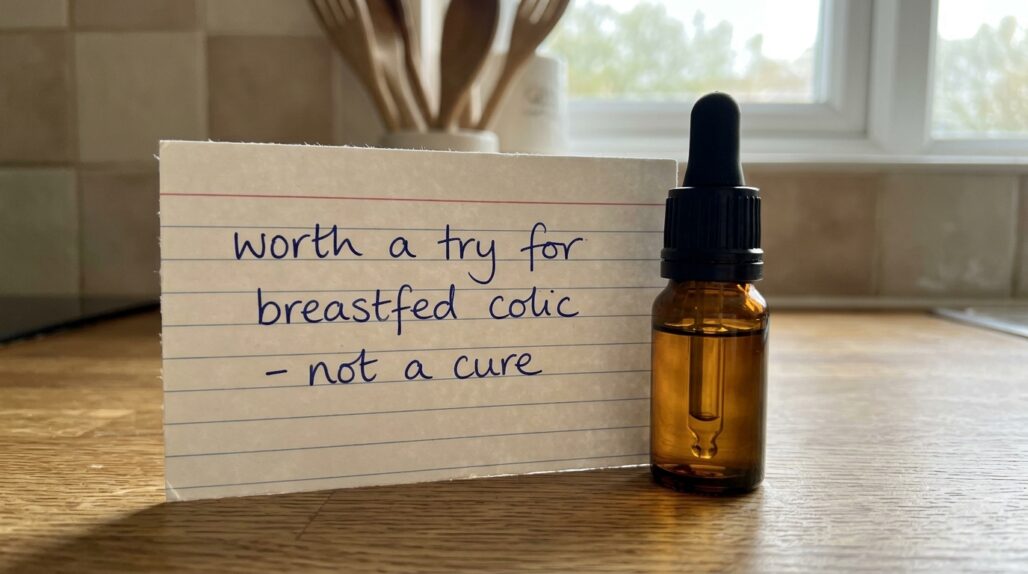
BioGaia Protectis is worth understanding because it is the one infant probiotic with a real research file behind the colic claim. That does not make it a cure. It makes it the least speculative thing to try if you want to try something.
The real decision is not "does this brand work." It is whether probiotic drops are worth a two-week trial for your specific baby – and that is a conversation for your pediatrician, not a product page. Infant supplements sit squarely in the "ask a doctor first" category, and giving anything to a baby under a few months old should be cleared by the person who knows their history.
This review covers what is actually in the bottle, what the studies do and do not show, how the vitamin D version differs, and where your money is better spent.
What BioGaia Protectis Baby Drops actually are
The active ingredient is a single probiotic strain, Limosilactobacillus reuteri DSM 17938 (you will also see it written the older way as Lactobacillus reuteri). According to the official BioGaia product page, the formula is just that strain suspended in sunflower oil, with no dairy, soy, lactose, or gluten.
The dose is 5 drops once a day, which delivers a minimum of 100 million live bacteria (10^8 CFU). That is a low CFU count by adult-probiotic standards, but infant dosing is not about big numbers – the strain and the trial dose matter more than headline CFU.
Why this one strain and not a multi-strain blend? Because DSM 17938 is the strain the colic trials actually used. A product is only as proven as the exact strain inside it, and most infant probiotics on the shelf have never been tested for colic at all.
A few practical notes from the label:
- Shake well before use – the bacteria settle in the oil.
- Drops go on a clean spoon, on the breast, or mixed into expressed milk or room-temperature liquid.
- Never mix into anything hot (above about 37 C / body temperature) – heat kills the bacteria.
- The bottle does not need refrigeration before opening, which is part of the appeal for travel.
One honest gap on quality: BioGaia leans on its own in-house programs (it markets terms like EvidenceBiotics and LongevityGuard) rather than an independent third-party certification such as NSF or USP. We could not confirm an external seal on the baby drops, so treat the quality story as brand-stated, not independently verified. For infant products, that is a fair point to raise with your pediatrician.

What the colic evidence really shows
This is where BioGaia earns its reputation, and also where the marketing gets ahead of the science.
The strongest single piece of evidence is the individual-patient-data meta-analysis by Sung and colleagues, published in the journal Pediatrics in 2018. It pooled the best randomized trials of DSM 17938 for colic. The headline finding has a sharp split:
- In breastfed infants, babies on the probiotic were roughly two to three times more likely to respond (crying cut by half) at days 7, 14, and 21 than babies on placebo.
- In formula-fed infants, that benefit did not show up.
A separate 2021 systematic review and meta-analysis focused on breastfed babies and again found reduced crying time – but graded the confidence in that evidence as low to very low. Translation: the direction is consistent, the certainty is not.
So the fair summary is this. If your baby is breastfed and colicky, BioGaia is the most defensible thing to try. If your baby is formula-fed, the evidence does not support the same expectation, and you should set that expectation with your pediatrician before spending anything.
A grounding reality check worth keeping in view: even in the positive trials, plenty of babies on the real probiotic did not improve, and colic resolves with time regardless. A two-week trial is a reasonable test. A bottle you keep buying for months "just in case" is not.
The vitamin D version – a different product for a different job
BioGaia also sells a Protectis Baby Drops with Vitamin D version, typically a 10 mL bottle. Same probiotic strain, same 5-drops-a-day dose, plus 400 IU (10 mcg) of vitamin D3 per dose.
That 400 IU number is not random. It matches the American Academy of Pediatrics recommendation that breastfed babies get 400 IU of vitamin D daily from the first days of life, because breast milk does not supply enough.
Here is the catch worth flagging. The vitamin D matters for almost every breastfed baby; the probiotic only matters if you are treating colic. So the combo can be convenient, but do not let the colic angle talk you into a vitamin you would have given anyway from a cheaper plain-D drop.
If your baby already takes a vitamin D supplement, adding the combo could double up – check with your pediatrician so you are not stacking 800 IU by accident.

What it costs and how that compares
BioGaia is premium for an infant probiotic, and the value depends entirely on whether the trial works for your baby.
| Product | Size | Approx. supply | Approx. price | Approx. cost per day |
|---|---|---|---|---|
| BioGaia Protectis Baby Drops | 5 mL | about 50 days | around $20 | about $0.40 |
| BioGaia Protectis with Vitamin D | 10 mL | about 50 days | around $30 to $35 | about $0.60 to $0.70 |
| Plain infant vitamin D drops (separate) | varies | 2 to 3 months | around $10 to $15 | under $0.20 |
Prices are ballpark figures as of writing and move around by retailer and pack size, so check the current price before you buy. The point of the table is the shape, not the exact cents: a two-week BioGaia trial costs only a few dollars, which is part of why it is a low-stakes thing to test.
Where it stops being good value is the open-ended monthly habit. If two to three weeks brings no change, the honest move is to stop, not to keep buying.
Who should try it, and who should look elsewhere
A quick, plain sort:
- Reasonable to try (with pediatrician sign-off): a breastfed, full-term, otherwise-healthy baby with classic colic who is driving the household to exhaustion.
- Set low expectations: a formula-fed baby with colic. It may be worth a conversation, but the evidence does not promise the same benefit.
- Do not start without a doctor first: premature babies, babies with any underlying illness, or any infant whose pediatrician has not okayed it.
If your real worry is general gut health rather than colic specifically, step back and read up on what probiotics can and cannot do before spending. Our explainer on prebiotics, probiotics, and synbiotics lays out the difference, and the NIH Office of Dietary Supplements probiotics fact sheet is a sober, non-marketing overview.
For older kids or adults in the house comparing probiotics for themselves, the strain-versus-strain logic is the same one we apply in our Culturelle single-strain review and our Florastor S. boulardii review – buy the strain with evidence for your specific goal, not the biggest CFU number. When the goal is broad daily support rather than a studied condition, a straightforward multi-strain like the ones in our Physician's Choice probiotic review usually costs less and does the job.

A few practical things to do it right
If you and your pediatrician decide to try it:
- Give it as a once-daily dose and stick to the same time so you can actually judge the result.
- Run a clean two-week trial and watch crying and fussing time honestly, ideally with a rough log.
- Stop if nothing changes by two to three weeks. The trials that showed benefit showed it inside that window.
- Do not combine it with the vitamin D version and a separate vitamin D drop.
Where to buy and the affiliate note
The drops are widely stocked, and price moves around by retailer and pack size, so it is worth comparing before you commit to either the plain or vitamin D version.


As an Amazon Associate, UsefulVitamins.com earns from qualifying purchases at no extra cost to you.
UsefulVitamins may earn a commission from purchases made through the links above, at no extra cost to you. This never changes our verdicts or which products we recommend.
FAQ
Does BioGaia Protectis actually cure colic? No. The best evidence shows it can reduce crying time in breastfed colicky infants, but it does not work for everyone and colic resolves on its own by three to four months regardless. Treat it as a reasonable trial, not a cure.
Does it work for formula-fed babies? The large 2018 Pediatrics meta-analysis found the benefit in breastfed infants but not in formula-fed infants. If your baby is formula-fed, set expectations low and talk to your pediatrician first.
How many drops and how often? The standard dose is 5 drops once a day, delivering at least 100 million live L. reuteri DSM 17938. Shake the bottle first and never mix the drops into anything hot, because heat kills the bacteria.
What is the difference between the regular and vitamin D versions? Same probiotic strain and dose; the vitamin D version adds 400 IU of vitamin D3, which matches the AAP recommendation for breastfed babies. If your baby already gets a separate vitamin D drop, the combo could double the dose, so check first.
Is it safe for newborns? The trials reported no significant side effects, and it is marketed from birth. That said, anything given to a newborn should be cleared by your pediatrician, and premature or medically fragile infants need a doctor’s specific guidance.
Is there a cheaper probiotic that does the same thing? Not for colic specifically. DSM 17938 is the strain the colic studies used, so a cheaper probiotic with a different strain is not an equivalent swap. For general gut support, a standard multi-strain is cheaper, but that is a different goal.
The verdict
BioGaia Protectis is the one infant probiotic with real colic research behind it, and for a breastfed, full-term baby with colic, a two-week trial is a low-cost, low-risk thing to try – with your pediatrician's blessing.
Just keep the expectations honest. It is not a cure, the evidence is weak for formula-fed babies, and colic ends on its own anyway. If two to three weeks brings no change, stop. And if your real goal is the vitamin D, a plain vitamin D drop costs less and does that job on its own.
Your next step is simple: ask your pediatrician whether a short trial makes sense for your baby, and only then decide between the plain and vitamin D versions.
This article is for general information only and is not medical advice. Supplements are not a treatment for colic or any other condition, and infant supplements in particular should be discussed with your pediatrician before use. Always consult a qualified healthcare professional about your child.
Reviewed by the UsefulVitamins Editorial Team.
