
Affiliate disclosure: this article contains affiliate links. As an Amazon Associate, UsefulVitamins.com earns from qualifying purchases at no extra cost to you.
Before you buy
Cymbiotika sells some of the most photographed supplements on the internet. The slim black pouches, the vanilla-orange flavor, the liposomal claim. The question is not whether the products are good. It is whether the premium price buys you anything a $25 Amazon bottle does not.
For most buyers, the honest answer is no. Liposomal delivery is real and modestly helpful, but it is not exclusive to Cymbiotika, and it does not justify paying two to four times more.
One thing to clear up first: Cymbiotika is no longer direct-only. You can buy it on Amazon and at Target now, often at the same or higher price than the website. So the decision is not "premium brand versus Amazon." It is "this premium brand versus cheaper liposomal options that sit right next to it in the same search results."
This guide compares Cymbiotika's two flagship liposomal products against the Amazon picks that copy the format for less, and tells you where the cheaper option actually matches and where it does not.
What Cymbiotika sells, and what it costs
Two products drive most of the dupe-hunting traffic.
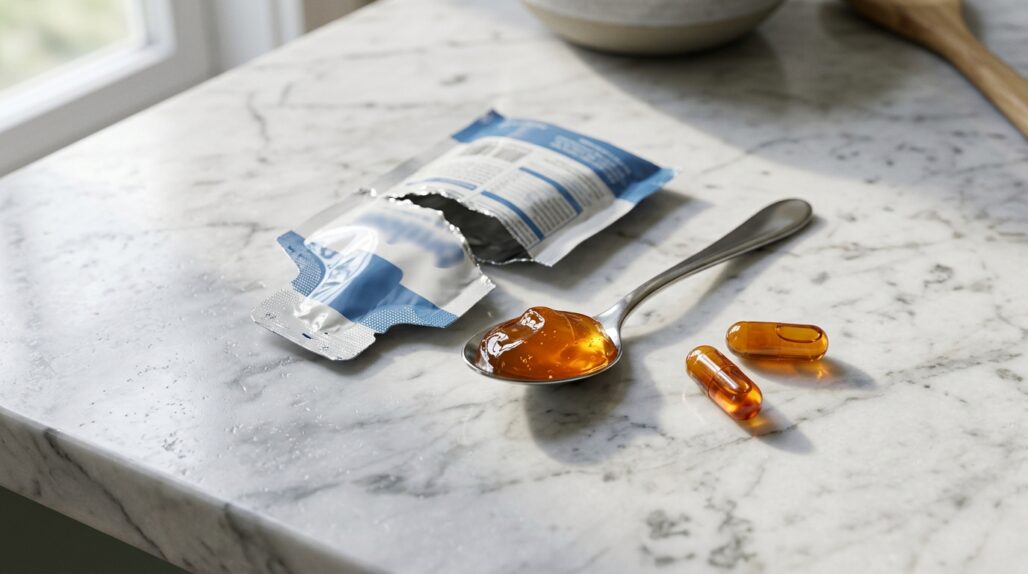
The Liposomal Vitamin C comes as 30 single-serve gel packets, vanilla with orange notes, priced at around $62 one-time or about $55.80 on subscription as of writing (check current price). Cymbiotika describes it as a "nano-encapsulated phospholipid" liposomal gel.
The Liposomal Glutathione is the bigger spend. It runs around $88 one-time, about $79.20 on subscription, and ships as 26 pouches. This one is more than plain glutathione: each pouch also carries CoQ10 (in the ubiquinol form), PQQ, and riboflavin, delivered in phosphatidylcholine from sunflower lecithin.
Cymbiotika's quality claims are reasonable on paper, per its official product pages: third-party tested by an outside lab, GMP-certified, non-GMO, soy-free, with a certificate of analysis available to view. That puts it ahead of bargain-bin brands. It does not put it ahead of the better Amazon options, which carry the same kinds of testing.
The glutathione page also advertises "300% higher absorption" versus a standard formulation. Treat that number as a marketing figure, not a settled fact – it reflects the brand's own comparison, not an independent head-to-head against the specific competitors below.
Is liposomal delivery worth a premium at all?
This is the real question, because "liposomal" is the whole pitch.
Liposomal means the nutrient is wrapped in a phospholipid shell, the same kind of fat your cell membranes are made of. The idea is that the shell protects the vitamin through digestion and helps more of it reach your blood. For vitamin C, the evidence says this is real but modest.
A 2025 scoping review in Basic & Clinical Pharmacology & Toxicology looked at the studies comparing liposomal to standard vitamin C and found that liposomal forms beat non-liposomal in most trials, though the size of the advantage swung widely between studies. One commonly cited figure is about 1.77 times the bioavailability. The reviewers were blunt that the data are still early and not yet robust, with small samples and inconsistent formulations.
So here is the practical read. Liposomal vitamin C probably does get a bit more into you than a cheap tablet, but plain vitamin C is already well absorbed at normal doses, and the body dumps the excess in urine anyway, as the NIH Office of Dietary Supplements notes in its vitamin C fact sheet. The upgrade is worth a small premium, not a large one.
For glutathione, oral absorption is genuinely tricky, so liposomal delivery has a stronger rationale. But again, the rationale applies to any quality liposomal glutathione, not just the one in a black pouch.
The takeaway: pay for liposomal if you want it. Do not pay four times more for the same technology in a fancier wrapper.
Cheaper liposomal Amazon picks, compared
Here are the alternatives worth shopping, with Cymbiotika as the benchmark. Prices are approximate and move often; confirm before you buy.
| Product | Format | Key actives | Approx. price | Approx. cost per serving |
|---|---|---|---|---|
| Cymbiotika Liposomal Vitamin C | 30 gel pouches | Liposomal vitamin C | ~$62 | ~$2.07 |
| Cymbiotika Liposomal Glutathione | 26 gel pouches | Glutathione + CoQ10 + PQQ + B2 | ~$88 | ~$3.38 |
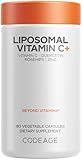
| Codeage Liposomal Vitamin C | 180 capsules | Vitamin C 1500 mg + bioflavonoids | ~$40 | ~$0.67 |
| NOW Liposomal Vitamin C | 120 veg capsules | PureWay-C 1000 mg | ~$20 to $25 | ~$0.40 |
| Codeage Liposomal Glutathione+ | 120 capsules | Reduced L-glutathione 1000 mg + vitamin C + CoQ10 | ~$60 | ~$1.00 |
Look at the cost-per-serving column. The Cymbiotika vitamin C costs three to five times more per dose than the capsules, and the gap on glutathione is similar once you account for the bigger Codeage bottle.
A few notes on the picks:
- NOW Liposomal Vitamin C uses PureWay-C, a fat-soluble vitamin C form with its own absorption data, at 1000 mg per serving. NOW runs its own in-house testing labs and holds NPA A-rated GMP certification, so the quality floor is solid for the price.
- Codeage Liposomal Vitamin C packs a bigger 1500 mg dose plus citrus bioflavonoids, and the 180-count bottle stretches across two months.
- Codeage Liposomal Glutathione+ uses reduced L-glutathione at 1000 mg, and adds vitamin C and CoQ10. It is the closest functional match to Cymbiotika's glutathione pouch, minus the PQQ and the flavor.


As an Amazon Associate, UsefulVitamins.com earns from qualifying purchases at no extra cost to you.
UsefulVitamins may earn a commission from purchases made through the links above, at no extra cost to you. This never changes our picks or our verdicts.
Where the cheaper options match, and where they differ
The capsules match Cymbiotika on the thing that matters most: liposomal or enhanced-absorption delivery of the same active nutrients. They also match or beat it on cost per dose, often dramatically.
They differ in three ways, and only one of those might matter to you.
Format. Cymbiotika is a flavored gel you squeeze from a pouch. The alternatives are capsules. If you genuinely will not swallow capsules, the pouch is a real reason to pay more – but be honest about whether that is you.
Flavor and feel. The vanilla-orange taste is part of what people buy. A capsule has no taste experience at all. That is a preference, not a clinical difference.
The glutathione stack. Cymbiotika's glutathione pouch bundles CoQ10, PQQ, and B2. Codeage's includes CoQ10 and vitamin C but not PQQ. If the PQQ specifically matters to you, that is a small point in Cymbiotika's favor, though PQQ has thinner human evidence than the brand's marketing implies.
Everything else – the testing, the GMP certification, the non-GMO labeling – the better Amazon brands also carry. You are not trading down on safety to save money here. If you want to dig into the CoQ10 angle specifically, our guide on CoQ10 versus ubiquinol absorption explains which form is worth paying for.
Top dupe by product type
If you came here to swap one specific Cymbiotika product, here is the short version.
For vitamin C, buy NOW Liposomal Vitamin C. It is the best value on the list at well under half Cymbiotika's price, the dose is sensible at 1000 mg, and NOW's testing track record is strong. This is the easy pick for most people. If you want a bigger dose with bioflavonoids and do not mind a slightly higher price, the Codeage version is the step-up.
For glutathione, buy Codeage Liposomal Glutathione+. It is the closest functional match to Cymbiotika's pouch, with reduced L-glutathione at 1000 mg, CoQ10, and vitamin C, at roughly a third less per month once you account for the 120-count bottle. You lose the PQQ and the flavor, and you keep almost everything that matters.
If you are still weighing the brand itself rather than the category, our deeper Cymbiotika worth-it breakdown covers the full lineup and the subscription math.
A quick safety note before you stock up. Glutathione, NAC, and high-dose vitamin C can interact with some medications and conditions. If you take prescriptions, run your stack through our drug and supplement interaction checker or read the full interactions guide first.
FAQ
Is Cymbiotika actually direct-only? No, not anymore. You can buy Cymbiotika on Amazon and at Target as of writing, often at the same price as its website. The “direct-only” reputation is outdated.
Is liposomal vitamin C really better than a regular tablet? Modestly, yes. Studies suggest liposomal forms reach your blood somewhat better, around 1.77 times in one analysis, but the evidence is early and plain vitamin C is already well absorbed at normal doses. The upgrade is worth a small premium, not a large one.
What is the cheapest good Cymbiotika vitamin C alternative? NOW Liposomal Vitamin C, which uses PureWay-C at 1000 mg per serving and typically costs well under half of Cymbiotika per month. It is third-party-quality from a GMP-certified maker.
Does the cheaper glutathione skip anything important? The main thing Codeage’s glutathione leaves out versus Cymbiotika is PQQ. It still includes reduced L-glutathione at 1000 mg and CoQ10. PQQ has limited human evidence, so most people will not miss it.
Are the Amazon dupes lower quality? Not necessarily. NOW runs its own testing labs and holds NPA A-rated GMP certification, and Codeage uses branded, research-backed ingredients like Setria. You are paying less for format and branding, not for safety.
Should I take glutathione at all? That depends on your goals, and oral glutathione has real absorption limits even in liposomal form. If you take medications or have a health condition, check for interactions or ask your doctor before starting.
The verdict
Cymbiotika makes a real product with real testing behind it. But the liposomal delivery it charges a premium for is not unique, and the science behind that delivery only supports a small price bump, not a doubling or tripling of cost.
For vitamin C, the smart buy is NOW Liposomal Vitamin C at a fraction of the price. For glutathione, Codeage Liposomal Glutathione+ is the closest match for clearly less. The only solid reason to stay with Cymbiotika is if you specifically want the flavored gel-pouch format or the exact PQQ-included stack and you are happy to pay for it.
Your next step: decide whether you are buying the technology or the experience. If it is the technology, switch to a capsule and pocket the difference.
This article is for general information and is not medical advice. Supplements are not regulated like drugs, and individual needs vary. Talk to a doctor or pharmacist before starting a new supplement, especially if you take medication or have a health condition.
Reviewed by the UsefulVitamins Editorial Team.
