
Affiliate disclosure: this article contains affiliate links. As an Amazon Associate, UsefulVitamins.com earns from qualifying purchases at no extra cost to you.
Why you test iron before you take it
Iron is one of the few supplements where guessing can hurt you in both directions. Take too little and you stay tired; take too much, for too long, without a reason, and you can load iron into the liver and heart, because the body has no fast way to dump the excess.
That is why testing first is closer to medical consensus than a nice-to-have. The American Gastroenterological Association and the American Society of Hematology use a serum ferritin under roughly 45 ng/mL to diagnose iron-deficiency anemia, and they treat the number as the starting point for finding a cause, not as a cue to self-medicate. The NHS is blunter still: once anaemia is confirmed, the job is to find why (heavy periods, a gut bleed, pregnancy, diet) and treat that, rather than topping up iron forever.
So an at-home iron test earns its place by answering one practical question: am I actually low, or am I about to fix a problem I do not have? A good kit gives you a real number you can take to a doctor. A weak one gives you a colour change you have to interpret on a bathroom counter.
This page ranks three honest options by what they measure, the lab behind them, and price. None of them diagnose anything. They are screening aids, and an abnormal result still belongs in front of a clinician.
What an at-home iron test actually measures
"Iron test" is a loose label, and the differences matter more than the brand on the box.
Ferritin is your storage tank. It is the single most useful early marker of low iron, because stores run down before your hemoglobin does. But ferritin has a catch: it is an acute-phase reactant. Per the StatPearls review on iron-deficiency anemia, infection, inflammation, liver issues and some chronic illness can push ferritin up and mask a real deficiency. A "normal" ferritin during a cold is not always reassuring.
Serum iron, TIBC and transferrin saturation describe iron in transit, not in storage. Together with ferritin they sketch a fuller picture: low stores with a high binding capacity points one way; high saturation points toward iron loading. A panel that includes these is more informative than ferritin alone, which is why clinicians order them together.
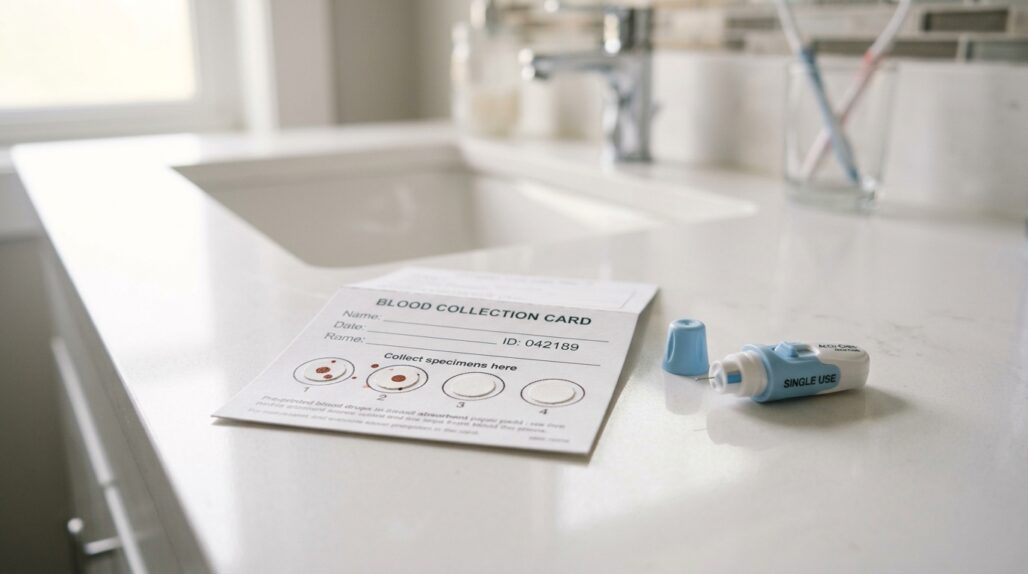
What "CLIA-certified" means. CLIA is the US standard, run under the CDC's Clinical Laboratory Improvement Amendments program, that any lab testing human samples must meet. When a finger-prick kit ships your dried blood spot to a CLIA lab, a quantitative ferritin value in ng/mL comes back from a regulated process. A strip you develop at home is not that; it reads "low" or "normal" against a line, and is best treated as a rough screen.
Two honest limits apply to every home kit. Finger-prick collection is sensitive to technique and hydration, so a botched sample skews the result. And a single ferritin reading, on its own, does not show how your body is handling iron overall, which is why a panel and a doctor's read beat one number in isolation.
How we ranked the three picks
We weighted four things, in this order: does it go through a named CLIA lab; does it give a real quantitative number; does it measure a panel or just ferritin; and price. Convenience and speed came last, because a fast answer you cannot trust is not a bargain.
The result is a clear hierarchy. A full CLIA-lab iron panel is the best default. A single-marker CLIA ferritin test is a fine, cheaper screen if you only want the storage number. A rapid no-lab strip is the budget tripwire, useful for a quick flag but not for a decision.
| Pick | What it measures | Lab / read-out | Best for | Price (approx, as of writing) |
|---|---|---|---|---|
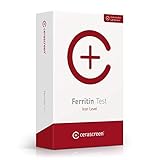
| CLIA-lab ferritin test with results report (finger-prick) | Ferritin (iron stores), quantitative | CLIA-certified lab, quantitative ng/mL plus a results report, about 7 business days | Most people deciding whether to start iron | Around $50-80; check current price |
| Cheaper CLIA-lab ferritin test (finger-prick) | Ferritin only (iron stores) | CLIA-certified lab, quantitative ng/mL, mailed back for analysis | A cheaper “are my stores low” screen or a re-test | Around $30-50; check current price |
| Rapid no-lab ferritin strip | Ferritin, semi-quantitative (low vs normal) | You read it at home in 5-15 min, no CLIA lab | A quick flag only, not a decision | Around $15-25 per pack; check current price |
Which to buy, and the honest trade-offs


As an Amazon Associate, UsefulVitamins.com earns from qualifying purchases at no extra cost to you.
Heads up: the links below are affiliate links. If you buy through them we may earn a small commission, at no extra cost to you. It does not change which kit is the better tool for your situation.
Pick 1, the CLIA-lab ferritin test with a results report. This is the default recommendation. You collect a finger-prick dried blood spot, mail it, and a CLIA-certified lab returns a quantitative ferritin value in ng/mL plus an interpreted report. A low number points to depleted stores; a high one is a reason to pause and ask a doctor about iron loading before you supplement. A real ng/mL result is also something a doctor can act on. If you want the wider picture, serum iron, TIBC and transferrin saturation are best added through a clinician-ordered panel.
Pick 2, the cheaper CLIA-lab ferritin test. Cheaper, same mail-in CLIA lab pathway, and it returns ferritin alone. It is a sensible screen if you mostly want to know whether your stores are low, and it is the cleaner choice for a re-test once you already know your starting picture. Its weakness is the acute-phase-reactant problem: one ferritin value, drawn while you are fighting something off, can read falsely normal.
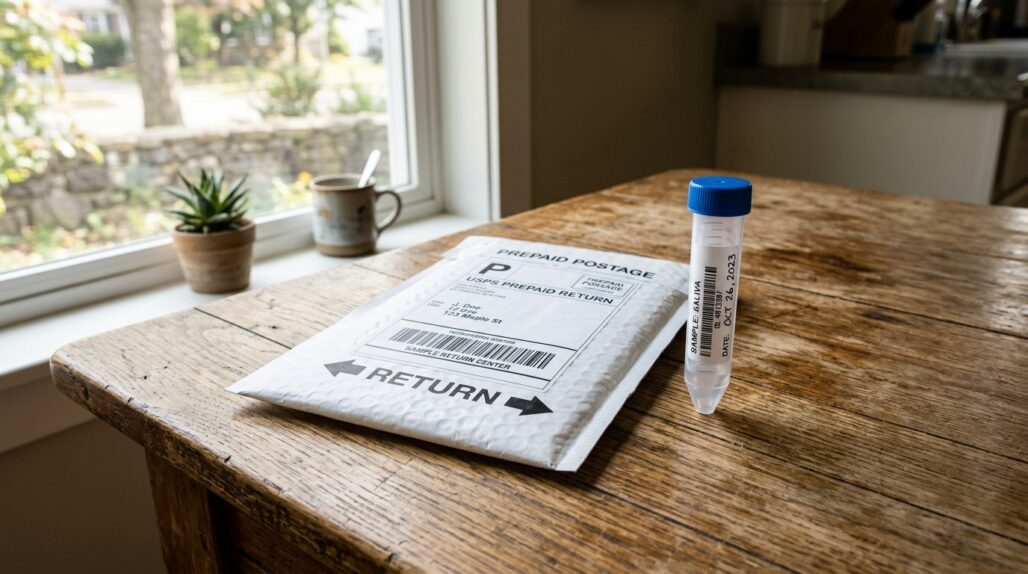
Pick 3, the rapid no-lab strip. Useful as a tripwire, not a verdict. These read "low" or "normal" against a line in minutes, with no CLIA lab in the loop, so the answer is semi-quantitative. As one clinic explains in its review of rapid ferritin tests, a single strip cannot tell you how your body is regulating iron, which is exactly the judgement you need before long-term supplementing. Treat a "low" strip as a prompt to get a proper test, not a green light to dose.
If you already know you are low and just need the iron, our notes on the best iron supplements and on how to take iron without constipation cover form and timing, and the iron dose calculator helps you sanity-check a dose against your result. If you also take other minerals, it is worth knowing whether to take iron and magnesium together or space them apart.
Reading the result and when to re-test
A test is only useful if you act on it. Here is the careful way to read a ferritin number, with the standard ranges, not invented ones.
A common laboratory reference window sits near 30-220 ng/mL for men and roughly 10-150 ng/mL for women, and labs vary, so use the range printed on your own report. For diagnosing deficiency, the AGA and ASH threshold of under 45 ng/mL is a useful anchor. The WHO guideline on ferritin uses lower population screening cut-offs (around 15 ng/mL in adults), which tells you these thresholds are judgement calls, not a single magic line.
You will see "optimal ferritin" figures online, often quoted as 50-100 ng/mL for symptom relief. That is a functional-medicine opinion, not clinical consensus, and it sits above the standard deficiency cut-off rather than replacing it. We mention it so you recognise it, not so you treat the lab range as wrong. For the full debate, our piece on how to read your ferritin result, optimal versus normal lays out both sides.
At the high end, the overload thresholds matter. Screening studies flag possible iron loading around ferritin above 300 ng/mL in men and 200 ng/mL in women with raised transferrin saturation; that is a reason to stop and see a doctor, not to keep taking iron.
The re-test checkpoint. If you and a clinician decide you are low and you start iron, do not re-test next week. Stores refill slowly. Re-check ferritin in roughly 8-12 weeks, ideally on the same kit or panel, so you are comparing like with like. To track whether the supplement is moving the number, log your starting ferritin and the date you began, then set a calendar reminder for the re-test window. A note in your phone does the same job. The point is to confirm the iron worked, and to stop once stores are back, rather than dosing on autopilot.
See a doctor if (do not skip this)
At-home kits screen; they do not diagnose. Bring a clinician in when:
- Your ferritin is very low and you have heavy periods, blood in your stool, dark or tarry stools, or unexplained weight loss. A low number with these signs needs a cause found before any long-term iron, per the NHS.
- You are pregnant or planning to be. Iron needs and targets are different, and dosing belongs with your maternity team.
- Your ferritin is high, especially with raised transferrin saturation or a family history of haemochromatosis. Iron overload is dangerous and is a doctor's call, not a supplement decision. Never start iron to "boost energy" on a high or normal result.
- You feel breathless, dizzy, or have a racing heart. Those are reasons for a clinic blood draw now, not a mail-in kit.
Never start long-term iron without confirming you are actually deficient. Testing first is the whole point of this page.
FAQ
Is an at-home ferritin test as accurate as a lab blood draw? A finger-prick sample processed by a CLIA-certified lab is generally reliable, but collection technique and hydration can skew it, and any abnormal or decision-changing result should be confirmed with a doctor-ordered venous test.
Should I get ferritin alone or a full iron panel? A full panel (ferritin plus serum iron, TIBC and transferrin saturation) is more informative and is the better default, because it can flag iron overload as well as deficiency. Ferritin alone is a fine cheaper screen or re-test.
Are the rapid 10-minute strip tests worth it? They are useful as a rough flag, but they are semi-quantitative, do not go through a CLIA lab, and cannot guide an iron decision on their own. A “low” strip is a reason to get a proper test, not to start dosing.
My ferritin is normal but I am still tired. Should I take iron anyway? Not on your own. Fatigue has many causes, and taking iron without a deficiency adds risk without benefit. Discuss a normal-but-symptomatic result with a doctor rather than self-supplementing.
How soon should I re-test after starting iron? Iron stores refill slowly, so re-check ferritin in about 8-12 weeks, on the same test if you can, to see whether the number actually moved.
Can these tests diagnose anemia? No. They screen iron status. Anemia is diagnosed with a full blood count and a clinical work-up by a doctor, who also looks for the underlying cause.
The bottom line
Iron is worth testing before you take it, because the risk runs both ways and your body cannot easily shed an excess. The best at-home option for most people is a CLIA-lab finger-prick kit that returns a quantitative ferritin value in ng/mL, so you get a real number a doctor can act on rather than a colour you read yourself. A cheaper CLIA-lab ferritin test is a solid lower-cost screen, and a rapid no-lab strip is a tripwire at best. Get a real number, read it against the standard range, and if you decide to supplement, re-test in 8-12 weeks to confirm it worked. Then route anything abnormal, or anything with red-flag symptoms, to a doctor. This is education to help you test, understand and act, not a diagnosis.
This article is for general education and is not medical advice. At-home tests are screening aids, not a substitute for clinical testing or a clinician's judgement. Talk to a doctor or pharmacist before starting, stopping, or changing any supplement or medication.
Reviewed by the UsefulVitamins Editorial Team.
