
Affiliate disclosure: this article contains affiliate links. As an Amazon Associate, UsefulVitamins.com earns from qualifying purchases at no extra cost to you.
If you have landed here, you have probably narrowed your options to two of the most studied performance supplements on the shelf and you want to know which one earns the money for endurance work. The honest answer is that they are not really competitors. They fix different problems.
What "endurance" means for each of these supplements
Endurance is a slippery word. A marathon, a 90-second rowing piece and a set of repeated 30-second hill sprints all feel like endurance, but your body fuels them in different ways.
Creatine sits in the phosphocreatine system, the fast battery that powers all-out efforts of a few seconds. Beta-alanine works on a slower clock, in the acid-buffering zone that decides whether you can hold a hard pace for one to four minutes. Knowing which zone limits you is most of the decision.
So the useful question is not "which is better for endurance." It is "which part of my event falls apart first." Below, each ingredient gets its mechanism and an honest evidence grade, then a head-to-head, then who should buy what.
Creatine: refilling the fast battery
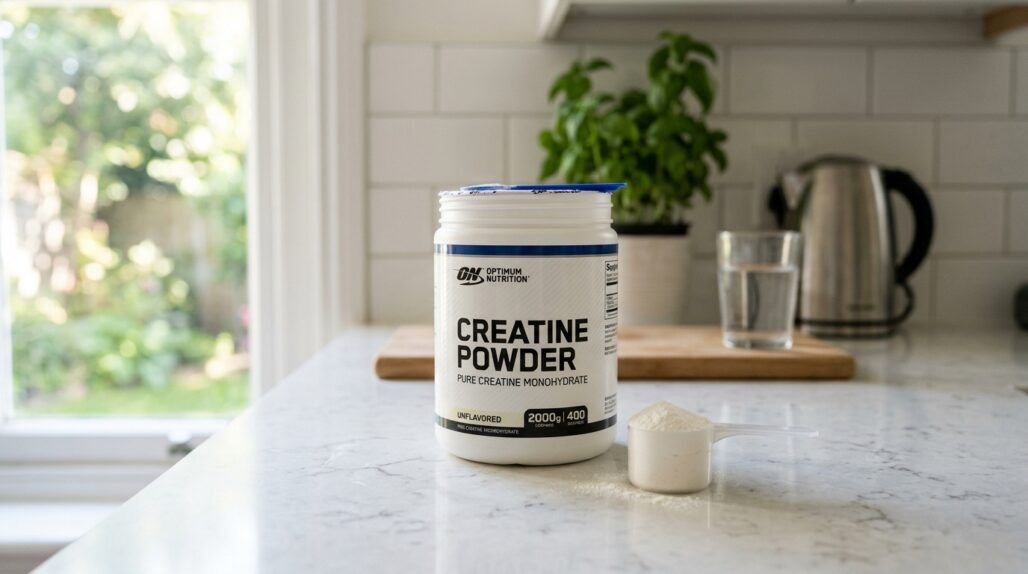
Creatine monohydrate loads your muscles with phosphocreatine, which is the molecule your body taps to regenerate ATP during brief, intense work. More phosphocreatine means you recover a little faster between hard efforts and can push a little harder on the next one.
The human evidence here is about as strong as it gets in sports nutrition. The International Society of Sports Nutrition position stand reports that performance of high-intensity or repeated exercise generally improves by 10 to 20 percent, and calls creatine the most effective legal ergogenic supplement for high-intensity capacity and lean mass. That is a confident claim backed by hundreds of trials. Evidence grade: strong, human, repeated.
The catch for endurance athletes is the word "high-intensity." A 2023 review titled surges and sprints to win the race concluded that creatine does not directly improve steady-state aerobic endurance. What it does help is the anaerobic layer sitting on top of your aerobic base: the surges, the breakaways, the closing kick. The authors found creatine most useful for sports with "high-intensity burst, multiple surges, or finishing end spurts," naming cross-country skiing, mountain biking, rowing, swimming, triathlon and cycling.
A separate 2023 meta-analysis in Sports Medicine on trained endurance athletes was blunter: it found creatine ineffective for endurance performance overall, with only a handful of trials nudging the lactate threshold or time-trial results. Pure aerobic economy is not where creatine shines.
There is one wrinkle worth naming. Creatine pulls water into muscle and tends to add a kilo or two of body mass. For a powerlifter that is fine. For a runner carrying their own weight up a hill, the extra mass can offset the small anaerobic gains, so the math is less clear in weight-bearing events than in rowing or cycling.
Beta-alanine: buffering the burn
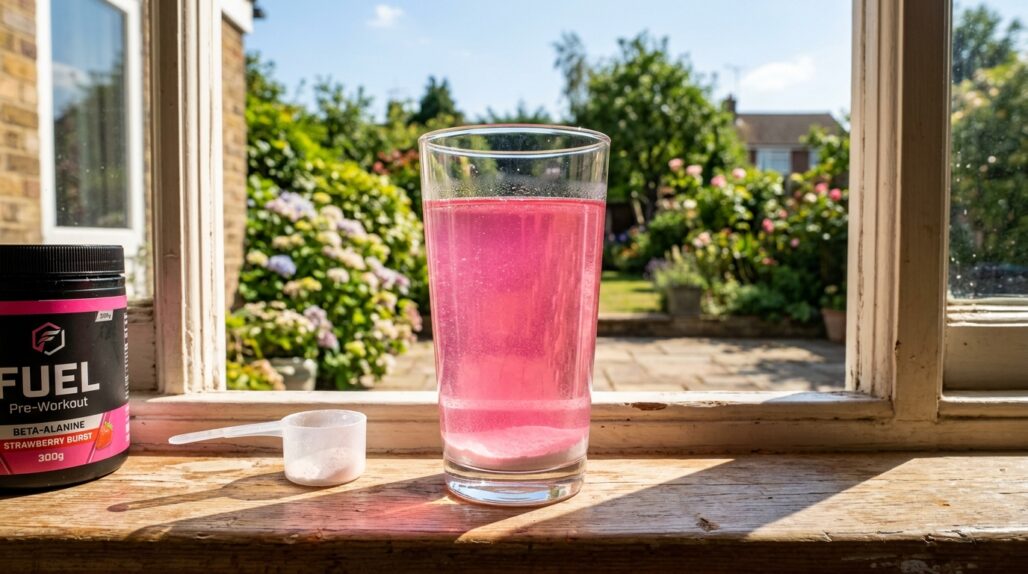
When you hold a near-maximal effort for longer than about a minute, hydrogen ions pile up and your muscles get acidic. That burning, leaden feeling is part of why you slow down. Beta-alanine is the rate-limiting building block your body uses to make carnosine, an intracellular buffer that mops up some of those protons and lets you hold the pace a bit longer.
You do not feel beta-alanine the way you feel caffeine. It works by slowly raising muscle carnosine over weeks. The muscle carnosine meta-analysis confirms a clear dose-response: take it daily and carnosine climbs, with the ISSN position stand on beta-alanine reporting roughly a 40 to 60 percent rise after four weeks of loading.
Where does that translate to performance? The same position stand is specific: the most consistent benefit shows up in open-ended efforts and time trials lasting one to four minutes, and broadly for high-intensity work over 60 seconds. The size of the effect is modest, usually a couple of percent, and it shrinks the more elite the athlete. So the evidence grade is solid human evidence for a real but small effect, in a narrow time window. It will do little for your steady marathon pace and little for a single five-second sprint.
The well-known side effect is paresthesia, the harmless skin tingling some people feel on the face, neck and hands after a larger dose. It is not dangerous and it fades within an hour or so.
Head-to-head: which zone are you racing in?
The cleanest way to choose is to look at where your effort actually breaks down. The table below lines up the two on the factors that matter.
| Factor | Creatine monohydrate | Beta-alanine |
|---|---|---|
| Best for | Short explosive efforts, repeated sprints, surges and a finishing kick | Sustained all-out efforts in the roughly 1 to 4 minute zone |
| Evidence | Strong, large human literature; 10-20% gains in high-intensity and repeated work, but no direct steady-state aerobic benefit | Solid human evidence for a small (a few percent) effect, mostly in the 1-4 min window; carnosine rise well replicated |
| Onset | Days with a loading phase, about 3-4 weeks at a steady 3-5 g/day | Weeks; meaningful carnosine after 2-4 weeks of daily use |
| Typical dose | 5 g four times daily for 5-7 days to load, then 3-5 g/day; or skip loading and take 3-5 g/day | 4-6 g/day for at least 2-4 weeks, ideally split into smaller doses |
| Main downside | 1-2 kg water weight gain, which can offset gains in weight-bearing events | Harmless skin tingling at larger single doses; slow to kick in |
Notice that neither row says "improves aerobic endurance." That is the point. If your limiter is steady-state aerobic fitness, the answer is training, fueling and sleep, not either of these powders.
Who should pick which
Pick creatine if your event rewards power and repeatability. Sprinters, team-sport players, rowers off the start, criterium cyclists, CrossFit-style athletes and anyone doing structured interval or hill work get the most out of it. Runners can still benefit from the recovery and finishing-kick angle, but should weigh the water weight. If you want help choosing a clean, third-party-tested option, our roundup of the best creatine monohydrate supplements walks through what to look for, and the creatine dose calculator sets your loading and maintenance grams.
Pick beta-alanine if your pain is the sustained burn. The 800m runner, the 2k rower, the swimmer holding a 100 to 200m pace, the cyclist trying to survive a two-minute breakaway: these are the efforts beta-alanine was built for. To dial in the loading grams and the split-dose schedule, use the beta-alanine dose calculator.
If your goal is long, slow distance like a marathon or a long gravel ride, be honest with yourself: most of that race is aerobic, and neither supplement moves that needle much. The exceptions are the punchy moments, the climbs and the final push. For the bigger picture on fueling those efforts, see our guide to the best supplements for marathon training.
Which one to buy
Match the product to the verdict above. Power and surge athletes start with creatine; sustained-effort athletes start with beta-alanine; and if your training spans both, the combo pick covers the gap.


As an Amazon Associate, UsefulVitamins.com earns from qualifying purchases at no extra cost to you.
We may earn a commission if you buy through links on this page, at no extra cost to you. It does not change our recommendations.
Can you take both together?
Yes, and for a lot of athletes that is the smart move. Creatine and beta-alanine act on completely separate systems, the fast phosphocreatine battery and the acid buffer, so stacking them is additive rather than redundant. It is one of the better-studied combinations in the gym, which is exactly why so many pre-workouts include both.
Practical setup: take creatine daily at 3 to 5 grams, timing does not matter much. Load beta-alanine at 4 to 6 grams a day, but split it into two or three smaller doses across the day. Keeping single servings under about 0.8 to 1.6 grams is the simplest way to avoid the tingling, or you can use a sustained-release version.
A real safety note before you stack anything. These two have a clean record in healthy people, but supplement quality varies, so choose third-party-tested products. If you take prescription medication, are managing a kidney condition, or are pregnant or breastfeeding, clear it with your clinician first rather than self-prescribing. Creatine is processed by the kidneys, so anyone with reduced kidney function in particular should not start it without medical advice. A tingly skin sensation from beta-alanine is expected and harmless, but a rash, swelling or trouble breathing is not, and means stop and seek care. Supplements support training; they do not replace a medical workup if something feels wrong.
FAQ
Does creatine work for long-distance running? Not directly. Creatine does not improve steady-state aerobic endurance, so it will not lower your marathon pace on its own. It can help the surges, hill repeats and finishing kick, and may aid glycogen storage and recovery between hard sessions.
How long until beta-alanine works? Weeks, not minutes. It raises muscle carnosine gradually, with meaningful levels after about two to four weeks of daily dosing. A single dose before a workout does nothing useful except possibly make your skin tingle.
Is the beta-alanine tingling dangerous? No. The tingling, called paresthesia, is harmless and usually fades within an hour. Splitting your daily dose into smaller servings or using a sustained-release form reduces it.
Do I need to do a creatine loading phase? No, loading just gets you to full muscle saturation faster. You can take 3 to 5 grams a day and reach the same place in about three to four weeks. Loading is 5 grams four times daily for five to seven days if you want the quicker route.
Will creatine make me gain weight? Usually one to two kilograms of water held in the muscle, not fat. For strength and power athletes that is fine. For weight-bearing endurance athletes it is worth weighing against the small anaerobic gains.
Should I just buy a pre-workout that has both? It can be convenient, but check the labeled doses. Many blends underdose beta-alanine below the 4 to 6 grams a day that the research uses, so you may still need to top up to hit an effective amount.
The bottom line
There is no universal winner here, and any article that crowns one is skipping the biology. Creatine owns the explosive, repeated and finishing-effort side, with strong human evidence behind 10 to 20 percent gains in high-intensity work. Beta-alanine owns the sustained one to four minute burn, with solid but smaller evidence. Pick creatine if you race on power and surges; pick beta-alanine if you fade in long all-out efforts; and if your training touches both, take them together, because they complement rather than compete. Just split the beta-alanine, hedge on quality, and loop in a clinician if you have a medical condition or take prescription drugs.
This article is for general information and is not medical advice. Talk to a qualified healthcare professional before starting any supplement, especially if you have a health condition, take medication, or are pregnant or breastfeeding.
Reviewed by the UsefulVitamins Editorial Team.
